
Security cameras become far more useful when they can operate beyond the reach of an ordinary outlet. For monitoring a driveway, wooded boundary, cabin, or hunting area, cellular trail cameras combine motion detection with remote image delivery, while mounting hardware and external power help complete the installation. I focus on practical fit, camera coverage, connectivity, and maintenance rather than treating every specification as equally important.
Your Options, Compared

K&F Concept 2 Pack Adjustable Tree Mounts

Camojojo 1/4-20 Rotating Camera Bracket

Stealth Cam Revolver PRO Cellular Camera

Stealth Cam 12V Battery

TACTACAM Reveal X 3.0 Cellular Camera

Moultrie Edge 2 Cellular Camera
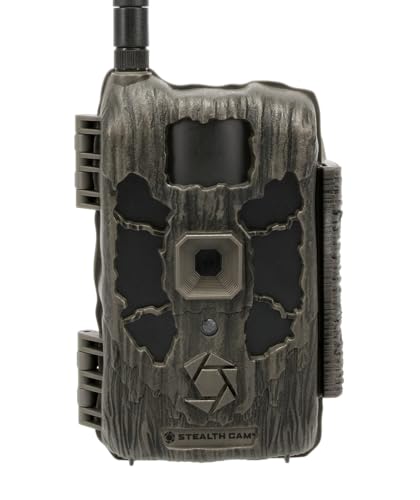
Stealth Cam Deceptor Max 2.0 40MP
Taking A Closer Look At The Options
Two mounts make this a practical starting point for a paired trail-camera layout, particularly around a wooded driveway or hunting corridor. The broad rotation and 220-degree vertical range let me frame a downward view from a tree without moving the camera every time the target changes.
Unlike the single Camojojo bracket, the K&F package provides two mounting points for broader placement. Owners of cameras with a bottom-mounted 1/4-inch by 20 thread gain the most useful compatibility, while other thread systems require an adapter.
Why It Works Well
- Two holders support separate cameras or a backup location
- Horizontal rotation and vertical tilt simplify tree-side aiming
- The standard threaded connection suits many trail cameras
- Tree spikes support loads up to 2 kilograms
Worth Noting
- The load limit makes weight and tree size important installation factors
- Hardware inspections are sensible after storms or heavy wildlife contact
Key Specs
Built With In Mind
This pair fits hunters and property monitors running two compatible cameras across separate trees.
Another Choice May Suit
The Camojojo 1/4-20 Rotating Camera Bracket better serves installations requiring wall fasteners and a full hardware kit.
Wall and tree installations are easier when the mounting pieces arrive together. This Camojojo bracket includes a strap, six screws, an Allen wrench, and a guide, reducing the need for a separate trip for basic hardware.
The horizontal and vertical rotation of 180 degrees gives adequate repositioning for a driveway camera or cabin entrance. Compared with K&F Concept 2 Pack Adjustable Tree Mounts, it offers only one bracket, but its screw and strap options make it more versatile across different surfaces.
Positive Takeaways
- Included screws and strap support tree or wall mounting
- The Allen wrench simplifies assembly in the field
- A threaded insert accepts compatible 1/4-inch by 20 camera fittings
- The guide reduces setup guesswork for first-time users
Small Caveats
- The 180-degree movement is less extensive than the K&F holder’s range
- Wall anchors need suitable substrate, and outdoor fasteners may require inspection
At A Glance
The Right Fit
Beginners and property monitors benefit from a complete bracket package for a single camera near a tree or exterior wall.
Swap It Out When
K&F Concept 2 Pack Adjustable Tree Mounts suit two-camera deployments that need broader aiming movement.
One rotating lens can replace the need for several fixed cameras around an open property. The Stealth Cam Revolver PRO uses a 360-degree design to cover its surroundings, which is useful near a broad trail junction, clearing, or cabin yard.
Its 40MP photo setting, 1440P video, and 30-frame-per-second recording favor detailed review, while the listed 0.4-second trigger speed targets fast movement. The tradeoff is cellular dependence, so a weak signal or limited monthly data plan can reduce remote monitoring flexibility.
What Earns Its Place
- A single device provides a full panoramic view
- Day-and-night coverage suits changing outdoor conditions
- Fast motion response helps preserve short-lived movement
- Cellular delivery removes the need for on-site viewing
Trade Offs
- Cellular reception must be checked at the exact placement area
- 360-degree hardware can be more exposed to branches, insects, and weather
Technical Highlights
Who It Suits Best
Remote property monitors benefit most where one open vantage point must observe traffic from several directions.
Where Another Pick Suits Better
The Stealth Cam Deceptor Max 2.0 40MP favors people prioritizing conventional image detail and selectable photo resolution.
A box-style 12-volt supply is a practical power base for cameras stationed far from an outlet. I see the strongest fit in a cold-weather hunting setup or a remote cabin where carrying spare cells would be inconvenient during routine monitoring.
Unlike the cellular cameras in this list, this battery box is an accessory rather than the imaging device itself. Compatibility, lead connections, and weather-protected placement therefore matter more than resolution or lens coverage, and the limited source details warrant checking the camera’s power requirements before ordering.
Everyday Advantages
- A 12-volt box suits compatible Stealth Cam trail cameras
- External power reduces frequent cell replacements
- Remote locations avoid dependence on nearby wall outlets
Practical Considerations
- Connection requirements and included components need confirmation for the exact camera
- Moisture management and cable routing require attention outdoors
- The source provides too little detail for assumptions about capacity or runtime
Made For
Long-duration remote installations benefit from the box format when paired with a compatible 12-volt trail camera.
Reach For A Different Pick When
The TACTACAM Reveal X 3.0 Cellular Camera offers a more complete monitoring solution for locations with dependable cellular service.
Remote properties rarely have uniformly strong reception across every tree, wall, and field edge. The integrated SIM in the TACTACAM Reveal X 3.0 automatically selects the stronger available network, reducing the need to manage a particular carrier connection manually.
AT&T and Verizon support make the approach relevant to locations covered by those networks, while night vision and a waterproof housing suit year-round outdoor monitoring. Compared with the Stealth Cam Revolver PRO, this model prioritizes signal flexibility over a panoramic 360-degree view, and battery life can vary with activity and transmission volume.
Strong Points
- Multi-carrier selection improves flexibility in variable signal areas
- Night vision supports monitoring after dark
- Waterproof construction suits exposed outdoor positions
- Automatic network selection simplifies remote setup
Points To Keep In Mind
- Neither supported network guarantees reception at every installation point
- Heavy motion traffic can increase cellular data use and power consumption
Feature Snapshot
Who Will Love This
Cabin owners and hunters benefit most where two supported cellular networks provide a meaningful coverage advantage.
A Better Fit Elsewhere
The Stealth Cam Revolver PRO Cellular Camera better serves open areas that need one device to observe several directions.
Storage decisions can complicate a remote installation, and the Moultrie Edge 2 handles images and video internally. That built-in memory removes the need for a removable SD card, which is convenient for users managing cameras across several properties.
Its listed 36MP photos, 1080P video, and 0.4-second trigger time provide a detailed and responsive core specification set. The camera also selects the strongest available signal across major networks, though that convenience still depends on service reaching the exact mounting location.
Everyday Perks
- Internal storage reduces card-handling tasks
- 36MP stills support close visual inspection
- The 0.4-second trigger targets brief movement
- Multi-carrier selection assists variable reception
- 1080P video provides practical detail
Less Ideal Details
- Internal storage removes the familiar option of exchanging memory cards
- 1080P video trails the 1440P format listed for two Stealth Cam models
Best Suited To
Multi-property monitors benefit from built-in storage when card retrieval and replacement would be inconvenient.
Where A Sibling Pick Shines
The Stealth Cam Deceptor Max 2.0 40MP suits image-focused placements that benefit from 1440P video and selectable photo resolutions.
Flexible capture settings make the Stealth Cam Deceptor Max 2.0 appealing for varied outdoor scenes. Photo resolution can be set to 4MP, 8MP, 16MP, or 40MP, allowing owners to balance detail against file size according to the monitoring task.
Dual-core processing handles image capture and uploads at the same time, while compression and integrated image processing support the listed 1440P video and 40MP still output. Compared with the Moultrie Edge 2 Cellular Camera, it offers higher listed video resolution, though cellular coverage, storage plans, and actual data consumption still shape the experience.
Where It Excels
- Four photo settings support different storage priorities
- 40MP captures provide detailed source images
- 1440P video improves on standard-definition footage
- Dual-core processing supports simultaneous capture and upload tasks
Details To Watch
- Higher-resolution files can increase storage and cellular data demand
- Remote placement still depends on adequate network reception
Technical Reference
Whose Shelf It Belongs On
Detail-focused property monitors benefit from adjustable photo resolution and higher-resolution video output.
Not Your Match When
The Camojojo 1/4-20 Rotating Camera Bracket is the better starting point for a single compatible camera mount.
What Matters Before I Choose A Remote Camera
Coverage comes first because a narrow field may miss a person approaching from the side. I compare the Revolver’s 360-degree design with conventional forward-facing models, then confirm whether mounting height and angle can cover the required ground area.
Connectivity deserves a location-specific check. Multi-carrier selection can help, but neither TACTACAM Reveal X 3.0 Cellular Camera nor another cellular model can transmit through an area without usable service.
Power arrangements shape maintenance intervals too. The Stealth Cam 12V Battery supports compatible extended deployments, while battery-powered cellular cameras need regular charging and monitoring, especially during frequent motion activity.
Mounting hardware completes the system. K&F Concept 2 Pack Adjustable Tree Mounts suit paired tree installations, while the Camojojo bracket provides straps, screws, and a wrench for tree or wall surfaces.
Small Mistakes That Can Ruin An Installation
Wrong Turns To Avoid
Compatibility must be checked before mounting, especially the 1/4-inch by 20 thread used by both bracket picks. I also avoid placing a cellular camera in a location with weak reception or hiding its view behind vegetation.
What Separates Premium From Basic
Higher-tier cameras can add panoramic coverage, selectable photo resolution, faster processing, or stronger network flexibility. The extra capability matters for open properties or detailed evidence, while a conventional view may be sufficient for a narrow entrance.
Frequently Asked Questions
Do trail cameras work in cold weather?
Temperature tolerance varies by model, and cold weather can reduce battery performance. The sealed housing and power arrangement should both be checked for the expected season.
Is cellular coverage better than a memory card?
Cellular service enables remote viewing, while removable storage avoids transmission data requirements. Coverage quality and access frequency determine which method is more convenient.
What thread do many trail-camera mounts use?
Many trail cameras use a 1/4-inch by 20 thread, which applies to both mounting brackets in this roundup. Camera compatibility should still be confirmed.
Do I need a panoramic camera?
A 360-degree camera suits broad open areas where activity can approach from several directions. A standard view can be more efficient for a driveway, gate, or cabin entrance with a defined sightline.
Can one mount support two cameras?
Each mount supports one compatible camera, but a two-pack provides separate mounting hardware for a paired setup. Tree size, load limits, and coverage angles determine whether two positions are useful.
Final Verdict
The best choice depends less on resolution alone than on field of view, cellular reception, power, and mounting conditions. Wide properties favor the Stealth Cam Revolver PRO, variable-signal areas deserve attention for the TACTACAM Reveal X 3.0, and detail-focused users may prefer the Deceptor Max 2.0. Matching the camera to the actual site keeps the installation simpler and more dependable.