
A reliable game camera should preserve the details that matter after a long day outdoors, from deer movement at dusk to unexpected traffic near a rural property. I compare local WiFi models with cellular cameras, conventional recorders, and a concealment accessory, focusing on connection methods, image detail, low-light performance, battery considerations, and practical maintenance.
A Snapshot Of The Selections

GardePro A3S 2-Pack Trail Camera

TACTACAM Reveal X 3.0 Cellular Trail Camera

GardePro X66 Pro 2-Pack Cellular Trail Camera

VOOPEAK Cellular Trail Camera with Solar Panel
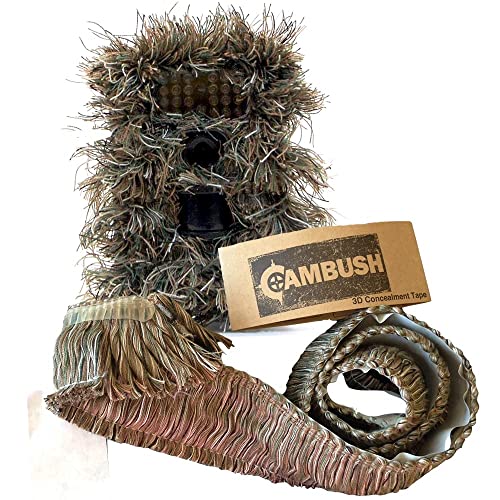
CAMBUSH 3D Camo Tape for Game Cameras

GardePro E6+ WiFi Bluetooth Trail Camera

GardePro E8 2.0 Pro WiFi Bluetooth Trail Camera
More On The Choices That Made The List
The A3S pairs traditional field recording with unusually high photo resolution, making it useful across a backyard, tree line, or hunting area. Its two-camera pack offers a practical way to monitor separate approaches without relying on cellular coverage.
Unlike the E6+ and E8 2.0 Pro, this model does not provide the direct smartphone WiFi connection associated with newer GardePro cameras. In my view, that limitation is acceptable for conventional scouting, where retrieving the memory card after the fact is part of the routine.
Why It Works Well
- 64MP photos preserve useful detail in wide scenes and distant subjects.
- 1296P HD video includes sound for adding context to recorded activity.
- A Sony Starvis sensor supports low-light capture and night vision up to 100 feet.
- Two units provide broader coverage than a single camera.
Small Caveats
- Remote viewing requires a separate camera with built-in connectivity.
- External housings and straps need periodic checks after prolonged weather exposure.
Key Specs
Made For
I favor the A3S for local wildlife monitoring and hunting areas where high-resolution recording matters more than live phone access.
Consider Something Else When
The GardePro E6+ is a better fit for nearby scouting that depends on direct Bluetooth and WiFi control.
The Reveal X 3.0 targets locations beyond dependable WiFi range, using cellular service to keep remote checking possible. That distinction matters on isolated land, wooded hunting properties, and construction sites where the nearest router may be miles away.
Its integrated SIM can select the stronger of AT&T and Verizon service at the installed position, reducing dependence on one network. Compared with the GardePro X66 Pro, this approach offers a clearer multi-carrier strategy, although exact reception still depends on local coverage and terrain.
Points In Its Favor
- Automatic carrier selection improves flexibility across coverage areas.
- Cellular connectivity removes the need for a nearby WiFi signal.
- Night vision supports monitoring after daylight fades.
- Waterproof construction suits exposed outdoor positions.
- Battery life is stated at up to six months under applicable use conditions.
Points To Keep In Mind
- Cellular service requires a compatible subscription and adequate signal.
- Carriers may differ substantially in wooded or remote terrain.
- Battery duration changes with transmission frequency, temperature, and activity.
Feature Snapshot
Right Fit For
I recommend the Reveal X 3.0 for remote properties where cellular reception is stronger than local WiFi coverage.
A Better Fit Elsewhere
The GardePro E6+ fits close-range monitoring better because its direct phone connection avoids a cellular subscription.
The X66 Pro is built around a two-camera approach, giving remote monitoring points greater coverage across a property or shared trail system. Rechargeable batteries add a practical layer of ownership, particularly where replacing disposable cells is inconvenient.
Motion-triggered alerts, live viewing, and requests for HD images or short clips make it more interactive than the conventional A3S. The live and on-demand functions require an active data plan sold separately, so the hardware alone does not provide every advertised remote feature.
What Earns Its Place
- Live viewing allows activity checks away from the mounted position.
- On-demand clips reduce unnecessary full-card reviews.
- Rechargeable batteries suit frequently accessed installations.
- Two cameras support separate property approaches.
Trade Offs
- An active data plan is required for cellular functions.
- Two installations demand twice the mounting and maintenance attention.
- Remote features still depend on usable cellular reception.
Core Details
Built With In Mind
I favor the X66 Pro for land managers and regular hunters who need remote checks across two separate locations.
Look Elsewhere When
The TACTACAM Reveal X 3.0 serves single-camera sites better when multi-carrier selection is the main priority.
The VOOPEAK leans more toward property surveillance than conventional wildlife tracking, with live streaming, two-way audio, and a solar panel in the package. That makes it relevant to a driveway, cabin, or remote outbuilding, although the broad feature set warrants closer scrutiny before installation.
Its dual-lens design covers 360 degrees and supports 2K recording, with color night vision and a built-in LED. I would inspect the listed recording mode closely because the headline wording mentions 4K while the detailed dual-camera description identifies 2K capture.
Real Benefits
- Two lenses reduce the number of major blind spots.
- The solar panel supports sustained outdoor placement.
- PIR sensing triggers recording and alerts after detected movement.
- Two-way audio allows remote communication near the camera.
- Local SD storage reaches 256GB, with optional cloud storage.
Details To Watch
- Cellular coverage and data service remain necessary for remote access.
- Solar placement depends on direct sun and a secure panel position.
- Lens and panel surfaces need occasional rain and dirt cleaning.
Feature Facts
Who It Suits Best
I recommend the VOOPEAK for property monitoring where two-way communication and continuous outdoor placement matter.
Another Choice May Suit
The GardePro X66 Pro is the cleaner alternative for conventional wildlife monitoring across two cellular locations.
CAMBUSH tape is not a camera, so it serves a different role from the other six selections. It helps break up the familiar shape and reflective surfaces of a mounted game or security camera, which can make the installation less conspicuous on a tree, post, or cabin wall.
The accessory pairs naturally with any of the cameras here, including the bright indicator lights and housing edges often found on modern electronics. For a busy property, I favor careful placement around seams and fasteners instead of covering the lens, sensor, strap, or access port.
Useful Touches
- Adheres to game and security camera housings.
- Adds visual breakup without replacing the camera itself.
- Works alongside several camera models in this roundup.
- Needs no batteries or wireless configuration.
Potential Compromises
- Weather resistance and roll dimensions are not specified.
- Poorly placed strips may peel after rain, wind, or strong sunlight.
- Adhesive residue may complicate a later housing change.
Made For
I favor this tape for hunters and property watchers who want a simpler concealment layer around a camera mount.
Skip It When
The GardePro E8 2.0 Pro is the better choice for a complete camera setup centered on 4K video and direct phone control.
The E6+ offers a straightforward option for a cabin, backyard, or nearby trail where the phone can reach the camera directly. It uses low-power WiFi and Bluetooth through GardePro Mobile, which avoids monthly service fees and dependence on a cellular plan.
Dual antennas support a stated range of up to 165 feet under open conditions, giving the setup more flexibility than a very short-range connection. Walls, dense foliage, and metal structures can reduce that reach, so a clear line between the camera and phone remains important.
A Few Highlights
- Direct Bluetooth and WiFi control removes recurring service charges.
- Dual antennas improve connection stability and open-range reach.
- The app supports configuration without a separate remote control.
Small Limitations
- It cannot join a home WiFi router or cellular network.
- Open-air range is less useful through buildings or heavy vegetation.
- The phone connection range can make large properties inconvenient.
Who Should Grab It
I choose the E6+ for nearby wildlife monitoring where direct smartphone control and no monthly fee take priority.
Reach For A Different Pick When
The TACTACAM Reveal X 3.0 is more suitable for installations far beyond dependable phone or WiFi range.
The E8 2.0 Pro brings 4K video into the same direct-connection approach as the E6+, making it the more compelling model for detailed near-property footage. Dual antennas and low-power WiFi support app-based operation without a router, cellular subscription, or handheld remote.
I see the upgrade as meaningful mainly where video detail changes the outcome, such as identifying a distant subject or reviewing vehicle movement. For simple still-image scouting at moderate range, the E6+ may deliver the more economical fit without requiring 4K resolution.
A Strong Showing
- 4K video captures finer movement and subject detail.
- Dual antennas support steadier direct wireless communication.
- Bluetooth and WiFi reduce dependence on a home network.
- GardePro Mobile handles setup without a monthly service charge.
Honest Caveats
- It does not connect to a home router or cellular network.
- 4K files require more storage space than standard-definition footage.
- Physical obstructions can reduce the useful wireless range.
Technical Highlights
The Right Fit
I favor the E8 2.0 Pro for close-range property monitoring where detailed 4K clips justify the added storage demands.
Swap It Out When
The GardePro E6+ is the better option for routine nearby scouting where direct control matters more than 4K detail.
What Matters Before Choosing A Field Camera
Connection Distance And Coverage
Connection type determines how a camera fits into daily use. Direct WiFi and Bluetooth suit nearby monitoring, cellular service supports remote locations, and standard recording avoids live connectivity altogether. I also compare the advertised range with trees, buildings, terrain, and metal structures that can interrupt a local signal.
Resolution And Low-Light Detail
High photo resolution helps separate subjects from a busy background, while 4K video offers more detail for later inspection. Neither specification guarantees useful results in every setting, so aperture, sensor behavior, motion quality, and night illumination matter too. Low-light models are especially useful near dawn, dusk, and wooded clearings.
Power And Service Expenses
Battery type, expected activity, transmission frequency, and temperature influence replacement schedules. Rechargeable cells and solar accessories can reduce routine trips, but panel placement and charging conditions still need attention. Cellular cameras also add data-plan costs that belong in the ownership calculation.
Placement And Maintenance
A clear line of sight can improve both motion detection and phone connectivity. Tree limbs, growing vines, condensation, mud, and direct sun can change over time, so periodic checks are part of responsible ownership. Concealment material should never block the lens, sensor, microphone, strap, or service panel.
Sharp Choices For Different Field Setups
Wrong Turns To Avoid
A headline feature does not always describe the actual recording mode, so lens resolution and 4K claims deserve separate attention. I would also avoid placing a local WiFi camera beyond practical phone range or selecting cellular service without checking coverage at the exact mounting site.
What Separates Premium From Basic
Higher-tier models tend to add remote access, higher-resolution video, stronger antennas, dual lenses, or rechargeable power. Those additions help most across frequently checked or security-focused installations; a conventional still-image camera remains sensible for occasional local scouting.
Frequently Asked Questions
Do Wifi Game Cameras Need Home Internet?
No. These cameras commonly connect directly to a phone through WiFi and Bluetooth rather than joining a home router. Connection range remains limited by walls, vegetation, and distance.
Is Cellular Better Than WiFi For Trail Cameras?
Cellular is better for remote placements where a phone cannot maintain a direct connection. WiFi or Bluetooth is simpler for nearby monitoring and avoids a recurring data plan.
Does 4K Video Use More Storage?
Yes. 4K files generally require more memory-card capacity than lower-resolution recordings. A higher-capacity card also reduces how often files must be transferred or deleted.
Can Camo Tape Damage A Camera?
Poorly applied tape can leave adhesive residue or block openings. I favor careful placement that covers exterior surfaces without touching the lens, sensor, microphone, or access panel.
Do Cellular Trail Cameras Work Without A Data Plan?
No. Cellular transmission and remote-viewing features require compatible service. A camera may record locally, but remote alerts and viewing remain unavailable without the required connection.
Closing Verdict
I favor the GardePro E6+ for straightforward nearby control, the E8 2.0 Pro for detailed 4K clips, and the TACTACAM Reveal X 3.0 for remote cellular coverage. The right choice comes down to distance, connection reliability, and the amount of detail actually needed.