
Ice fishing electronics need dependable power in cramped shelters, cold sleds, and vehicles that sit for hours. Battery weight, usable capacity, cold-weather charging, and fish-finder compatibility matter far more than a headline amp-hour figure alone. I compare these options for anyone running sonar, lights, a heater, or several devices from one compact power system.
The HQST and Renogy 100Ah options provide the most practical balance for mobile shelters and mixed equipment loads. The self-heating Renogy model makes more sense for consistently subfreezing setups, while the 16V LiTime battery focuses on higher-voltage sonar and radar systems.
The Choices Worth Comparing

HQST 12V 200Ah LiFePO4 Battery, Group 22NF
Vexilar V-220L MAX Lithium Battery

LiTime 12V 20A LiFePO4 Battery Charger

Renogy 12V 100Ah Trolling Motor LiFePO4 Battery

Renogy 12V 100Ah Self-Heating LiFePO4 Battery
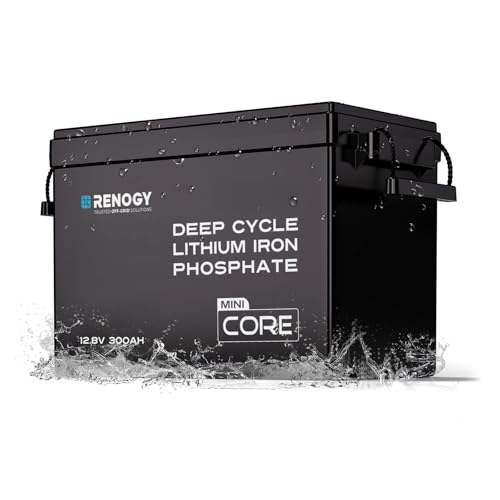
Renogy 300Ah LiFePO4 Lithium Battery

Litime 16V 100Ah Battery for Fish Finders
The Strengths Of Each Pick
The high title capacity appeals to shelters running sonar, LED lighting, a heated shelter, and several smaller devices. A battery management system, meaning the electronics that regulates charging, current, and cell balance, provides a useful layer of control for mixed mobile loads.
Compared with the lighter Vexilar option, this model makes more sense for anglers carrying substantial equipment into a remote shack. One detail deserves care: the title references 200Ah, while the listed performance details describe a 12V 100Ah configuration, so I would confirm the exact configuration and quantity on the listing.
The Case For It
- Large energy reserve supports electronics, lights, and heating accessories.
- Up to 100A continuous discharge covers demanding trolling motor, RV, trailer, and marine applications.
- A 21-pound listed weight reduces the burden of carrying lead-acid alternatives.
- Automatic temperature suspension helps protect charging and discharge in outdoor conditions.
Honest Caveats
- The inconsistent 100Ah and 200Ah title references may complicate comparison shopping.
- Charging pauses below 23°F and above 140°F, which matters during temperature swings.
Key Attributes
Built With In Mind
This battery fits mobile ice shelters and mixed marine systems that need more reserve than a small sonar pack.
Where Another Pick Suits Better
Renogy 12V 100Ah Self-Heating LiFePO4 Battery is a stronger fit for consistently subfreezing charging conditions.
Carrying less equipment changes the battery calculation. The Vexilar V-220L MAX is listed as a 12V, 12Ah lithium battery, giving compact Vexilar users a more focused option than the much larger HQST and Renogy deep-cycle models.
That lower capacity suits a shelter with a single fish finder, modest lighting, and light accessories. Depending on sonar draw and charging access, it may be less comfortable for heated shelters, a trolling motor, or prolonged operation of several high-current displays.
Real Benefits
- The 12Ah rating is easier to manage in a small sled or shelter.
- Lithium chemistry avoids the familiar lead-acid weight burden.
- Its focused capacity suits portable sonar rather than whole-cabin loads.
Points To Note
- Limited source information makes runtime comparisons with 100Ah batteries difficult.
- Owners should keep terminals dry and secure despite the battery’s marine-category listing.
- Compatibility with non-Vexilar displays and larger electronics needs confirmation.
Who It Suits Best
Minimalist anglers running a compatible Vexilar unit and a small collection of accessories will appreciate the reduced carry burden.
Consider Something Else When
Litime 16V 100Ah Battery for Fish Finders better serves setups using multiple high-voltage sonar or radar units.
This is a charger rather than an ice-fishing battery, but charging logistics can dictate how a mobile setup performs. The LiTime unit supplies 20 amps through a 14.6-volt LiFePO4 charging profile, making it relevant to cabin, RV, and off-grid owners keeping one compatible battery ready.
The 0V activation function helps a charger recognize a deeply discharged pack, while the Anderson connector provides a secure physical connection. Its honest limitation is placement: the listed charger is not waterproof and should stay out of open, wet marine environments.
The Value In It
- The 20A output shortens charging time compared with many small maintenance chargers.
- A dedicated LiFePO4 profile avoids treating the chemistry like a conventional lead-acid battery.
- Zero-volt activation supports recovery attempts on deeply discharged compatible packs.
Small Caveats
- The unit requires a protected indoor or vehicle location.
- It is not a portable power source for the shelter itself.
Feature Snapshot
Made For
Cabin and RV users with shore power access benefit from a charger dedicated to compatible 12V LiFePO4 storage.
Another Choice May Suit
HQST 12V 200Ah LiFePO4 Battery, Group 22NF is the more direct choice for anglers seeking an integrated mobile power system.
Renogy targets a broader boating role with this Group 24 battery, combining 100Ah capacity with output suitable for a trolling motor. The listed IP67 rating means the enclosure resists dust and temporary water exposure, a sensible attribute around ice, wet boots, and marine gear.
Bluetooth monitoring adds visibility into battery status, while the 100A battery management system regulates the pack. Compared with the Vexilar V-220L MAX, the extra capacity is substantial, making this option more practical for a heater, brighter display, lighting, and electronics sharing the same circuit.
Where It Delivers
- 100Ah capacity gives mobile shelters a useful energy reserve.
- 150A continuous discharge supports higher-current marine equipment.
- Bluetooth monitoring reduces the need to access the battery physically.
- Water-resistance ratings add practical protection around wet gear.
Trade Offs
- At 21.8 pounds, it is heavier than a sonar-only pack.
- The 21.8-pound Group 24 case occupies more space than the self-heating Renogy model.
- Low-temperature charging behavior still deserves attention in deep winter.
Right Fit For
Anglers moving between open water, an ice shelter, and auxiliary marine electronics benefit from the trolling-motor capability.
A Better Fit Elsewhere
Renogy 12V 100Ah Self-Heating LiFePO4 Battery is more compelling for winter trips dominated by prolonged subfreezing conditions.
Cold weather is the central issue this model addresses. Dual heating pads provide 110 watts of heat, helping the 100Ah battery reach an appropriate charging temperature in a remote cabin or exposed vehicle during sustained winter conditions.
The Group 22NF case is listed as 45 percent smaller than comparable batteries, which improves sled packing. Unlike the larger Renogy trolling motor battery, this design prioritizes winter charging and compact transport rather than high marine output.
Where It Helps
- Active heating is directly relevant to subfreezing charging conditions.
- A listed 40 percent faster warm-up reduces waiting after exposure to cold.
- More than 5,000 rated cycles at 80% depth of discharge support long-term ownership.
- The Group 22NF format leaves more room for shelter gear.
Where It May Fall Short
- Heating operates under cold-sensitive conditions rather than continuously.
- The listed 100A management system is less oriented toward high-output marine use than the trolling motor model.
Technical Highlights
Who Will Love This
Winter anglers using remote cabins or vehicle charging will find the heating system more relevant than ordinary cold storage.
Swap It Out When
Renogy 12V 100Ah Trolling Motor LiFePO4 Battery makes more sense for mixed open-water and ice trips with a motor load.
Capacity becomes the priority for a fixed shack, cabin base, or weekend system supporting several devices. This 12V 300Ah battery provides roughly three times the listed capacity of the 100Ah Renogy options, creating a larger reserve for a heater, lighting, sonar, and networking equipment.
Its 55.1-pound weight still requires two-handed handling, and the 15.12-by-7.64-by-9.96-inch case needs clear floor or shelf space. Compared with the self-heating model, cold charging is not the headline feature here, so the 300Ah option best serves locations where storage and installation matter more.
Key Advantages
- 300Ah capacity supports extended weekend and stationary loads.
- A 200A battery management system handles substantial current.
- The case is listed as 31 percent more space-efficient than another 300Ah LiFePO4 design.
Things To Weigh
- The 55.1-pound weight is substantial for a sled or narrow shelter.
- Hazmat transportation rules can complicate returns and some delivery scenarios.
- A fixed installation offers easier access than a frequently moved battery.
Whose Shelf It Belongs On
Cabin owners and base-camp anglers with secure floor space benefit from the generous reserve.
Look Elsewhere When
Renogy 12V 100Ah Self-Heating LiFePO4 Battery is the more transportable choice for cold-weather mobile shelters.
Voltage separates this battery from nearly everything else in the roundup. Its 16V output is aimed at advanced fish-finder, sonar, and radar installations, where higher voltage can support clearer imaging and brighter chart displays than a conventional 12V arrangement.
Compatibility matters more than capacity here. The listing targets Humminbird, Garmin, and Lowrance systems, but Lowrance installations require a separately sold 16.4V regulator. The 12.13-by-8.31-by-6.69-inch case remains substantial, so my decision would hinge on device voltage and connector requirements.
What Pays Off
- The 16V platform suits electronics designed around higher operating voltage.
- 100Ah capacity can support several compatible marine displays.
- The broader case dimensions reduce the need to stack multiple packs.
Details To Watch
- Lowrance systems require an additional 16.4V regulator.
- A 12V-only electronics installation may not benefit from the higher voltage.
- Charging and connector requirements need confirmation before installation.
Core Details
The Right Fit
Anglers with compatible 16V sonar, radar, or multi-display systems gain the most from this specialized power supply.
Another Choice May Suit
Vexilar V-220L MAX Lithium Battery is simpler for a compact shelter centered on one compatible sonar unit.
Matching Power to the Ice Shelter
Capacity, cold charging, and device voltage determine which option makes sense. A sonar-only shelter needs far less energy than a heated base camp, while advanced electronics may require more than a simple 12V pack can provide.
Start With the Equipment Load
I begin by adding the current draw of each fish finder, display, light, heater, and accessory. Peak demand matters as much as average consumption, especially when several devices start together or a trolling motor may be connected.
A 12Ah pack suits a minimal setup more often than a mixed shelter. The 100Ah models create a practical middle ground, while the 300Ah option makes sense where charging interruptions are common.
Check the Cold-Charging Plan
LiFePO4 chemistry is commonly associated with strong cycle life, though charging at low temperature still requires care. The self-heating Renogy model is the clearest cold-focused option here, while the HQST battery explicitly suspends charging below 23°F.
For a remote cabin, the LiTime charger is useful only when connected to a suitable power source and kept dry. Bringing a battery indoors for charging may also be necessary during extended cold spells.
Confirm Voltage Before Capacity
16V is not automatically better than 12V. A higher-voltage battery belongs only when the fish finder, sonar, radar, and any required regulator support that arrangement.
The case dimensions also matter for sled and shelf planning. A compact Vexilar setup leaves more carrying room, while the 100Ah and 300Ah Renogy batteries trade weight for longer runtimes.
Two Details That Change the Choice
Hidden Buying Traps
A large amp-hour number does not guarantee longer runtime when voltage, device draw, and conversion losses differ. I would also avoid assuming that a marine-category battery has suitable cold-charging behavior, since water resistance and temperature management address different problems.
The Upgrade Payoff
Spending more becomes useful only for a specific benefit: active heating, a larger reserve, Bluetooth monitoring, water resistance, or higher-voltage electronics. Paying more for capacity that never gets used merely makes a mobile setup heavier.
Frequently Asked Questions
Are LiFePO4 Batteries Suitable for Ice Fishing?
LiFePO4 batteries suit many ice-fishing electronics because they offer high energy density and deep-cycle capability. Cold-weather charging still requires attention, particularly during sustained subfreezing conditions.
How Much Battery Capacity Does an Ice Shelter Need?
A single fish finder and lights may operate from a compact pack, while heaters and multiple displays demand considerably more energy. Calculating the combined device draw gives a more useful estimate than choosing capacity from trip length alone.
Should an Ice Fishing Battery Be Self-Heating?
Self-heating is valuable where the battery regularly sits below its permitted charging temperature. In moderate conditions, a properly sized 12V battery with compatible cold-safe charging may be sufficient.
Is a 16V Battery Better for Fish Finders?
A 16V battery fits electronics designed for that operating range and can support more demanding imaging systems. Devices intended for 12V, or Lowrance models needing a regulator, require careful compatibility checks.
Can One Lithium Battery Run Multiple Devices?
A single battery can run several devices as long as its voltage, continuous output, connector configuration, and total draw are compatible. Fusing the circuit and using manufacturer-approved adapters helps protect both the battery and electronics.
Closing Remarks
For a compact sonar setup, the Vexilar V-220L MAX keeps weight and capacity focused. Mobile mixed-load shelters fit the HQST or 100Ah Renogy options better, with active heating making the self-heating Renogy especially useful in sustained cold. The 300Ah Renogy serves fixed base camps, while the 16V LiTime battery addresses specialized high-voltage electronics. The right choice is the one that matches the equipment, cold, and space together.