
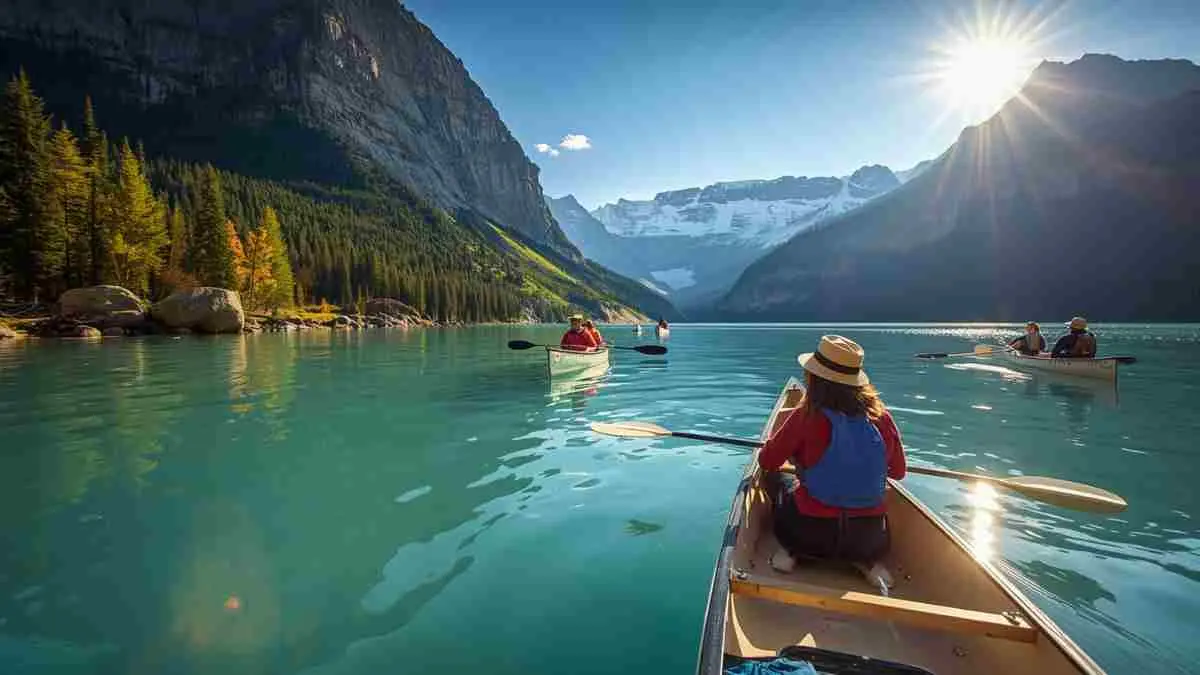
Self Guided Canoe Trips Canada let you explore the country’s iconic wilderness on your own terms—paddling remote lakes and rivers, por00ing between waterways, camping under starlit skies, and immersing yourself in nature.
Canoeing is woven into the fabric of Canada’s identity—and nowhere is that more evident than on a self-guided canoe trip.
For adventurers seeking freedom and a genuine connection with the natural world, paddling through Canada’s lakes, rivers, and backcountry is one of the most rewarding ways to travel.
Unlike guided tours, self-guided canoeing puts you in the captain’s seat: you decide how far to go, where to camp, and how fast (or slow) you want to travel.
If you’re navigating the serene lakes of Algonquin Provincial Park, exploring the vast wilderness of Wabakimi, or tackling the northern rivers of Saskatchewan, Canada offers routes for every level of paddler.
In this article, we’ll cover the best self-guided canoeing destinations in Canada, planning tips, route ideas, safety advice, and resources.
Why Choose a Self‑Guided Canoe Trip in Canada?
Self-guided canoe trips offer several advan00es:
Freedom & Flexibility: You set your own itinerary, pace, and destinations.
Immersive Nature Experience: Paddle through untouched wilderness, away from crowds.
Cost Control: With careful planning, you can keep expenses lower than fully guided trips.
Personal Growth: Navigating, por00ing, and camping independently builds confidence and skills.
Cultural Connection: Many canoe routes follow historic Indigenous and fur-trade corridors.
Top Self‑Guided Canoe Destinations in Canada:
Here are some of the most compelling regions and routes for self-guided canoeing across Canada:
1. Algonquin Provincial Park, Ontario
One of the most iconic canoe-tripping regions in Canada.
Classic loop routes, like the Canoe Lake → Burnt Island Lake loop, let paddlers spend 3+ days navigating por00es, shoreline campsites, and remote lakes. Northern Ontario Travel
According to Paddle.ca, the Nippissing / Roseberry Loop is a 3–4-day route ~30 km long, with challenging por00es. Paddle.ca
Wildlife such as moose, loons, and woodland birds are commonly seen, and solitude is possible on less-traveled routes.
2. Wabakimi Provincial Park, Northern Ontario
Over 1,200 miles of water routes, with virtually no roads inside the park. Northern Ontario Travel+1
Ideal for experienced paddlers seeking a remote backcountry trip.
Route planning and logistics support is available through outfitters like Wilderness North, which offers self-guided trip packages. Wilderness North
Wildlife viewing is exceptional—expect sightings of beavers, wolves, and a variety of bird species.
3. Quetico Provincial Park, Ontario
Known for its rugged wilderness, granite cliffs, and pristine lakes. Northern Ontario Travel
Explore 25+ canoe routes, including loops and one-ways, with different levels of difficulty. explore-mag.com
Permits are required for backcountry camping; Quetico’s remote feel comes in part from its “mechanical ban,” meaning no motors on many lakes.
4. Lake Superior / Agawa River Region
Naturally Superior Adventures outlines self-guided canoe routes for Lake Superior’s backcountry. lakesuperioradventures.ca
The Agawa River route includes Class I-IV rapids, scenic canyon paddling, and historic sites. lakesuperioradventures.ca
Best for paddlers comfortable with rapids and remote wilderness.
5. Solace / Temagami Region, Ontario
Solace Provincial Park is highly remote and only accessible via canoe, offering rugged por00ing through boreal forest terrain. Wikipedia
The lake chain includes Selkirk, Maggie, Bluesucker, and Pilgrim Lakes—expect long, steep por00es but very secluded campsites.
6. Saskatchewan’s Clearwater River
Clearwater River Provincial Park, part of the Churchill River system, includes historical routes like the Methye Por00e. Wikipedia
Features wilderness rapids (Class II–IV) and campsites along the river’s banks. Wikipedia
Suitable for experienced canoeists looking for a challenging, multi-day trip.
Read Next: 6 Warmest Place In Europe In January And February
Planning & Preparation:
Permits & Regulations
Many provincial parks require backcountry camping permits. For example, Solace Park demands permits for camping. Wikipedia
In some National Parks (e.g., Parks Canada sites), you may need to reserve specific canoe routes or campsites. pc.gc.ca
For marshy routes and por00e-heavy trips, check seasonal water levels and park advisories.
Gear & Equipment
Bring a robust canoe or kayak, paddles, life jackets, and a dry bag.
Use a topographic map, reliable GPS, and route map(s) from trusted sources.
Pack camping gear: tent, sleeping bag, cooking stove, food, first-aid kit.
Consider bear safety gear when canoeing in remote regions.
Logistics & Access
Some routes (like Wabakimi) require air charter in/out or float-plane access. Wilderness North+1
For routes like the Agawa River, you can start from access points via roads or via historic rail lines. lakesuperioradventures.ca
Plan for resupply points (or lack thereof)—remote trips may demand carrying all your food.
Skill Level & Safety
Self-guided canoeing demands a mix of paddling, navigation, por00ing, and wilderness camping skills.
Practice reading water, managing rapids, and packing for por00e.
Let someone know your trip plan, expected take-out date, and emergency contacts.
3-Day Algonquin Loop (Beginner / Intermediate):
Day 1: Launch at Canoe Lake, paddle to Radiant Lake, camp. Northern Ontario Travel
Day 2: Por00e through Teepee and Littledoe Lakes, head to Burnt Island Lake, camp by the shore.
Day 3: Return via Joe Lakes and back to Canoe Lake.
6‑Day Wabakimi Wilderness Trip:
Fly into a remote entry point (using outfitter services), paddle through a chain of lakes, navigate por00es, and camp at lakeside campsites. Use a map from Wilderness North or other outfitter for route planning. Wilderness North
Expect wildlife, solitude, and the full experience of true Canadian backcountry.
10-Day Agawa River Expedition:
Begin at the Agawa River put-in, paddle through canyon sections, por00e rapids, and camp along the river.
Design your trip using route descriptions from Naturally Superior Adventures. lakesuperioradventures.ca
Allow flexibility for water level changes and weather.
Benefits & Challenges of Self‑Guided Canoe Trips:
Benefits
Control Over Your Journey: Pick your route, pacing, and downtime.
Deeper Connection to Nature: Camp in remote, unspoiled wilderness.
Cost Savings: Avoid guide fees; only pay for equipment, permits, and travel.
Skill Growth: Learn or improve navigation, camping, and paddling.
Historical Experience: Trace old trade routes or Indigenous waterways, like in the Methye Por00e.
Challenges
Logistical Complexity: Planning permits, gear, food, and access can be demanding.
Risk Management: Wild water, remote emergencies, and changing weather demand caution.
Physical Demands: Por00ing heavy gear, long paddling days, and rugged terrain.
Permit Availability: High-demand routes may require reservations well in advance.
Evidence & High‑Authority References:
According to Lonely Planet, the South Nahanni River in the Northwest Territories offers spectacular wilderness paddling, though most guided trips are common there. Lonely Planet
According to Explore Magazine, there are 25 iconic canoe routes in Ontario—including Quetico’s Beaverhouse Ranger Station loop—that are well-suited to independent trip planning. explore-mag.com
According to Parks Canada, in backcountry zones like Kluane and other remote parks, paddlers should prepare for challenging routes, including whitewater or glacier-fed rivers. pc.gc.ca
According to Northern Ontario Travel, Wabakimi Provincial Park has more than 1,200 miles of paddling routes and minimal road access, making it a premier destination for self-guided canoeing. Northern Ontario Travel
Last Call:
Self-guided canoe trips in Canada offer a rare and deeply rewarding way to experience the country’s natural beauty. If you’re gliding across Algonquin Park’s ancient lakes, navigating the wild rivers of northern Ontario, or journeying along the majestic Clearwater River in Saskatchewan, you can build your own adventure—on your own terms.