
Alpine climbing punishes gear that drifts on your back, swings into your harness, or simply cannot breathe during a sweaty approach in summer sun. Choosing well means weighing capacity against mobility, frame stiffness against flex, and feature density against the ounces you’ll carry for ten hours. The picks below cover fast-and-light single-pitch missions, multi-day alpine traverses, technical ice routes, and stripped-down gym-to-crag days, so you can match the pack to the line.
The Essentials At A Glance
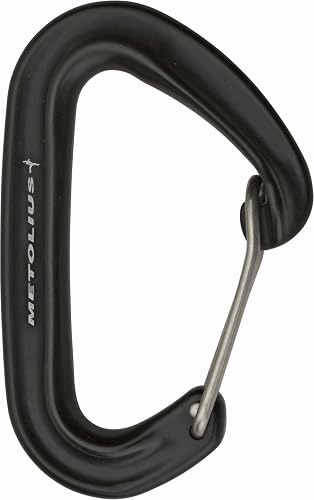
Metolius FS Mini II Carabiner

Deuter Trail 24L Backpack (Black-Shale)
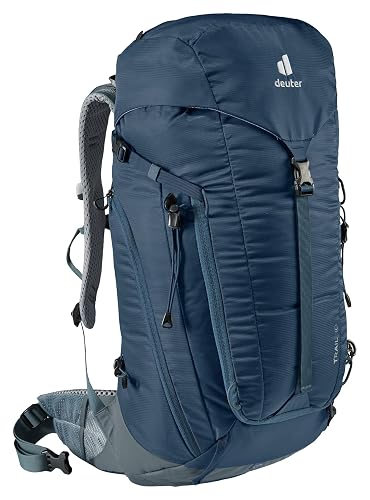
Deuter Trail 30 Hiking Backpack (Marine Shale)

Mardingtop 15L Tactical Sling Backpack
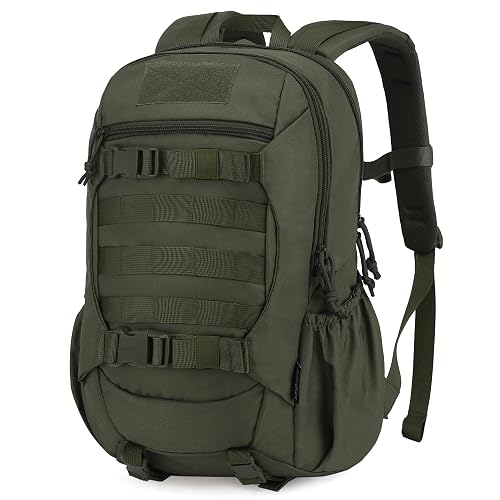
Mardingtop 18L Tactical Molle Backpack
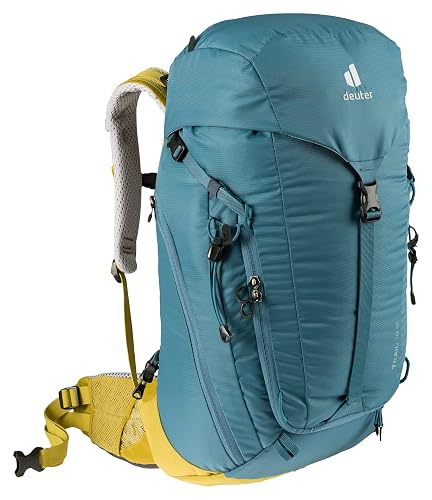
Deuter Trail 28L SL Backpack
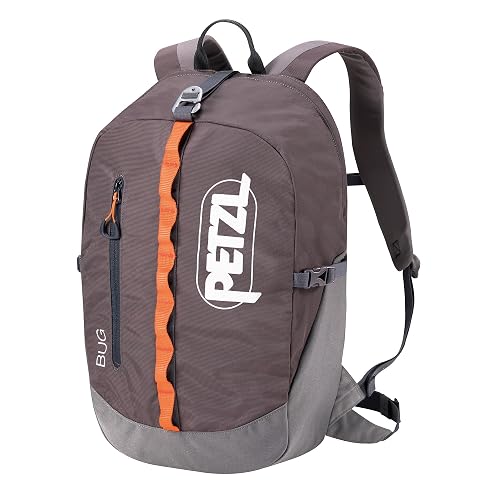
Petzl Bug Backpack (Gray)

GORUCK Ruck Plate Carrier 3.0
The Strengths Of Each Pick
Strictly speaking, a carabiner isn’t a backpack, but no alpine kit feels finished without one clipped to the harness or pack strap. The Metolius FS Mini II is a nonlocking carabiner, meaning the gate swings open and shut without a screw-lock sleeve, so it’s faster on routes where you rack and rerack gear constantly.
It carries a 22 kN major-axis rating, which is the load a carabiner can hold along its strongest axis before failure, and that strength lands in the same range as full-size locking carabiners. The compact 78 mm by 49.3 mm frame keeps it from hogging harness real estate when you’re strung out on a multi-pitch route.
Notable Upsides
- Full-strength 22 kN rating in a sub-ounce package, so you don’t sacrifice safety for size.
- Lightweight at roughly 0.88 oz (25 g), barely noticeable on a harness or pack strap.
- Multiple color options (purple, blue, orange, black) make color-coding gear painless.
- CE/UIAA certification, which confirms it meets European Climbing Federation and International Climbing and Mountaineering Federation safety standards.
Things To Consider
- Not a locking carabiner, so it isn’t the right gate for critical anchor loads where accidental release would matter.
- Compact shape can be awkward in thick gloves on cold alpine mornings.
Whose Rack It Belongs On
Trad and alpine climbers who want a featherweight, certified carabiner for racking cams, clipping slings, and organizing the outside of a pack.
Swap It Out When
If you need an actual pack, the Deuter Trail 24L Backpack is a far better fit for carrying gear than any hardware accessory.
The Deuter Trail 24L is built around the idea that a pack should move with you, not bounce behind you, on technical ground. It uses an internal frame, meaning a flexible support structure sewn inside the back panel rather than a rigid external frame, which lets the bag flex with your body while still transferring weight to the hips.
At 24 liters, it’s small enough for fast-and-light alpine objectives but roomy enough for a layer, helmet, food, and a lightweight rack. The shoulder straps and hip belt sit close to the body, which helps on steep, narrow terrain where a swinging pack can throw you off balance.
What Stands Out
- Internal frame hugs the torso, so the load feels planted rather than pendulous on steep ground.
- Ventilation channels along the back panel reduce the sweaty-shirt effect during summer approaches.
- Compact 24L capacity keeps weight low without forcing you to leave essential layers behind.
Worth Noting
- 24L is tight for overnight alpine bivys unless you pare your kit ruthlessly.
- Smaller volume means less padding room for delicate electronics or camera gear.
Feature Snapshot
Right Fit For
Day climbers and via ferrata users who want a stable, ventilated pack for long approaches and technical ascents in a single push.
A Better Fit Elsewhere
For longer missions where you’d carry overnight kit, the Deuter Trail 30 Hiking Backpack gives you the same body-hugging geometry with extra room.
If the 24L is a sprinter, the Deuter Trail 30 is a trail ultrarunner. Same internal-frame architecture, same close-to-body fit, but six extra liters that translate to room for a down layer, an extra pair of gloves, and a sturdier rack. On routes where weather can flip in an hour, that buffer matters.
The padded hip belt and adjustable sternum strap work together to keep the load from swaying. Carabiner clips on the shoulder straps give you a quick-attach point for clippers, cams, or the Metolius FS Mini II from pick one if you want a fast stash.
Where It Delivers
- Padded hip belt takes weight off the shoulders on long carries up glaciers.
- Shoulder-strap carabiner loops keep gear accessible without rummaging inside the pack.
- Removable rain cover, which is a stowed waterproof shell that pulls over the pack when weather turns.
- 30L capacity swallows a full alpine rack plus layers and food for a long day.
- Internal frame maintains structure even when the load is unevenly distributed.
Room For Improvement
- Heavier than smaller-volume alpine packs, which you’ll feel on grade-IV speed missions.
- Color choices may be limited depending on availability.
Quick Facts
Made For
Alpine climbers tackling long day routes, moderate ski tours, and conditions where weather and route-finding demand extra gear.
Reach For A Different Pick When
If your day is short and your rack is light, the Deuter Trail 24L Backpack will save ounces and keep the load tighter.
The Mardingtop 15L is a tactical daypack that wears several different harnesses. Detachable shoulder straps let you swap between backpack, sling, crossbody, chest pack, and hand-carry modes. For crag days where you’re walking in from a parking lot and then scrambling, that flexibility is genuinely useful.
At 15 liters and roughly 0.88 kg, it sits in a different category from the Deuter alpine-specific designs above. The 600D polyester shell, where 600D refers to the denier rating of the fabric (a measure of fiber thickness, with higher numbers meaning tougher material), shrugs off scuffs from granite and scree. The trade-off is capacity: 15L is not enough for a long alpine day with a rack.
Everyday Perks
- Modular carry system adapts to the terrain, the climb, and the approach.
- YKK zippers and buckles, which are widely considered an industry-standard hardware brand for reliability.
- Compact 9.5 x 7.1 x 16.9 inch footprint fits as a personal-item on buses and small aircraft.
- Tough 600D polyester resists abrasion from rock, branches, and concrete.
Points To Keep In Mind
- 15L capacity rules out any full alpine day with a rack, rope, or extra layers.
- MOLLE webbing (the rows of stitched nylon strips used to attach modular pouches) adds weight and bulk if you don’t use modular accessories.
Best Suited To
Crag-to-cafe climbers, gym-to-rock commuters, and anyone who wants one pack for travel days and quick local sessions.
Look Elsewhere When
If your routes demand rope, rack, and full alpine clothing, the Deuter Trail 30 Hiking Backpack gives you that room with proper load support.
The 18L sibling to the 15L sling keeps the tactical DNA but adds a hydration bladder sleeve and a more padded back panel. A hydration bladder is a flexible water reservoir that you fill and drink from through a hose, which lets you sip without stopping.
The breathable padding on the back and shoulder straps earns its keep on summer approaches where your back becomes a sweat farm. The 2-liter bladder sleeve holds a standard reservoir, though the bladder itself is not included, so plan to add one if hydration matters to you.
Practical Advantages
- Hydration sleeve fits a standard 2L bladder, keeping water accessible on the move.
- Breathable padded back panel reduces moisture buildup during warm climbs.
- Same 600D polyester and YKK hardware as the 15L for abrasion and zipper longevity.
- 3-liter volume bump over the 15L gives you more room for layers without going full-alpine.
Less Ideal Details
- Bladder is not included, so factor that into your setup.
- 18L is still short for rope-and-rack days; this stays in the day-use lane.
Feature Card
Who It Suits Best
Climbers tackling hot-weather crags, dry-tool sessions, or summer alpine starts who want water on tap without breaking stride.
Consider Something Else When
For full-day alpine objectives carrying rope and rack, the Deuter Trail 30 Hiking Backpack offers proper hip-belt support.
The SL in the name stands for “Slim Line,” which is Deuter’s designation for women’s-specific and narrow-torso fits. The back panel, shoulder straps, and hip belt are cut shorter and narrower than the unisex Trail 30, so the pack actually sits where it should on a slimmer build.
A U-shaped aluminum frame (a curved support that forms a U-shape against the back) keeps the load off the spine while allowing ventilation channels to do their work. For multi-day hiking and trekking where breathability matters as much as fit, that combination is hard to fake.
Where It Excels
- SL fit geometry suits narrower torsos and shorter back lengths without leaving dead space.
- U-frame transfers load efficiently while preserving airflow down the spine.
- 28L straddles day-pack and overnight-pack capacity for fast traverses.
- Padded hip belt and sternum strap lock the load down on uneven ground.
Honest Caveats
- Narrower cut may feel pinched on broader-shouldered users.
- 28L capacity won’t swallow a full bivy kit plus rack without creative packing.
The Main Details
Who Should Grab It
Climbers with narrower builds who want a backpack tuned to their torso rather than one they’ll spend an afternoon adjusting.
Not Your Match When
If you prefer a unisex cut or carry particularly bulky loads, the Deuter Trail 30 Hiking Backpack has the same architecture with more universal sizing.
The Petzl Bug is a purpose-built climbing pack, and you can tell within ten seconds of looking at it. The profile is trim, almost vest-like, because it was designed to stay out of the way when you’re leaning back to look up a route or hanging at a belay.
It’s sized for single-day multi-pitch climbing, meaning several pitches you finish within a daylight window, with enough room for water, food, layers, and approach shoes. The shape keeps weight close to your center of gravity, which matters when the rock steepens and the rack comes out.
The Value In It
- Trim, close-fitting profile that doesn’t interfere with high steps or chimney moves.
- Designed specifically for multi-pitch rock routes during a single day.
- Petzl climbing heritage means thoughtful gear loops and clip-in points.
- Compact enough to wear on lead without feeling like a kite behind you.
Some Limits To Know
- Capacity is geared toward day use, not rope-and-rack multi-pitch hauling.
- Minimal external attachment points if you like to strap things to the outside.
Built With In Mind
Rock climbers running out multi-pitch routes who want a pack that disappears while they climb.
Where A Sibling Pick Shines
For alpine or winter routes where weather and bulkier loads enter the picture, the Deuter Trail 30 Hiking Backpack handles the extra gear and conditions.
The GORUCK Ruck Plate Carrier 3.0 lives on the training side of the alpine world rather than the route itself. It’s a weighted rucking backpack, meaning it’s designed to hold weight plates for loaded walking and hiking workouts. Think of it as a gym that goes outside.
For climbers, it earns a place here because the toughness translates. GORUCK builds these bags around Special Forces-grade standards, and the plate-carrier layout keeps the weight high and tight against your back, which is excellent conditioning for carrying a pack up real mountains.
Useful Highlights
- Plate-carrier design holds weight high and close, building the exact muscles alpine days demand.
- Heavy-duty construction aimed at harsh, repeated use.
- Useful for general strength training, not just climbing prep.
Trade-Offs To Consider
- Not a technical climbing pack, so it lacks gear loops, rope straps, and ice-axe attachments.
- Overkill for short gym sessions and casual hikes.
Perfect Match For
Climbers who train with weighted hikes, or anyone building a base of leg and core strength for future alpine objectives.
Skip It When
If you want a pack to actually carry rope and rack up a route, switch to the Petzl Bug Backpack, which is purpose-built for the cliff.
What To Weigh Before Picking An Alpine Pack
The first decision is volume. Alpine climbing rewards tight kits, but going under 25L usually forces you to leave behind a real belay parka or a second pair of gloves, which can matter when the weather rolls in. Most day-only alpine objectives fit between 24 and 32 liters; multi-day traverses need more.
The next decision is fit and frame type. Internal frames sit closer to the body and flex with movement, which is what you want on technical rock. External frames carry heavier loads more comfortably but feel bulky on steep ground. Try the pack loaded before committing; an unloaded fitting rarely tells the truth.
Finally, match the pack to the rock, ice, and snow you expect. Ice and mixed routes benefit from dedicated tool loops and rope straps, while single-pitch rock days need a low profile that stays out of your harness. Climbing-specific packs like the Petzl Bug earn their narrow shape; generalist packs like the Deuter Trail 30 earn their versatility. Pick based on your most common line, not the dream route once a year.
Key Considerations Across These Picks
Wrong Turns To Avoid
A common mistake is sizing a pack for the route you wish you were climbing rather than the route you actually do. A 40-liter pack feels reassuring until it swings into the wall on every steep pitch. Equally, an ultralight 18-liter pack on a stormy day can leave you without a spare insulation layer when the temperature drops.
Another misstep is ignoring torso fit. Back length varies widely between people, and a pack that’s too long pushes the hip belt above your pelvis, where it can’t transfer weight. Measure your torso length, the distance from the base of your neck to the top of your hip bones, and check the pack’s size chart before committing.
What The Higher Tier Buys
Premium alpine packs spend your money on lighter, tougher fabrics and better frames. The payoff is ounces saved per day and a frame that doesn’t fight you on technical moves. For weekend objectives close to the car, mid-tier packs deliver most of the same function at a lower cost. If your climbing involves multi-day traverses, remote objectives, or genuinely harsh weather, the upgrade usually pays for itself in comfort and durability. If your alpine days are short and close to home, a solid mid-tier pack covers you well.