
Cold nights, tight budgets, and the quiet pressure of picking a sleeping bag that won’t leave you shivering. Backpacking doesn’t have to mean sacrificing warmth, and it certainly doesn’t mean overspending. The right budget bag keeps you comfortable through shoulder-season trips and family car-camping weekends alike, without forcing you to compromise where it actually counts. These ten picks cover the full spectrum, from ultralight solo options to oversized rectangles that double as guest bedding.
The Lineup, Simplified
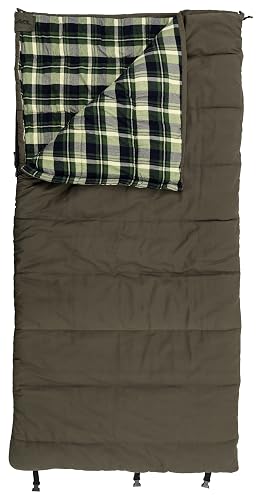
ALPS OutdoorZ Redwood -10°F Flannel-Lined Sleeping Bag
ALPS OutdoorZ Redwood -25 Sleeping Bag
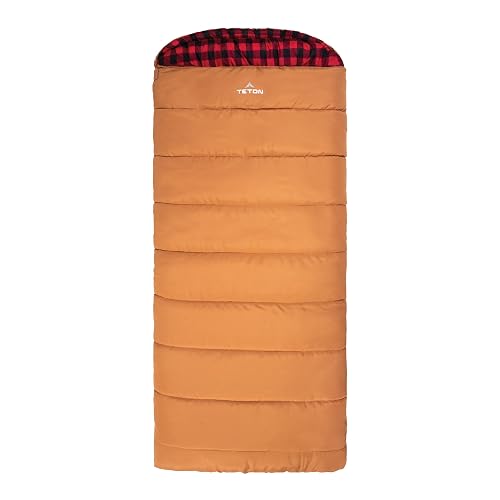
TETON Sports Deer Hunter Sleeping Bag

TETON Sports Outfitter XXL Sleeping Bag
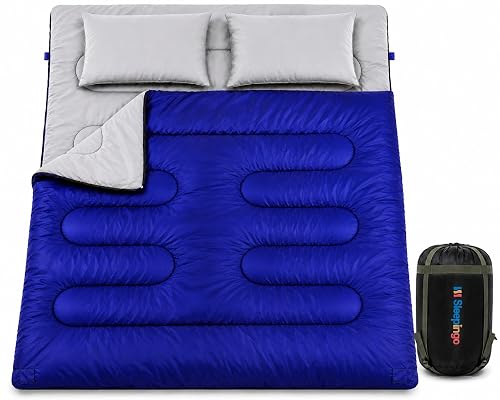
Sleepingo Double Sleeping Bag
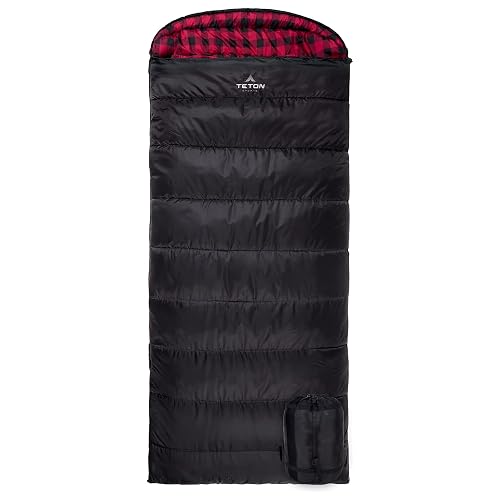
TETON Sports Celsius XXL Sleeping Bag
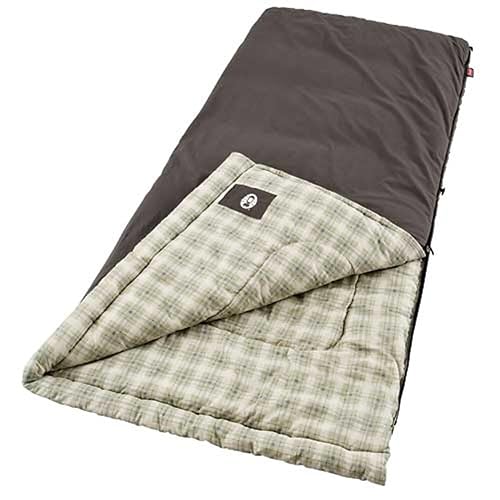
Coleman Heritage Big & Tall 10°F Flannel Sleeping Bag
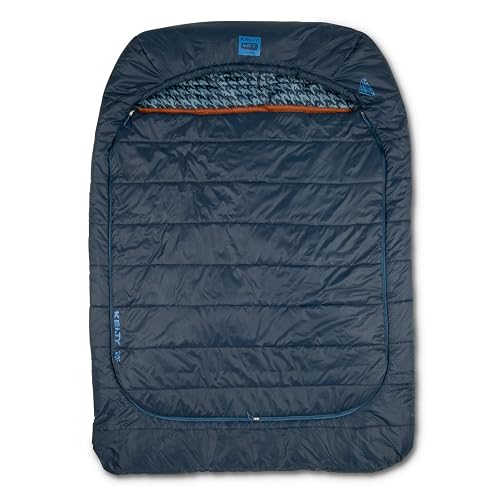
Kelty Tru.Comfort Doublewide 20 Degree Sleeping Bag
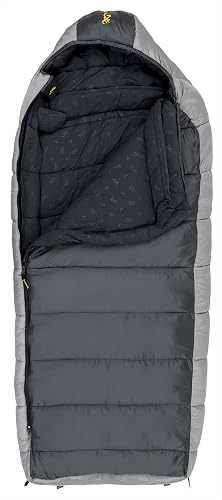
Browning McKinley 0° Sleeping Bag
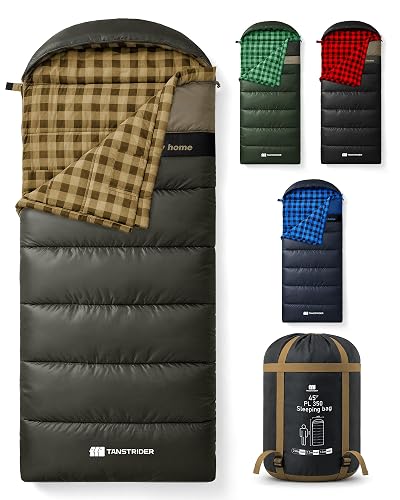
TANSTRIDER Cotton Flannel XXL Sleeping Bag
More Details On Our Top Picks
Built around a 100% cotton canvas shell and a soft plaid flannel lining, the Redwood -10°F leans into old-school durability rather than ultralight design. The oversized rectangle cut gives you room to toss, layer clothes inside, or even share it with a child on car-camping nights. TechLoft insulation (siliconized micro-denier fibers) keeps the loft high while the bag still compresses reasonably well for transport. You can feel the heft on your shoulder during a long approach, but that weight earns its keep when temperatures drop well below freezing.
Compared with the synthetic ultralight picks on this list, the Redwood trades packability for comfort and longevity. Hunters, base campers, and anyone driving to a fixed site will appreciate the heavy-duty zippers and the canvas exterior’s resistance to abrasion and sparks.
What Makes Sense
- Cotton canvas shell resists wear and stays quiet in sub-freezing temps.
- Oversized rectangle lets you store boots or layers inside without cramping.
- TechLoft micro-denier fill provides reliable loft down to -10°F.
- Flannel lining feels soft against the skin for restless sleepers.
Things To Consider
- Heavier than nylon mummy bags, so not ideal for long trail miles.
- Cotton canvas takes longer to dry after a wet night under a leaking tent.
Right Fit For
Still hunters, base campers, and weekend cabin travelers who prioritize warmth and room over pack weight.
Swap It Out When
Thru-hikers counting every ounce should look at the Sleepingo Double Sleeping Bag for a lighter, more compressible option.
The Redwood -25 takes everything the -10°F model offers and pushes it deeper into winter territory. TechLoft insulation fills the same oversized rectangle shell, but with more material lofted for serious cold-weather protection. Think late-season elk hunts, snow shelters, and ice-fishing shanties where a standard three-season bag would leave you miserable.
Compared with the canvas build of the first pick, this one shares the same family DNA, so the trade-offs in weight and drying time carry over. What changes is the temperature ceiling, which opens up trips that other budget bags simply can’t handle.
Benefits That Matter
- -25°F rating handles genuine winter conditions on a tight budget.
- Rectangular shape allows layers and clothing storage inside.
- Siliconized fiber fill resists moisture better than untreated synthetics.
Points To Keep In Mind
- Bulkier than three-season bags, requiring a larger compression sack.
- Cotton canvas exterior demands careful drying and storage to prevent mildew.
Made For
Snow campers, late-season hunters, and anyone whose trips run into deep cold but who doesn’t want to step up to a down expedition bag.
Reach For A Different Pick When
Three-season backpackers should consider the TETON Sports Deer Hunter Sleeping Bag instead, which balances weight and warmth for more temperate conditions.
The Deer Hunter cuts a different silhouette than the canvas-wrapped Redwoods reviewed earlier. It uses a poly-cotton canvas shell with synthetic fiber fill, and a mummy-style hood cinches down to trap heat when temperatures slide below freezing. The hood also keeps your pillow from drifting around if you sleep restlessly on uneven ground.
Where the Redwood line feels like a base-camp piece, the Deer Hunter aims at hunters and campers who actually hike a few miles in. It won’t disappear in your pack the way an ultralight bag does, but the warmth-to-weight ratio is friendlier for shoulder-season trips than many canvas competitors.
Where It Helps
- Mummy hood with cinch cord for serious cold-weather heat retention.
- Poly-cotton shell holds up to brush, packs, and years of repeated use.
- Synthetic fill rated for below-freezing nights without the price tag of down.
Trade Offs
- Mummy cut feels restrictive to sleepers who prefer room to sprawl.
- Not the lightest option on this list for true backpackers.
Quick Facts
Who It Suits Best
Still hunters, fall campers, and weekend backpackers tackling shoulder-season weather where temperatures swing hard after sundown.
A Better Fit Elsewhere
The Browning McKinley 0° Sleeping Bag suits sleepers who want a rectangular cut with similar cold-weather protection.
The Outfitter XXL trades the mummy hood of the Deer Hunter for sheer room. TETON designed this bag for tall sleepers and people who simply hate feeling confined, with a wide rectangular cut and synthetic fill rated for well below freezing. The canvas shell gives it the same rugged feel as the Deer Hunter, but the silhouette is unmistakably car-camp friendly.
Versus the Deer Hunter’s tight hood and tapered footbox, the Outfitter opens up. Two adults can share it on a warm night, and a parent can squeeze in alongside a child without anyone touching the zipper.
Standout Benefits
- Generous XXL cut accommodates sleepers over six feet tall.
- Synthetic fiber fill maintains loft through damp conditions.
- Durable canvas shell resists wear over years of family trips.
Small Caveats
- Bulkier than tapered designs, requiring more pack space.
- No hood means heat escapes faster than mummy-style alternatives.
Best Suited To
Tall adults, restless sleepers, and families who want one bag to handle road trips, cabin stays, and backyard sleepovers.
Not Your Match When
Deep-winter backpackers should consider the ALPS OutdoorZ Redwood -25 instead, which adds a lower temperature rating.
Where the canvas-wrapped TETON and ALPS bags aim at base-camp duty, the Sleepingo Double shifts the conversation. At 87 inches by 59 inches, it’s queen-sized and built for two adults, with a waterproof shell that shrugs off truck-bed condensation and tent-floor moisture. You can split it into two individual bags or unzip the top layer entirely on warm nights.
Compared with the TETON Outfitter XXL reviewed above, the Sleepingo wins on flexibility and shared coverage but loses on cold-weather rating. Think summer road trips, mild shoulder seasons, and car camping rather than snow shelters.
Points In Its Favor
- Queen-size coverage for couples without buying two separate bags.
- Waterproof shell keeps moisture out in tents, trucks, and on sleeping pads.
- Versatile design works as one large bag or two individual blankets.
Worth Noting
- Not designed for freezing temperatures, so winter trips need a backup plan.
- Larger packed size can crowd smaller backpacks.
Feature Snapshot
Who Will Love This
Couples, families with teens, and anyone who camps out of a truck or large tent during mild-weather trips.
Look Elsewhere When
Cold-weather campers should consider the Browning McKinley 0° Sleeping Bag, which handles freezing temperatures more reliably.
The Celsius XXL wraps TETON’s spacious rectangle cut in a soft poly-flannel lining, with a half-circle mummy hood that adds heat retention without cramping your head. Double-layer construction and draft tubes work together to keep cold air from sneaking through the zipper. A compression sack ships with the bag, which is a thoughtful touch for backpackers.
Versus the Outfitter XXL covered earlier, the Celsius trades canvas for a flannel-lined shell that feels softer and lighter against the skin. It leans toward family comfort rather than heavy-duty hunting duty.
Well-Handled Touches
- Flannel lining feels warm and cozy on the first night without a liner.
- Two-way zipper lets each side open independently for couples.
- Draft tubes block cold air along the zipper for more consistent warmth.
Honest Caveats
- Lighter shell fabric may show wear faster than full canvas options.
- XXL size requires extra storage space at home between trips.
Perfect Match For
Family campers and cold-weather car travelers who want the cozy feel of flannel without giving up the room to stretch out.
Consider Something Else When
Backpackers counting ounces should look at the Sleepingo Double Sleeping Bag for a lighter, more compressible option.
The Coleman Heritage Big & Tall stands out for one simple reason: length. Built to accommodate adults up to 6’7″, it solves a problem most rectangular bags ignore. Holofill 808 insulation fills the 40-by-84 inch shell, and the flannel lining adds the kind of cozy feel that makes late-night tent entry less painful.
Where the TETON Celsius XXL focuses on family width, the Coleman Heritage focuses on height. It’s the right call for tall sleepers who constantly find their feet pressed against cold footbox fabric in standard bags.
A Few Strong Suits
- Accommodates sleepers up to 6’7″ without compressing their feet.
- Machine-washable design simplifies post-trip cleanup.
- 10°F temperature rating handles most shoulder-season camping trips.
A Few Limitations
- Bulky packed size makes it less ideal for backpacking trips.
- Heavier fill weight adds bulk during transport.
Quick Facts
Who Should Grab It
Tall adults who have given up on standard-length sleeping bags and need a budget-friendly option that actually fits.
Another Choice May Suit
Backpackers should consider the TANSTRIDER Cotton Flannel XXL Sleeping Bag, which offers a similar oversized cut in a more compact build.
The Kelty Tru.Comfort solves one of the oldest problems in two-person camping: temperature mismatch. A removable zip-off top layer lets one partner shed insulation on humid nights, while two built-in blankets give each sleeper their own comfort zone. Two-way zip vents even let you stick your feet out without unzipping the whole bag.
Compared with the Sleepingo Double reviewed earlier, the Kelty is colder-rated at 20°F and adds genuine personalization. It’s a clear step up for couples who actually camp together, not just share a bag.
Key Advantages
- Removable top layer adapts to warm nights without opening the whole bag.
- Two built-in blankets let each sleeper customize their setup.
- 20°F rating handles three-season conditions for most regions.
- Two-way zip vents allow foot ventilation without unzipping.
Possible Compromises
- Higher price than basic double bags on this list.
- Heavier packed weight than single sleepers need.
Built With In Mind
Couples and co-sleepers who run at different temperatures and need a bag that flexes with both of them.
Where A Sibling Pick Shines
Solo campers on a tight budget should consider the TANSTRIDER Cotton Flannel XXL Sleeping Bag, which offers roomy solo coverage at a lower cost.
The Browning McKinley takes a different approach to cold-weather comfort than the canvas-wrapped Redwoods. A ripstop outer shell holds up to brush and rocky tent floors, while a brushed polyester liner feels soft against the skin. TechLoft Silver insulation and two-layer offset construction work together to eliminate cold spots that often plague budget bags.
The oversized hood and separating zippers give couples the option to share or split the bag as needed. Compared with the TETON Deer Hunter’s mummy cut, the McKinley’s rectangular shape offers more space for restless sleepers.
What Works In Its Favor
- Ripstop outer resists tears from branches and rough tent floors.
- Two-layer offset construction eliminates cold spots across the bag.
- 0°F rating handles freezing overnight temperatures.
- Brushed polyester liner feels soft against bare skin.
Where It Is Less Suited
- Larger packed volume than mummy-style alternatives.
- Compression sack helps, but the bag still demands significant pack space.
Feature Card
Whose Shelf It Belongs On
Campers facing wet, cold conditions who want a rectangular bag with serious cold-weather protection.
Skip It When
Backpackers counting ounces should consider the TETON Sports Deer Hunter Sleeping Bag, which packs smaller for trail use.
The TANSTRIDER rounds out the list with a 90-by-39 inch oversized cut, cotton flannel lining, and a waterproof shell that handles damp tent floors. At roughly 6.2 pounds, it leans toward car camping rather than trail mileage, but the comfort-focused design earns its place for big and tall sleepers who feel cramped in standard bags.
The 40-to-45°F comfort zone places this bag in the three-season-plus category. It won’t handle the deep cold that the ALPS Redwood -25 covers, but for shoulder-season camping it delivers warmth without the bulk of full winter bags.
Good Reasons To Consider
- 90.5-by-39.4 inch footprint offers generous room for restless sleepers.
- Cotton flannel lining feels soft and warm against the skin.
- Waterproof shell resists tent-floor moisture and light rain.
- Machine-washable design simplifies cleanup after messy trips.
Where It May Fall Short
- Heavier than ultralight options at 6.2 pounds.
- Not designed for deep winter temperatures below freezing.
Key Product Details
The Right Fit
Big and tall campers who want a roomy, comfortable bag for car camping, cabin trips, and mild shoulder-season overnights.
Where Another Pick Suits Better
Deep-winter campers should look at the ALPS OutdoorZ Redwood -25 Sleeping Bag, which handles genuinely freezing temperatures.
What To Weigh Before Picking Your Budget Backpacker’s Sleeping Bag
Temperature Rating Versus Real Conditions
A sleeping bag’s temperature rating tells you the lowest ambient temperature at which an average sleeper stays comfortable. Manufacturers test these ratings in controlled conditions, so real-world performance often runs a little colder, especially for women, older campers, and anyone who sleeps cold. For shoulder-season backpacking, a bag rated 10°F below your expected overnight low gives you a buffer. A summer-tripper camping in mild conditions can usually step down to a 30°F or 40°F bag and save weight and money.
Insulation Type And Care
Synthetic fills like TechLoft, Holofill, and standard polyester fiber keep you warm when damp, dry faster after a wet night, and cost less than down. Down insulation compresses smaller and weighs less, but loses loft when wet and demands careful drying. For budget backpacking, synthetic insulation typically wins on value and durability, especially on trips where tent condensation or rain is a real possibility. Washing synthetic bags is straightforward: most home machines handle them on a gentle cycle with mild detergent, then air-dry thoroughly before storage.
Shape, Cut, And Fit
Mummy bags taper at the feet and shoulders, saving weight and trapping heat, but they feel restrictive to restless sleepers. Rectangular bags give you room to sprawl and often unzip flat for use as a blanket, at the cost of warmth efficiency and pack size. Semi-rectangular cuts split the difference. For backpackers carrying weight over distance, mummy or semi-rectangular bags usually make more sense. For car campers and families, the roomier rectangular cuts reviewed above deliver better sleep quality.
Pack Size And Weight Trade-Offs
The smaller the packed bag, the more space you keep for food, water, and shelter. Budget bags with heavier fills (like the canvas-wrapped Redwoods and the Coleman Heritage) compress to a sizable stuff sack, which can crowd a smaller backpack. If you’re hiking more than a mile or two from the trailhead, prioritize pack weight over extra insulation. If you’re mostly driving in and setting up camp, comfort and warmth matter more than ounces.
Picking Through The Noise: Common Slip-Ups And Upgrade Choices
Pitfalls Shoppers Hit
The most common buying mistake is chasing a temperature rating without checking the bag’s shape and weight. A -25°F rectangular canvas bag sounds appealing until you’re carrying eight pounds on a backpacking trip. The reverse is also true: a lightweight mummy rated to 20°F won’t keep a cold sleeper warm on a shoulder-season night in the Rockies. Match the bag to your actual conditions and your typical sleeping temperature, not the marketing headline.
Another trap is ignoring packed size. A budget bag that barely fits your backpack forces compromises elsewhere, like leaving behind a warmer jacket or extra food. Always check the compressed dimensions before committing.
Where The Extra Money Goes
Higher-tier sleeping bags earn their price through lighter insulation (often premium synthetics or treated down), better shell fabrics, and smarter design features like draft tubes, snag-free zippers, and contoured hoods. Bags in the premium range also tend to use materials that resist moisture longer and dry faster after a wet night.
The upgrade is worth it for backpackers logging serious miles, campers facing genuinely cold conditions, and anyone who values pack space. For car campers and weekend trips, the budget options reviewed above deliver warmth and comfort without the premium price tag.
Frequently Asked Questions
What temperature rating do I need for three-season backpacking?
A 20°F to 30°F rating handles most spring, summer, and fall nights for average sleepers. Cold sleepers, women, and high-elevation campers should step down to a 10°F or 0°F bag for shoulder-season trips. You can always vent a warmer bag on hot nights, but you can’t add warmth to a bag rated too high.
Are synthetic sleeping bags warm enough for cold-weather camping?
Modern synthetic fills like TechLoft and Holofill perform surprisingly well in cold conditions, especially when paired with a quality shell and draft tubes. They handle damp conditions better than down, making them a solid choice for wet climates and unpredictable weather.
Can I wash a budget sleeping bag in a home washing machine?
Most synthetic budget bags are machine washable on a gentle cycle with mild detergent. Front-loading machines work best because top-loaders with agitators can damage baffles and insulation. Always air-dry the bag thoroughly to prevent mildew and clumping.
How do I store my sleeping bag between trips?
Storing a sleeping bag compressed for long periods damages loft and shortens its lifespan. Keep it in a large breathable storage sack or hang it loosely in a closet. Compression sacks are for transport only, not long-term storage.
What’s the difference between a mummy bag and a rectangular bag?
Mummy bags taper at the feet and shoulders to save weight and trap heat, while rectangular bags offer more room and often unzip flat for use as blankets. Mummy bags pack smaller and perform better in cold weather, while rectangular bags deliver more comfort for car camping and restless sleepers.
Final Take
The right budget sleeping bag matches your climate, your camping style, and the way you actually sleep. Canvas-wrapped Redwoods and the Browning McKinley handle genuine cold, the TETON Outfitter and Coleman Heritage give tall sleepers room to stretch, and the Sleepingo and Kelty double bags solve shared-camping problems without breaking the bank. Pick the bag that fits your conditions, treat it with reasonable care, and it’ll carry you through plenty of nights under the stars.