
A splitboard trip rewards light, deliberate packing. The right pack disappears on the skin track, then shoulders a shovel, probe, layers, food, and water without complaint when you boot back up for another lap. Choosing between touring bags means weighing carry systems, board attachment, and how much real estate you actually need once skins and a puffy claim their space.
These nine packs cover the full spread. Some ride shotgun on airline flights, some swallow a season’s worth of gear for car-camping missions, and a few are slim enough for quick dawn tours. Think about the days you actually take, not the ones you imagine.
The Choices Worth Comparing
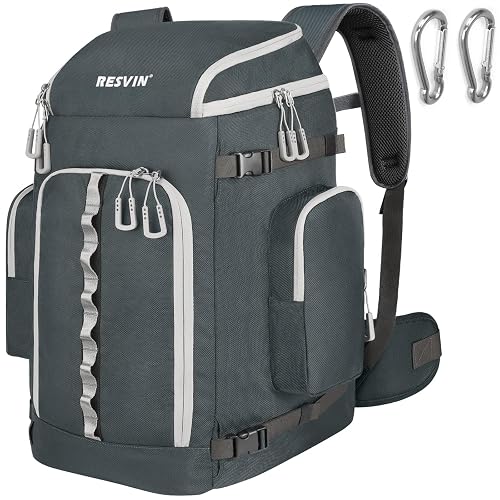
RESVIN 65L Ski Boot Travel Backpack 1680D Nylon
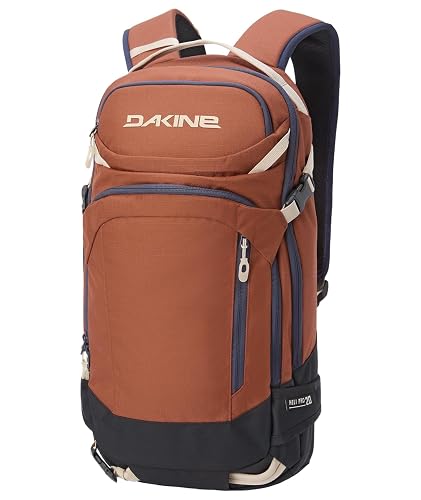
Dakine Heli Pro Backpack 20L (Spice)
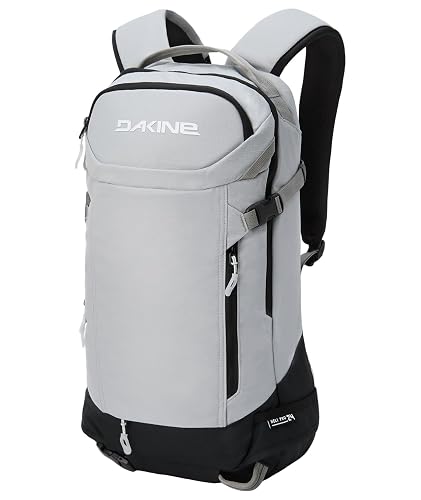
Dakine Heli Pro Backpack 24L (Griffin)
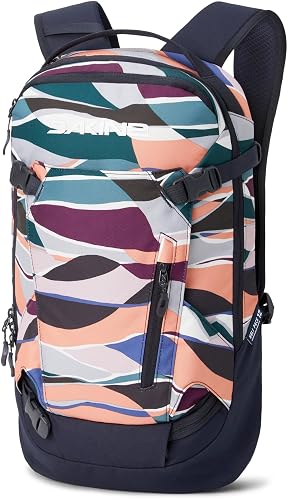
Dakine Women’s Heli Pro 20L Backpack

Dakine Split Adventure Backpack 28L/38L
Tonesport Padded Snowboard Travel Bag 165cm
Dakine Mission Pro Backpack 18L (Black)
Dakine Heli Pack 12L Ski & Snowboard Backpack
The Picks, Examined More Closely
The RESVIN 65L lands first for a reason: it is not really a touring pack at all. It is a duffel-style hauler built to swallow boots, helmet, goggles, gloves, outerwear, and a board for riders flying to a destination week or driving to a multi-stop trip. The 1680-denier nylon shell shrugs off wet baggage carousels and shuttle bus trunks without complaint.
For anyone who treats their splitboard kit like luggage, this bag keeps everything in one piece between the airport and the trailhead. The trade-off is weight and silhouette. On a skin track, the bulk tells, and you will not find dedicated shovel or probe sleeves here. For its real job, moving a season’s worth of gear, it earns its keep.
Everyday Advantages
- 65L of storage swallows boots, helmet, outerwear, gloves, and a board in one piece.
- 1680D nylon shell resists abrasion and weather better than lighter daypack fabrics.
- Duffel-style opening simplifies packing and unpacking at hotels, cars, and lodges.
Things To Consider
- Lacks a dedicated shovel pocket or probe sleeve, so it does not replace a touring pack on the mountain.
- Bulky when fully loaded and uncomfortable for long hikes, since the carry system is travel-focused rather than alpine-tuned.
- Owners commonly report the fabric scuffs visibly after repeated airline handling, though it holds up structurally.
Quick Facts
Made For
Riders flying to a destination resort or driving between mountain bases with a full kit in tow.
Where Another Pick Suits Better
Backcountry skiers who need avalanche-tool organization should reach for the Dakine Split Adventure Backpack 28L/38L instead.
The Heli Pro 20L is the kind of pack that disappears on short tours and quick lift-served laps. It carries skis in an A-frame or diagonally, plus a snowboard vertically or horizontally, so you have real options for boot-packs and short ridges. Twenty liters sounds small, but the layout makes the space work harder than its numbers suggest.
For riders who treat dawn patrol as a routine rather than an expedition, this pack hits a sweet spot. Compared to the larger RESVIN travel bag above, it is purpose-built for time on snow, not time at the airport. Quick-dry mesh on the back panel helps after sweaty transitions in spring temps.
Real-World Strengths
- Multi-mode carry: skis diagonal or A-frame, board vertical or horizontal.
- Shovel pocket with sleeves for handle and probe keeps tools organized.
- Fleece-lined goggle pocket protects lenses from scratches and freezes less than exposed fabric.
- Quick-dry mesh back panel wicks sweat on spring tours.
Worth Noting
- 20L fills up quickly if you carry an extra puffy, skins, and water for longer tours.
- No hydration bladder compatibility noted, so fluids ride in a bottle pocket only.
Right Fit For
Riders chasing short tours and lift-served laps who want board-carry and tool storage without the weight of a bigger pack.
Skip It When
Anyone carrying overnight layers should look at the Dakine Heli Pro Backpack 24L (Griffin) instead.
The 24L version of the Heli Pro buys you breathing room. You gain a deployable helmet carry system that frees internal space, plus zippered back-panel access that turns the pack into a wide-open trunk when you need to dig for gloves at the top of a ridge. Same ski and board carry options as the smaller sibling, just with more room to breathe.
This sits in the middle of the Dakine touring lineup and arguably hits the most common day-tour size. Riders who bumped against the 20L’s wall will appreciate the extra liters. Compared to the Mission Pro reviewed later, this pack leans more toward the touring side and away from pure resort use.
What Makes Sense
- Deployable helmet carry clears room inside for layers, food, and skins.
- Back-panel zippered main access opens wide, which speeds transitions.
- Quick-dry mesh back panel handles sweaty uphill stretches.
- Same ski diagonal, A-frame, and snowboard carry versatility as the 20L.
Trade Offs
- Heavier and bulkier than the 20L when not fully loaded, so it feels overbuilt for short laps.
- Colorways and availability tend to rotate seasonally, which can frustrate shoppers set on a specific look.
Best Suited To
Riders running longer day tours with extra layers, food, and avalanche tools who want quick back-panel access.
Not Your Match When
You mostly ride lifts and want a smaller pack; the Dakine Heli Pack 12L Ski & Snowboard Backpack is the leaner play.
The Women’s Heli Pack 12L is a slimmed-down companion for lift-served days when you carry little beyond a layer, water, and a snack. Built on a women’s-specific fit, with shoulder straps and back panel shaped for narrower torsos, it sits closer to the body than unisex packs of the same volume.
For resort riders who splitboard on occasion but mostly chase chairlifts, this is the right size. You lose the touring volume of the 20L Heli Pro above, but you gain a pack that does not bounce when you drop into trees. It is one of the more featherweight options in the Dakine winter line.
A Strong Showing
- Women’s-specific harness and back panel improve comfort on narrower torsos.
- Compact 12L form factor stays out of the way through trees and tight terrain.
- Lower weight makes it a strong pick for short tours and resort laps alike.
Honest Caveats
- Limited space for shovel, probe, and skins on serious tours.
- Lacks the layering room of the 20L Heli Pro for cold, demanding days.
Who Should Grab It
Resort-first riders with a women’s-specific fit who want a small, comfortable pack for everyday laps.
A Better Fit Elsewhere
Riders who need real touring capacity should look at the Dakine Women’s Heli Pro 20L Backpack instead.
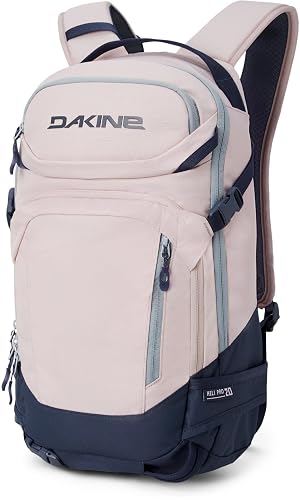
The Women’s Heli Pro 20L marries the touring-ready feature set of the standard Heli Pro with a women’s-specific harness and torso length. For riders who want board carry, avalanche-tool organization, and a pack that actually fits their frame, this is one of the cleanest answers in the category. Compared to the smaller 12L Heli Pack above, you get serious room for layers and tools.
The pack is well matched to all-day tours where you carry skins, shovel, probe, food, and water. You give up the 24L’s deployable helmet carry and back-panel zippered access, so transitions take a touch longer. For most riders, the trade is worth it for the fit.
Where It Excels
- Women’s-specific harness distributes weight on narrower shoulders.
- Ski and snowboard carry options support multiple mission types.
- Shovel pocket with sleeves organizes avalanche tools cleanly.
- Fleece-lined goggle pocket protects lenses without scratching.
Points To Keep In Mind
- Lacks the deployable helmet carry of the unisex 24L Heli Pro.
- Top-loading main compartment slows access to buried layers compared to back-panel-zip designs.
Key Specs
Whose Shelf It Belongs On
Women riders running day-long tours who want touring features and a harness that actually fits.
Look Elsewhere When
You want the maximum touring volume; the Dakine Split Adventure Backpack 28L/38L handles longer missions.
The Split Adventure is the pack Dakine built specifically for what splitboarders actually do. Available in 28L and 38L sizes, it carries split mode skis on the outside, swallows skins, shovel, probe, food, layers, and water inside, and uses a body-hugging carry system that stays stable on long ascents. Among the picks here, it is the most touring-focused.
For multi-day hut missions or single-day tours with full kit, this is the bag the others are measured against. Compared to the 24L Heli Pro, you trade some resort polish for genuine backcountry space. Riders who frequently boot-pack or push into bigger terrain will appreciate the extra liters and dedicated tool organization.
Strengths Worth Knowing
- Two size options (28L and 38L) cover day and overnight tours.
- Diagonal and A-frame ski carry handles splitboards in board mode.
- Dedicated tool sleeves keep shovel and probe separated and accessible.
- Body-hugging harness reduces swing weight on technical ascents.
Minor Gripes
- Bigger and heavier than resort-leaning packs when not fully loaded.
- Colorways rotate, which can limit selection depending on the season.
Feature Snapshot
Perfect Match For
Backcountry splitboarders running day-long and overnight missions who want purpose-built organization.
Swap It Out When
You mostly ride lifts and want something lighter; the Dakine Heli Pack 12L Ski & Snowboard Backpack fits that bill.
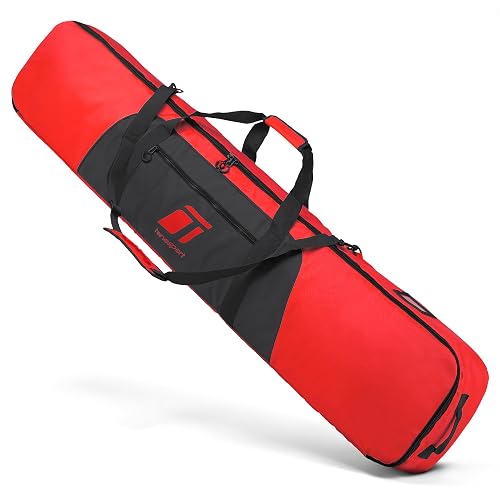
The Tonesport padded snowboard bag solves the part of splitboarding most packs ignore: getting a board to the mountain alive. With 360-degree padding and a 600-denier ripstop shell, it absorbs the rough handling of airline baggage systems. The bag fits boards up to 165 cm and includes a separate front pocket for boots, bindings, or accessories.
For riders who fly to chase snow, this bag pairs naturally with a touring pack like the Dakine Split Adventure. You pack the board and outerwear here, then carry your layers and tools on your back. The honest read is that this is a luggage piece, not a touring pack. Treat it accordingly.
Reasons It Performs
- 360-degree thick padding protects the board through airline handling.
- 600D ripstop shell resists tears and abrasion over many seasons.
- Separate front pocket organizes boots, bindings, or accessories.
- Fits boards up to 165 cm, covering most splitboard lengths.
Where It May Fall Short
- Not a wearable pack, so it does not replace a touring pack for skin tracks.
- Boarding gear counts and total weight can push airlines’ oversized-bag thresholds, depending on carrier.
At A Glance
Who Will Love This
Riders who fly with their board and want checked-bag peace of mind without paying premium luggage fees.
Reach For A Different Pick When
You drive to the mountain and need a wearable touring pack instead; the Dakine Split Adventure Backpack 28L/38L fits that role.
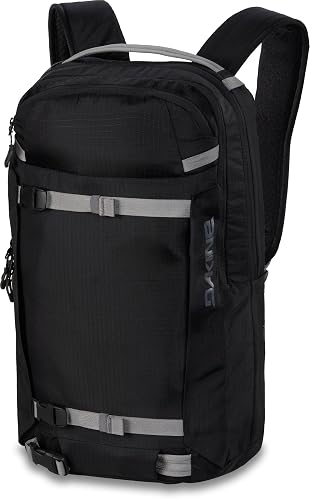
The Mission Pro 18L sits in a sweet middle ground for riders who split their time between resort laps and sidecountry boot-packs. It stows shovel and probe for powder days at the hill, leaves room for skins and spare gloves, and includes a fleece-lined pocket for goggles or sunglasses. The hydration compatibility with an insulated shoulder strap sleeve is a thoughtful touch for warm spring riding.
Among the Dakine winter packs, the Mission Pro leans resort-first while remaining capable enough for short tours. Compared to the Split Adventure reviewed earlier, this is the lighter, less space-hungry option. For most riders, that balance is the point.
Practical Advantages
- Shovel and probe storage fits avalanche tools for sidecountry missions.
- Fleece-lined pocket protects goggles and sunglasses from scratches.
- Hydration compatible with insulated sleeve to slow freezing.
- Straps for board or skis handle boot-pack trips beyond the boundary.
A Few Limitations
- 18L fills fast on longer tours with full winter layering.
- Less dedicated organization than the Split Adventure for true multi-day use.
Built With In Mind
Resort riders who occasionally boot-pack or hit sidecountry gates and want one pack for both worlds.
Consider Something Else When
You run longer tours with overnight layers; the Dakine Split Adventure Backpack 38L handles that load better.
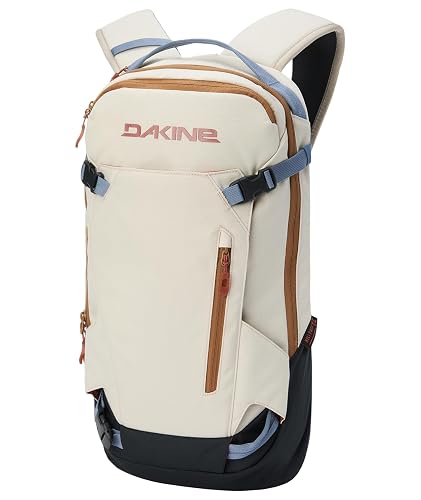
The Heli Pack 12L is the most stripped-down option in the Dakine winter line. Vertical snowboard carry with horizontal carry option, diagonal ski/splitboard carry, and a quick-dry mesh back panel cover the essentials without inflating the pack. Snow tools ride in main-compartment sleeves, and the exterior shovel blade carry keeps the handle accessible.
For riders who want the smallest viable pack with real carrying options, this one delivers. Compared to the 18L Mission Pro above, you give up goggle-pocket padding and hydration compatibility, but you save weight and bulk. For short laps and lift-served days, that trade feels right.
Noteworthy Benefits
- Vertical and horizontal snowboard carry for varied boot-pack scenarios.
- Diagonal ski/splitboard carry supports short ascents.
- Quick-dry mesh back panel wicks sweat on warm days.
- Exterior shovel blade carry frees internal space.
Some Limits To Know
- 12L is tight for layers, food, and water on anything beyond a single lap.
- Limited padding around the goggle pocket compared to larger Dakine packs.
Perfect Match For
Lap-day riders and short-tour minimalists who want board-carry without extra weight.
Where Another Pick Suits Better
Riders who need more room for tools and layers should consider the Dakine Mission Pro Backpack 18L instead.
Picking the Right Pack for Your Riding Style
Splitboard packs live or die by fit. A harness that pinches on the up-track makes a long tour feel twice as long. Try packs on with weight inside; a loaded bag tells you the truth about the shoulder straps and hip belt far better than an empty showroom wall. Torso length matters more than advertised volume, and women-specific harnesses really do fit narrower shoulders differently.
Carry systems separate touring packs from travel duffels. Diagonal and A-frame ski carry let you boot up ridges with your splitboard in ski mode. Vertical and horizontal snowboard carry matter for boot-packs where the board rides outside the bag. Tool organization is the quiet hero: a dedicated shovel pocket with probe sleeves saves fumbling in a whiteout. Quick-dry mesh on the back panel reduces post-tour dampness, and fleece-lined goggle pockets protect lenses better than exposed fabric.
Volume depends on honest use. Resort riders chasing sidecountry can live happily in 12 to 18 liters. Day-tour riders carrying skins, tools, layers, food, and water usually want 20 to 24 liters. Multi-day missions or hut trips call for 28 liters and up. Riders who fly with their kit should pair a touring pack with a dedicated padded board bag rather than cramming everything into one carry-on.
Key Considerations Across These Picks
Mistakes Worth Dodging
Treating a travel duffel like a touring pack is the most common slip-up. The RESVIN 65L excels at moving gear to the mountain but lacks the tool sleeves, board carry, and body-hugging harness needed for serious ascents. Buying on volume alone is the second pitfall; a 38-liter pack with a poor fit rides worse than a well-fitted 24-liter pack on long days. Finally, skipping avalanche-tool organization to save space puts you in the wrong place when conditions turn.
Where The Extra Money Goes
Higher-tier touring packs earn their cost through carry systems that actually distribute weight, robust fabrics that survive years of freeze-thaw cycles, and dedicated organization that speeds transitions. The Dakine Split Adventure’s body-hugging harness and tool sleeves show up on every long day. A premium pack also tends to last longer, which offsets the higher entry cost across multiple seasons. The honest read is that the upgrade pays off most for riders who actually log tours, not those chasing gate laps once a month.
Frequently Asked Questions
What size splitboard backpack do most riders need?
For day tours with skins, tools, food, and water, 20 to 28 liters covers most riders. Resort riders chasing sidecountry can ride comfortably in 12 to 18 liters. Multi-day missions generally require 30 liters and above.
Can one pack handle both resort days and backcountry tours?
Yes. Mid-volume packs around 18 to 24 liters, such as the Dakine Mission Pro 18L or the Heli Pro 24L, balance resort comfort with enough tool storage and carry options for short tours.
How do you carry a splitboard on a touring pack?
Splitboards ride in ski mode, carried diagonally or in an A-frame on packs with the right straps. Vertical or horizontal carry works in board mode for boot-packs. The Dakine Split Adventure and Heli Pro lines support both methods.
Do you need a separate bag for flying?
A padded snowboard travel bag like the Tonesport protects your board through airline handling far better than a soft duffel. Pairing a padded bag with a wearable touring pack keeps your gear organized across flights and trailheads.
How important is women’s-specific fit?
For riders with narrower torsos, women’s-specific harnesses and back panels distribute weight more comfortably on the shoulders and lower back. The Dakine Women’s Heli Pack 12L and Women’s Heli Pro 20L are the obvious picks in this category.
Wrap Up
The right pack is the one that disappears on the skin track and handles your real days, not your imagined ones. Match volume to your average mission, prioritize a fit that works with weight inside, and make sure your tools and board have a home on the outside. The picks above cover the full range from lap-day minimalism to hut-trip hauling, so trust the scenario that matches your season and let the pack fall into place.