
You don’t need the most expensive radio in the lineup to stay connected across a worksite, a trail, or a multi-story building. What you need is a radio matched to your terrain, your team size, and how often you’ll actually push the PTT button. This list breaks down ten solid options spanning mobile GMRS rigs, amateur handhelds, and bulk commercial packs, so you can skip the guesswork and grab something that fits.
An Overview Of The Picks

Midland MXT275VP4 15-Watt GMRS MicroMobile 2-Way Radio

Baofeng UV-5R Ham Radio Dual Band 2 Way Radios 4 Pack
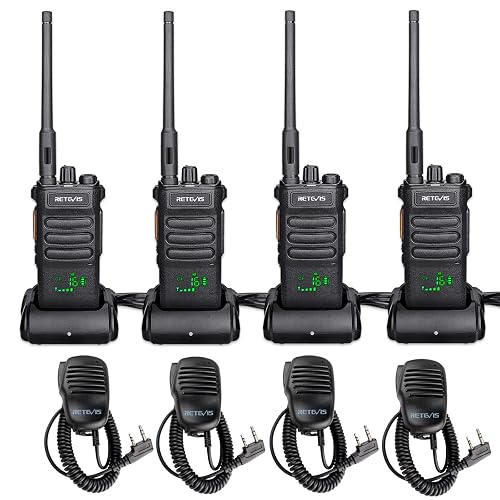
Retevis RT86 2 Way Radio Long Range with Mic 4 Pack
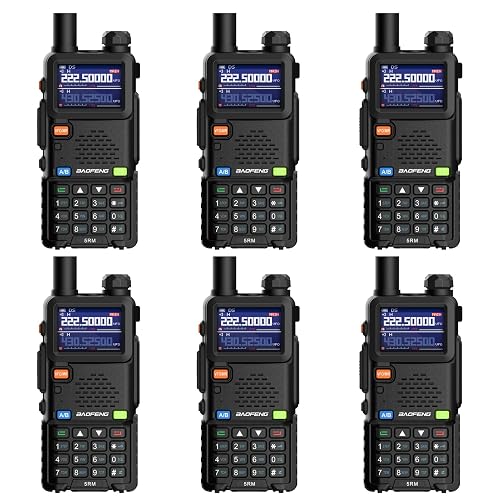
BAOFENG 5RM 10W Ham Radio Handheld Tri-Band 2 Way Radio
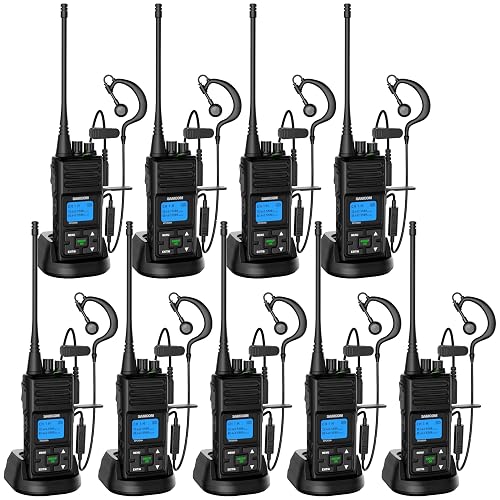
SAMCOM Programmable UHF Two Way Radios 9 Packs
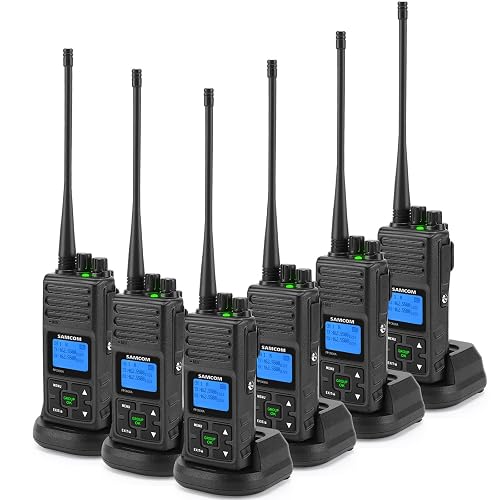
SAMCOM FPCN30A Two Way Radios Long Range 5 Watts 6 Packs
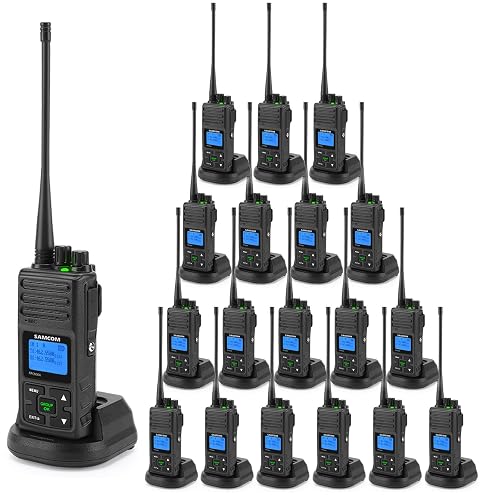
SAMCOM FPCN30A Professional Walkie Talkies Bulk 19 Packs
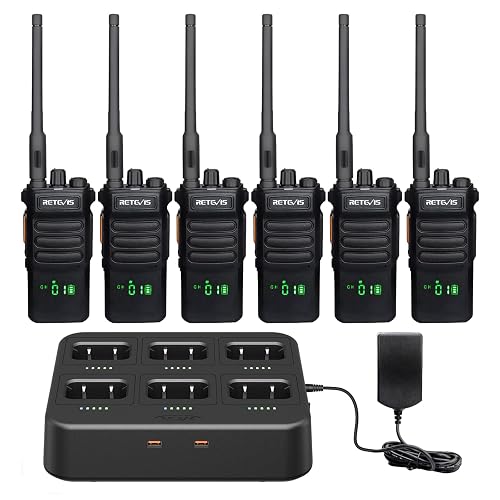
Retevis RT86 2 Way Radio Long Range with 6 Way Charger 6 Pack
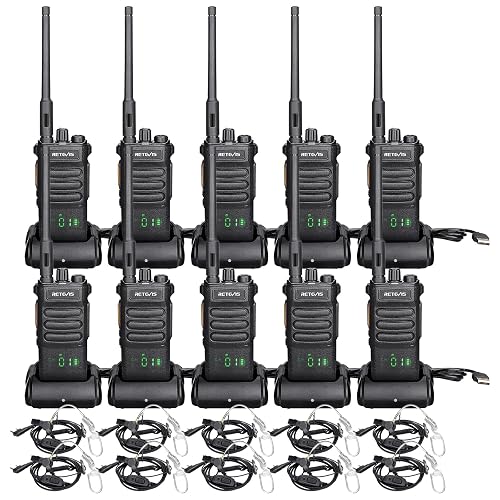
Retevis RT86 Two Way Radios Long Range with Earpiece 10 Pack

Retevis H-777S Walkie Talkies Long Range FRS 6 Pack
More On The Choices That Made The List
Unlike the handheld picks further down this list, the Midland MXT275VP4 is a vehicle-mounted mobile radio that bolts into a truck or base-camp setup. It pushes the full 15 watts allowed on GMRS (General Mobile Radio Service, a UHF band that requires an FCC license in the US) across 15 high-power repeater-capable channels, which translates into noticeably longer reach than a 5-watt handheld in rolling terrain.
For overlanders, convoy leaders, and rural property owners running a base station, that extra power is the difference between hearing a call from the far fence line and losing it to static. Owners commonly pair it with the included 3dB gain antenna for a measurable bump in signal strength on flat ground.
Everyday Wins
- Full 15-watt output puts it well above the 5-watt handheld ceiling
- Repeater-capable on channels 1-7 and 15-22 extends usable range through a repeater tower
- 142 CTCSS/DCS privacy codes (sub-audible tones that filter out other users on the same channel) cut down on cross-traffic from nearby groups
- NOAA weather scan plus severe-weather alerts broadcast AMBER notifications automatically
- Vehicle-mount design keeps the radio powered on long hauls without draining handheld batteries
Things To Consider
- GMRS operation requires an FCC license in the US, a step some casual users skip
- Real-world range varies heavily with terrain, tree cover, and antenna height
- Installation is more involved than dropping a handheld on a belt clip
Key Specs
Built With In Mind
Overlanders, convoy organizers, and anyone running a base-station setup from a vehicle or fixed mount who needs reliable miles of coverage.
Reach For A Different Pick When
You want a grab-and-go handheld without a license, in which case the Retevis H-777S keeps things simple on FRS (Family Radio Service, a license-free UHF band).
The UV-5R has earned its reputation as the default starter handheld for new amateur radio operators, and this 4-pack stretches that value across a small group. It covers VHF (very high frequency, roughly 136-174 MHz, good for outdoor terrain) and UHF (ultra high frequency, roughly 400-520 MHz, better for penetrating buildings) bands, holds up to 128 memory channels, and runs on a rechargeable battery with a modern USB-C port instead of the older barrel-jack chargers.
For preppers, off-grid households, or families getting into ham radio together, the learning curve is real but forgiving. You get familiar Baofeng menus with 50 CTCSS tones, 210 DCS codes (digital privacy codes that mute other conversations), and an SOS emergency function that broadcasts a distress signal at the push of a button.
What Stands Out
- USB-C charging replaces the legacy charging cradle
- Four radios in one box outfits a family or small crew for less than typical two-handheld bundles
- Dual-band VHF/UHF covers both outdoor and indoor scenarios
- Up to 128 stored channels with adjustable squelch (the noise-gate threshold that mutes static between transmissions) in 9 levels
Worth Noting
- Amateur radio transmission requires a ham license in the US
- Stock antenna is the most common limitation cited for short range
- Programming initially requires CHIRP software or a PC cable, which adds setup time
Made For
Newly licensed amateur operators and prepper families who want a budget-friendly entry into VHF/UHF handheld comms without learning a more advanced menu system first.
A Better Fit Elsewhere
Crew members who just need simple push-to-talk across a building should look at the Retevis RT86 2 Way Radio Long Range with Mic 4 Pack for license-free operation.
The Retevis RT86 is purpose-built for the messy realities of warehouses, multi-floor job sites, and properties with thick concrete walls. Its long wavelength signal (0.6-0.75 meters) bends around obstacles better than shorter handheld wavelengths, and the high-gain antenna pushes that signal through steel racks and reinforced floors where standard FRS handhelds choke.
For a four-person crew coordinating across a large facility, the claim of up to 700,000 square feet of coverage and roughly 50 floors of vertical reach is the kind of spec that matters on day one. Owners commonly deploy these in logistics hubs, school maintenance departments, and church properties where staff roam between buildings.
Key Advantages
- Long-wavelength signal bends around structural obstacles in dense facilities
- High-gain antenna designed for multi-floor penetration in steel-frame buildings
- Includes a shoulder mic so the radio stays clipped to a belt or vest
- Four-pack fits small warehouse or property-management teams out of the box
Trade Offs
- Heavier ABS housing than typical consumer handhelds
- Real-world range drops sharply in heavily partitioned interiors
- Programming relies on Retevis software, which adds a learning step
Who It Suits Best
Small warehouse crews, property managers, and church or school facilities teams who need reliable signal across multiple floors and metal-rack environments.
Consider Something Else When
You need a bigger fleet with shared charging, in which case the Retevis RT86 2 Way Radio Long Range with 6 Way Charger 6 Pack adds a single multi-unit dock.
Baofeng positions the 5RM as the spiritual successor to the UV-5R, and the upgrades are real. It pushes 10 watts of output (double the UV-5R’s high setting), adds a 1.77-inch color display, and stretches coverage into tri-band territory, meaning FM broadcast, AM aircraft reception, VHF, the 1.25-meter amateur band (222 MHz), 350 MHz, UHF, and NOAA weather channels.
That breadth makes it a fit for ham operators who also want to catch local AM radio chatter, monitor weather alerts, or work the 222 MHz band without buying a second radio. The kit includes a 222 MHz antenna and a USB-C cable, so you can charge from a laptop or power bank in the field.
A Few Strong Suits
- 10-watt output doubles the high-power setting of older Baofeng handhelds
- Tri-band coverage includes the 1.25-meter amateur band at 222 MHz
- 999 stored channels and built-in frequency copy for fast cloning
- USB-C charging and NOAA weather reception in one chassis
Points To Note
- 10 watts drains the battery faster than the UV-5R’s 5-watt mode
- Tri-band flexibility only matters if you actually transmit on multiple bands
- Color display is harder to read in direct sunlight than simpler monochrome screens
Feature Snapshot
Best Suited To
Licensed amateur operators who want extra power, multiple bands, and weather monitoring in a single handheld they can charge from a laptop.
Swap It Out When
You only need a basic dual-band starter radio, in which case the Baofeng UV-5R Ham Radio Dual Band 2 Way Radios 4 Pack covers the same VHF/UHF bands at a friendlier entry cost.
SAMCOM’s 9-pack is built for institutions that need to outfit a whole department in one shot, and the rugged shell tells you it’s expecting rough use. The housing is designed to survive drops and the kind of weather exposure that school security, transportation, or hospital logistics teams put radios through daily.
With 5 watts of output and a replaceable antenna, these radios push signal across typical campus footprints. Programmable UHF channels let an admin lock the channel list before issuing the radios, which prevents accidental cross-talk with nearby businesses on shared frequencies.
Notable Upsides
- Heavy-duty shell survives drops and weather exposure in school or transit environments
- Replaceable antenna lets you swap in a longer whip for better range
- 9-pack covers a full department without leaving anyone short
- Programmable channel lock keeps staff on assigned frequencies only
Honest Caveats
- Larger bulk than pocket-sized consumer handhelds
- Initial programming requires a PC cable and SAMCOM software
- Battery life on 5-watt transmit drops faster than 2-watt modes
Perfect Match For
School security teams, hospital logistics, and transit crews who need a rugged, programmable radio fleet ready to deploy on day one.
Not Your Match When
You only need a handful of radios for a small retail floor, in which case the Retevis RT86 Two Way Radios Long Range with Earpiece 10 Pack delivers similar range at a tighter scope.
The FPCN30A is a 5-watt UHF handheld built around a single, very useful feature: a one-key group-call button that broadcasts to every team member at once, even if they were tuned to different channels. For construction sites coordinating a crane lift, an evacuation drill, or a sudden safety alert, that single button can replace a chain of separate calls.
You also get 20 UHF channels pre-programmed and a 1500 mAh battery that holds up to a full shift under typical transmit/receive ratios. Earpieces ship in the box for crews who need to keep calls discreet on a noisy site.
Useful Strengths
- One-key group broadcast reaches everyone at once across channels
- 1500 mAh battery covers a standard shift under mixed use
- 20 pre-programmed UHF channels remove the initial setup step
- Includes earpieces for noisy job-site environments
A Few Limitations
- Frequency-version compatibility matters if mixing with older FPCN30A units
- 5 watts is the practical ceiling for handheld range in this category
- Charging cradle per radio means more countertop space for the fleet
Right Fit For
Construction supervisors and event coordinators who need to push a site-wide alert or group announcement without calling each channel individually.
Look Elsewhere When
You’re outfitting a school where a larger bulk pack and rugged shell matter more, in which case the SAMCOM FPCN30A Professional Walkie Talkies Bulk for School 19 Packs fits better.
Nineteen radios in one box is the kind of spec that only makes sense for a specific use case, and this one targets it directly. Whole-school deployment, large church security teams, and event-staffing companies can outfit every team member with a single purchase order rather than coordinating multiple bulk buys.
The rugged shell and replaceable antenna from the smaller SAMCOM packs carry over, so you’re not trading durability for quantity. The trade-off, of course, is that you need somewhere to charge and store 19 units, which means a real commitment to fleet management.
Reasons It Performs
- 19-pack outfits a department in one purchase order
- Rugged shell designed for construction, transit, and security environments
- Replaceable antenna lets you standardize range across the whole fleet
- Compatible with smaller SAMCOM packs for mixed-size deployments
Things To Consider
- 19 individual charging cradles take up significant counter space
- Bulk pricing only makes sense if every radio will be used daily
- Larger order means longer initial programming session across the fleet
Quick Facts
Who Should Grab It
Large school districts, church security teams, and event-staffing companies that need to deploy a coordinated radio fleet without piecing together multiple orders.
Where Another Pick Suits Better
Smaller teams needing fewer radios plus centralized charging should pick the Retevis RT86 2 Way Radio Long Range with 6 Way Charger 6 Pack instead.
The defining feature here is the 6-way charger, a single dock that tops off all six radios overnight instead of crowding your counter with six individual cradles. For shift-based teams handing radios off between crews, that charging dock becomes the operational heart of the fleet.
The radio itself shares the RT86 platform’s long-wavelength signal and 2.15 dBi high-gain antenna, so range claims hold up in warehouses and multi-floor buildings. Sensitivity rated at or below -122 dBm (decibel-milliwatts, a measure of how faint a signal the radio can still pick out from the noise floor) helps the radio hold stable communication in dense metal-rack areas.
A Favorable Mix
- 6-way charger replaces six individual cradles on the counter
- Long-wavelength signal and high-gain antenna push through multi-floor buildings
- Rugged ABS housing resists drops in active work environments
- Sensitivity rating helps maintain signal in dense metal-rack zones
Trade-Offs To Consider
- 6-pack still requires dedicated shelf space for the charger dock
- Programming across six units takes longer than single-radio setup
- Heavier than pocket-format consumer radios for belt-clip all-day carry
Whose Shelf It Belongs On
Shift-based warehouse and security teams that rotate radios between crews and need one central charging station instead of scattered cradles.
Skip It When
You need earpieces included for discreet retail comms, in which case the Retevis RT86 Two Way Radios Long Range with Earpiece 10 Pack ships with that hardware in the box.
Ten radios with earpieces in the box is a smart bundle for hospitality, retail floor staff, and event teams who need discreet one-ear monitoring instead of shoulder-speaker chatter. The included earpieces also cut down on ambient noise bleeding into calls in busy lobbies or stockrooms.
You get the same RT86 chassis as the smaller packs: 2.15 dBi high-gain rubber antenna, ABS drop-resistant housing, and sensitivity suited to multi-floor penetration. The honest read is that this pack trades the central charging dock of the 6-way charger model for a larger fleet and bundled accessories.
Bright Spots
- Earpieces included for every radio, no separate accessory order needed
- High-gain 2.15 dBi rubber antenna reaches through multi-floor layouts
- Drop-resistant ABS housing for retail and hospitality wear
- 10-pack suits larger staff rotations across a venue
Possible Compromises
- Bundled earpieces are basic, not custom-molded for long shifts
- Ten charging cradles still take significant counter space
- Programming across ten units is a longer first-night project
Who Will Love This
Retail managers, hotel staff, and event coordinators running larger teams who want earpiece-style comms out of the box without ordering accessories separately.
Another Choice May Suit
Smaller crews needing fewer radios and a single charging dock should consider the Retevis RT86 2 Way Radio Long Range with 6 Way Charger 6 Pack.
The H-777S is a no-license-required FRS handheld, which is the single biggest reason it lands on lists for churches, schools, daycares, and small retail operations. You can hand these to volunteers or part-time staff without paperwork, training them on channel selection and basic etiquette in minutes.
The 6-way charger station is the unsung hero here, turning six batteries into a single overnight ritual instead of a mess of cables. Sturdy construction handles the inevitable drop off a folding table at a school event.
Strengths Worth Knowing
- No FCC license required for FRS operation in the US
- 6-way charger keeps six batteries topped off from a single outlet
- Sturdy shell survives drops in school and event environments
- Simple channel selector suits volunteer or part-time staff
Less Ideal Details
- FRS power ceiling is lower than GMRS or amateur options
- Range drops sharply inside metal-frame commercial buildings
- Antenna is fixed, not replaceable for range upgrades
At A Glance
Made For
Church groups, schools, daycares, and small retail floors that need license-free push-to-talk for volunteer or part-time staff without paperwork or licensing.
Consider Something Else When
You need to push signal through multi-floor warehouses, in which case the Retevis RT86 2 Way Radio Long Range with Mic 4 Pack delivers stronger penetration.
Choosing Two Way Radios That Match Your Real Situation
Range claims on packaging tend to assume open desert and a clear line of sight, which is rarely the case once you’re inside a building or behind a tree line. Match your radio to the actual environment first, and the marketing numbers sort themselves out.
Power, Bands, and Licensing
Power output translates directly to how far your voice carries, with 5 watts being the practical handheld ceiling and 15 watts reserved for vehicle-mounted mobile rigs. UHF signals penetrate buildings better, while VHF travels farther in open outdoor terrain. FRS radios are license-free but capped at lower power; GMRS radios reach further but require an FCC license in the US; amateur handhelds unlock the most flexibility but need a ham license.
Range Claims in the Real World
Manufacturer range numbers assume flat, open terrain with nothing between the two antennas. Once walls, vehicles, hills, or heavy tree canopy enter the picture, expect a steep drop. Long-wavelength radios (around 0.6-0.75 meters) bend around obstacles better than shorter wavelengths, which is why the Retevis RT86 family handles warehouses well.
Fleet Size, Charging, and Daily Routine
A 4-pack with individual charging cradles works for a small crew; a 19-pack makes sense only if you have a charging shelf and a daily distribution plan. Multi-unit charging docks simplify overnight routines for shift teams and keep cords off the counter. Earpieces matter for discreet hospitality or retail use, and they cut down on ambient noise leaking into calls.
Key Considerations Across These Picks
Where Shoppers Go Wrong
The most common slip is chasing the longest advertised range without checking the environment you’ll actually use the radio in. A 15-watt mobile rig does nothing for you on a hiking trail if you can’t mount it in a vehicle. The other trap is buying a license-required radio (GMRS or amateur) and never completing the paperwork, which makes operation technically illegal in the US.
What The Higher Tier Buys
Premium-tier radios in this category add higher power output, longer-wavelength signals, multi-band flexibility, and ruggedized shells. For occasional neighborhood use, the extra cost rarely pays back. For daily commercial use, shift teams, or overland travel, the upgrades in durability, charging infrastructure, and signal penetration show up in fewer dead-air moments and longer hardware life.
Frequently Asked Questions
What does “long range” actually mean for two way radios?
Long range in this category usually refers to radios that maintain usable signal across multiple miles in open terrain or several floors inside buildings. Real-world range depends on power output, antenna quality, terrain, and obstacles.
Do I need an FCC license for these radios?
FRS radios like the Retevis H-777S are license-free. GMRS radios like the Midland MXT275VP4 require an FCC license in the US but unlock higher power. Amateur handhelds like the Baofeng UV-5R and 5RM require a ham license for transmitting.
What’s the difference between VHF and UHF?
VHF (very high frequency) travels farther in open outdoor terrain. UHF (ultra high frequency) penetrates buildings and walls more effectively. Dual-band radios like the Baofeng UV-5R cover both.
How many radios do I need for a small team?
A 4-pack covers most small crews, while 6 to 10 packs suit mid-size teams across shifts or venues. Anything beyond 10 radios typically belongs in the bulk-pack category like the SAMCOM 19-pack for institutional deployment.
Can these radios work with different brands?
FRS radios use standardized channels and generally work across brands. GMRS and amateur radios have more compatibility complexity depending on frequency, privacy codes, and programming. Check the manual before mixing brands in a fleet.
Bottom Line
If you need a vehicle-mounted base with maximum reach, start with the Midland MXT275VP4. For warehouse and multi-floor comms, the Retevis RT86 family across its various pack sizes handles the job. New amateur operators get the best learning platform from the Baofeng UV-5R, while tech-savvy hams want the 5RM. Bulk institutional buyers should look at the SAMCOM 19-pack, and license-free simplicity lives in the Retevis H-777S. Match the radio to your terrain, your team size, and whether you’re willing to handle the licensing step, and the rest falls into place.