
Picking up a handheld radio before a long hike, a ski weekend, or a volunteer event on a sprawling site feels right until cell coverage drops. Battery powered walkie talkies solve that gap in seconds, with no towers required and no contracts. The lineup below covers casual outdoor use, licensed GMRS setups, and network-based options that work like cell phones. Each pick was selected for a specific user profile, so matching your terrain and habits matters more than chasing specs.
A Closer Look At The Lineup
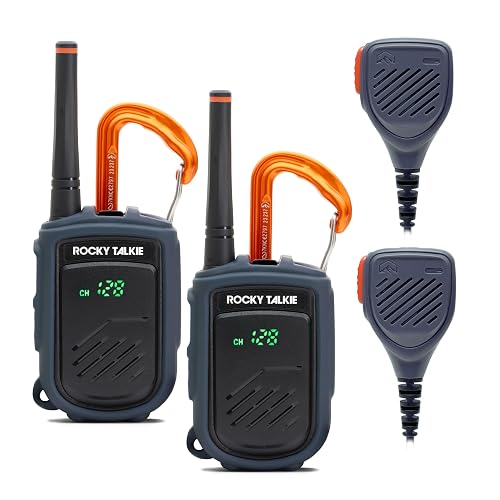
Rocky Talkie Mountain Radio (Waterproof Handmic) 2-Pack
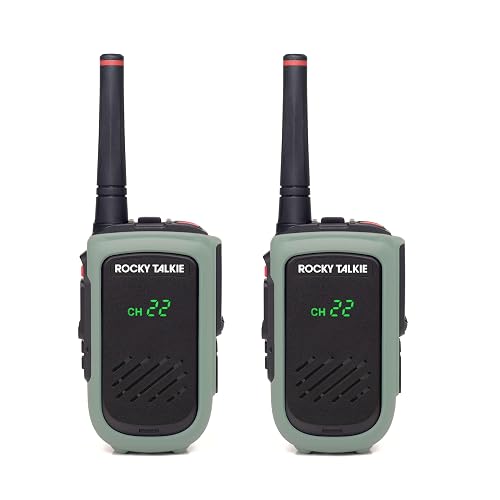
Rocky Talkie Expedition 5W GMRS Radio 2-Pack
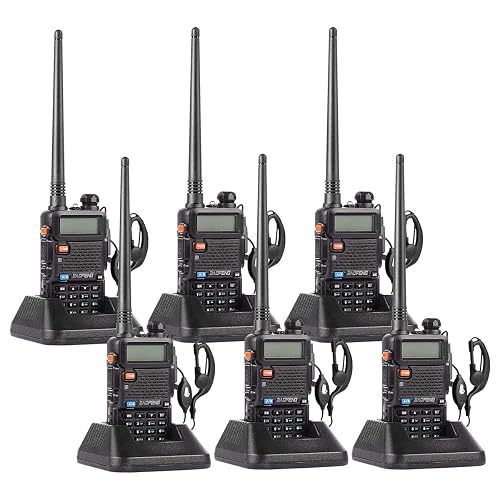
Nicama Baofeng UV-5R Dual Band 6-Pack
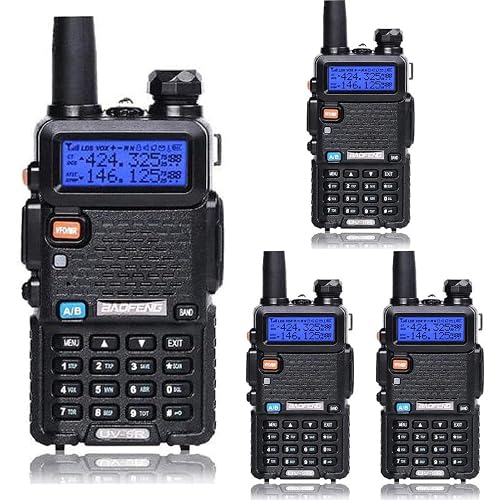
Baofeng UV-5R Ham Radio 4-Pack
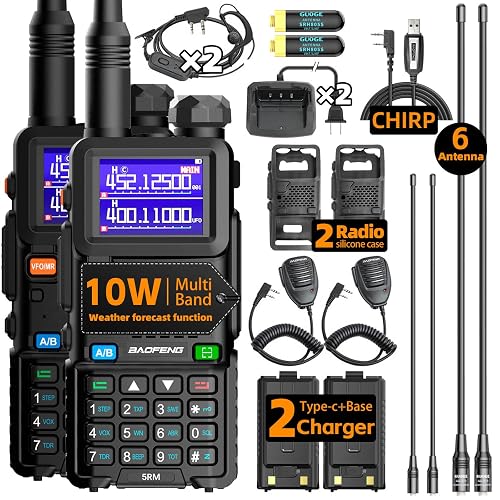
Baofeng UV-5RM Ham Radio Handheld

Rocky Talkie Mountain Radio 1-Pack
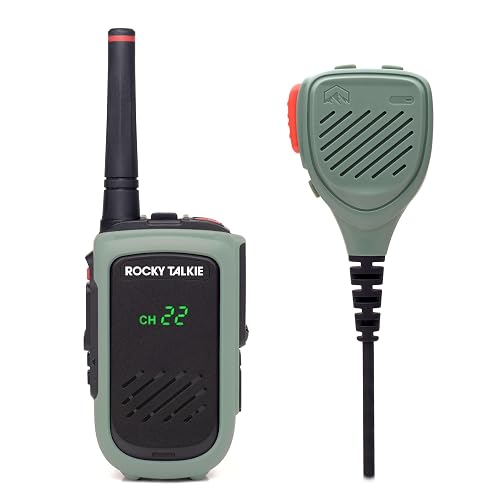
Rocky Talkie Expedition 5W (Hand Mic) 1-Pack
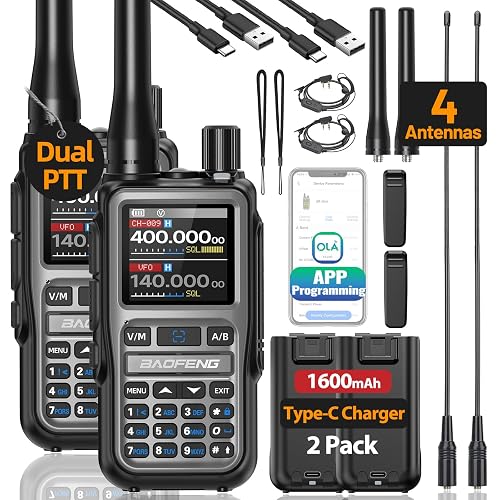
Baofeng UV-5R Mini Ham Radio
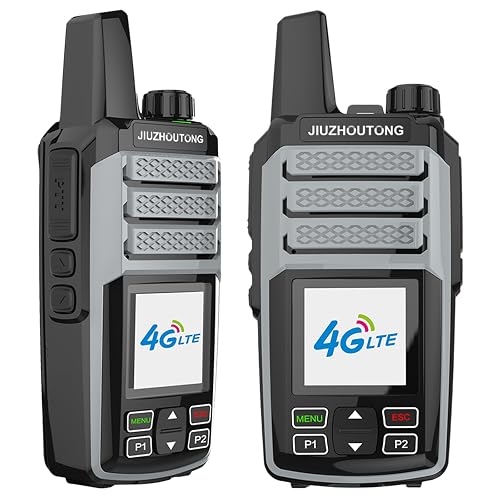
JIUZHOUTONG 4G LTE POC Radio (Gray)
Taking A Closer Look At The Options
The Mountain Radio leans into the kind of punishment a long route throws at gear. Its FRS signal runs at the legal 2-watt ceiling without forcing you to chase a license, and the included waterproof handmic lets you clip the radio inside your pack and still chat at the harness. In real backcountry terrain, owners commonly report 1 to 5 miles of usable range, which covers most group splits on a trail.
The 4-day battery claim on a single charge holds up well in cold shoulder-season conditions where most radios fade early. You also get a shatterproof LED screen that survives the inevitable drop on granite. Compared to the ham-band Baofeng picks later in this list, the Mountain Radio trades programming complexity for grab-and-go simplicity.
Standout Benefits
- Waterproof handmic keeps the radio sheltered while you talk
- Rechargeable lithium-ion pack lasts multiple days in cold air
- No FCC license needed for FRS channels
- Reinforced LED face resists impact on rocky routes
- Two-pack matches a typical climbing rope team size
Trade Offs Worth Knowing
- Range drops sharply in dense tree cover or steep canyon walls
- Charging uses a proprietary cable, so a spare belongs in your kit
- Bulkier than the Mini Baofeng covered later in this guide
Who It Suits Best
Climbers, hikers, and backcountry skiers who want a license-free radio with a tough shell.
Look Elsewhere When
Drivers and overlanders needing highway-distance coverage should reach for the Rocky Talkie Expedition instead.
The Expedition jumps from FRS into GMRS, the General Mobile Radio Service that requires a simple FCC license but unlocks far more range. At 5 watts, this is the maximum handheld power allowed on GMRS, and the removable antenna plus 8 repeater-capable channels let you stretch that signal across valleys. Real-world reports put usable range around 2 to 8 miles in wooded terrain.
IP67 waterproofing means the radio survives full submersion in shallow water, so river crossings and rainstorms stop being a worry. NOAA weather alerts broadcast directly to the unit, a real safety gain when a storm rolls in faster than your phone can refresh. The 1800 mAh rechargeable pack stretches to about 5 days under intermittent use, edging past the Mountain Radio above.
What Helps Most
- 5-watt GMRS power hits the regulatory ceiling for handhelds
- Removable antenna lets you swap in a longer whip later
- NOAA alerts pull live weather into the radio
- 1800 mAh battery extends field trips to nearly a week
Honest Caveats
- GMRS use legally requires an FCC license, which adds a small step
- Repeater-dependent range gains only work near an active node
- Heavier than the FRS Mountain Radio for pack carry
Built With In Mind
Backcountry leaders, overlanders, and preppers who already hold or plan to grab a GMRS license.
Consider Something Else When
Total newcomers who want zero paperwork should default to the Mountain Radio (Pick 1) instead.
The UV-5R has earned its place as the default dual-band handheld for budget shoppers, and this Nicama 6-pack leans into that reputation. Each radio covers the 144-148 MHz and 420-450 MHz bands with 128 memory channels and selectable output between 1 and 4 watts. For a volunteer crew, a wedding staff, or a large family on a reunion hike, six radios under one listing removes the per-unit hassle.
The 1800 mAh Li-ion battery is removable, so hot-swapping a fresh pack into a long shift is realistic. Owners commonly program these via CHIRP software to load local GMRS and ham frequencies, though out of the box they arrive ready for ham-band use. Compared to the Rocky Talkie pairings above, the trade is build quality for raw channel count.
A Few Highlights
- Dual-band coverage opens more frequencies than single-band radios
- Removable battery supports swap-and-go shifts
- CTCSS and DCS privacy tones reduce cross-talk on shared channels
- Six units simplify outfitting a whole group at once
Room For Improvement
- Stock antenna limits range unless upgraded to a longer whip
- Programming software adds a learning curve for first-time users
- Plastic shell feels less rugged than the Rocky Talkie chassis
Quick Facts
Made For
Crew leads, event organizers, and group leaders who need many radios without per-unit licensing steps.
Reach For A Different Pick When
Solo backpackers may find the 4-pack Baofeng UV-5R (Pick 4) a tidier fit.
This 4-pack version of the classic UV-5R targets households that want to sample ham radio without overspending. Each unit covers VHF and UHF bands, holds up to 128 memory channels, and includes a backlit LCD display that adjusts across three colors for night readability. The 9-level squelch setting helps cut static when signals get weak.
New licensees often start here because parts, batteries, and antennas are widely available. SOS emergency function, dual watch, and VOX (voice-activated transmit, meaning the radio keys up when you speak) round out the everyday feature set. Against the Rocky Talkie FRS radios earlier, the appeal is frequency flexibility rather than rugged simplicity.
Where It Helps
- Wide CTCSS and DCS tone library reduces neighborhood interference
- Three-color backlight helps in low-light operation
- SOS function provides a quick distress signal option
- Four units cover a family or small group at one listing
Points To Keep In Mind
- Requires an FCC amateur license to transmit on ham bands legally
- Manual is dense, so plan time to learn the menu layout
Best Suited To
First-time licensees studying for their Technician ticket and wanting gear on hand the day they pass.
A Better Fit Elsewhere
Backcountry-only users without a license get easier value from the Mountain Radio (Pick 1).
The UV-5RM builds on the UV-5R platform with a wider receiving range that stretches from the AM aircraft band up through 520 MHz. Transmission stays on the licensed 144-148 and 420-450 MHz ham bands, but the broad receiver turns the radio into a portable scanner as well as a transceiver. The 1.77-inch color display replaces the older monochrome screen, which makes channel names far easier to read.
With up to 999 memory channels, sorting local repeaters, NOAA weather channels, and aviation traffic becomes realistic. Output power still toggles between low and high to manage battery drain. Versus the UV-5R 4-pack above, this is the upgrade for hobbyists who want depth without leaving the Baofeng ecosystem.
A Strong Showing
- Broad receiver covers aircraft, marine, and public service bands
- Color display improves menu navigation
- 999 memory slots handle large regional repeater lists
- Compact shell fits standard Baofeng accessories
Honest Caveats
- Receiver breadth adds complexity for users who only need simplex chat
- Stock antenna still limits range in obstructed terrain
Key Product Details
Right Fit For
Hobbyists with a Technician license who want one handheld that monitors more than it transmits.
Skip It When
Casual group hikers may prefer the simpler Baofeng UV-5R (Pick 4) instead.
The single-unit Mountain Radio suits solo travelers who mostly listen for traffic from a partner group or base camp. Same 2-watt FRS platform as the 2-pack above, same shatterproof LED face, same multi-day lithium battery. You simply lose the second handset, which keeps cost down when you only need one radio for yourself.
For ultralight backpackers, every ounce matters, and buying only the radios you actually carry trims both weight and budget. The radio pairs cleanly with the 2-pack above for mixed groups where one person already owns a Mountain Radio. Compared to the Expedition radios, this is the FRS, license-free path.
Strong Points
- License-free FRS channels work out of the box
- Lightweight shell fits a chest harness without bulk
- Long-life battery tolerates cold starts and overnight use
- Compatible with other Rocky Talkie units in mixed groups
Worth Bearing In Mind
- Single unit means you can’t pair it without buying a second
- Lower transmit power than the GMRS Expedition options
Whose Shelf It Belongs On
Solo backpackers, climbers, and backcountry skiers running without a partner group.
Swap It Out When
Group travel across multiple vehicles calls for the 2-pack Mountain Radio (Pick 1) instead.
The single-handset Expedition matches the 2-pack above in radio specs but ships with one unit and a waterproof handmic. SAR volunteers, search teams, and storm chasers often deploy a single primary radio with a tethered mic clipped to a vest, which fits this configuration cleanly. IP67 sealing keeps the radio alive after a dunk in a river crossing.
GMRS 5-watt output, NOAA alerts, and 5-day battery life match the 2-pack sibling, and the removable antenna supports aftermarket upgrades for vehicle-mount use. Versus the FRS Mountain Radio, you trade license-free operation for repeater access and stronger signal penetration through foliage. Owners commonly report reliable contact at 2 to 8 miles in mixed terrain.
What Makes Sense
- IP67 sealing handles submersion and driving rain
- Waterproof handmic clips to packs and vests
- 5-day battery life covers multi-day deployments
- NOAA weather alerts run passively in the background
Trade-Offs To Consider
- Single-unit package means no second radio included
- GMRS license is required for legal transmit
Who Will Love This
SAR team members, storm spotters, and overlanders who already hold a GMRS license.
Not Your Match When
First-time licensees shopping for household radios should pivot to the Baofeng UV-5R 4-pack (Pick 4).
The UV-5R Mini shrinks the classic Baofeng into a pocket-friendly shell without dropping the dual-band transmit or the 999-channel memory bank. The dual PTT (push-to-talk) layout is the standout feature, letting you toggle between two frequencies without menu diving, useful for monitoring a repeater input while chatting on simplex. USB-C charging removes the proprietary cable clutter from your bag.
Built-in NOAA weather access adds a passive safety layer when skies turn. App-based programming via a companion mobile tool simplifies the initial setup compared to legacy CHIRP workflows. The Mini trades the chunky feel of the UV-5R for everyday carry comfort, which is the whole point.
Notable Gains
- Dual PTT keys two frequencies at once
- USB-C charging works with modern power banks
- Compact form fits jacket pockets and small pouches
- NOAA weather channels included for storm awareness
Some Limits To Know
- Smaller body means smaller battery capacity than full-size Baofengs
- Ham-band transmit still requires an FCC amateur license
Perfect Match For
Everyday carry operators who want a discreet radio that still pulls repeater duty.
Where Another Pick Suits Better
All-day field work with heavy transmit cycles is better served by the UV-5R 6-pack (Pick 3).
This unit breaks from traditional radio entirely. Instead of VHF or UHF bands, it runs as a POC (push-to-talk over cellular) device on 4G LTE networks, effectively turning the handheld into a phone-shaped two-way radio with unlimited range wherever LTE coverage exists. For truckers crossing state lines or hotels coordinating staff across multiple floors, that nationwide reach changes the use case.
Advanced noise cancellation keeps transmissions clear in loud hotel lobbies and on busy construction sites. The gray housing looks closer to a small phone than a chunky handheld, which matters for hotel concierges who carry the radio at a front desk. Versus every other pick in this guide, the trade is subscription fees for unlimited range.
Everyday Perks
- Nationwide LTE coverage replaces line-of-sight limits
- Noise cancellation improves clarity in busy environments
- Group calling works across many radios on the same network
- Lightweight housing suits front-desk and concierge roles
Things To Weigh Up
- Requires active cellular coverage and likely a service plan
- Useless in cell dead zones where traditional radios still work
Who Should Grab It
Trucking fleets, hotel teams, and security operations that need coverage across cities, not just campgrounds.
Where A Sibling Pick Shines
Off-grid backpackers are better served by the Mountain Radio (Pick 1) or Expedition (Pick 2).
What Matters Most Before Choosing Battery Powered Walkie Talkies
Frequency Band And Licensing
FRS (Family Radio Service) radios operate license-free on fixed channels at lower power, perfect for casual use. GMRS radios push higher wattage and access repeaters but require an FCC license. Ham radios open the largest frequency pool but need an amateur license and programming know-how. Pick the band that matches your skill level and how far you want your signal to travel.
Battery Life And Charging Style
Lithium-ion packs dominate the field, with the Rocky Talkie Mountain Radio advertising roughly 4 days of runtime in cold conditions. Look for removable batteries when multi-day events are common, since hot-swapping avoids downtime. USB-C charging on newer models removes the need for a wall adapter.
Range Expectations In Real Terrain
Manufacturer range claims assume open line of sight, which almost no one has. Foliage, walls, and ridges cut real-world distance to a fraction of the listed maximum. For dense tree cover, GMRS or ham radios with repeater access stretch coverage further than license-free FRS options.
Build Quality And Water Protection
IP67 sealing means a radio survives temporary submersion, a real asset for river crossings or stormy worksites. Reinforced displays and drop-rated shells protect against the everyday bumps of trail use. Lighter plastics trim weight but trade away impact resistance.
Key Considerations Across These Picks
Common Shopping Slip Ups
A frequent mistake is trusting the headline range number without factoring in terrain. Another is buying a ham-band radio without planning for the license study, leaving a capable handheld locked to a few default channels. Skipping an antenna upgrade on stock Baofengs also caps real performance.
Where The Extra Money Goes
Stepping up from a basic FRS handheld to a GMRS unit buys repeater access, stronger signal penetration, and weather alerts. The jump from a UV-5R to the UV-5RM adds wide-band receiver coverage and a color screen. Each tier earns its place through concrete feature gains, not just branding.
Frequently Asked Questions
Do I need a license to use these radios?
FRS models like the Mountain Radio work license-free, while GMRS units such as the Expedition require a simple FCC license. Ham-band Baofengs need a Technician-class amateur license to transmit legally.
How far will battery powered walkie talkies actually reach?
Open terrain can push range past 30 miles, but wooded canyons and urban buildings often drop usable distance to 1 to 8 miles. Repeater-capable GMRS radios extend coverage where infrastructure exists.
Can I charge these radios in the field?
Most modern handhelds accept USB or wall charging, and the Baofeng UV-5R Mini specifically uses USB-C for power bank compatibility. Removable battery packs on the UV-5R 6-pack allow hot-swapping spares.
Are these radios waterproof?
IP67-rated units like the Rocky Talkie Expedition survive temporary submersion in shallow water. Other models resist light rain but should not be dunked, so check each listing before river trips.
What is the difference between FRS and GMRS?
FRS runs at lower wattage on shared channels with no license required. GMRS allows higher transmit power and repeater use, granting more range in exchange for a simple FCC registration.
Bottom Line
Matching the radio to your terrain, your licensing comfort, and how many people you need to connect decides everything. Solo backpackers do well with the FRS Mountain Radio, while group coordinators and licensed operators gain more from the Expedition pairings. For cross-country fleet use, the 4G LTE POC radio changes the rules entirely.