
One wrong step on a frozen trail and a winter hike turns into a trip to urgent care. That’s where traction devices earn their keep, giving your boots the bite they need across ice, packed snow, and slick rock. If you chase shoulder-season peaks or just want the dog walk to stop feeling like a balance test, a good set of microspikes changes the whole day. Below are six options that handle real cold-weather footing, from featherweight runners’ picks to heavy-duty mountain gear.
The Main Contenders
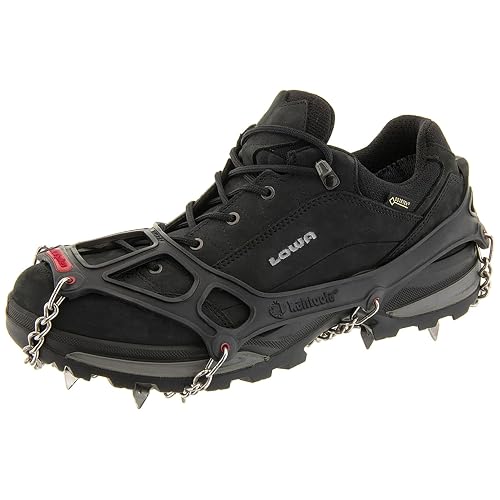
Kahtoola MICROspikes Footwear Traction
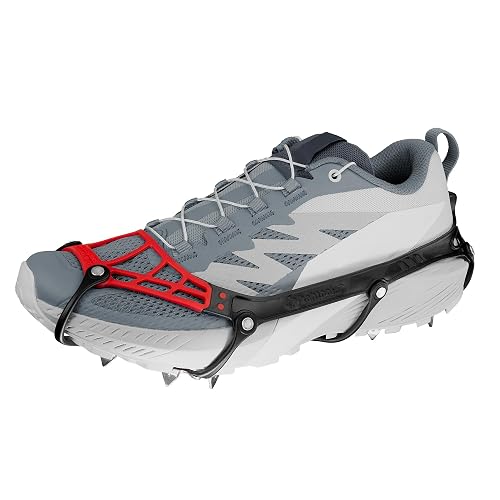
Kahtoola MICROspikes Ghost Footwear Traction
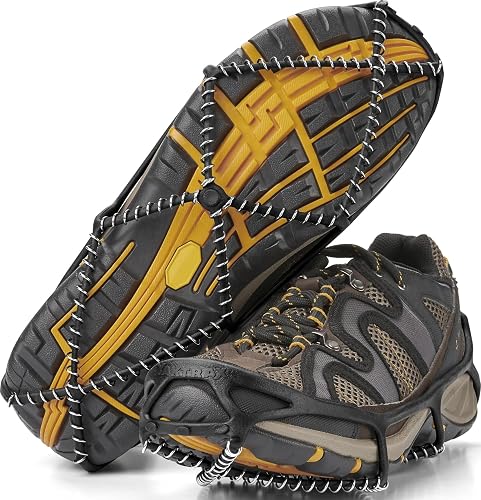
Yaktrax Walk Traction Cleats
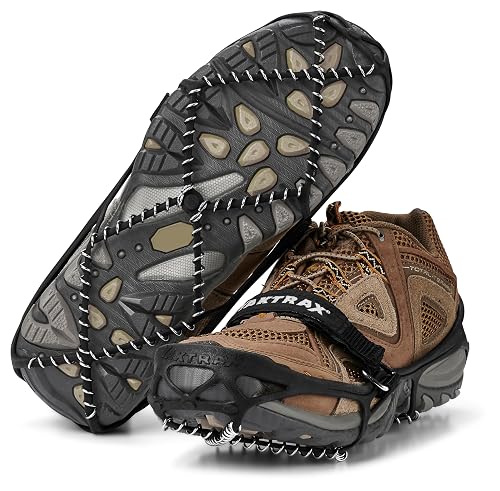
Yaktrax Pro Traction Cleats
Yaktrax Diamond Grip Traction
Yaktrax Adventure Grip Traction
Meet The Standout Selections
The Kahtoola MICROspikes have become the reference point in this category, the model other traction devices get compared against. They pair heat-treated stainless-steel spikes (12 per foot) with a stretchy TPR (thermoplastic rubber) harness that stays supple below freezing. The spike layout, with eight at the forefoot and four at the heel, puts the bite exactly where your foot pushes off.
On the trail, that distribution translates to confident footing on refrozen snow, glazed granite, and the slushy patches that show up after a warm afternoon. The chain link design keeps weight evenly spread, so the spikes don’t clump in one spot. They fit standard hiking shoes and boots, which matters if your collection spans trail runners to winter mountaineering boots.
Why It Works Well
- Twelve heat-treated stainless-steel spikes per foot for aggressive bite on hard ice and mixed snow.
- TPR harness stays flexible in deep cold, unlike rubber that cracks and turns brittle.
- Even weight distribution across the foot reduces pressure points during long days on the trail.
- Compact enough to stash in a pack pocket for shoulder-season hikes where conditions shift quickly.
- Trusted track record among winter hikers and backcountry travelers.
Trade Offs
- Heavier than minimalist options, noticeable on ultralight fastpacking setups.
- Chain-style system takes a bit longer to fit than simple coil designs.
Made For
Winter hikers and backpackers tackling icy mountain trails, snow-packed ridges, and refrozen terrain where serious grip matters.
Where Another Pick Suits Better
Runners chasing grams will find the lighter Kahtoola MICROspikes Ghost a better match for fast-and-light days.
The Ghost takes everything reliable about the original MICROspikes and strips it down. Kahtoola swapped the steel chain for a TPU (thermoplastic polyurethane) build and trimmed weight by more than 43%. The result is a traction device that folds flat, slips into a jacket pocket, and barely registers on your feet.
Where the original leans toward mountaineering, the Ghost targets flexible footwear: trail runners, light hikers, and approach shoes. You still get 12 spikes per foot in the same 8-forefoot, 4-heel layout, so grip isn’t sacrificed for the weight savings. It’s the pick for people who log winter miles at pace and don’t want a chain banging against their ankle all day.
Benefits That Matter
- 43% lighter than the original MICROspikes, a real win for fastpacking and long trail days.
- Same 12-spike layout keeps aggressive grip on icy patches.
- Packs flat into a small pocket or running vest.
- Streamlined TPR toe harness fits flexible trail-running shoes without bunching.
Things To Consider
- Less durable than steel-chain builds on sharp, rocky terrain over many seasons.
- TPU components can feel stiffer in extreme sub-zero cold, depending on conditions.
Best Suited To
Trail runners and fast hikers who want serious traction without the weight penalty on winter routes.
A Better Fit Elsewhere
Heavier backpackers carrying loads on rugged summits should stick with the original Kahtoola MICROspikes for longer-term durability.
The Yaktrax Walk is the casual entry point in the lineup, built for the kind of winter most people actually live. Slip them on at the door, walk the dog, scrape ice off the car, and slip them off when you get back. The 360-degree coil pattern wraps the entire sole with 1.2mm zinc-coated steel, giving grip on everything from a frosted sidewalk to a gravel path.
The elastic band stretches over shoes and low boots without a fight, and the heel tab makes removal quick. Unlike heavier spike systems, the Walk feels unobtrusive on regular errands. It’s the kind of gear you leave by the door all winter because it gets used so often.
What Earns Its Place
- Coil design gives 360-degree traction under the whole foot.
- Easy-on, easy-off elastic band saves time on short outings.
- Lightweight enough to keep in a coat pocket or glove box.
- Works across shoes and light boots without needing precise sizing.
Points To Note
- Coils wear down faster than spikes on abrasive surfaces like concrete and stone.
- Less bite on steep, hard ice compared to dedicated spike systems.
Quick Facts
Who It Suits Best
Commuters, dog walkers, and anyone navigating icy sidewalks and light winter errands.
Look Elsewhere When
Serious trail hikers tackling mountain terrain will want the Yaktrax Pro for stronger underfoot grip.
The Pro steps up from the Walk with thicker 1.4mm stainless-steel coils and a more robust harness. Where the Walk handles sidewalks, the Pro handles trailheads, packed-snow climbs, and the kind of mixed terrain where you actually need something tougher underfoot. The heavier coil resists flattening on rocky paths, which is the usual failure mode for lighter traction gear.
The fit mirrors the Walk’s straightforward slip-on design, so there’s no learning curve if you’re already familiar with the brand. It’s a workhorse option for hikers who push deeper into winter conditions without wanting to commit to a full spike system. For long days on packed trails, the durability difference is real.
Real-World Strengths
- Thicker 1.4mm coils last longer on abrasive and rocky terrain.
- Stainless-steel construction resists corrosion in wet, slushy conditions.
- Full-foot 360-degree traction gives stable footing across uneven ground.
- Heel tab design makes on-and-off fast between trail sections.
Potential Drawbacks
- Heavier than the standard Walk, noticeable on all-day outings.
- Coil design still lacks the digging bite of spike-based traction on sheer ice.
Right Fit For
Winter hikers covering long distances on packed snow and mixed terrain who value durability over ultralight weight.
Skip It When
Mountaineers tackling steep, technical ice will get more bite from the Yaktrax Adventure Grip with its dedicated spike teeth.
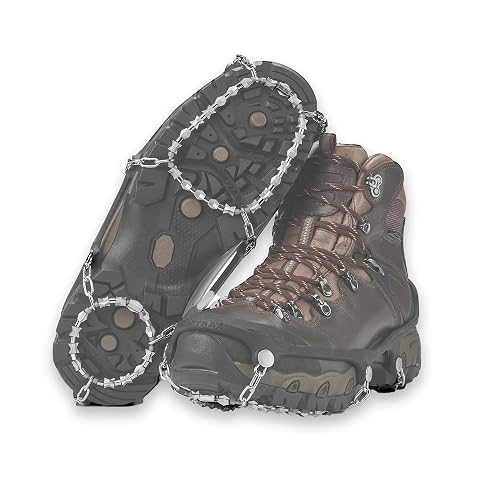
The Diamond Grip swaps the familiar coil pattern for rotating diamond-shaped beads that pivot with your natural stride. That swiveling action keeps the contact points flat against the ground through each step, which feels more natural than coils that resist sideways motion. It’s a subtle but real difference if you’re spending hours on your feet.
The upper band uses the same cold-resistant elastic as other Yaktrax models, and the lighter bead construction makes this one of the more packable options in the lineup. It shines on hard-packed snow and ice-covered pavement where the bead geometry can find purchase. For trail running on snowy paths, it offers a smoother gait than traditional coils.
Standout Benefits
- Swiveling diamond beads move naturally with your stride for a smoother walk.
- Full-foot coverage gives balanced grip across the entire sole.
- Lightweight construction packs down small for travel and commuting.
- Effective on both ice and bare pavement, useful for variable conditions.
Honest Caveats
- Less aggressive bite than spike-based traction on steep, hard ice.
- Beads can wear faster than steel coils on very abrasive surfaces.
Who Should Grab It
Commuters and casual walkers who want a comfortable, low-profile traction device for mixed urban and light trail use.
Another Choice May Suit
Backcountry hikers needing stronger purchase on technical terrain should consider the Kahtoola MICROspikes instead.
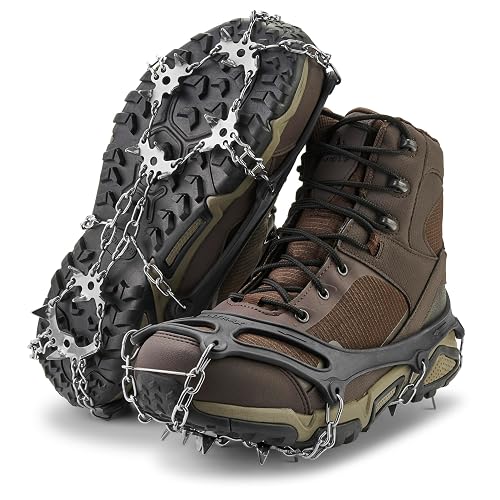
The Adventure Grip sits at the top of the Yaktrax spike lineup, and it shows in the spec sheet: nineteen half-inch stainless-steel triangular teeth per foot. That spike count translates to serious purchase on ice, frozen scree, and the kind of steep, mixed ground that would overwhelm lighter designs. Compared to the coil-based Walk, the bite is in a different league entirely.
The TPR upper stretches to fit a range of footwear from hiking boots to mountaineering shoes, which matters if you’re switching between setups. The triangular tooth shape penetrates hard ice rather than skating across it. For serious winter objectives where coil systems fall short, this is the Yaktrax answer.
Useful Touches
- Nineteen triangular stainless-steel teeth per foot deliver strong bite on hard ice.
- Versatile TPR harness fits multiple boot types in your quiver.
- Built for mountaineering and rugged trail use where coils won’t cut it.
- Stainless-steel spikes resist corrosion through wet freeze-thaw cycles.
Worth Bearing In Mind
- Spike density makes it heavier than casual-use options.
- Overkill for simple sidewalk walking, where lighter designs handle conditions fine.
Feature Snapshot
Built With In Mind
Mountaineers and winter hikers tackling technical, icy terrain where aggressive traction is non-negotiable.
Reach For A Different Pick When
Casual walkers on plowed sidewalks will find the Yaktrax Walk lighter and simpler for everyday use.
What Matters Most Before Choosing Hiking Microspikes
Spike layout decides how your foot actually grips. Forefoot concentration helps on climbs; heel spikes prevent sliding on descents. Most quality microspikes split the count, around 8 at the front and 4 at the back, which covers both phases of your stride without overbuilding weight.
Harness material matters more than people expect. Thermoplastic rubber (TPR) and thermoplastic polyurethane (TPU) both stay flexible below freezing, unlike natural rubber that hardens and cracks. If you hike in deep cold, this is the difference between a harness that snaps mid-trail and one that keeps stretching over your boot season after season.
Weight changes everything once you’re moving. Ultralight options like the Ghost serve trail runners well, but heavier chain systems hold up better on rocky ground over years of use. Match the build to your actual use: light for fast days, robust for loaded winter trips and technical routes.
Fit compatibility rounds out the decision. Some traction devices hug trail runners, others need a stiff boot to anchor properly. Check sizing against the boots you already own before committing, since a loose harness shifts underfoot and a tight one won’t go on at all.
Key Considerations Across These Picks
Pitfalls Shoppers Hit
The biggest mistake is buying coil-based traction for hard, steep ice and expecting it to dig in. Coils work by texture, not penetration; on blue ice they can skid. For serious slopes, a spike-based design like the Adventure Grip or original MICROspikes makes the difference between confident steps and a slide.
Sizing is another trap. Traction devices stretch, but only so far. A harness stretched over a boot too large for it won’t stay centered, and spikes end up where they shouldn’t be. Measure your footwear and check the brand’s size chart before ordering, especially if you wear large or small sizes outside the average range.
Where The Extra Money Goes
Premium microspikes cost more for materials that hold up: stainless-steel spikes instead of zinc-coated steel, thicker coil gauges, and harnesses built from cold-rated polymers. The upgrade shows up after a season or two, when cheaper coils have flattened and harnesses have cracked. If you log real winter miles, the durability gap usually pays for itself in replacements avoided and trails walked without slipping.
Frequently Asked Questions
What is the difference between microspikes and traction cleats? Microspikes use individual pointed spikes that dig into ice, while traction cleats often use coils or bead patterns that grip by texture. Microspikes work better on hard, steep ice; cleats are lighter and more comfortable for casual walking.
Can microspikes fit over trail running shoes? Yes, most modern microspikes fit flexible footwear including trail runners. Lightweight models like the Ghost are specifically designed for running shoes, though stiffer boots give a more secure platform.
How long do microspikes typically last? With regular winter use on mixed terrain, quality microspikes often last several seasons. Coil-based designs wear faster on abrasive surfaces, while spike-based models hold up longer on rocky ground.
Are microspikes safe to use on bare rock? Microspikes can be used on bare rock in transition zones, but the spikes reduce grip and may scratch smooth surfaces. They’re designed for ice and snow, not continuous rock scrambling.
Do microspikes work on black ice? Yes, microspikes are one of the better options for black ice because the pointed spikes penetrate the slick surface rather than skating across it like rubber or coil designs.
The Takeaway
The right microspikes come down to where you actually walk and how far you push into winter conditions. Casual users get plenty of value from a simple coil design, while backcountry travelers need the bite and durability of spike-based traction. Match the gear to the terrain and your boots, and a frozen trail becomes just another walk.