
A good pair of adjustable hiking poles turns knee-pounding descents into a controlled glide. Whether you’re logging weekend miles, recovering from an injury, or just want a steadier rhythm through rough rock, the right poles make a real difference. This roundup covers seven different approaches, from custom-fit one-piece designs to ultralight carbon builds.
A Fast Comparison Of The Options
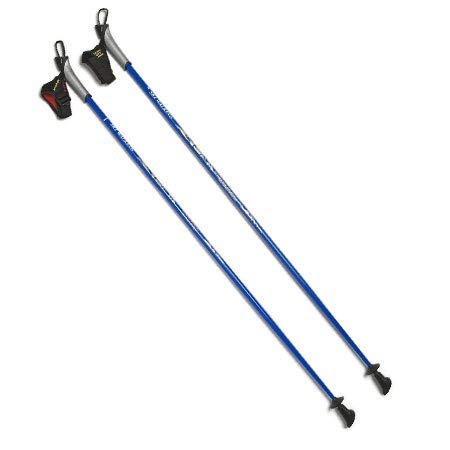
American Nordic Walking System Custom Fit 1-Piece Walking Poles (32 Lengths)
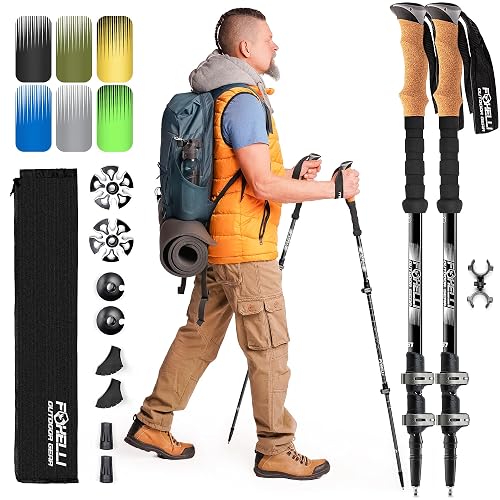
Foxelli Trekking Poles – Lightweight Collapsible Aircraft Grade Aluminum Hiking Poles

Hiker Hunger Outfitters 100% Carbon Fiber Trekking Poles (Cork & EVA Grips)
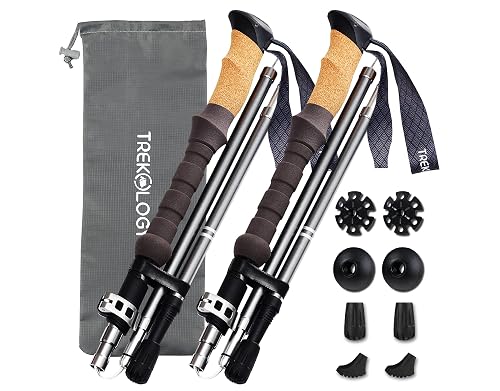
Trekology Trek-Z Cork Grip Collapsible Lightweight Hiking Trekking Poles
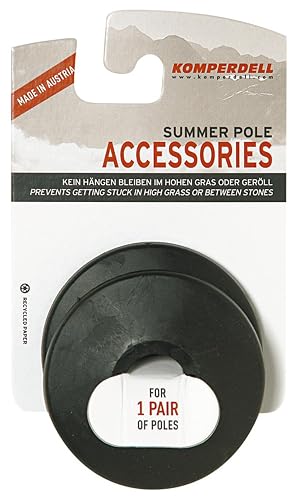
Komperdell Vario Summer Basket for Trekking Pole (Black)

LEKI Ultratrail FX.One Trekking Poles
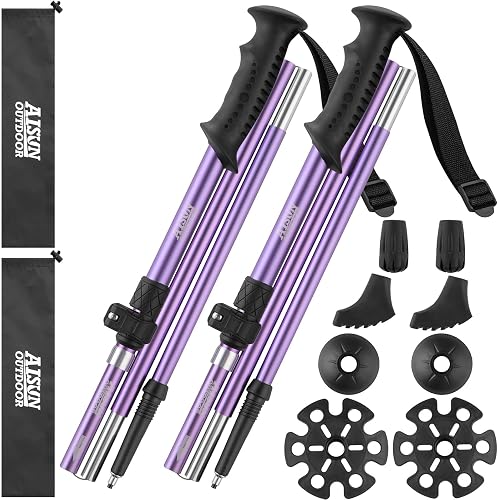
AISUNOUTDOOR Lightweight Adjustable Trekking Poles (Aluminum, Collapsible)
Taking A Closer Look At The Options
These poles skip the folding mechanism entirely. They’re built as single solid shafts, similar to traditional cross-country ski poles, and arrive cut to your barefoot height in one of 32 length options. The brand sources blanks made in ski pole factories, which is part of why the weight and flex feel closer to Nordic equipment than your typical telescoping hiking stick.
For people committed to Nordic walking form, this matters. Real Nordic straps wrap your hand so you can push off through the grip, and carbide tips bite dirt, grass, and snow. You also get rubber paws for pavement, which makes these usable around town or in a physical therapy clinic. The trade-off is obvious: these don’t collapse to fit in a carry-on. You use them at full length, every time.
Positive Takeaways
- Custom-cut from your barefoot height across 32 size options for a precise fit.
- Ski-factory construction delivers a stiffer, more responsive feel than typical twist-lock poles.
- Real Nordic straps support proper push-off technique rather than just holding on.
- Carbide tips handle trail terrain while removable rubber paws protect pavement.
- Final assembly completed in the US, which helps with quality consistency.
Worth Noting
- Non-collapsible design means transport is awkward; plane travelers and backpackers may struggle.
- You commit to a specific length at order, which limits reselling or sharing.
Quick Facts
Who It Suits Best
Committed Nordic walkers and physical therapy users who train close to home and want a pole that matches their form rather than a generic adjustable tube.
Consider Something Else When
Frequent flyers should look at the Foxelli Trekking Poles instead, since those collapse short enough for luggage.
The Foxelli Trekking Poles are the kind of poles you toss in a duffel and forget about until you need them. Each one weighs around 9.4 ounces, collapses down to roughly 21 inches (the length of a small suitcase handle), and extends from about 24 to 54 inches using external flip locks. That range covers everyone from a kid testing out poles to a tall adult on a steep uphill.
The cork grips are a quiet upgrade. Cork absorbs sweat, softens with use, and stays cooler than foam or hard rubber in summer. Compared to the American Nordic Walking System poles above, these trade custom-cut precision for travel-friendly collapsibility. Most weekend hikers and backpackers will find the trade worthwhile.
Practical Pluses
- Collapses to roughly 21 inches for pack carry and airline luggage.
- Wide 24 to 54 inch range covers most adult heights from a single product.
- Cork grips handle sweat better than foam on long summer climbs.
- Flip locks adjust quickly without the slow twisting of twist-lock designs.
Points To Keep In Mind
- Aircraft-grade aluminum is heavier than carbon; you’ll notice the difference on multi-day trips.
- Three-section designs introduce more joints, and flip locks need occasional retightening.
Made For
Backpackers and casual hikers who want a packable aluminum build at a friendly entry tier.
Not Your Match When
Weight-obsessed thru-hikers should consider the Hiker Hunger Outfitters Carbon Fiber Poles instead.
Carbon fiber is the lightweight hiker’s cheat code, and the Hiker Hunger Outfitters poles lean into that fully. The shafts use a 3k carbon weave, a tight basket-weave pattern of carbon fibers that resists flex and torsion, and each pole weighs only about 7.6 ounces. On a long day with a heavy pack, those ounces add up to real fatigue savings.
The dual-material grip is the thoughtful touch: cork on top for the sweating hand position, EVA foam (a soft, closed-cell foam that grips well even when wet) below for the choking-down grip when climbing. Quick flip locks adjust without tools. The honest read is this, you pay more for the weight savings, and carbon can crack under hard side loads.
What Works In Its Favor
- 7.6 ounces per shaft, noticeably lighter than aluminum rivals.
- 3k carbon weave resists torsion under aggressive downhill use.
- Cork-and-EVA grip handles both summer sweat and winter gloves.
- Flip locks adjust fast for terrain changes.
Trade Offs
- Carbon costs more than aluminum for similar length.
- Side-loaded impacts can crack carbon shafts where aluminum would dent and survive.
- Higher cost per pole than the Foxelli set for casual use.
Feature Snapshot
Best Suited To
Long-distance backpackers and thru-hikers tracking every ounce who already know they use poles every mile.
Look Elsewhere When
Casual day hikers who leave poles in the car half the time may do better with the Trekology Trek-Z.
The Trekology Trek-Z hits the sweet spot most hikers actually want: aluminum durability, cork comfort, and a compact Z-fold design. The aero-grade aluminum claim refers to a specific aluminum alloy often used in aircraft structures, chosen here for its strength-to-weight balance. The cork grips mold to your hand over time, and the collapse is short enough to strap to a pack without a fight.
Where the Trek-Z differs from the Foxelli is in the joint style. Z-fold poles hinge rather than telescoping, which makes them faster to deploy and pack away. They’re popular for a reason: the format works for the widest range of weekend hikers, which is why you’ll see them recommended again and again.
The Upside
- Z-fold design deploys and packs faster than telescoping poles.
- Cork grips shape to your hand for a custom feel over time.
- Aero-grade aluminum balances strength and weight for general hiking.
Honest Caveats
- Heavier than the Hiker Hunger carbon build, so multi-day backpackers pay a weight penalty.
- Z-fold hinges need periodic checks for play.
Right Fit For
Recreational hikers who want a comfortable, durable pair without overthinking specs.
A Better Fit Elsewhere
Through-hikers watching pack weight will be happier with the Hiker Hunger Outfitters carbon poles.
This entry is a different beast. The Komperdell Vario Summer Basket is a replacement basket, the small disc that sits a few inches above the pole tip and prevents the shaft from sinking into soft ground. If you already own Komperdell poles and the original basket cracked, fell off, or got chewed by a trail encounter, this is the official fix.
It’s not a hiking pole on its own, but it earns its spot because accessories often matter more than people expect. A missing basket turns a summer hike into a frustrating game of catching the pole tip in soft dirt. The basket fits the Vario system specifically, so check your pole’s compatibility before ordering.
The Good Stuff
- Genuine Komperdell replacement part, so fit stays consistent.
- Summer-specific design suits dry-trail and packed-snow conditions.
Where It Is Less Suited
- Only useful for existing Komperdell pole owners.
- Not a standalone hiking pole, so it has no value on its own.
Perfect Match For
Existing Komperdell pole owners who lost or damaged a summer basket.
Skip It When
You need an actual pole; the Trekology Trek-Z is the friendlier all-around pick from this list.
LEKI has long been a benchmark brand for serious outdoor poles, and the Ultratrail FX.One is their take on the trail-running category. Each pole weighs roughly a quarter pound, breaks down into three 14.5-inch sections at the push of a button, and uses carbon construction to keep the swing weight, the feel of how heavy the pole seems when you move it forward, surprisingly low.
The Trail Trigger Shark grip is a foam grip with a strap that adjusts to your hand with one pull. That sounds small, but on a hot run when you don’t want to think about buckles, it matters. Compared to the Hiker Hunger carbon poles, you trade some cost savings for LEKI’s refinement and warranty infrastructure.
Features That Help
- Carbon build keeps swing weight minimal for fast movement.
- Push-button break to 14.5-inch sections stashes in a running vest.
- Trail Trigger Shark grip adjusts with one pull, not fiddly buckles.
Points To Weigh
- Costs more than most casual hikers want to spend.
- Narrow trail-run focus may be wasted on slow weekend hikes.
Technical Highlights
Who Will Love This
Trail runners and ultralight hikers who move fast and want a race-grade pole.
Another Choice May Suit
Recreational hikers will find more value in the Trekology Trek-Z at a much friendlier cost.
The AISUNOUTDOOR poles focus on shared use. The height range goes from about 43 inches up to 51 inches, which covers most teens, average-height women, and kids comfortably. Each pole weighs just under 11 ounces, collapses for travel, and the bundle even includes a disposable rain poncho.
Aircraft-grade aluminum keeps the construction honest without overbuilding for casual use. The shorter max height rules out taller adults, which is the honest trade-off. For a family that wants a spare pair for guests, occasional walkers, or a growing kid, that trade-off is a feature, not a bug.
The Practical Payoff
- Short minimum height suits kids and shorter adults.
- Collapses small for car trunks and carry-on bags.
- Bundled rain poncho adds weather coverage for sudden showers.
Small Limitations
- 51-inch max height leaves taller hikers under-extended on uphills.
- Aluminum construction weighs more than carbon alternatives.
- Disposable rain poncho is single-use and ends up in landfill.
Feature Card
Whose Shelf It Belongs On
Families who need one shared pair for guests, kids, or shorter adults on casual day hikes.
Reach For A Different Pick When
Taller adults or frequent backpackers will prefer the Hiker Hunger Outfitters carbon poles.
What Matters Most Before Choosing Adjustable Hiking Poles
Shaft Material And Weight Trade-Offs
Aluminum and carbon dominate the category. Aluminum costs less, bends rather than breaks under impact, and weighs more. Backpackers watching every ounce lean carbon; day hikers who occasionally hit a rock face lean aluminum because the cheaper pole survives the impact and the dent is a story, not a disaster.
Lock Mechanisms And Collapsibility
Telescoping poles use either twist locks (rotate to tighten) or flip locks (a lever snaps closed). Twist locks are lighter but slower to adjust; flip locks are faster and easier with cold hands. Z-fold poles collapse on a hinge, which speeds setup but adds a maintenance point. Match the mechanism to how often you change length mid-hike.
Grip Choice And Climate
Cork absorbs sweat, softens with use, and feels cool in summer. EVA foam grips cheaper, lighter, and works fine in cool weather. For hot, sweaty climbs, cork earns its extra cost. For shoulder-season use or tight budgets, foam is the sensible call.
Sizing And Fit For Real Bodies
A common rule: with the pole planted, your elbow should sit at roughly 90 degrees when you’re standing upright. Adjustable poles with wider ranges accommodate growing kids, shared use, and steep terrain changes. One-piece custom-fit poles fit one body perfectly and no one else.
Smart Picks And Smarter Habits
Wrong Turns To Avoid
A surprisingly common slip is buying poles without checking the collapsed length. Travelers have discovered this the hard way at the airport. Another trap is choosing carbon fiber for occasional use; the weight savings don’t repay the cost if you’re driving to the trailhead and walking ten easy miles. Finally, skipping the grip material check leads to hot, slippery hands in summer if you bought cheap foam expecting cork comfort.
Where The Extra Money Goes
Higher-tier poles spend the extra cost on refined joints, better lock mechanisms, lighter materials, and tighter tolerances. For thru-hikers and trail runners, that matters every mile. For casual weekend use, the mid-tier often makes more sense: you get most of the comfort and durability without paying for race-grade specs you won’t notice on a four-mile loop.