
The right water setup on the trail can turn a grueling day into a smooth one. Whether you’re filtering from a mountain stream, refilling at a sketchy hostel tap, or simply trying to keep grit out of your drink on dusty switchbacks, your bottle and filter combo does a lot of quiet work. This roundup covers ten options spanning ultralight straws, hand-pump powerhouses, integrated filtered bottles, and UV purifiers, so you can match gear to terrain, trip length, and how paranoid you are about that puddle by the campsite.
The Picks In Brief
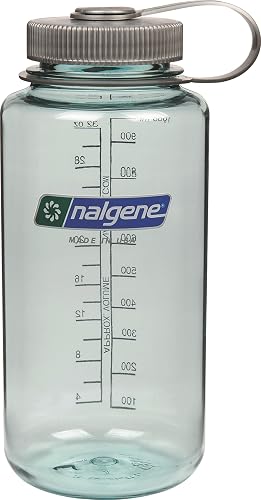
Nalgene Sustain Tritan 32 oz Wide Mouth Bottle
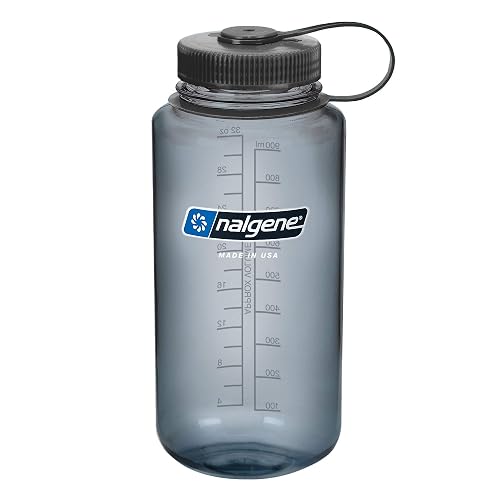
Nalgene 32 oz Tritan Wide Mouth Bottle

LifeStraw Personal Water Filter
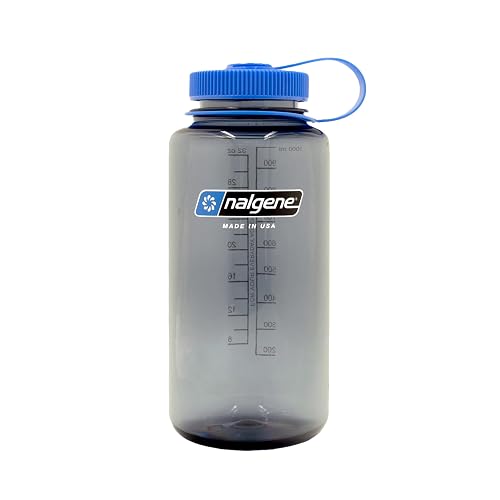
Nalgene 32 oz Wide Mouth Bottle (Recycled Resin)
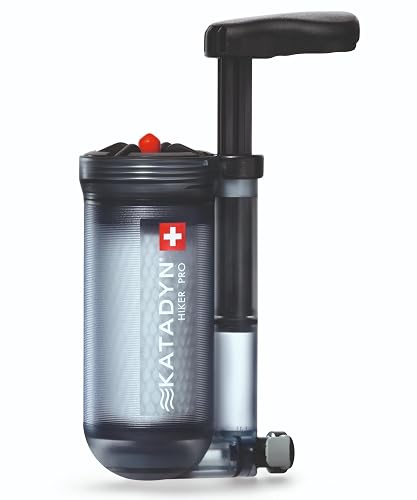
Katadyn Hiker Pro Transparent Hand Pump Filter
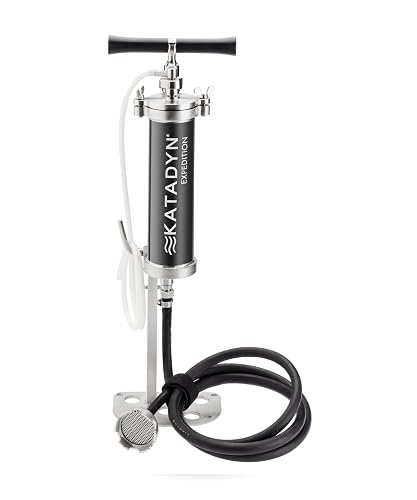
Katadyn KFT Expedition Stainless Steel Hand Pump Filter
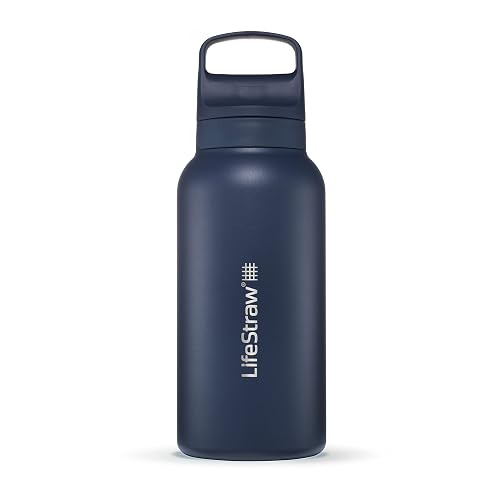
LifeStraw Go Series Insulated Steel Filter Bottle 1L
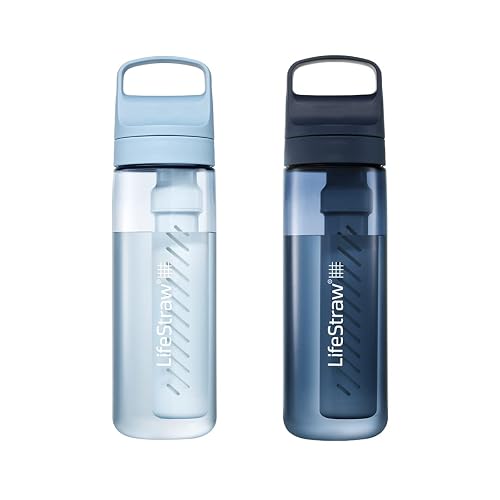
LifeStraw Go Series Filter Bottle 22 oz 2-Pack
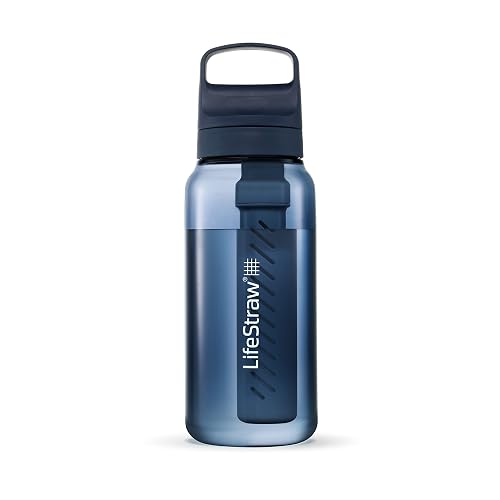
LifeStraw Go Series Filter Bottle 1L Aegean Sea

SteriPen Adventurer Opti UV Purifier
The Details Behind The Selections
Wide-mouth Nalgene bottles have anchored trail packs for decades, and the Sustain version keeps the familiar profile while shifting the resin to a blend that incorporates 50 percent plastic waste pulled from landfill streams. The opening stays large enough to drop in standard filter cartridges, ice cubes, or a cleaning brush without contortion, and the 32-ounce capacity covers a couple of hours of steady sipping on a warm ridge walk.
If you already own a pump filter or a screw-in purification cartridge, this bottle slides into that kit without adapters. The trade-off worth knowing: the co-polyester body tolerates a wide temperature range but isn’t insulated, so cold drinks warm up faster than they would in a double-walled vessel.
Everyday Perks
- Wide mouth accepts most aftermarket hiking filter cartridges without fiddling
- 32 oz covers a meaningful stretch between refills on a moderate pace
- Recycled-content resin offers a smaller material footprint than virgin plastic
- Top-rack dishwasher safe, which simplifies cleanup after muddy days
Things To Consider
- No insulation, so chilled water climbs toward lukewarm on a hot afternoon
- Single-wall co-polyester can dent or scuff when tossed loose in a pack
- Filter cartridge sold separately from the bottle itself
Who It Suits Best
Backpackers already running a separate pump or inline filter who want a sturdy, filter-friendly reservoir at a familiar weight.
A Better Fit Elsewhere
Day hikers who want a single integrated solution should look at the LifeStraw Go Series 1L bottle instead.
Before the recycled variants existed, this was the wide-mouth shape everyone pictured when you said “hiking bottle.” The opening is generously sized, so dropping in ice or a hand-wash brush takes no thought, and the 32-ounce volume maps well to typical section-hike water carries. The gray-with-black-lid colorway is unflashy on purpose, and the loop-top lid clips to a pack strap or carabiner without complaint.
Where this Nalgene earns its keep on filtering hikes is the simple compatibility with most aftermarket filter cartridges. You screw on a standard 63 mm thread filter and the bottle doubles as the clean reservoir. The catch is the same as the previous pick: no insulation, and the Tritan body can take on a slight plastic taste in the first few uses until it seasons.
Practical Pluses
- Generous mouth simplifies refilling from shallow streams and trickling taps
- Proven Tritan construction handles drops and pack abuse on long routes
- Accepts a wide range of inline filter cartridges on a standard thread
- Volume markings on the side help track intake over a hot day
Worth Noting
- No thermal barrier, so cold water warms noticeably above 80°F ambient
- Plastic taste can linger for the first few fill cycles
- Wider profile may not fit in smaller pack side pockets
Made For
Thru-hikers and weekend backpackers who want a no-nonsense bottle that pairs with their existing filter hardware without buying a new ecosystem.
Skip It When
Travelers wanting a built-in filter should reach for the LifeStraw Go Series 1L instead, since it bundles filtration.
The classic LifeStraw is not a bottle, and that is precisely the appeal. It works as a straw-style inline filter you drink through directly, which means you can kneel beside a creek, dip the end in, and pull clean water without hauling an extra reservoir. The hollow-fiber membrane inside targets bacteria, parasites, microplastics, and sediment, and the small form factor tucks into a hip-belt pocket or a ditty bag on fast-and-light missions.
For solo backpackers watching every gram, this strips the kit down to a filter plus whatever bottle you already carry. The trade-off is real, though: you cannot fill a bottle in advance and stash it, and the flow rate slows as the filter loads with sediment over time. It’s a supplement or a minimalist primary, not a group solution.
The Good Stuff
- Tiny footprint and very light weight suit ultralight packing lists
- No moving parts, so field maintenance amounts to blowing out water
- Effective against common bacteria and parasites found in backcountry water
- Pairs with any bottle or bladder you already own
Room For Improvement
- Drinking directly is awkward mid-hike compared to a built-in filter bottle
- Flow rate drops as the membrane collects silt, requiring backflushing
- Not a practical choice for filtering water for a partner or group
Right Fit For
Solo hikers and thru-hikers prioritizing pack weight who don’t mind drinking straight from a stream.
Look Elsewhere When
Groups or couples should look at the Katadyn Hiker Pro Transparent for faster, shareable output.
This Nalgene leans into the same wide-mouth geometry as the long-running classic but swaps in a resin made through next-generation recycling that diverts plastic waste from landfills. The bottle still reads and handles like the original 32-ounce wide mouth you’ve seen on a thousand packs, with the same threading that accepts most hiking filter cartridges without fuss.
Choosing it over the standard version is mostly an environmental vote rather than a performance shift. You get the same rugged Tritan-style feel, same pour behavior, and same filter compatibility, in our view. The honest trade-off: it costs a touch more for the recycled material, and the resin still needs to be hand-washed occasionally to keep the thread clean for filter swaps.
A Few Highlights
- Resin derived from plastic waste supports circular material use
- Same wide-mouth filter compatibility as standard Nalgene
- 32 oz volume works for a half-day between reliable refill points
Points To Note
- Premium for the recycled material over the conventional resin
- Still a single-wall bottle without insulation
- Filter hardware sold separately
Best Suited To
Hikers and commuters who want a familiar wide-mouth bottle with a lower virgin-plastic footprint.
Consider Something Else When
Anyone needing integrated filtration in one package should pivot to the LifeStraw Go Series Insulated Steel bottle instead.
The Hiker Pro Transparent is built around a simple idea: show the filter cartridge so you can see when it’s loading up. The clear body lets you watch sediment build in real time, and at around 11 ounces it’s a manageable carry for solo backcountry trips. The microfilter pushes roughly a liter per minute under normal use, and it threads onto most standard water bottles and hydration bladders.
Compared to the LifeStraw straw approach earlier in this list, you get a real pumping mechanism that fills a bottle you can cap and walk with. The trade-off shows up in maintenance: the cartridge needs backflushing on muddy days, and pump-action takes more attention than drinking through a straw. Field replacement parts are also limited compared to the heavy-duty Expedition model.
Everyday Advantages
- Transparent body makes cartridge loading obvious at a glance
- Around 1 L/min flow rate keeps solo refills moving
- Threads onto most standard bottle openings without adapters
- Compact enough to fit in a pack lid without a fight
Trade Offs
- Pumping adds effort compared to a passive straw filter
- Cartridge backflushing is a regular chore on silty water sources
- Not designed to filter for groups at speed
Who Should Grab It
Solo backpackers who want bottle-ready filtered water without hauling the heavier Expedition-grade pump.
Reach For A Different Pick When
Group base camps and trek leaders should step up to the Katadyn KFT Expedition for higher output.
The Expedition is the workhorse of the Katadyn line, and it shows. A ceramic element that handles up to roughly 100,000 liters before replacement, a stainless steel body that shrugs off the kind of abuse expedition travel dishes out, and a 4 L/min output that fills bladders and jerry cans instead of dribbling into a single bottle. This is the filter you’ll see on relief missions, military treks, and base-camp setups where downtime is not an option.
Where it pulls ahead of the Hiker Pro covered earlier is throughput and longevity, assuming a group actually needs that scale. The honest read is that this is overkill for a weekend solo loop: the steel body adds real weight, and the ceramic element wants a steady cadence to stay clean. You trade away nimble pack-and-go simplicity for dependable volume.
Real-World Strengths
- 4 L/min output suits group water runs at camp
- Ceramic element rated for tens of thousands of liters of use
- Stainless housing stands up to hard transport and rough conditions
- Fits bladders, jerry cans, and group containers with standard fittings
A Few Limitations
- Heavier than solo-oriented hand pumps, depending on your carry tolerance
- Ceramic element needs regular cleaning when fed silty water
- Overkill for one- or two-person weekend trips
Built With In Mind
Group leaders, expedition organizers, and emergency responders who need high output and a filter that lasts.
Where A Sibling Pick Shines
Solo backpackers will find the Katadyn Hiker Pro Transparent a more packable match.
The Go Series Insulated Steel bottle stitches together a stainless steel outer shell, a built-in 2-stage filter, and a liter of carrying capacity. The 2-stage setup handles bacteria, parasites, microplastics, chlorine, and sediment, which means the same bottle can move from a trail refill to a hotel tap to a road-trip gas station without a separate cartridge swap. The steel body also adds a layer of insulation, so cold water stays cooler longer than in the Nalgene bottles earlier in this list.
For travelers and hikers splitting time between wild water and city taps, this consolidates a filter and a vessel into a single object. Filter replacement cartridges are the long-term cost to plan around, depending on how much you push through it. The bottle itself also weighs more than a plastic wide-mouth thanks to the steel construction.
What Earns Its Place
- Built-in 2-stage filtration handles both wilderness and urban sources
- Stainless steel adds insulation and a more durable feel
- 1 L volume covers solid between-refill stretches
- Reusable filter reduces single-use plastic bottle waste
Honest Caveats
- Heavier than plastic wide-mouth options
- Replacement filters add to long-term ownership cost
- Steel body can dent if dropped hard on rock
Whose Shelf It Belongs On
Travelers and hikers who bounce between city taps and backcountry sources and want one bottle that handles both.
Swap It Out When
Thru-hikers focused purely on weight should look at the LifeStraw Personal straw filter instead.
This is the Go Series in a smaller 22-ounce form factor, and the 2-pack framing makes it a natural fit for couples, travel partners, or anyone who wants a spare bottle stashed in a different bag. Each bottle carries the same 2-stage filter that addresses bacteria, parasites, microplastics, chlorine, and sediment, so you get the same protection across two separate vessels.
The 22-ounce capacity is more compact than the 1L version, which fits smaller daypack pockets and personal item pouches more comfortably. The honest read: you give up volume per fill and pay for two filter replacements down the line, but the redundancy is worth it for shared travel kits.
Useful Touches
- Two bottles cover both members of a travel pair from one purchase
- Compact 22 oz size fits in smaller bags and side pockets
- 2-stage filter handles varied water sources on the same trip
Points To Keep In Mind
- Smaller volume means more frequent refills than the 1L Go bottle
- Two replacement filters to track over time
Perfect Match For
Couples and travel partners who want matched filtered bottles without buying individually.
Another Choice May Suit
Solo long-haul travelers who want maximum volume should look at the LifeStraw Go Series 1L Aegean Sea bottle instead.
The 1L Aegean Sea version of the Go Series is the middle path between the steel-insulated model and the 2-pack plastic version above. The integrated 2-stage filter still pulls out bacteria, parasites, microplastics, chlorine, and sediment, but the lighter body trims weight for trail use. Aegean Sea gives it a deep, calm blue finish that reads well on a desk as well as a daypack.
For commuters who move from a city tap to a park fountain to a trail stream, the all-in-one format removes a layer of decision fatigue. You may find the plastic body less rugged than the steel sibling, and you still need to budget for filter replacements on a long timeline. The trade-off is a lighter carry for everyday use.
What Helps Most
- All-in-one design removes the need to attach separate cartridges
- 1 L capacity covers a solid between-refill window
- Effective against a wide range of contaminants for varied sources
- Plastic body keeps weight manageable on long walks
Potential Drawbacks
- Replacement filter cost over multi-year use
- Less impact-resistant than the steel Go bottle
Who Will Love This
City-to-trail commuters and travelers who want one bottle that adapts between tap, hotel, and trail water without a second purchase.
Not Your Match When
Hot-climate day hikers who want longer cold retention should pick the LifeStraw Go Series Insulated Steel bottle instead.
The Adventurer Opti takes a different route: instead of physically straining water through a membrane, it zaps clear water with UV light to neutralize bacteria and viruses. The pen-style form factor slips into a side pocket, and it runs on two CR123 lithium batteries that are easy to find at camera shops and outdoor retailers worldwide, which matters for global travel.
Compared to the straw and pump filters in this list, UV purification is fast on a single liter and adds no squeeze resistance, depending on your patience for waiting out the treatment cycle. The catch: the water has to be clear, so turbid sources need pre-filtering or settling, and the lamp’s effectiveness drops if the glass gets scratched or dirty.
Useful Strengths
- UV approach handles bacteria and viruses in clear water sources
- Pen-style form factor carries like a marker in a side pocket
- CR123 batteries are widely available in travel destinations
Small Caveats
- Only effective on clear water, so silty sources need pre-treatment
- Treatment cycle adds wait time per liter
- Lamp window scratches reduce performance over years of use
The Right Fit
International travelers and emergency kit builders who often encounter clear tap water and want a fast, compact purifier.
A Better Fit Elsewhere
Hikers drawing from silty mountain streams should reach for a membrane filter like the LifeStraw Personal or Katadyn Hiker Pro Transparent instead.
What To Weigh Before Choosing Filtering Water Bottles For Hiking
Filter Type and What It Actually Removes
The first fork in the road is whether you want a physical membrane filter, a UV purifier, or an integrated bottle. Membrane filters (LifeStraw, Katadyn) strain out bacteria, parasites, and microplastics mechanically, so they handle turbid water but slow as they clog. UV units like the SteriPen neutralize microorganisms with light but need clear water to work, so they pair poorly with silty streams. Integrated bottles like the LifeStraw Go Series combine a vessel with a built-in filter, which is convenient but locks you into one filter ecosystem.
Weight, Capacity, and Trip Length
Capacity and weight run in opposite directions here. The LifeStraw straw is the lightest option but only works as you drink, so you still need a bottle. The Katadyn Expedition is the heaviest and most capable, suiting base camps over fast hiking days. For weekend trips, a 1L integrated bottle or a 32 oz wide-mouth Nalgene with a screw-on filter usually strikes the right balance, assuming your group size stays small.
Threading, Compatibility, and Long-Term Cost
If you already own a pump filter, make sure the bottle threading matches before you buy. Most hiking bottles use a standard 63 mm thread that accepts common inline cartridges, but not all do. Replacement filter cartridges are the recurring cost people underestimate, especially on integrated bottles that need a specific cartridge shape. Budget for that, depending on how often you refill, and check spare-part availability before committing to a system you can’t maintain on the road.
Care and Maintenance in the Field
Filters want attention. Straw-style filters like the LifeStraw Personal need occasional backflushing to clear silt. Pump filters want a regular cleaning cadence, especially on muddy days. UV lamps need a clean glass window and a working battery to stay effective. The honest read: the simpler the maintenance, the more likely you are to actually do it after a long day on the trail.
Smart Trade-Offs Across These Picks
Where Shoppers Go Wrong
A common mistake is buying the lightest straw filter and expecting to fill bottles on the move, which the straw design is not built for. Another trap is picking an integrated bottle without checking replacement filter availability, since some proprietary cartridges are harder to source in remote areas. People also tend to ignore water clarity. UV purifiers like the SteriPen look appealing on paper, but they underperform on the silty stream water hikers actually meet on real trails.
When Paying More Pays Off
Higher-tier options like the Katadyn Expedition or the insulated steel Go Series earn their price through durability, throughput, and longer filter life spans, in our view. Spending up makes sense for group trips, repeated heavy use, or travel where you need both insulation and filtration in one object. For a casual day-hiker who refills twice from a clear stream, a basic wide-mouth Nalgene and a straw filter cover the same job at a fraction of the weight and cost.
Frequently Asked Questions
Do filtering water bottles actually work on backcountry streams?
Yes, when the filter matches the water conditions. Membrane filters handle turbid stream water well, while UV purifiers need pre-clear water to be effective, and both neutralize bacteria and parasites that cause common backcountry illnesses.
How long do replacement filter cartridges last?
It depends on water quality and how often you refill. A typical integrated bottle filter handles several hundred liters before noticeable flow loss, while a ceramic element on the Katadyn Expedition can run for tens of thousands of liters with cleaning. Silt-heavy sources shorten that lifespan considerably.
Can I use a filter bottle with hot drinks?
Most filter bottles are designed for cold or room-temperature water, and hot liquids can damage the membrane and threading. Check the manufacturer’s temperature range, which the Nalgene bottles list at -40 to 212°F, but most filters are not rated for hot brewing.
Are UV purifiers safer than physical filters?
Both approaches target the same contaminants but work differently. UV is fast on clear water and handles viruses, while membrane filters handle turbid water and physical sediment better. The safer pick depends on the water source you expect to encounter, not the technology itself.
What’s the lightest filtering water bottle for hiking?
The LifeStraw Personal straw is the lightest dedicated filter in this list, though it’s paired with whatever bottle you already own rather than bundled into one. For an integrated option, the LifeStraw Go Series plastic 1L stays modest in weight while keeping the filter built in.
Closing Thoughts
The right filtering water bottle comes down to your water sources, group size, and how much kit you want to carry. Solo ultralight hikers tend to do well with a straw filter and a light bottle, while groups and base-camp setups need a pump with real throughput. Travel-heavy users who bounce between city taps and streams get the most from an integrated 1L bottle. Pick the option that matches your most common scenario, and the rest of the trail takes care of itself.