
A good pair of folding hiking sticks changes how a long day on the trail feels, especially when the elevation stacks up or the grade turns rocky. Most hikers notice the difference on the first real climb: less strain on the knees, steadier footing on loose scree, and a more rhythmic cadence that keeps fatigue from sneaking in. The picks below cover the main trade-offs you will face, from ultralight carbon setups for thru-hikers to sturdier aluminum options built for year-round abuse.
An Overview Of The Picks
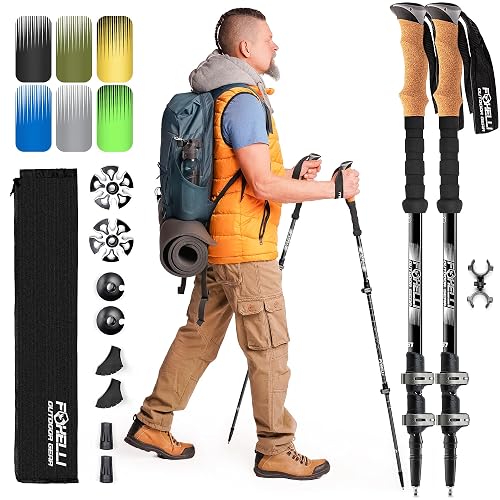
Foxelli Aluminum Trekking Poles with Cork Grips

Hiker Hunger Carbon Fiber Trekking Poles with Cork & EVA
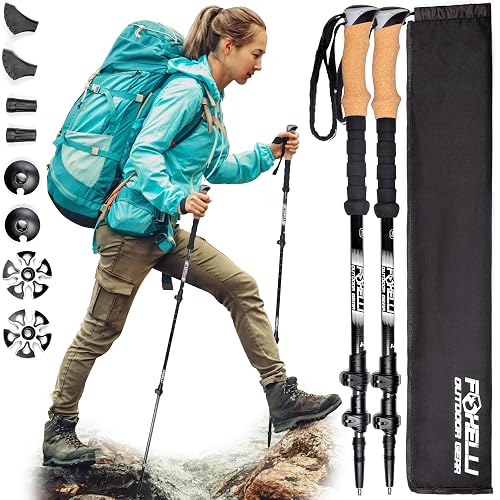
Foxelli Carbon Fiber Trekking Poles with Cork Grips
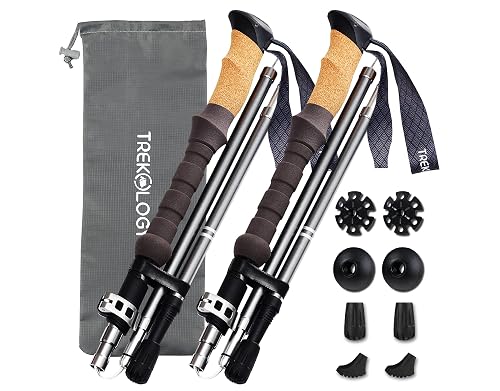
Trekology Trek-Z Cork Grip Collapsible Hiking Poles

LEKI Ultratrail FX.One Trekking Poles
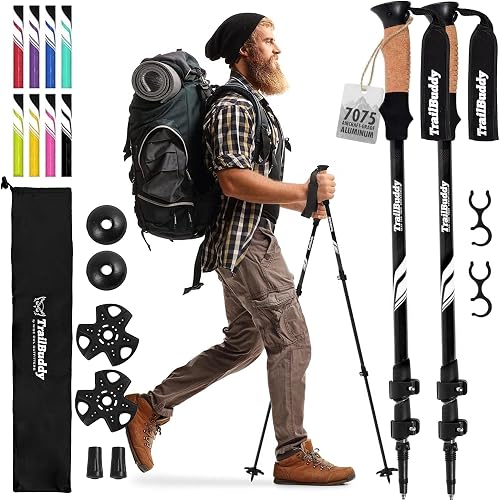
TrailBuddy 7075 Aluminum Trekking Poles
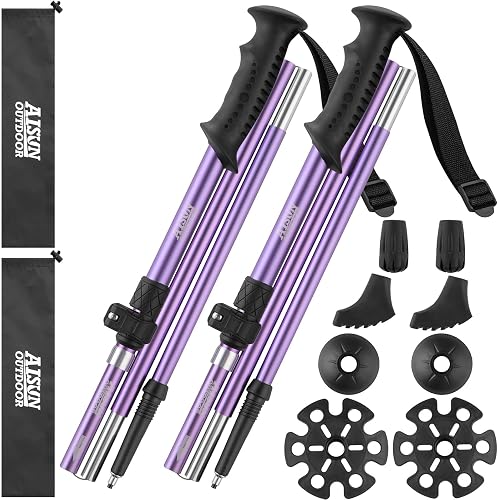
AISUNOURDOOR Aluminum Adjustable Trekking Poles
A Closer Look At Each Pick
These Foxelli poles are the kind of straightforward pair most weekend hikers end up with, and for good reason. The shaft uses aircraft-grade aluminum, which bends rather than snaps when the inevitable tip-jam happens on a buried root. The cork grip section feels cooler than foam in summer heat, and the extension range covers a wide span of user heights.
For someone stepping into trekking poles for the first time, the flip-lock adjustment is friendlier than twist locks because you can see and feel the clamp close. The all-terrain accessories in the box cover most situations, so no extra shopping is required before your first outing.
Benefits That Matter
- Aircraft-grade aluminum shaft tolerates rough handling and accidental drops on rock
- Cork grips wick moisture and stay cooler than foam on hot, sunny climbs
- Flip-lock mechanism is simple to adjust on the fly, even with cold or gloved hands
- Wide extension range fits shorter and taller hikers without swapping gear
Honest Caveats
- Aluminum is heavier than the carbon picks below, which matters on long-mileage days
- Cork absorbs sweat over time and may need an occasional wipe to stay fresh
At A Glance
Who It Suits Best
New hikers and casual weekend trekkers who want a durable, low-fuss pole without paying for ultralight carbon.
Look Elsewhere When
Thru-hikers counting every gram should look at the Hiker Hunger Carbon Fiber Trekking Poles instead.
The Hiker Hunger poles stand out for long-distance hikers who care about pack weight and arm fatigue over multi-day routes. The shaft is built from 3k carbon fiber, the same woven layer style used in higher-end sporting gear, which keeps the swing weight low without feeling flimsy under load. The dual-material grip combines cork on top with EVA foam lower down, so the hand always has a place to land.
Unlike the aluminum Foxelli above, this pair is more about saving energy than surviving abuse. On rolling terrain where the poles are in motion for hours, the lighter swing weight adds up fast.
Features That Help
- 3k carbon fiber construction keeps the pole light enough for long mileage days
- Cork-and-EVA grip offers two hold zones for changing terrain and steep descents
- Quick flip locks stay tight once set, even after repeated packing and unpacking
- Low swing weight reduces arm pump during all-day trekking
Trade-Offs To Consider
- Carbon can crack under sharp, focused impacts, so rocky descents deserve more care
- Adjustment range is tighter than the Foxelli aluminum, so very tall or very short hikers should double-check fit
Built With In Mind
Backpackers and thru-hikers logging big weekly mileage who want carbon weight savings without the premium racing price.
Reach For A Different Pick When
Hikers pounding rocky, technical trails in rough weather should consider the TrailBuddy 7075 Aluminum Trekking Poles for extra durability.
The carbon version of Foxelli’s trekking pole takes the everyday-friendly fit of the aluminum pair and trims weight off the swing. For hikers who put on a lot of miles across mixed terrain, that weight drop is the single biggest upgrade. The cork grip is shaped to settle into the palm, and the extension range covers most adult heights without compromise.
Compared with the Hiker Hunger model, the Foxelli carbon design is slightly more forgiving on lock feel, though both use a similar flip-style mechanism. For someone who already knows they like Foxelli sizing and wants the same body in carbon, this is the natural step up.
What Works In Its Favor
- Carbon fiber shaft cuts weight noticeably for hikers used to aluminum
- Contoured cork grip reduces hot spots on long descents
- Flip locks are easy to read and confirm at a glance
- All-terrain accessories cover snow, mud, and standard trail use
Things To Weigh
- Carbon shafts can develop hairline cracks after hard, repeated side-loading
- Replacement parts can be harder to source than for aluminum models
Feature Snapshot
Who Should Grab It
Multi-day backpackers who want the Foxelli fit and accessory kit in a lighter carbon package.
Not Your Match When
Racers looking for the lightest possible setup should look at the LEKI Ultratrail FX.One Trekking Poles instead.
The Trek-Z design is built for hikers who pack light and travel often. The folding Z-style construction collapses down to a small footprint, which slips into carry-on luggage or a daypack without dominating the space. The cork grip section is comfortable on a short hike, and the aluminum shaft keeps the price approachable for people just testing the waters.
For someone flying into a destination hike or renting a car with limited cargo space, the compact folded length removes a real headache. It’s not the lightest pole here, but the convenience tradeoff is hard to beat for travel-heavy hikers.
What Earns Its Place
- Z-fold design packs down small enough for carry-on travel and daypacks
- Aero-grade aluminum shaft balances weight and durability for casual use
- Cork grip feels natural and absorbs light sweat
- Quick setup means less fiddling at the trailhead
Points To Note
- Z-fold joints are more numerous than telescoping poles, which means more potential snag points over years of use
- Aluminum weight shows up on very long days compared with the carbon options above
Key Specs
Right Fit For
Travelers and day hikers who need a folding hiking stick that disappears into luggage without a fight.
Swap It Out When
Long-distance backpackers should swap in the Hiker Hunger Carbon Fiber Trekking Poles for weight savings on the trail.
The LEKI Ultratrail FX.One is aimed at trail runners and fast hikers who treat their poles like part of their stride. The carbon construction keeps the per-pole weight around a quarter pound, and the three-section design collapses to roughly 14.5 inches, small enough to stash in a running vest or race pack. The foam Trail Trigger Shark grip is shaped for a one-handed quick grab, which matters when the pace is high.
For most recreational hikers, this is more pole than the trail calls for, and the price reflects that. Where it earns its keep is during tempo days, training runs on technical terrain, and any scenario where pole weight directly affects pace.
Noteworthy Benefits
- Ultralight carbon build keeps swing weight nearly invisible at race pace
- Three-section folding collapses to a pack-friendly length
- Push-button release makes deployment fast on a moving start line
- Foam grip conforms to the hand during sweaty, high-output efforts
Soft Spots
- Specialized design carries a higher cost that recreational hikers may not justify
- Foam grip wears faster than cork under heavy, repeated use
Quick Facts
Perfect Match For
Trail runners and fast hikers who want the lightest folding hiking sticks available without sacrificing rigidity.
Where Another Pick Suits Better
Casual walkers and weekend hikers will get more value from the Foxelli Aluminum Trekking Poles for the same comfort at a friendlier price.
The TrailBuddy pair trades the ultralight chase for raw toughness. The shaft uses 7075 aluminum, the same grade found in high-stress bike and climbing gear, which bends under load rather than snapping clean. For seniors, balance-focused walkers, and anyone hauling gear into rough country, that failure mode is the safer trade.
Adjustable height settings make these accessible to a wide range of users, and the included accessories cover muddy, rocky, and standard trail conditions. The honest read is that these weigh more than carbon, but for many walkers, dependability matters more than grams.
Strengths Worth Knowing
- 7075 aluminum shaft handles rough treatment and cold-weather use without brittleness
- Wide height range fits both shorter adults and seniors using poles for balance
- Secure locking system stays put under heavy downhill pressure
- Complete accessory kit covers most trail conditions out of the box
Points To Keep In Mind
- Heavier swing weight will wear on hikers logging very long days
- Grip shape favors a neutral hold, which may not suit users with very small or very large hands
Spec Overview
Whose Shelf It Belongs On
Seniors, casual walkers, and hikers tackling rough terrain who prioritize a pole that can take punishment over saving weight.
Consider Something Else When
Thru-hikers counting pack weight should consider the LEKI Ultratrail FX.One Trekking Poles for a lighter long-distance option.
The AISUNOURDOOR pair is a sensible starting point for anyone curious about folding hiking sticks without committing to a higher price. The aluminum shaft keeps the weight manageable at just under a pound per pole, and the adjustable range from roughly 43 to 51 inches covers a useful spread of user heights. The inclusion of a disposable raincoat in the box is a small touch that makes the package feel like a complete starter kit.
These poles are not designed for aggressive backcountry use, but for neighborhood walks, vacation trails, and first hikes, they do the job without drama.
Where It Delivers
- Accessible price point for first-time pole users
- Adjustable height range covers most adult walkers and older kids
- Lightweight aluminum shaft is easy on the wrists during casual outings
- Disposable raincoat included adds value for spontaneous weather changes
Honest Caveats
- Build quality is lighter than the aluminum options above, so longevity under heavy use is limited
- Lock mechanism may need periodic checking on rougher terrain
Feature Rundown
Best Suited To
Casual walkers, vacationers, and first-timers looking for an inexpensive way to try folding hiking sticks on easy terrain.
Where A Sibling Pick Shines
Anyone who hikes weekly or tackles rougher trails will get better long-term value from the Foxelli Aluminum Trekking Poles with Cork Grips.
What Matters Most Before Choosing Folding Hiking Sticks
Shaft Material and Real-World Weight
Aluminum and carbon fiber are the two main shaft options you will see. Aircraft-grade aluminum is heavier but bends instead of breaking when the pole takes a hard hit, which makes it a forgiving choice for beginners and rough terrain. Carbon fiber is lighter and reduces arm fatigue on long days, but it can crack under sharp, focused impacts. For hikes under a few miles, the weight difference barely registers. For multi-day backpacking trips, the savings add up fast.
Lock Mechanism and Adjustment Range
Flip locks and twist locks each have a fan base. Flip locks are easier to operate with cold hands and are simple to confirm at a glance, while twist locks are less likely to snag on brush. The adjustment range matters most if the poles are shared between users of different heights, and a wider range also lets you tune pole length to slope angle on steep terrain.
Grip Material and Long-Day Comfort
Cork grips manage sweat and stay cooler in summer, though they need occasional cleaning. EVA foam grips are softer out of the box and dry quickly, but they tend to wear faster on the upper surface. For most hikers, the right grip comes down to climate and personal preference more than any objective measure.
Smart Choices Before You Buy
Common Slip Ups First-Timers Make
Buying poles that are too short is the single most common mistake, since taller users need full extension to keep their elbows at roughly 90 degrees. Skipping the wrist strap adjustment is another pitfall, because proper strap use transfers load off the grip and into the forearm. Locking mechanisms also need a quick check before every hike, since a slipped lock on a downhill stretch is a real stumble risk.
Where The Extra Money Actually Goes
Higher-priced folding hiking stakes typically put the budget into carbon fiber shafts, refined grip shapes, and tighter machining on the locking joints. Those upgrades matter most for thru-hikers and fast hikers who feel every extra gram. For weekend use, mid-range aluminum poles usually cover the same practical ground without the premium cost.