
A good pair of hiking sticks quietly takes pressure off your knees, steadies you across loose gravel, and turns a steep climb into something your legs can actually finish. The hard part is matching the pole to the ground you cover most often, whether that’s a paved greenway, a technical alpine scramble, or a flat nature loop with the dog. This roundup sorts through eight very different options, from handcrafted wooden staffs to collapsible aluminum pairs and trail-ready medallions, so you can pick the one that fits how you actually move outside.
The Shortlist At A Glance
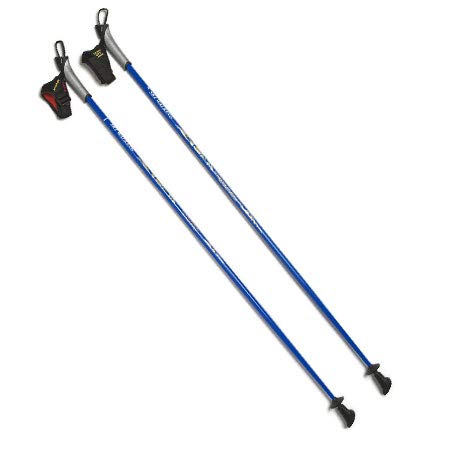
Nordic Walking Poles Custom Fit Non-Collapsible Hiking Trekking Therapy

Mountain Man Walking Stick, Dark Wood 60″
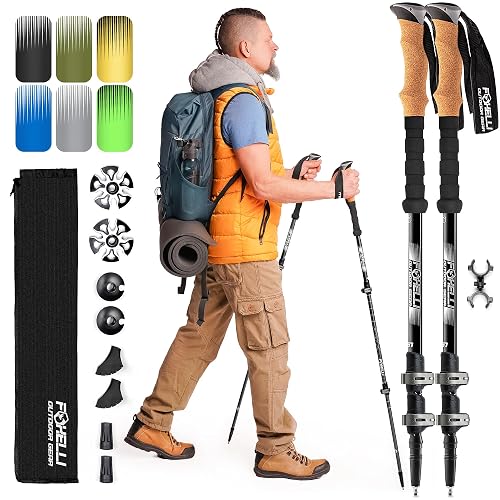
Foxelli Trekking Poles Lightweight Collapsible Aluminum Cork Grips
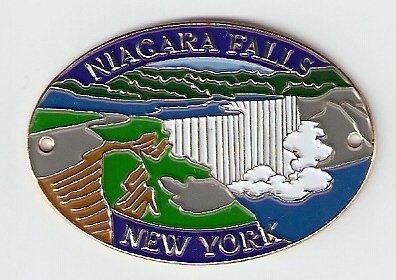
Niagara Falls Hiking Stick Medallion

Yellowstone Old Faithful Hiking Stick Medallion
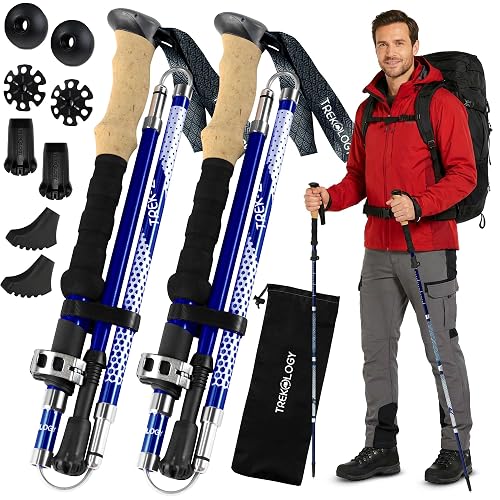
Trekology Trek-Z Hiking Trekking Poles 2pc
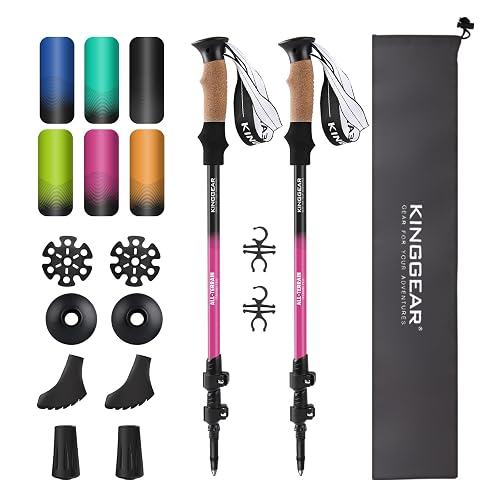
KINGGEAR Trekking Poles 7075 Aluminum Hiking Sticks

LEKI Ultratrail FX.One Trekking Poles
Taking A Closer Look At The Options
These poles come from American Nordic Walking System and are built on SWIX and EXEL ski-pole manufacturing lines, so you get a real one-piece shaft rather than a twist-lock assembly. You order by entering your barefoot height, and the company matches you to one of 32 fixed lengths for a custom fit. That precision matters in Nordic walking, where a pole that lands too high or too low changes how much effort your arms and shoulders absorb.
Because they don’t collapse, you trade packability for stiffness. On paved greenways, indoor tracks, or long asphalt routes, the lack of joints means the swing feels quieter and the rebound cleaner. Compared with the collapsible aluminum picks coming later, these lean more toward a daily fitness walker or someone in physical therapy who needs a measured, repeatable feel.
What Pays Off
- Custom length from 32 sizes means your elbow sits at roughly 90 degrees without guesswork.
- One-piece ski-pole construction removes the flex and rattle you sometimes get from twist or flip-lock joints.
- Real Nordic straps, not basic loops or Velcro slings, so you can push off through the strap during the kick phase.
- Removable rubber feet and carbide metal tips are both included, covering pavement, gym floors, trails, sand, and snow.
- Built for users who want a clinical, repeatable gait, including those rebuilding balance after injury.
Worth Noting
- Non-collapsible design makes travel awkward; you won’t fit these in a carry-on or a small daypack.
- Ordering requires measuring barefoot height, so it’s not an impulse grab-and-go purchase.
Whose Shelf It Belongs On
Daily Nordic walkers, fitness walkers on pavement, and people in physical therapy who want a pole sized to their exact body.
Consider Something Else When
Backpackers should reach for the Trekology Trek-Z Hiking Trekking Poles, 2pc instead, since they fold down small enough for a pack.
CreationCarvings builds this 60-inch staff by hand in the USA, sanding the wood to a smooth polish and finishing it in a dark stain. It’s a single solid stick rather than a telescoping pole, leaning into the traditional walking-staff aesthetic rather than the modern trekking category. A leather wrist strap sits at the top, and a rubber tip protects the base for better grip on mixed surfaces.
For gentle day hikes, neighborhood walks, or even light display use, the stick gives you reliable balance without any moving parts to fuss with. It contrasts sharply with the SWIX/EXEL Nordic poles reviewed above, trading athletic function for craftsmanship and a classic look. The trade-off shows up the moment you want to pack it in a suitcase or strap it to a pack.
Benefits That Matter
- Hand-finished wood gives a smooth, splinter-free grip you can hold for hours.
- Generous 60-inch length suits taller walkers who find standard poles too short.
- Leather safety strap helps you keep a firm hold if your hand slips on a wet trail.
- Rubber tip adds traction on pavement, tile, and packed dirt without marking floors.
Honest Caveats
- At full length, it’s not travel-friendly; you’ll struggle to fit it in a standard vehicle or pack.
- Solid wood needs occasional conditioning to prevent drying or cracking in arid climates.
- No adjustable length, so the fit depends on your exact height matching the 60-inch design.
Right Fit For
Traditional walkers, casual hikers, and anyone who wants a handcrafted stick as much for the look as for the support.
Look Elsewhere When
Rugged trail users who need a collapsible pole will do better with the KINGGEAR Trekking Poles 7075 Aluminum Hiking Sticks, which pack down to a much shorter size.
Foxelli’s pair of collapsible trekking poles are aimed squarely at the person buying their first set. The aircraft-grade aluminum shaft telescopes from roughly 24 to 54 inches, uses quick flip locks to set length, and breaks down to a compact size that stows in a daypack. Cork grips sit under the foam choke-grip, which feels softer than bare plastic on a long ascent.
On most moderate trails, the weight and balance stay manageable, and the quick locks let you share the poles between family members of different heights. Compared to the Mountain Man wooden stick above, this is the opposite philosophy: lighter, packable, and built for variable terrain. The honest read is that this is a workhorse pick rather than a luxury one.
Why It Works Well
- Lightweight aluminum keeps arm fatigue low over multi-hour hikes.
- Quick flip locks adjust fast when the terrain shifts from flat trail to steep climb.
- Cork grips absorb sweat better than hard plastic, so your hands stay drier in warm weather.
- Collapses short enough to clip onto a backpack when you don’t need them.
- Comes as a pair, so you don’t have to remember to order two.
Trade Offs
- Aluminum is heavier than carbon, which matters on long-distance or fastpacking days.
- Flip locks can loosen over time and may need a retightening mid-hike.
Key Product Details
Best Suited To
First-time pole shoppers, casual hikers, and travelers who want a versatile, easy-to-use pair without a steep learning curve.
Skip It When
Trail runners chasing speed should look at the LEKI Ultratrail FX.One Trekking Poles, which use carbon to drop weight significantly.
This isn’t a pole at all, it’s the small pewter-style medallion that gets nailed onto a hiking staff to mark where you’ve walked. LWBC’s design shows a scene of the American Falls on the U.S. side of Niagara, a detail that makes it more meaningful than a generic mountain emblem. You shape it gently around the curve of your stick and attach it with the included nails.
For travelers who already own a stick, this turns the staff into a personal record of visits. The tradition comes from Europe, where hikers collect medallions from trails and hostels as a kind of outdoor passport. Against the high-tech poles in this roundup, this is a completely different product category, more craft than gear.
Notable Upsides
- Detailed American Falls scene gives the medallion a clear sense of place.
- Soft enough to bend and shape around a curved staff without cracking.
- Includes nails for installation, so you have everything you need in the box.
- Lightweight enough to add no meaningful weight to a long hike.
Where It Is Less Suited
- Pre-drilling pilot holes is recommended, which adds an extra step to installation.
- It’s a decorative piece, not a functional pole, so it doesn’t help with balance or stability.
Who Will Love This
Travelers, souvenir collectors, and hikers who already own a wooden staff and want to mark a Niagara Falls visit.
Where Another Pick Suits Better
Anyone who doesn’t yet own a stick should start with the Mountain Man Walking Stick, Dark Wood 60″ and add medallions as their collection grows.
L W Bristol Classics’ Yellowstone medallion shows a likeness of the Old Faithful geyser, one of the most recognizable sights in the U.S. national park system. Like the Niagara Falls medallion above, it’s designed to be shaped gently around a wooden staff and nailed in place, building a record of national park trips one pin at a time. For families who make an annual park visit, this becomes part of a tradition rather than a one-off purchase.
You can also attach it to paddles, walking canes, or display boards if you prefer not to nail it to a stick. Compared to the Niagara piece, the imagery is more singular, so it works best as a focused souvenir from a specific trip rather than a general trail emblem.
Positive Takeaways
- Old Faithful imagery is instantly recognizable for anyone who’s stood on the boardwalk.
- Bendable construction fits curved staffs as well as straighter ones.
- Mounting hardware is included in the package.
- Works on staffs, paddles, and canes, giving you multiple display options.
Small Caveats
- Pre-drilling is recommended to avoid splitting thinner wood shafts.
Made For
National park travelers and collectors building a hiking-stick travel log, especially anyone who has watched Old Faithful erupt in person.
Not Your Match When
Hikers looking for actual walking support should pick the Foxelli Trekking Poles Lightweight Collapsible Aluminum Cork Grips instead, since this medallion adds no structural function.
Trekology’s Trek-Z poles are a foldable Z-style design, three sections that hinge together and pack down small enough for carry-on luggage or a small daypack. You get a pair, with EVA foam grips and a quick lever-lock system for length adjustment. For backpackers, the appeal is obvious: when the trail steepens, you pull them out, and when the path flattens, they collapse and clip to your hip belt.
Compared to the Foxelli pair reviewed earlier, the Trek-Z leans more toward ultralight travel than rugged abuse. The Z-fold is fast to deploy, but you trade a bit of the long-shaft stiffness that rigid telescoping designs offer. For most weekend trips, that compromise barely registers.
Where It Helps
- Folding Z-design packs to a short length that fits luggage and small packs.
- Light enough for thru-hikers counting grams in their pack.
- EVA foam grips stay comfortable on bare hands in cool weather.
- Quick lever locks adjust length fast, even mid-stride.
- Pair pricing means you can hand one to a hiking partner at a moment’s notice.
- Lower price point than carbon alternatives, which matters for first-time shoppers.
Things To Consider
- Folding mechanism adds a hinge that some long-distance users feel under heavy load.
- Internal cord tension can stretch over years, so periodic inspection helps.
Feature Snapshot
Perfect Match For
Backpackers, casual travelers, and anyone who flies with their gear and needs poles that disappear into a carry-on.
Reach For A Different Pick When
Hardcore trail runners should consider the LEKI Ultratrail FX.One Trekking Poles, which are built for stride efficiency rather than packability.
KINGGEAR’s collapsible poles use 7075 aluminum for the shaft, a higher-strength alloy than the more common 6061, so the walls can be thinner without sacrificing toughness. The poles extend from roughly 25.5 to 54 inches via quick flip locks, which suit a wide range of users on shared trips. The result is a pole that handles rocky trails, hard-packed dirt, and uneven roots without flexing noticeably under load.
Compared with the Foxelli pair, the upgrade here is material rather than design. You still get three telescoping sections and a similar quick-lock, but the 7075 alloy gives the pole a more planted feel on descents. It’s a sensible pick for someone who hikes weekly rather than a few times a year.
The Value In It
- 7075 aluminum offers a stronger-to-weight ratio than standard 6061 alloy.
- Quick flip locks hold length reliably on steep, loaded descents.
- Adjustable range fits most adult heights and trail grades.
- Comes with standard trekking accessories for varied terrain.
Points To Keep In Mind
- Aluminum still weighs more than carbon, which matters on multi-day trips.
- Flip locks can slip if not checked before steep climbs.
- For a Nordic walking gait, the Nordic Walking Poles Custom Fit Non-Collapsible Hiking Trekking Therapy offer a more tailored geometry.
Built With In Mind
Regular hikers, weekend backpackers, and anyone who wants a tougher aluminum shaft than entry-level poles typically offer.
A Better Fit Elsewhere
Backpackers chasing the lightest setup should consider the LEKI Ultratrail FX.One Trekking Poles, which trade aluminum for carbon to drop meaningful weight.
LEKI’s Ultratrail FX.One is built for trail runners and racers, with a carbon shaft that keeps weight at roughly a quarter-pound per pole while staying rigid under stride load. A push-button release separates the pole into three 14.5-inch sections, so the collapsed package tucks behind a hydration vest or inside a small running pack. The Trail Trigger Shark grip is a shaped foam that conforms to your hand on long efforts.
Compared to the KINGGEAR aluminum pair, the LEKI design philosophy is opposite: less material, faster swing, more discipline required from the user. Carbon tolerates repetitive impact but doesn’t love being jammed into car doors or treated like a tent pole. The honest read is that this is a specialist tool for people who already know they want it.
Where It Excels
- Ultralight carbon shaft keeps arm fatigue minimal on long trail runs.
- Three-section push-button collapse packs tight enough for running vests.
- Trail Trigger Shark grip wraps the hand for stable plant on technical terrain.
- Stiff enough under load that experienced runners don’t notice flex during the push phase.
Factors To Consider
- Premium carbon construction costs more than most recreational poles.
- Carbon doesn’t tolerate hard side impacts the way aluminum does, so care matters.
- Specialized grip shape takes a few outings to feel natural for first-time users.
Feature Rundown
Who Should Grab It
Trail runners, ultramarathoners, and experienced hikers who want the lightest possible pole and don’t mind paying for carbon.
Swap It Out When
Casual day hikers and beginners should start with the Foxelli Trekking Poles Lightweight Collapsible Aluminum Cork Grips, which are more forgiving and friendlier on a budget.
What Matters Most Before Choosing Hiking Sticks
Matching The Pole To Your Terrain
Flat gravel paths and paved greenways reward lightweight aluminum or one-piece composite shafts that swing without effort. Technical mountain trails with loose rock call for stiffer shafts and serious tips, so a 7075 aluminum or carbon build earns its weight. Sand, snow, and soft trail surface benefit from wider baskets that keep the pole from sinking straight through.
Sizing And Adjustability
A good rule of thumb is to set the pole so your elbow sits at about a 90-degree angle when the tip is on the ground beside your foot. Fixed-length poles give you the most precise fit, which is why the Nordic walking pick above uses 32 lengths. Telescoping poles trade a bit of precision for the ability to share between users and adjust for slope.
Grip Material And Strap Design
Cork grips absorb sweat and mold to your hand over time, which helps on long climbs. EVA foam grips insulate well in cold weather and cost less, but they can feel slick when wet. Strap design matters more than most shoppers expect; a real Nordic strap lets you push off through the webbing instead of gripping the handle tightly the whole hike.
Weight And Packability
Every ounce on a pole is an ounce you swing 1,500 times per mile, so weight adds up faster than you think. Collapsible designs, like the Trekology Trek-Z, fit in luggage and small packs, which matters for travelers and backpackers. If you never need to pack your poles, a one-piece option often feels sturdier and lasts longer.
Key Considerations Across These Picks
Common Shopping Slip Ups
A frequent mistake is buying the cheapest collapsible pole and expecting it to feel like a one-piece ski-pole shaft. Twist and flip locks flex, especially on heavy downhills, and that flex reads as instability. Another common error is ignoring strap design; a basic loop strap forces you to clench the grip, which tires your hand on long days. You may also find that “lightweight” claims online refer to the pole without the rubber tips or baskets, so the shipped weight can climb once you add the full accessory kit.
When Paying More Pays Off
Higher-tier poles earn their price in three places: shaft material, joint design, and grip ergonomics. Carbon shafts like the LEKI’s drop significant weight without sacrificing stiffness, which matters on long days. Better joint mechanisms hold length under load, so the pole doesn’t slowly telescope down on steep descents. You may find that a premium grip pays off too, especially if you deal with sweaty hands or cold-weather hiking. For casual weekend use, mid-tier aluminum poles are usually plenty; for weekly or multi-day adventures, the upgrade tends to show up in comfort, not just specs.
Frequently Asked Questions
How do I know what length hiking stick I need?
Stand with your arm relaxed at your side and bend your elbow 90 degrees; the top of the grip should land at wrist height. Fixed-length poles match that measurement precisely, while adjustable poles let you tune on the trail.
Are hiking sticks better than trekking poles for day hikes?
Walking sticks are usually single poles with a fixed or traditional length, while trekking poles come in pairs and are designed for active pushing. Trekking poles tend to offload more joint stress on long climbs, while a single stick is friendlier for casual strolls and balance support.
Do I need rubber tips if I mostly hike on dirt?
Rubber tips help on pavement and hard-packed surfaces, but on soft dirt, grass, or sand, the carbide or metal tip gives better bite. Many poles include both so you can swap based on the day’s surface.
Can I bring collapsible poles on a plane?
Most folding and telescoping poles fit in checked luggage or large carry-on packs when collapsed, but airline policies vary. The Trekology Trek-Z and LEKI Ultratrail both collapse short enough to be travel-friendly in most cases.
How do I maintain a wooden hiking stick?
Wipe the shaft down after muddy hikes, let it dry away from direct heat, and apply a light wood oil or wax a few times a year. That routine helps prevent drying, cracking, and splintering on hand-finished sticks like the Mountain Man staff.
Closing Remarks
Eight different poles, eight different jobs. The right pick depends on where you walk most often, how you travel, and whether you want a tool for athletic performance or a companion for casual miles. Start with the terrain you actually hike, not the dream terrain, and the choice usually narrows fast. Whatever you land on, a well-fitted pole quietly makes every step feel more controlled.