
A good pair of hiking sticks changes how a trail feels, especially on long climbs and rocky descents where knees take a beating. For women shopping for their first pair or a thoughtful upgrade, the choices can feel surprisingly technical. This lineup focuses on seven pairs that balance weight, grip comfort, adjustability, and packability, so you can match the pole to the terrain and your stride.
A Quick View Of The Lineup
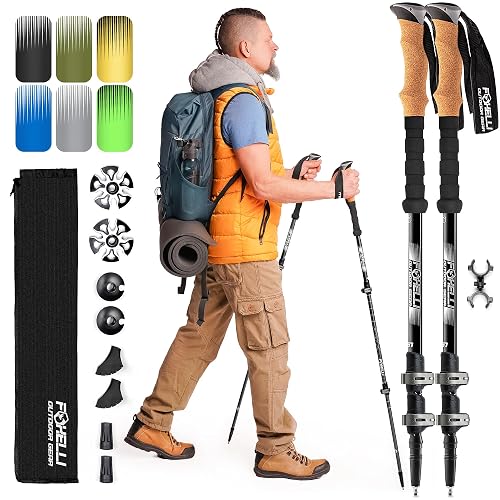
Foxelli Aluminum Trekking Poles with Cork Grips

Hiker Hunger Carbon Fiber Trekking Poles

TrailBuddy 7075 Aluminum Trekking Poles
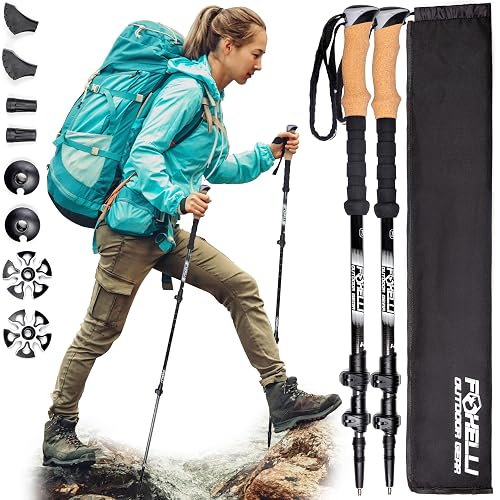
Foxelli Carbon Fiber Trekking Poles
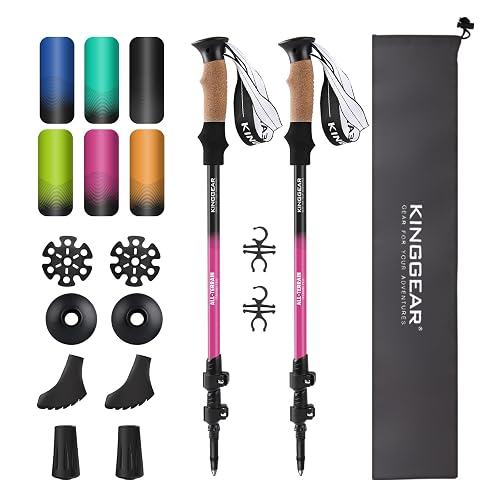
KINGGEAR 7075 Aluminum Trekking Poles
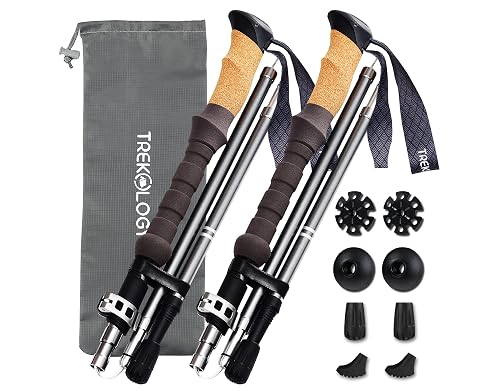
Trekology Trek-Z Cork Grip Trekking Poles
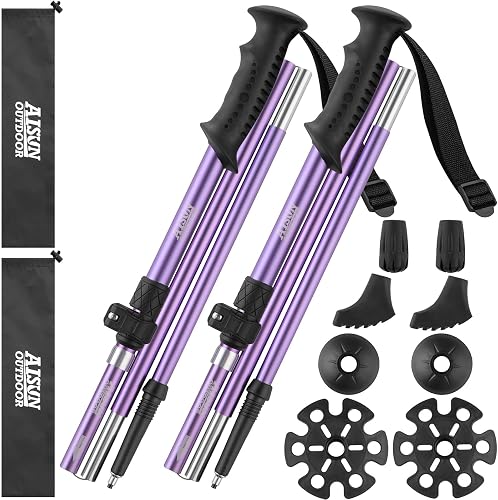
AISUNOUTDOOR Aluminum Trekking Poles
The Details Behind The Selections
For a first pair of hiking sticks, the Foxelli aluminum set hits a comfortable middle ground between weight and toughness. The aircraft-grade aluminum shaft stands up to scrapes against granite, while cork grips soften the feel on warmer days when palms start to sweat.
These collapse down short enough to strap to a daypack, which makes them a sensible choice for anyone who doesn’t want poles swinging around mid-route. Compared with the carbon picks later in this list, you trade a couple of ounces for a noticeably lower price and a more forgiving feel on impact.
Key Advantages
- Cork grips absorb sweat and stay cooler than basic foam in summer conditions.
- Quick flip locks let you adjust length on the fly without stopping your hike.
- All-terrain accessories are included, so you can swap baskets for snow or mud.
- Aluminum tolerates hard knocks better than carbon for new hikers still learning technique.
Things To Consider
- Heavier than carbon alternatives, which matters on multi-day trips where every ounce counts.
- The included wrist straps run a touch wide for smaller hands, depending on your fit preference.
Key Product Details
Who Will Love This
New hikers who want a forgiving, all-purpose aluminum pole with cork comfort and minimal fuss.
Look Elsewhere When
Long-distance backpackers counting every gram will prefer the Hiker Hunger Carbon Fiber Trekking Poles for their lighter swing weight.
Carbon fiber changes the feel of a long day, and the Hiker Hunger pair leans into that with full 3K carbon shafts and a dual-grip setup. Cork up top handles the usual hold position while EVA foam takes over for sidehill traverses, where hands drift lower on the pole.
The flip locks tighten down with a confident snap, and at around 7.6 ounces per pole, you stop noticing them on the climb. Versus the Foxelli aluminum pair above, you pay more for noticeably less arm fatigue over a 15-mile day, which is the real currency on a long route.
A Favorable Mix
- Carbon construction drops swing weight, easing shoulder and wrist strain over distance.
- Moisture-wicking cork grips soften the hold and reduce hot spots on long climbs.
- EVA foam lower grip gives a better angle for stream crossings and side slopes.
Worth Noting
- Carbon can crack under hard impact on rocky falls, so it’s worth treating them gently on off-trail sections.
- Higher upfront cost compared to aluminum picks in this list.
Feature Snapshot
Made For
Backpackers and thru-hikers logging serious mileage who value weight savings and grip versatility.
Consider Something Else When
Casual day hikers on groomed trails will get more value from the Foxelli Aluminum Trekking Poles, where the extra ounces are barely noticeable.
The TrailBuddy pair uses 7075 aluminum, a tougher alloy than the more common 6061, which translates to thinner walls without a real sacrifice in strength. For shoppers who want poles that can take a beating without overspending, this is the sweet spot.
The design also works well for older hikers and anyone recovering from a knee injury, since the angle and grip encourage a steadier rhythm on uneven ground. Side by side with the Foxelli aluminum pair, the TrailBuddy feels slightly more robust, though a touch less refined in the grip texture.
Real-World Strengths
- 7075 aluminum offers a strong strength-to-weight ratio at a friendly price.
- Versatile enough for travel, neighborhood walks, and weekend trails.
- Adjustable range accommodates a wide variety of user heights.
Trade Offs
- Heavier swing weight than carbon options on long ascents.
- Grip shape is functional rather than contoured, which can bother users with smaller hands on hot days.
- Bundled accessories tend to be basic, so swapping in upgraded baskets is common.
Best Suited To
Beginners and value-focused hikers who want a reliable aluminum pole without premium features.
Another Choice May Suit
Travelers needing a tighter pack-down length should look at the Trekology Trek-Z Cork Grip Trekking Poles, which fold much shorter for luggage.
The other Foxelli entry in this list trades aluminum for carbon fiber, and the difference shows up fastest on days with lots of vertical gain. At about 7.6 ounces per pole, the swing is light enough that arms don’t feel like they carried an extra load by the time you reach the saddle.
Cork grips keep the hold comfortable on warmer trails, and the flip locks hold their setting through hundreds of adjustments. Compared with the Hiker Hunger carbon pair, the Foxelli carbon is similarly light but usually lands at a slightly lower price, which is worth knowing if ounces are the priority but budget still matters.
Positive Points
- Carbon fiber construction trims arm fatigue on long climbs and multi-day routes.
- Cork grips reduce vibration through the wrist on rocky descents.
- Quick flip locks stay secure without slipping mid-stride.
- Adjustable height range covers a wide spread of user sizes and terrain angles.
Honest Caveats
- Carbon can splinter if the pole wedges between rocks and takes hard lateral pressure, so it pays to clear the tip before each plant.
- Some users find the included straps a bit narrow, depending on glove use.
Feature Card
Perfect Match For
Fastpackers and thru-hikers who count grams and want a carbon pole without the top-tier price.
Swap It Out When
Hikers who mostly tackle rough, brushy terrain may prefer the KINGGEAR 7075 Aluminum Trekking Poles for tougher impact resistance.
KINGGEAR’s 7075 aluminum shaft is built with rougher days in mind, the kind of off-trail scramble where poles tend to take hits. Aviation-grade aluminum pairs nicely with a quick flip lock that snaps tight, so you spend less time fiddling and more time walking.
These extend from roughly 25.5 inches up to 54 inches, which means a single pair can fit shorter and taller hikers in the same group. Versus the TrailBuddy pair, the KINGGEAR feels a touch stiffer on plant, which is a real asset on loose scree where you want feedback through the grip.
Where It Delivers
- 7075 aluminum is stronger than 6061, with a slimmer shaft for less hand fatigue.
- Wide adjustment range covers users from shorter to taller heights.
- Flip lock design keeps the length setting secure under load.
Points To Note
- Heavier than carbon options, noticeable on longer flat approaches.
- Stock grip may feel basic compared with cork alternatives.
The Right Fit
Hikers tackling rocky, off-trail routes who want aluminum toughness without a heavy price.
Where Another Pick Suits Better
Anyone chasing a lighter swing for fast-packing should pick the Foxelli Carbon Fiber Trekking Poles instead.
The Trek-Z folds down to a notably short packed length, which is the whole reason travelers and backpackers gravitate toward it. You can slide it into a carry-on or strap it to the side of a small pack without it catching on every branch you pass.
Aero-grade aluminum keeps the weight reasonable, and the cork grip feels natural in hand on warm days. Compared with the Foxelli aluminum pair, the Trek-Z collapses smaller but trades away some of the rigid, planted feel of a longer three-section pole.
What Makes Sense
- Compact folded length slips into luggage and small daypacks.
- Cork grip stays comfortable in warmer weather.
- Aluminum shaft tolerates the rigors of airline travel and rental car trunks.
Softer Spots
- Z-fold design is slightly less stiff than telescoping poles, depending on how tight you lock each joint.
- Adjustment range is shorter than full-size options, which can matter for very tall hikers.
Feature Snapshot
Built With In Mind
Travelers and minimalist packers who want poles that disappear into a bag when not in use.
Skip It When
Heavier users or those tackling technical terrain may prefer the sturdier KINGGEAR 7075 Aluminum Trekking Poles for added rigidity.
The AISUNOUTDOOR pair leans into flexibility, with a retractable range that adjusts from about 43 inches up to 51 inches, which makes it easy to share among family members of different heights. Aircraft-grade aluminum keeps the shaft light enough for kids and shorter hikers to manage without it dragging them down.
Each set also ships with a disposable rain shell, a small touch that pays off when a sudden shower hits mid-trail. The honest read is that the grip shape and lock system feel more basic than the cork-equipped picks higher in this list, but the value is real for casual and shared use.
The Helpful Details
- Wide height range adapts to adults and children in the same household.
- Aircraft-grade aluminum balances strength with manageable weight.
- Included rain shell is handy for unexpected weather changes.
Potential Drawbacks
- Grip material is more basic than cork, which can feel sticky on hot days.
- Heavier than carbon options in this list.
Whose Shelf It Belongs On
Families or casual hikers who want one adjustable pair that fits multiple users.
Reach For A Different Pick When
Anyone serious about long-distance comfort will appreciate the cork grip and lighter feel of the Hiker Hunger Carbon Fiber Trekking Poles.
Matching Hiking Sticks For Women To Your Style Of Trail
The right pole starts with how and where you actually hike. Match the material, weight, and grip to the routes you walk most often, and the poles will feel like an extension of your stride instead of extra gear to babysit.
Shaft Material: Aluminum Vs Carbon Fiber
Aluminum bends under hard impact, which is helpful on rocky, off-trail routes where poles tend to take hits. Carbon fiber is lighter and stiffer, but it can splinter under sharp lateral pressure, so it’s a better match for established trails and long mileage days. The weight difference adds up fast: a carbon pair around 7.6 ounces per pole feels very different from an aluminum pair near 9 to 11 ounces after several hours.
Grip Comfort And Hand Size
Cork grips mold to the hand and manage moisture well, which makes them the most popular choice for warm-weather hiking. EVA foam grips are softer at first touch but can feel slick once wet, depending on the conditions. Women with smaller hands may prefer narrower grip diameters, so it’s worth checking the grip circumference if you can.
Length, Locks, And Packability
Most adjustable poles extend from roughly 24 to 54 inches, which covers a wide range of user heights. Quick flip locks adjust faster than twist locks, which is useful when you’re changing incline often. For travel and small packs, fold-up designs like the Trekology Trek-Z collapse short enough to slip into luggage.
Key Considerations Across These Picks
Before settling on a pair, take a minute to think through the real-world use case, not just the spec sheet. A little clarity up front saves frustration on the trail.
Mistakes Worth Dodging
Many first-time shoppers buy poles that are too long, then end up with shoulders shrugged on every plant. A quick sizing check, elbow at 90 degrees with the pole tip on the ground, prevents the most common fit problem. Another trap is choosing carbon fiber for rugged, off-trail use, where aluminum will outlast it.
Where The Extra Money Goes
Premium carbon shafts, contoured cork grips, and tighter tolerance locks show up most on long-distance days. For shorter hikes and casual use, mid-tier aluminum poles offer nearly all the function at a noticeably lower cost. Paying up makes sense when the poles will log hundreds of miles a year, not a few weekend loops.
Frequently Asked Questions
How do I know what length trekking pole I need?
A simple sizing trick: stand with your elbow bent at 90 degrees and have someone measure from your hand to the ground. Most adjustable poles cover that length, and you can fine-tune from there based on terrain.
Are cork grips really worth it over foam or rubber?
Cork tends to feel cooler and drier than foam on warm days, and it molds to your grip shape over time. Foam is softer at first but can stay slick when wet, depending on the conditions.
Is carbon fiber worth the extra cost over aluminum?
Carbon is lighter and stiffer, which helps on long climbs and multi-day routes. Aluminum is tougher under hard impact, so it’s often the better match for rocky, off-trail days.
Can one pair of hiking sticks fit multiple people in my family?
Adjustable poles with a wide height range, like the AISUNOUTDOOR pair, can fit several users with a quick length change. Anyone sharing poles should still check grip comfort, since hand size varies.
How do I store trekking poles when I’m not using them?
Collapsed and locked, most poles fit in a closet or under a bed. Keeping the locks clean and the tips dry extends the life of the mechanism, especially after wet hikes.
Closing Remarks
The best hiking sticks for women are the ones that disappear into your stride, light enough to swing, comfortable enough to hold, and tough enough for the terrain you actually walk. Start with where you hike most, then narrow the choice by weight and grip feel, and you’ll end up with poles that earn their place on every trip.