
Cell networks have a way of giving up exactly when you need them most, somewhere deep in a national park, halfway up a ski lift, or at the far corner of a sprawling warehouse. Two-way radios fill that silence with something dependable, and the “1000 miles” claim floating around the category is closer to a marketing ceiling than a real-world figure. What you actually get is a strong FRS signal across open terrain, between buildings, or down a hiking trail, with the right antenna and power combo doing most of the heavy work.
The picks below come from spec research, build analysis, and category-by-category fit, aimed at families, crew leaders, outdoor hobbyists, and small business owners who want radios that do the job without endless menu-diving. Every entry uses FCC-certified FRS frequencies, so there’s no license paperwork, no test prep, just power on and talk.
The Main Contenders
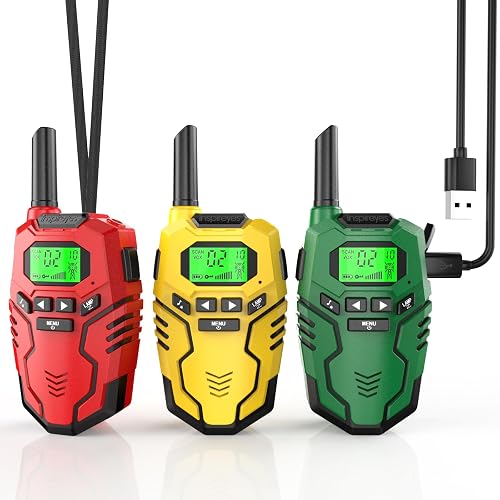
Inspireyes Kids Walkie Talkies 3 Pack

Retevis RT22 FRS Walkie Talkies (6 Pack)

DEWALT DXFRS800 FRS Walkie Talkies 2 Pack

Retevis RT22 Business Walkie Talkies (10 Pack)

Retevis RT68 Adults Walkie Talkies (10 Pack)

Baofeng T26 Walkie Talkies Long Range

Retevis RT22 FRS Walkie Talkies (4 Pack)

Retevis H-777S Walkie Talkies 6 Pack
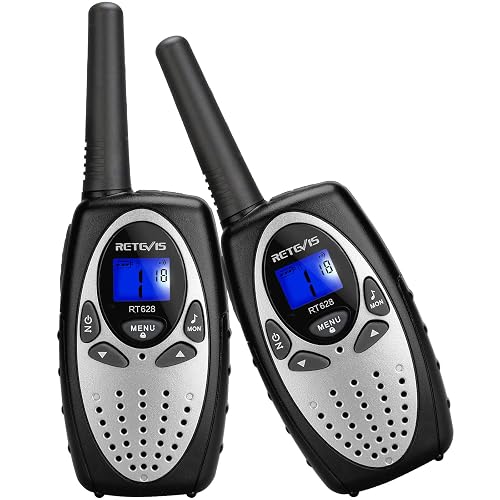
Retevis RT628 Family Walkie Talkies

Retevis RB48 Heavy Duty 2 Way Radios
More Details On Our Top Picks
A three-pack built around simplicity, the Inspireyes set gives families a way to hand one radio to each kid without the usual scramble for AAA cells. The built-in lithium polymer battery changes the ownership math: you skip the recurring battery bill entirely, and a full charge stretches across a long weekend of camping or backyard games. Compared to the more industrial picks later in this list, the form factor leans small and rounded, which suits younger hands.
You get 22 channels and 99 sub-codes (privacy codes that block other nearby radios from bleeding onto your channel), which is generous for a kid-focused unit and gives parents room to find a quiet frequency at crowded campgrounds. Just keep in mind the included charging cable is model-specific, so losing it means ordering a replacement rather than grabbing a spare drawer cable.
Practical Pluses
- Rechargeable battery eliminates ongoing battery costs.
- Three-pack sizing suits a parent and two kids, or a small sibling set.
- Lightweight shell fits small hands without strain during long outings.
- 22 channels with 99 sub-codes keep family chatter private in busy areas.
Things To Consider
- Range is modest compared to higher-power adult units.
- The proprietary charging cable is easy to misplace on family trips.
Who It Suits Best
Families with younger kids who want a fuss-free introduction to two-way communication on trails, campgrounds, or large backyards.
Where Another Pick Suits Better
The Retevis RB48 suits outdoor adventurers who need genuine MIL-spec toughness in rain, mud, or freezing temps.
The RT22 is a slim, pocket-shaped radio that doesn’t ask the wearer to commit to a bulky belt clip. Six units land in one box, which makes outfitting a small crew, a restaurant team, or a hotel housekeeping staff painless. Setup is the “match the channel and go” style, with no channel programming or pairing flow to slow onboarding for new hires.
The radio also plays nicely with sibling Retevis models like the RT68 and RB17, which matters when you scale up an existing fleet and don’t want a single model dependency. Compared to the Inspireyes set earlier, this is a working tool, not a toy, and the build reflects that without going full industrial.
Real-World Strengths
- Slim profile slips into apron pockets without printing bulk.
- Six-pack covers a full small-team rollout in one order.
- Cross-compatible with other Retevis FRS models for fleet expansion.
- License-free operation keeps onboarding paperwork out of the picture.
Trade Offs
- No rugged rating for drops or water exposure.
- Six radios charging simultaneously needs planning for outlet space.
Right Fit For
Hospitality, retail, and event crews who want slim, discreet radios that disappear on a uniform.
Consider Something Else When
The DEWALT DXFRS800 is a smarter call for jobsite conditions with rain, dust, or rough handling.
The DXFRS800 is the radio you reach for when the work environment actively tries to destroy it. The IP67 rating (a sealing standard meaning full dust-tight and water-submersible to one meter for short periods) covers both dusty job trailers and sudden downpours, while the drop-rated housing shrugs off two-meter falls onto hard ground. For crews that span 25 floors or 300,000 square feet, the 2W output keeps the signal alive where lower-power radios fade.
The privacy side of the equation gets attention too, with 22 FRS channels and 121 privacy codes plus auto-squelch (a feature that mutes the speaker when no signal is present, cutting static) to keep crowded radio traffic from bleeding into your crew’s conversation. You trade away the slim pocket-friendly shape of picks like the RT22, and gain a radio that earns its weight on a tool belt.
What Works In Its Favor
- IP67 sealing handles rain, dust, and brief submersion without drama.
- 2W output covers large jobsites and multi-floor buildings reliably.
- 121 privacy codes with auto-squelch keep chatter clean on busy channels.
- Drop-tested housing survives the kind of tumbles that end radios.
Things To Consider
- Bulkier than pocket-friendly options, so it lives on a belt clip.
- Two-pack limits large crew rollouts without buying multiples.
Best Suited To
Construction foremen, industrial crews, and outdoor contractors who treat radios like tools, not gadgets.
Look Elsewhere When
The Retevis RT68 ten-pack suits school or warehouse deployments that need more units than two radios provide.
Ten radios in one box puts this on the shortlist for franchise rollouts and multi-location staffing. The RT22 Business keeps the same pocket-friendly form factor as the smaller packs, so you don’t have to standardize on two different shapes across departments. Rechargeable Li-ion cells with USB charging keep shift-change logistics simple, since any spare USB cable keeps the fleet topped up.
The feature set leans toward service environments: VOX hands-free (voice-activated transmission that lets you talk without pressing the push-to-talk button), an emergency alert button, and squelch all come standard. Compared to the rugged DEWALT set earlier, you give up jobsite sealing in exchange for the volume and the unobtrusive shape that works on a host stand.
Points In Its Favor
- Ten-pack suits franchise and multi-store deployments without splitting orders.
- USB charging cuts down on proprietary dock dependencies.
- VOX hands-free helps in fast-moving service environments.
- Pocket-sized shell keeps the radio off the apron or lanyard.
Less Ideal Details
- Lacks rugged sealing for outdoor or industrial environments.
- Battery life lands in the lower-mid tier during long shifts.
Quick Facts
Made For
Restaurants, retail floors, and franchise operations that need slim, discreet radios in volume.
Skip It When
The DEWALT DXFRS800 suits crews who face rain, dust, or rough handling on a daily basis.
The RT68 is the volume pick that doesn’t feel like a compromise. Ten radios in a single order, plus the rugged enclosure that handles one-meter drops without damage, makes this a serious option for warehouses, school campuses, and multi-building facilities. The strong penetration through concrete walls is the headline feature, since most pocket radios lose signal the moment they hit load-bearing masonry.
Compared to the slimmer RT22 ten-pack earlier, this trades pocketability for a sturdier grip and better in-building reach. License-free FRS operation means you skip the FCC paperwork that ham radio (amateur radio requiring a license exam) demands, so deployment stays simple.
Everyday Wins
- Strong signal penetration through concrete and steel walls.
- Ten-pack suits large facilities without splitting orders.
- Drop-rated enclosure survives typical workplace tumbles.
- License-free FRS keeps deployment paperwork-free.
Some Limits To Know
- Bulkier than slim RT22 picks for users who pocket their radios.
- Charging ten units in parallel needs dedicated outlet planning.
Who Should Grab It
Warehouse managers, school administrators, and facilities teams who need reach through walls across large buildings.
Another Choice May Suit
The Retevis RT22 Business ten-pack is a better fit for service crews who prioritize slim shape over wall penetration.
The Baofeng T26 pairs a 2W transmitter with an unusually thick antenna, and that combination is where most of the range comes from. The fixed FRS frequency setup means you can’t reprogram the channels like some other Baofeng models allow, which is actually a plus if you want a simple “set and forget” radio that doesn’t drift into restricted ham frequencies. FCC certification under ID 2AJGM-T26 keeps it legal out of the box in the US.
The earpiece inclusion makes this a practical pick for hunting parties or security detail where you need to keep chatter discreet. Compared to the slimmer Retevis RT22 earlier, the T26 trades pocketability for raw reach across open terrain and large venues.
The Case For It
- 2W output with thick antenna pushes range across open terrain.
- Pre-locked FRS channels prevent accidental frequency drift.
- Included earpieces add discretion for hunting or security use.
- USB-C charging aligns with modern cable standards.
Factors To Consider
- Frequencies are pre-locked, so the radio can’t be reprogrammed.
- Antenna size reduces pocket-friendliness compared to slimmer picks.
Key Attributes
Whose Shelf It Belongs On
Outdoor enthusiasts, hunters, and security teams who prioritize signal reach over pocket-friendliness.
Swap It Out When
The DEWALT DXFRS800 fits jobsite crews who need IP67 sealing more than antenna-driven range.
Four units hit the sweet spot for a family of four or a small group of friends who want to stay in touch on a road trip. The thumb-length stub and blunted antenna angle are thoughtful design touches: the shortened antenna reduces the snagging risk that long antennas create, especially around kids. USB-C charging on the modern RT22 revision means you can top up with the same cable that charges a phone.
Compared to the Inspireyes three-pack earlier, this steps up from toy-grade to genuine everyday utility without becoming bulky. It’s the kind of radio you throw in a glove box and forget about until you actually need it.
Good Reasons To Consider
- Four-pack suits a family without overshooting into surplus units.
- Short antenna reduces snag risk around kids and tight spaces.
- USB-C charging works with common modern cables.
- Belt clip keeps the radio accessible during active use.
Honest Caveats
- Battery life hovers around 10 hours, shorter than full-shift picks.
Feature Snapshot
Perfect Match For
Families and small friend groups who want compact, easy-to-use radios for road trips and casual outings.
Reach For A Different Pick When
The Inspireyes three-pack fits households specifically looking for a kid-focused entry point with simpler ergonomics.
The H-777S separates itself from other Retevis packs with one accessory that earns its shelf space: the six-way charging station. Charging six radios at once turns end-of-shift logistics into a single dock-and-go motion, rather than a sprawl of individual cables and wall adapters. The rugged shell takes shock and vibration, which suits schools, churches, daycares, and retail floors where drops happen.
The mid-sized form factor lands between the slim RT22 and the chunkier RT68, so it fits a belt clip without disappearing into a palm. Compared to the H-777S, the RT68 ten-pack offers more units but no centralized dock, so for teams of exactly six this set wins on daily workflow.
What Pays Off
- Six-way charging dock cuts end-of-shift clutter.
- Rugged shell handles shock and vibration in busy environments.
- Six units match common small-team sizes without surplus.
- Long battery life supports extended shifts.
Points To Keep In Mind
- Bulkier than the pocket-friendly RT22 series.
- Six-pack sizing doesn’t scale well to ten-person operations.
Quick Technical Notes
Who Will Love This
Schools, churches, and small retail teams who want a clean charging dock and mid-sized rugged radios.
Where A Sibling Pick Shines
The Retevis RT68 ten-pack suits larger operations that need more than six radios on the roster.
The RT628 is purpose-built for the family that wants walkie-talkies to feel like a game, not a gadget. The simple controls keep the learning curve gentle enough that younger kids can operate them without adult coaching on every channel change. Durability matters here too, since the radios will see backyard tumbles and tree-house drops, and the build is rated for typical kid-grade impacts.
You trade away the wall-penetrating power of the RT68 or the jobsite sealing of the DEWALT, and gain a friendlier entry point. Compared to the Inspireyes three-pack earlier, this is a step up in build maturity without giving up the family-outing focus.
Everyday Advantages
- Simple controls lower the learning curve for younger users.
- Durable shell handles typical kid-grade drops.
- Good range for outdoor family activities.
- Bright color options help with quick identification.
Worth Bearing In Mind
- Not suited for jobsite or industrial environments.
- Range is shorter than higher-power adult units in dense areas.
Feature Rundown
Who Should Grab It
Families with elementary-age kids who want a friendly introduction to two-way radios for outdoor play.
Skip It When
The Retevis RT22 four-pack suits families who want slimmer, USB-C-equipped radios as kids grow into teen use.
The RB48 is the pick when you need a radio that can survive the kind of abuse that ends other radios. MIL-STD-810H is a military-grade testing standard that covers extreme conditions, and this radio passed 19 of those tests including temperature shock, rain, salt fog, sand, vibration, and immersion. For marine use, search and rescue, and serious outdoor expeditions, that’s not marketing fluff, it’s a checklist you can plan around.
The trade-off is size and weight: you’re carrying a radio that feels like a piece of professional gear, not a phone accessory. Compared to the DEWALT earlier, the RB48 pushes further into true rugged certification rather than jobsite-targeted durability, which fits a different buyer profile.
What Helps Most
- MIL-STD-810H certified across 19 environmental tests.
- Handles rain, salt fog, immersion, and temperature extremes.
- Long battery life supports extended expeditions.
- Strong signal reach across challenging outdoor terrain.
Practical Considerations
- Heavier than consumer-grade picks for everyday carry.
- Premium build typically sits at a higher cost tier.
Built With In Mind
Search and rescue teams, marine operators, and serious outdoor professionals who push gear past its comfort zone.
Not Your Match When
The Retevis RT22 series fits service crews who want slim radios and don’t face extreme environments.
Choosing The Right Two-Way Radio for Your Situation
Range claims in this category live in a strange middle ground. Manufacturers often quote figures measured under ideal conditions: flat open terrain, no walls, no tree cover. In real life, dense forests, multi-story buildings, and urban interference pull that number down significantly. Understanding that gap helps you pick the right power class without overpaying for a spec you won’t see.
Power output (wattage) matters most. A 0.5W radio covers a small backyard and a few rooms comfortably, while a 2W radio pushes further across open areas and between buildings. Higher power also means faster battery drain, so the trade-off is real: pick the wattage that matches your environment rather than defaulting to the highest number.
Channel and privacy code count (the number of sub-channels that block other radios from interfering) shapes day-to-day usability in crowded areas. At a busy ski resort or convention center, 22 channels with 121 privacy codes make it far easier to find a quiet frequency than a 16-channel radio with no codes. Family use at home doesn’t need that complexity, so the simpler picks stay simpler for a reason.
Form factor should match the user. Pocket-clip slim picks disappear on a uniform or in a backpack. Belt-clip mid-sized picks sit comfortably on a tool belt. Heavy-duty rugged picks earn their weight when the radio lives in a backpack on a search mission. Match the radio shape to where it will actually live.
Battery type affects daily workflow. Rechargeable Li-ion (lithium-ion) with USB or USB-C charging means any cable tops up the radio. Proprietary charging bases simplify fleet deployments at the cost of cable flexibility. For single-family use, USB-C wins; for ten-radio deployments, a multi-bay dock pays off.
What Separates Premium From Basic
Higher-tier radios in this category typically bring three things: rugged certification, higher power output, and longer battery life. MIL-STD-810H certification, like on the Retevis RB48, isn’t cheap to test for or build around, so it shows up in gear priced for serious use rather than casual outings. Water and dust sealing follows the same logic.
Higher wattage radios (closer to 2W) push signal further and clean up audio in challenging environments. The trade-off is heavier battery drain, so these picks tend to pair with larger battery packs. You also tend to get longer antenna designs, which improve range but reduce pocket-friendliness.
The honest read is that for family and casual use, premium ruggedness is overkill. For jobsite, marine, and expedition use, it pays for itself the first time the radio hits the ground, the water, or the cold.
Smart Picks, Smarter Habits
Mistakes Worth Dodging
The biggest trap is reading the headline range number and assuming it applies to your environment. Most range claims assume open line-of-sight, so a “1000-mile” claim might mean 3 miles in a dense forest and 1 mile through concrete walls. Match the radio to your actual terrain, not the marketing ceiling.
A second common slip is overcounting channels. A radio with 22 channels but zero privacy codes feels limited fast in any area with other radio traffic. Privacy codes (sometimes called CTCSS/DCS, which are sub-audible tones that filter out other conversations on the same channel) matter more than raw channel count for most buyers.
Where The Extra Money Goes
Spending more typically buys rugged certification, higher wattage, longer battery life, and better antennas. None of those matter for backyard family use, but all of them matter the moment you cross into commercial, jobsite, or expedition territory. The honest framing is that the extra cost funds durability and reach, not features you’ll notice in casual use.
Frequently Asked Questions
How far can these radios really reach?
Range varies dramatically with terrain. Expect around 1 to 3 miles in suburban areas with buildings and trees, less in dense urban environments, and potentially more in flat open country. The “1000 miles” claim in the category refers to theoretical maximums under ideal conditions.
Do I need a license to use FRS radios?
No, FRS (Family Radio Service) radios in this list run on license-free frequencies approved by the FCC for consumer and business use without paperwork or testing.
How long does the battery last on a single charge?
Battery life ranges from around 8 to 24 hours depending on the model, transmission frequency, and power output. Heavy users may need to recharge daily; casual users can stretch charges across multiple days.
Can different brands talk to each other?
Yes, any two FRS radios on the same channel and privacy code can communicate regardless of brand. Cross-brand compatibility is one of the strengths of staying within the FRS band.
What is a privacy code?
A privacy code (CTCSS or DCS) is a sub-audible tone that filters out other conversations on the same channel, so your radio stays quiet unless the incoming signal matches your code. It doesn’t encrypt content; it just reduces interference.
Closing Remarks
Long-range walkie talkies earn their place in any kit where cell coverage is. Whether the goal is keeping a family connected across a campground, a small business synced across floors, or a jobsite team linked across 25 stories, the right radio delivers simple, license-free communication. Match the radio to your environment, your team size, and your durability needs, and the rest of the decision takes care of itself.