
A great pair of trail-ready shoes quietly disappears on your feet, whether you’re grinding through a commute, ticking off weekend miles on a local greenway, or chasing a ridgeline after work. The trouble is that “walking shoe” and “hiking shoe” describe overlapping but different demands, and picking the wrong one leaves you with hot spots, sloppy footing, or a soaked sock two miles from the trailhead. This roundup sorts ten solid options by what they actually do well on the ground, from featherweight approach shoes to weatherproof mid-height boots, so the right match for your terrain and routine is easier to spot.
Your Options, Compared
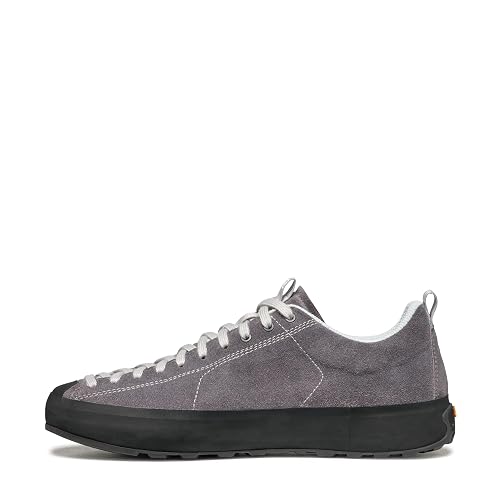
SCARPA Men’s Mojito Wrap Walking Shoes
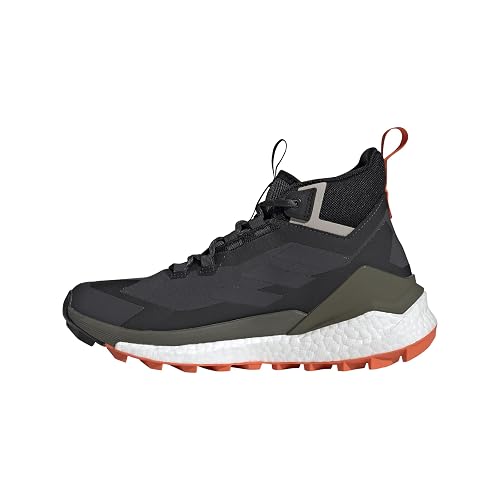
adidas Women’s Terrex Trailmaker 2.0 Mid GTX Hiking Shoes
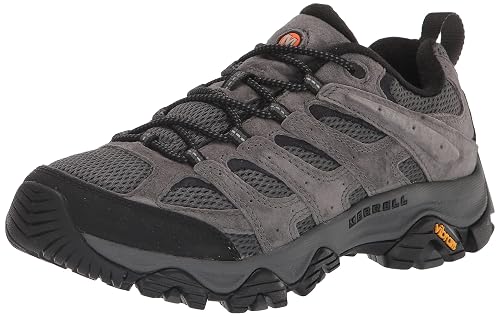
Merrell Men’s Moab 3 Hiking Shoe
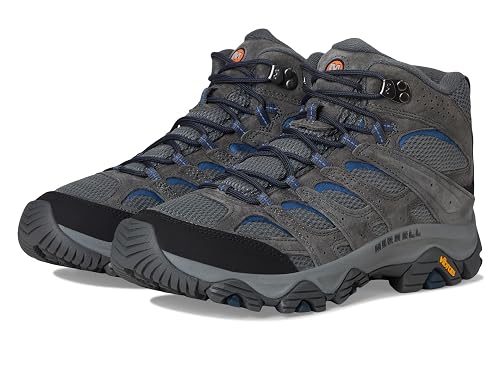
Merrell Men’s Moab 3 Mid Hiking Boot
Columbia Newton Explorer
Merrell Men’s Moab 3 Mid Waterproof Hiking Boots
KEEN Men’s Targhee 4 Low Waterproof Hiking Shoes

KEEN Men’s KS86 Retro Style Sneakers
Merrell Moab Speed 2 GTX
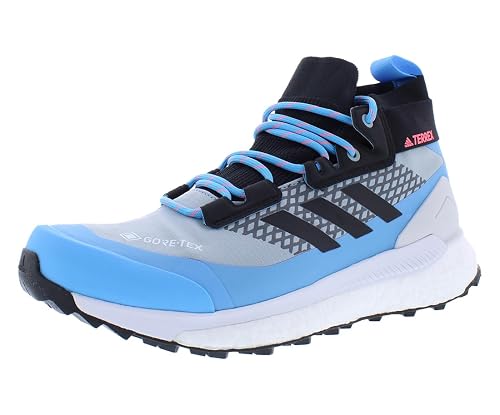
adidas Women’s Hiking Shoe
More On The Choices That Made The List
The SCARPA Mojito Wrap leans into the “approach shoe” side of the walking-and-hiking spectrum, with a low-cut silhouette that feels closer to a casual sneaker than a traditional hiker. The wrap-style lacing system pulls the upper snug around the midfoot, which helps on uneven pavement and groomed dirt paths alike. Compared to the bulkier mid-cut options further down this list, this one is built to disappear on your foot during long city walks, then handle a spontaneous trail detour without missing a beat.
You get that Italian shoemaking sensibility SCARPA is known for, with a leather and mesh upper that breaks in nicely over the first few outings. For most commuters, the trade-off is the lack of a waterproof membrane, so wet sidewalks and creek crossings will soak through. Treat it as a three-season dry-day shoe and it earns its place in the rotation.
A Few Strong Suits
- Low-profile feel that handles pavement and easy trails in one shoe
- Wrap-style lacing creates a secure midfoot hold on uneven ground
- Genuine leather panels add durability where abrasion tends to happen
- Versatile enough for office-to-trail days without swapping footwear
Things To Consider
- No waterproof membrane, so stream crossings mean wet feet
- Narrower fit may feel tight for shoppers used to roomier hiking shoes
- Lightweight build trades some ankle stability for agility on technical ground
Made For
Urban walkers and casual trail wanderers who want one shoe that covers both worlds without looking like a technical hiker.
Look Elsewhere When
The Columbia Newton Explorer is a stronger fit if you regularly walk through muddy or wet conditions and need a sealed leather upper.
Stepping up from a low-cut walking shoe, the adidas Terrex Trailmaker 2.0 Mid adds real mid-ankle support and a GORE-TEX membrane, which is a waterproof yet breathable lining designed to keep water out while letting heat escape. The BOOST midsole, adidas’s energy-return foam technology, softens each step and feels noticeably springier than the EVA foam (a lightweight, compression-molded cushioning material common in most hiking shoes) you’ll find in many rivals. You can think of it as a comfortable daily walker that is happy to take a beating on wet rock and root-strewn paths.
Where the SCARPA Mojito feels like a refined city shoe, the Trailmaker is unapologetically trail-oriented. The mid-top collar helps stabilize the ankle on side-slopes and uneven rock, which is a meaningful upgrade for new hikers who tend to roll their feet. You may find the BOOST cushion runs a touch warm on hot summer days, but in shoulder seasons that extra rebound is a real asset.
Strong Points
- GORE-TEX lining keeps feet dry through puddles, dew, and light rain
- BOOST midsole returns energy on long climbs and descents
- Mid-top construction provides meaningful ankle support for uneven trails
- Continental rubber outsole delivers reliable grip on wet rock
Worth Noting
- Heavier than the SCARPA Mojito, so it is less ideal for long urban commutes
- BOOST cushion can feel warm during summer hikes in hot climates
- Break-in period of a few short walks helps the upper mold to the foot
Feature Snapshot
Right Fit For
Hikers tackling wet weather and variable terrain who want athletic-style cushioning rather than a stiff, traditional boot feel.
Consider Something Else When
The Merrell Moab 3 Mid Waterproof is a smarter pick if you prefer a roomier toe box and a more classic hiking-boot fit over athletic energy return.
The Merrell Moab line has earned a near-legendary reputation among weekend hikers, and version 3 keeps that reputation intact. The Moab 3 is the low-cut sibling of the mid boot you’ll meet next, and it shines as a do-everything day hiker that feels comfortable straight out of the box. A grippy Vibram outsole (a high-traction rubber outsole made by the Italian company Vibram, widely considered a gold standard for hiking footwear) anchors the shoe on loose dirt and wet rock, while the updated insole gives the arch a more supportive feel than earlier versions.
This is a sensible pick for hikers who rack up mileage on a mix of groomed trails, fire roads, and the occasional scramble. You will not get the weather sealing of the adidas Terrex above, but the breathable upper is a genuine benefit on hot days when waterproof membranes turn your shoes into saunas. Treat the Moab 3 as a fair-weather workhorse, and it rarely disappoints.
Everyday Wins
- Vibram outsole grips confidently on loose dirt, gravel, and wet roots
- Roomy toe box accommodates thicker socks and wider feet
- Breathable mesh upper keeps feet cooler than waterproof alternatives in summer
- Updated insole delivers noticeably better arch support than Moab 2
Trade Offs
- No waterproof membrane means wet grass and puddles soak through quickly
- Heavier than trail-running-inspired options like the Moab Speed 2 GTX
- Wide fit may feel sloppy for shoppers with very narrow feet
Best Suited To
Day hikers and outdoor volunteers who want one trusted shoe for varied terrain in dry to moderately damp conditions.
Reach For A Different Pick When
The Merrell Moab Speed 2 GTX is a better fit for fast-paced hikers who want a lighter, athletic-feeling shoe with weather protection built in.
Take everything the Moab 3 low-cut does well and add a mid-height collar that wraps above the ankle, and you get the Moab 3 Mid. This is the version most weekend hikers reach for when the trail involves loose scree, heavier loads, or just an extra dose of confidence on uneven ground. It carries the same Vibram outsole and updated insole as the low-cut sibling, so the familiar comfort is intact.
Compared to the KEEN Targhee 4 below, the Moab Mid has a slightly more athletic, streamlined feel, while the Targhee leans roomier. The trade-off shows up on warm days: the higher collar and extra material add a touch of heat retention, and the shoe runs a bit heavier on long, flat approaches. For most hikers carrying a daypack, the ankle support is a fair swap for the extra grams.
What It Does Well
- Mid-cut collar stabilizes the ankle on uneven or rocky ground
- Vibram outsole handles loose terrain with confidence
- Out-of-the-box comfort minimizes the typical break-in window
- Padded collar reduces rubbing on longer descents
Room For Improvement
- Heavier than low-cut alternatives, which can wear on long flat days
- No waterproof version here, so wet weather demands the Moab 3 Mid WP
- Mid collar can feel warm during summer hikes in humid climates
Who It Suits Best
Weekend hikers carrying a daypack over rocky, rooty, or uneven terrain who want ankle support without committing to a full backpacking boot.
Skip It When
The KEEN Targhee 4 is a smarter call for shoppers with notably wide feet who want a roomier, lower-cut fit with waterproofing included.
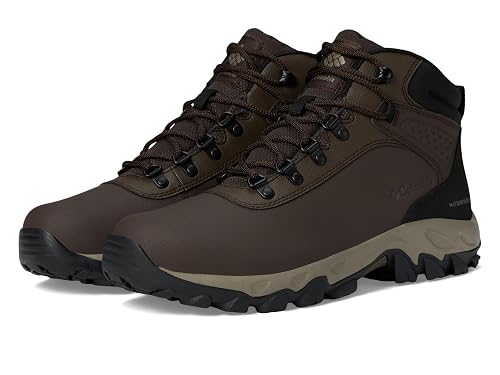
The Columbia Newton Explorer is a more traditional hiking shoe in the classic sense, with a waterproof leather upper, metal hardware, and a Techlite midsole, Columbia’s proprietary lightweight foam designed for cushioning and energy return. Where the SCARPA Mojito aims for sleekness and the Moab 3 leans into athletic comfort, the Newton Explorer is built to take a beating and keep coming back for more. It is a sensible choice for hikers who regularly deal with mud, wet underbrush, and unpredictable shoulder-season weather.
You’ll feel the weight difference compared to trail-runner-style options like the Moab Speed 2 GTX further down, but that heft is the cost of leather durability and reliable waterproofing. The Omni-Tech waterproof-breathable membrane, Columbia’s proprietary weather protection system, keeps rain and shallow puddles out while still allowing some heat to escape. For most hikers who log messy fall and spring miles, that balance is exactly what they need.
What Earns Its Place
- Waterproof leather upper handles mud, rain, and abrasive brush
- Techlite midsole delivers long-lasting cushioning for multi-hour walks
- Omni-Tech membrane seals out water without turning the shoe into an oven
- Metal hardware and stitched construction boost long-term durability
Honest Caveats
- Heavier than mesh-based hikers, which shows up on long flat approaches
- Leather upper needs occasional conditioning to prevent drying and cracking
- Stiffer out of the box than athletic-style options, so a short break-in helps
Feature Snapshot
Whose Shelf It Belongs On
Hikers who log wet, muddy miles in shoulder seasons and prefer a durable, traditional leather build over a lightweight mesh design.
A Better Fit Elsewhere
The Merrell Moab 3 Mid Waterproof is a lighter alternative for hikers who want weather protection without the weight of a full leather upper.
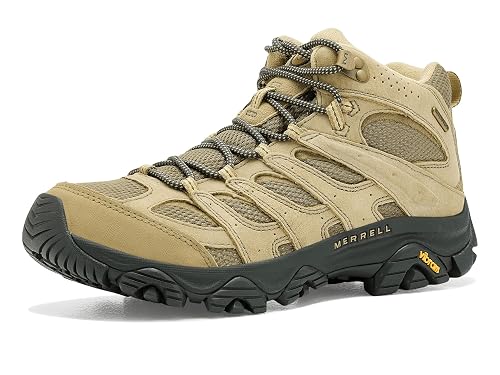
The Moab 3 Mid Waterproof takes the proven mid-cut Moab platform and seals it against the elements, adding a waterproof membrane that keeps stream crossings, morning dew, and surprise rain from ruining your hike. If you found the standard Moab 3 Mid appealing but wished it could handle wet trails, this is the version to look at. The mid-cut collar still delivers the same ankle support as the non-waterproof sibling.
Compared to the Columbia Newton Explorer, this boot feels noticeably lighter on the foot and runs cooler in warm weather, thanks to its mesh-forward construction. The trade-off is less long-term abrasion resistance than a full leather upper, so you will want to be a bit gentler with rough rocky terrain. For most hikers who want a versatile mid-cut that handles weather without weighing them down, the honest read is that this is a sensible middle ground.
Points In Its Favor
- Waterproof membrane keeps feet dry through shallow stream crossings
- Mid-cut collar stabilizes the ankle on uneven ground
- Vibram outsole maintains grip on wet rock and slick roots
- Lighter than full-leather boots like the Columbia Newton Explorer
Points To Keep In Mind
- Waterproofing adds modest weight compared to the non-waterproof Moab 3 Mid
- Membrane can feel warm during summer hikes in humid conditions
- Mesh panels are less abrasion-resistant than leather uppers over sharp rock
Feature Snapshot
Who Should Grab It
Hikers who want a mid-cut, weatherproof boot for shoulder-season trails and stream crossings without stepping up to a heavy backpacking boot.
Not Your Match When
The adidas Terrex Trailmaker 2.0 Mid GTX is a stronger call for hikers who want a more athletic, energy-returning ride in wet conditions.
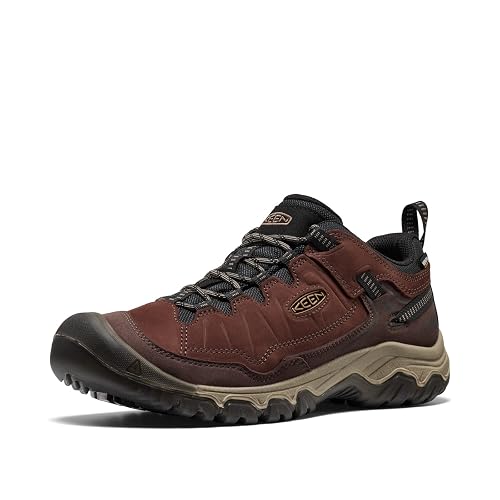
KEEN built its reputation on roomy, protective footwear, and the Targhee 4 Low carries that DNA forward with a direct-attach construction that fuses the upper to the outsole, reducing weak points where shoes typically fall apart. The KEEN.DRY waterproof membrane (KEEN’s proprietary waterproof yet breathable lining) keeps water out, while the famously generous toe box is a real gift for shoppers with wider feet who feel pinched in traditional hiking shoes. It is a low-cut, weatherproof option that doubles as a comfortable everyday walker.
Compared to the Moab 3 above, the Targhee 4 feels more substantial underfoot and a touch heavier, but it rewards that heft with a notably durable build. The trade-off shows up on hot, dry days when you might prefer a non-waterproof, more breathable shoe instead. For shoppers who walk in mixed conditions and need a wider fit, this is a thoughtful, hard-wearing pick.
Practical Pluses
- Roomy toe box accommodates wider feet and thicker hiking socks
- Direct-attach construction boosts long-term durability
- KEEN.DRY waterproof membrane handles wet conditions reliably
- All-terrain outsole grips dirt, gravel, and rocky paths with confidence
Some Limits To Know
- Heavier than athletic-style hikers like the Moab Speed 2 GTX
- Wider fit may feel loose for shoppers with narrow feet
- Waterproof lining can run warm in hot, dry summer weather
Built With In Mind
Wide-footed hikers and anyone who has felt pinched in traditional hiking shoes and wants a durable, weatherproof low-cut option.
Swap It Out When
The Merrell Moab 3 is a better fit for hikers who prefer a more athletic, lower-profile feel and do not need waterproofing on every outing.
The KS86 is KEEN’s play for shoppers who want the brand’s famously wide, comfortable fit in a sneaker that does not look like a hiking shoe. Available in recycled mesh or environmentally friendlier leather, the upper is paired with an aggressive tread that handles more than a casual sidewalk. Think of it as a retro-style everyday shoe that quietly outperforms most fashion sneakers on a long walk.
Where the Targhee 4 above is built for the trail, the KS86 lives in the overlap between street style and light outdoor use. It is not a technical hiker, so you will want to keep it on paved paths, park loops, and easy gravel trails. For most shoppers who want one shoe for daily wear with a little extra traction underfoot, the honest read is that this is a fun, capable option that looks better with jeans than most hiking shoes do.
Advantages To Know
- Retro silhouette works for casual office and weekend outfits
- KEEN’s wider footwear platform fits comfortably for many foot shapes
- Aggressive tread handles light trails better than a standard sneaker
- Available in recycled mesh and eco-friendlier leather uppers
Practical Considerations
- Not built for serious trails, so steep or rocky terrain is off the menu
- Lacks a waterproof membrane, limiting use in wet conditions
- Less arch support than purpose-built hiking shoes on long days
Perfect Match For
Everyday walkers and casual outdoor users who want a stylish, comfortable shoe that handles sidewalks and light paths without looking technical.
Where A Sibling Pick Shines
The KEEN Targhee 4 is a better choice for shoppers who want a real waterproof hiking shoe with the same roomy KEEN fit for trail use.
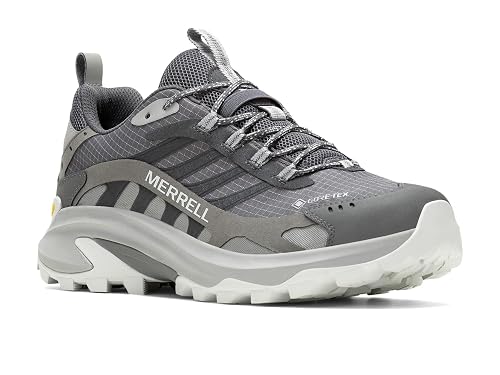
The Moab Speed 2 GTX is Merrell’s answer to hikers who want the comfort of the Moab family in a faster, more athletic package. It pairs the brand’s trail-running heritage with a GORE-TEX membrane and a Vibram TC5+ outsole, which is a Vibram rubber compound specially formulated for Merrell, designed to balance grip and durability on varied terrain. You get noticeable energy return on the uphills and confident braking on the descents, which makes it a favorite for hikers who log miles at a brisker pace.
Compared to the standard Moab 3, this shoe is lighter, lower to the ground, and feels more like a trail runner than a traditional hiker. The trade-off is less ankle support and a more snug, athletic fit that may feel tight for shoppers used to the roomy Moab toe box. For most hikers tackling established trails in wet or mixed weather, the Speed 2 GTX is a thoughtful performance upgrade.
Reasons It Performs
- GORE-TEX membrane seals out water while keeping weight low
- Vibram TC5+ outsole grips wet rock and loose dirt confidently
- Athletic midsole returns energy for a faster, less tired stride
- Lower-to-the-ground feel improves stability on technical terrain
Where It Is Less Suited
- Snug, athletic fit may feel tight for shoppers with wider feet
- Less ankle support than mid-cut boots on heavily loaded trips
- Waterproof lining can run warm during high-output summer hikes
Feature Snapshot
Who Will Love This
Active hikers and trail-runner-to-hiker converts who want weather protection, light weight, and a responsive ride on established trails.
Where Another Pick Suits Better
The Merrell Moab 3 Mid Waterproof is a better fit for shoppers who prefer a roomier toe box and more ankle support over athletic agility.
The adidas Women’s Hiking Shoe is a straightforward entry point for shoppers who are new to hiking or simply want a comfortable, approachable shoe for weekend outings. It fits into that easy sweet spot between a casual sneaker and a full hiking boot, which is exactly the gap many casual users are trying to fill. If you are dipping a toe into trail walking and do not want to overthink the gear side, this is a sensible place to start.
Compared to the trail-ready Moab 3 or the weatherproof Columbia Newton Explorer, this shoe is more of a casual all-rounder than a technical performer, so you’ll want to keep it on moderate terrain. The honest read is that new hikers get a comfortable, recognizable brand-name shoe at an approachable level, and that is often exactly enough to get out the door and onto the trail.
Everyday Advantages
- Approachable fit and feel for shoppers new to hiking footwear
- Versatile enough for casual walks, travel days, and light trails
- Familiar adidas sizing for shoppers who already know the brand
- Lower-cut design works for everyday wear beyond the trail
Things To Weigh
- Less technical support than purpose-built hikers like the Moab 3
- Limited spec detail available, so expectations should stay moderate
- Best matched to easy terrain rather than steep, rocky routes
The Right Fit
New hikers, casual walkers, and travelers who want a comfortable, brand-trusted shoe for light trail use and everyday wear.
Not Your Match When
The adidas Terrex Trailmaker 2.0 Mid GTX is a stronger call for hikers ready to commit to wet trails and more demanding terrain.
What Matters Most When Choosing Shoes For Walking And Hiking
Match the shoe to your dominant terrain
Think honestly about where these shoes will spend 80% of their time. A pavement-heavy walker with occasional trail weekends will be happier in a lighter, lower-profile option like the SCARPA Mojito than in a chunky mid-cut boot. Hikers who tackle loose scree and variable conditions benefit from the ankle support and grip of mid-cut options like the Moab 3 Mid or Targhee 4. The goal is a shoe that feels like a natural fit for your most common route, not a specialized tool for the trip you take once a year.
Decide how much weather protection you actually need
A waterproof membrane, like GORE-TEX, KEEN.DRY, or Columbia’s Omni-Tech, is a genuine gift on wet trails and a real liability on hot, dry days. Hikers in mild, damp climates will lean hard toward waterproof models, while those in dry, hot regions often do better with breathable non-waterproof options. The trade-off is straightforward: more weather protection usually means more heat retention and slightly more weight.
Get the fit right before anything else
Hiking shoes live or die by fit, and a great design in the wrong size is still the wrong shoe. Leave a thumb’s width of space at the toe for downhill movement, make sure the midfoot is held without pressure points, and try them on at the end of the day when your feet are slightly swollen. Wide-footed shoppers should prioritize roomy lasts like KEEN’s Targhee line, while narrow feet often do better in athletic, snug-fitting options.
Mistakes Worth Dodging And When Spending Up Pays Off
Pitfalls Shoppers Hit
The most common mistake is buying hiking shoes for walking-only use, which adds unnecessary weight and stiffness to a daily routine. The opposite mistake is grabbing a casual sneaker for a real trail, then wondering why the soles felt slippery and the feet ended up bruised. Match the shoe to the terrain you actually walk, and resist the temptation to size up for “extra comfort” without trying the shoes on first.
When Paying More Pays Off
Higher-tier models earn their keep through better waterproof membranes, more durable Vibram outsoles, supportive midsoles that retain cushioning over time, and construction methods like direct-attach builds that resist delamination. If you hike often, walk in wet conditions, or carry any weight on the trail, those upgrades translate to dry feet, fewer hot spots, and shoes that last several seasons rather than one. For occasional fair-weather walkers, a more moderate pick handles the job without the extra cost.