
A long descent on a remote ridge is exactly where the right stick earns its keep. Whether you’re chasing mileage on weekend loops or sorting gear for a first multi-day trek, the right pair of tactical hiking sticks saves your knees, steadies your footing, and stows neatly when the trail levels out. This roundup pulls together six real options across aluminum, carbon fiber, and survival-oriented designs. Each one solves a different kind of problem, so the match depends less on brand and more on how and where you actually hike.
Your Options, Compared
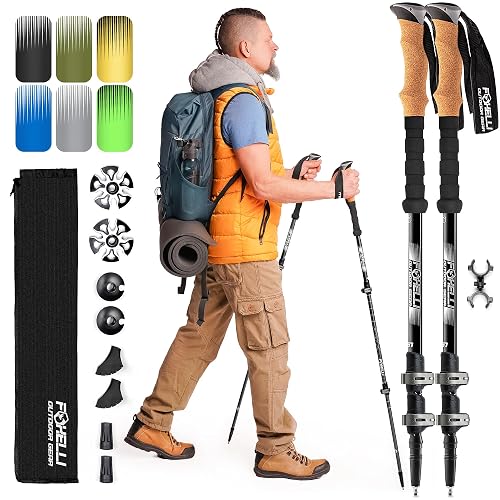
Foxelli Trekking Poles – Lightweight Collapsible Aircraft Grade Aluminum Hiking Poles with Cork Grips

100% Carbon Fiber Trekking Poles – Lightweight Collapsible Hiking Poles with Cork and EVA Foam Grips

Rhino USA Survival Hiking Stick Multi-Tool – Walking Staff for Camping
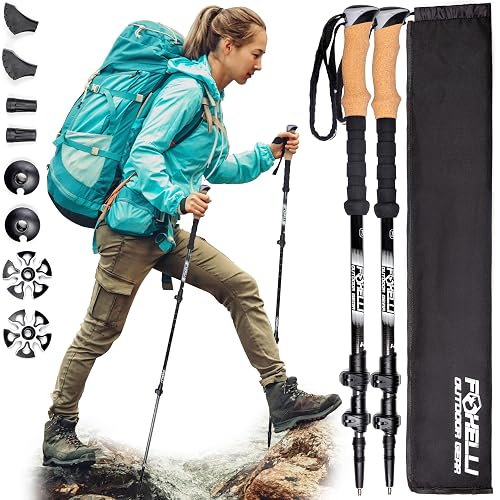
Foxelli Carbon Fiber Trekking Poles – Lightweight Collapsible Hiking Poles with Cork Grips
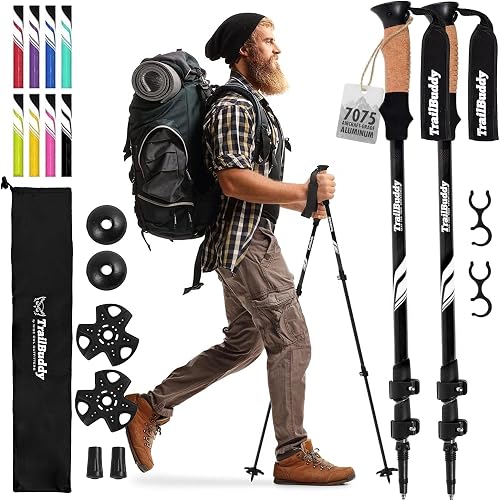
TrailBuddy Trekking Poles – Lightweight 7075 Aluminum Hiking Poles – Collapsible Walking Sticks
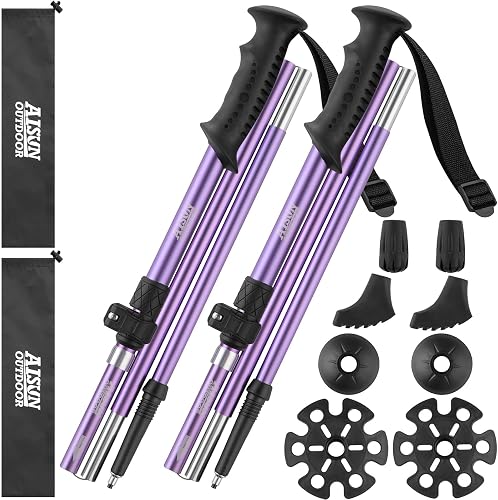
AISUNOUTDOOR Lightweight Adjustable Trekking Poles – Aluminum Collapsible Travel Hiking Sticks
For most weekend hikers, the Foxelli aluminum pair hits the sweet spot between price and real trail performance. Aircraft-grade aluminum (a high-strength alloy commonly used in aviation frames) gives you the durability to lean hard on steep grades without babying the gear. The cork grips mold to your hand over time and stay cooler than foam in summer sun, which matters more than you’d think on a long switchback.
Quick flip locks let you adjust length on the move, and the all-terrain accessories in the kit cover most conditions out of the box. Compared with the heavier steel options from years past, this design feels lively in hand. You get a pair that handles rocky descents, river crossings, and packed-dirt park trails without needing upgrades.
Points In Its Favor
- Cork grips absorb sweat and reduce hand fatigue on multi-hour walks.
- Flip locks adjust in seconds, so you can shift length for uphills versus flat sections.
- Aluminum shafts tolerate scrapes against rock better than carbon fiber.
- Collapsible design packs down small enough for carry-on luggage.
Trade-Offs To Consider
- Heavier than carbon fiber alternatives, so every gram counts on thru-hikes.
- Flip locks can loosen over time and may need occasional tightening.
Built With In Mind
Beginners and casual hikers who want a forgiving aluminum pair without a steep price tag.
Consider Something Else When
Long-distance backpackers chasing the lightest possible load should look at the carbon fiber options in this list instead.
When every gram on the trail matters, carbon fiber delivers. The 3K carbon fiber shafts (a tightly woven carbon weave known for high strength at low weight) keep these poles near the front of the ultralight pack. Long-distance hikers feel the difference after hour four, when swinging lighter poles means fresher shoulders and steadier footing on technical ground.
Cork grips handle sweaty palms well, while EVA foam extensions underneath give you a lower hand position for steep climbs. Quick flip locks handle length changes without tools. Compared with the Foxelli aluminum pair above, you gain meaningful weight savings and a stiffer feel under load, which is exactly what thru-hikers want.
Features That Help
- Carbon shafts cut weight without sacrificing stiffness on descents.
- Moisture-wicking cork grips keep hands dry during humid climbs.
- Foam lower grips give you a second hand position when the grade steepens.
- Collapsible design fits inside most backpacking packs.
- Flip locks adjust quickly even with cold or gloved hands.
Points To Keep In Mind
- Carbon fiber can crack under sharp rock impacts, unlike aluminum’s dent-and-continue behavior.
- Higher cost than aluminum pairs.
Key Specs
Made For
Thru-hikers and ultralight backpackers covering serious mileage with gear dialed to the ounce.
Reach For A Different Pick When
Hikers who treat their poles roughly and want dent-resistant durability should consider the TrailBuddy 7075 aluminum pair in this roundup.
This is less a trekking pole and more a trail-ready survival tool. The anodized aluminum body (an aluminum shaft treated to resist corrosion and surface wear) comes loaded with built-in gear: compass, fire starter, fishing line, tackle, screwdriver, and bottle opener. A paracord lanyard adds both grip security and emergency utility. Adjustable height and rubber tips round out a useful walking staff for varied terrain.
Think of it as a one-piece bug-out companion that doubles as a trekking aid. You can leave the multi-tool pouch at base camp and still have a capable walking stick. For backcountry routes or emergency kit preps, that consolidation matters. Compared with traditional poles, the tradeoff is weight and a narrower feature set focused on utility over athletic performance.
What Works In Its Favor
- Integrated survival kit cuts down on loose gear in your pack.
- Adjustable height fits a range of users and terrain.
- Anodized finish resists corrosion in wet or coastal environments.
- Paracord lanyard doubles as emergency cordage.
Honest Caveats
- Heavier than standard trekking poles due to the integrated kit.
- Not designed for fast-and-light hiking performance.
- Built-in tools are basics, so experienced outdoorsmen may still pack dedicated gear.
The Right Fit
Backcountry campers, preppers, and hikers who want one piece of gear that handles walking plus emergency basics.
A Better Fit Elsewhere
Hikers focused on mileage and athletic support should look at the Foxelli aluminum pair instead of this multi-tool option.
The Foxelli carbon pair lands in a smart middle ground for hikers who want lighter poles without jumping to the top of the price ladder. Carbon fiber construction drops fatigue during back-to-back hiking days, and cork grips keep the comfort level high on warm days. Quick flip locks let you tweak length between ascents and flat stretches in just a few seconds.
Day hikers and travelers who fly with their gear appreciate how compact these collapse. Adjustable height accommodates different user sizes and trail angles. Compared with the Foxelli aluminum model earlier in this list, you trade a small bump in price and a meaningful drop in swing weight.
The Helpful Details
- Carbon fiber keeps poles light enough for travel-friendly packing.
- Cork grips handle sweaty hands on summer climbs.
- Flip locks work with gloved fingers in cold weather.
- All-terrain accessories cover most common hiking surfaces.
Worth Bearing In Mind
- Carbon shafts are stiffer but more vulnerable to hard rock strikes than aluminum.
Best Suited To
Day hikers, travelers, and weekend backpackers who want carbon savings without committing to premium pricing.
Skip It When
Hikers beating through dense brush or rocky canyons should consider the aluminum TrailBuddy pair for tougher environments.
TrailBuddy leans into 7075 aluminum, a higher-grade alloy than the standard 6061 used in many entry-level poles, which gives you a stronger shaft for less weight. That makes the pair a natural fit for households sharing poles between adults and seniors, or for hikers who want extra durability on rough trails. Adjustable height spans a wide range, so multiple users can share the same set across a trip.
Collapsible construction stores flat in a suitcase, and the cork-EVA grip combo handles sweaty hands comfortably. Versus the Foxelli aluminum pair covered earlier, you get a slightly sturdier alloy and a similar weight class. You may find the adjustment range particularly useful on group hikes where gear gets passed around.
Good Reasons To Consider
- 7075 aluminum resists bending under hard downhill loads.
- Wide height range fits a variety of user heights.
- Collapsible format works for both trail use and travel storage.
- Cork and EVA grip combination stays cool and absorbs sweat.
- Solid balance aid for seniors needing extra stability.
Practical Considerations
- Heavier swing than carbon fiber poles on long mileage days.
- Lock mechanism may need occasional cleaning after muddy hikes.
Feature Snapshot
Whose Shelf It Belongs On
Households where multiple people share gear, or seniors looking for a confidence-boosting walking aid on uneven ground.
Where Another Pick Suits Better
Solo ultralight backpackers will get more value from the 100% Carbon Fiber trekking poles covered earlier in this roundup.
For casual walkers and families who just need a dependable pole now and then, the AISUNOUTDOOR pair delivers basic function at an approachable price. Aircraft-grade aluminum gives you a familiar feel under hand, while the collapsible format makes packing into a daypack or suitcase painless. A disposable raincoat tossed into the kit is a small but thoughtful extra for unexpected weather.
You may find this set hits the right notes for kids learning trail footing or grandparents who want a helping hand on neighborhood walks. Compared with the premium picks earlier in this list, you trade some refinement in grip ergonomics and lock precision, yet gain a lower cost of entry. The retractable height handles most walking scenarios without fuss.
Benefits That Matter
- Approachable price for first-time pole shoppers.
- Lightweight aluminum keeps arm fatigue manageable.
- Collapsible design works for travel and storage.
- Adjustable height fits a wide range of user sizes.
Possible Compromises
- Lock mechanism feels less refined than premium picks.
- Grip material is basic compared with cork-equipped models.
Perfect Match For
Casual walkers, kids, and seniors who want an affordable entry into pole-assisted walking without overthinking the choice.
Not Your Match When
Regular backpackers covering long distances will find the Foxelli aluminum or 100% Carbon Fiber options a stronger long-term match.
What Matters Most Before Choosing Tactical Hiking Sticks
Aluminum vs. Carbon Fiber Construction
Aluminum bends before it breaks, which makes it forgiving on rocky descents and dense brush. Carbon fiber is lighter and stiffer under load, but it can crack under sharp impacts. Aluminum suits rough users and shared family gear. Carbon fiber suits hikers chasing mileage or traveling light. Match the shaft to your terrain and your tendency to drop things on sharp rock.
Lock Mechanisms and Adjustability
Flip locks snap open and closed for fast length changes. They handle most conditions well but can loosen over months of use. Twist locks use internal friction and stay tighter longer, though they take slightly more time to adjust. For most hikers, the difference comes down to personal feel: do you prefer one-handed snaps or a firm twist.
Grip Materials and Ergonomics
Cork molds to your hand and handles sweat well, which matters on humid climbs. EVA foam feels softer at first but can get slick when wet. A combined cork-foam grip gives you both comfort up top and a useful lower hold for steep grades. Try a grip shape that matches how you naturally hold the pole on flat sections.
Accessory Kit and Footwear Tips
Standard tips include rubber boots for pavement and trekking baskets for mud or snow. Carbide tips bite into ice and hardpack. The right accessory turns one pole into a four-season companion. Buying tips separately is easy, but a kit that includes the basics saves time on your first hike out.