
Your first season chasing geese can feel like learning a second language, and the right call is your first vocabulary lesson. Most newcomers struggle with reeds that stick or guts that demand too much air, then wonder why every flock keeps banking away. The picks below focus on forgiving designs, clear response, and sound you can actually learn to shape without fighting the acrylic.
A Side-By-Side Look

RNT Barbelly Acrylic Specklebelly Goose Call
Buck Gardner Canada Hammer Goose Call

Zink Power Clucker (PC-1) Polycarbonate Goose Call

Primos Honky Tonk Short Reed Goose Call

Flambeau Big River Long Honker Goose Flute
Buck Gardner BGC Canada Hammer Goose Call

LXC Blue Canada Goose Call

Power Calls Strike Specklebelly Goose Call

Faulk’s Game Calls Honker H-100
Taking A Closer Look At The Options
Hunting specklebellies is a different game than chasing Canadians, and the RNT Barbelly is built specifically for it. Its acrylic body holds up to cold mornings when lesser calls choke up, and the individually milled delrin guts add a layer of consistency most beginners appreciate.
What sets this call apart for newcomers is the built-in back pressure, a design feature that resists your airstream just enough to keep the reed from collapsing. In practical terms, you spend less time fighting the call and more time learning the actual language of specks. You may find the volume ceiling lower than some big-bore competitors, but that’s a fair trade for the forgiveness it offers learners.
Noteworthy Benefits
- Built-in back pressure helps beginners maintain consistent tone without overblowing
- Acrylic construction resists cracking in freezing blinds
- Milled delrin guts produce a clean Speck sound across the full volume range
- Capable of soft murmurs and loud yodels from the same call
Worth Noting
- Specialized for specklebelly sound rather than multi-species flexibility
- Acrylic can feel cold against bare lips on late-season mornings
Made For
First-year hunters who want a forgiving Speck call that grows with their skills through several seasons.
Look Elsewhere When
The Flambeau Big River Long Honker is a better starting point if Canada geese are your primary target.
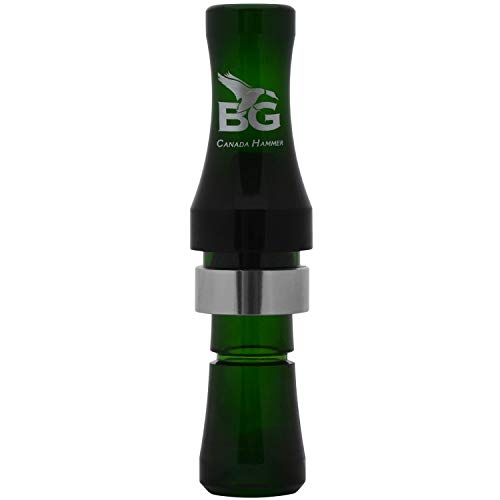
If you’ve ever pulled a call from your vest only to find it sounding off, you’ll appreciate what Buck Gardner built into the Canada Hammer. The Quick-Tune guts system is the kind of feature beginners actually use in the field, because it lets you adjust tone without disassembling the whole call.
The camo green polycarbonate body is rugged enough to handle being tossed into a layout shell, and the fast reed response helps new callers shape a productive call more quickly. The double O-ring insert keeps air where it belongs, so your effort shows up as sound instead of leaking sideways. Depending on your air pressure habits, you may need a season to find the sweet spot for the highest notes.
Why It Works Well
- Quick-Tune guts simplify field adjustments without tools
- Polycarbonate construction handles drops and temperature swings
- Double O-ring insert seals air efficiently for crisp tone
- Responsive reed helps shape hails, clucks, and moans
Practical Considerations
- Camouflage finish may wear at contact points over time
- Quick-Tune adjustment takes some trial to master the first season
Key Specs
Built With In Mind
Newcomers who plan to hunt Canada geese across varied conditions and want a call that forgives early mistakes.
Swap It Out When
The Buck Gardner BGC Canada Hammer is a smarter pick if you want a competition-grade sound right out of the box.
Zink calls have a quiet reputation among callers who care about how a mouthpiece feels against their lips, and the PC-1 is the polycarbonate version of their custom acrylic namesake. That means the body tolerates abuse while the internal machining keeps things tight.
For a beginner, the practical question is whether the call teaches you good habits or bad ones. The PC-1 rewards clean airflow, so you’ll develop technique that carries to any future call. It covers the full Canada goose vocal range, which means one call handles nearly every sound you need in the field. You may find it slightly less forgiving on those early, breathy attempts.
What Helps Most
- Polycarbonate body delivers acoustic consistency in cold weather
- Machined mouthpiece offers repeatable performance call after call
- Short reed design enables everything from murmurs to comeback calls
- Hand-tuned construction supports skill development
Possible Compromises
- Less back-pressure cushioning than beginner-first designs
- Requires more disciplined breath control to sound clean
Right Fit For
Callers ready to invest time in proper technique and wanting a call that grows with improving skill.
A Better Fit Elsewhere
The Primos Honky Tonk Short Reed is a friendlier first call if you’re not yet confident in your air control.
Anyone who has hunted in cold rain knows the misery of a reed that sticks halfway through a calling sequence. Primos addressed that headache directly with patented ditches on the sounding board, which channel moisture away from the reed. The result is a call that keeps working when conditions turn ugly.
Compared to the Buck Gardner Canada Hammer above, the Honky Tonk asks even less of your lungs. That makes it a natural choice for hunters who are still building the stamina to work a flock for several minutes at a time. In our experience, it’s the kind of call you can grab on a frosty dawn and trust without warm-up rituals.
Strengths Worth Knowing
- Patented moisture-ditch design prevents reed sticking in humid or wet conditions
- Low back pressure suits callers still building breath control
- Reproduces the full Canada goose vocabulary on one short-reed call
- Forgiving enough to learn quickly without fighting the call
Some Limits To Know
- Less competition-grade refinement than higher-tier short reeds
Feature Snapshot
Who It Suits Best
Hunters who face wet or cold weather often and want a call that performs reliably on the first blow.
Consider Something Else When
The Zink Power Clucker (PC-1) is a smarter match if refining technique matters more than weatherproofing.
Short-reed calls aren’t the only path into goose hunting, and the Flambeau Big River Long Honker proves it. A flute-style call uses a longer tone channel shaped like a goose’s vocal tract, which means it produces a deep, hollow honk with minimal air pressure from you.
For total beginners, this design removes most of the reed-management learning curve. You blow across the opening rather than pushing air through a vibrating reed. The trade-off shows up in versatility, because flutes cover fewer vocalizations than a short reed. For most newcomers starting on honks and clucks, that’s not really a limitation at all.
The Practical Payoff
- Minimal air pressure makes it the easiest call to blow on this list
- Long tone channel produces rich, natural-sounding honks
- Handles single and triple clucks for added realism
- No reed tuning required for daily use
Where It Is Less Suited
- Limited vocal range versus short-reed designs
- Less effective for loud, piercing hail calls at long distances
Best Suited To
Hunters who want the lowest-effort path into goose calling and don’t need advanced vocal range right away.
Not Your Match When
The Primos Honky Tonk Short Reed is a better option if you plan to learn the full Canada goose vocabulary.
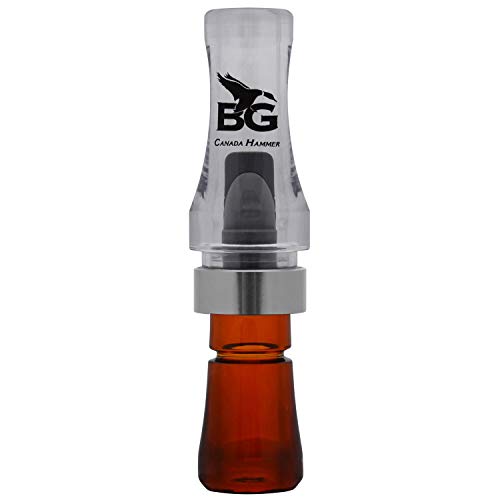
The BGC version of Buck Gardner’s flagship takes what the standard Canada Hammer does well and pushes it further toward contest-quality sound. The clear and bourbon polycarbonate body lets you see the guts, which is helpful when you’re learning how reeds and tone boards interact.
For a beginner who wants to develop refined technique, the BGC rewards clean, deliberate air. The double O-ring insert keeps air where it should be, and the responsive reed pickup means even subtle changes in your pressure show up in the sound. You may find it less forgiving than the camo Canada Hammer reviewed earlier, but the payoff is a clearer, more competition-ready tone once you master it.
The Good Stuff
- Hand-tuned construction delivers competition-quality output
- Clear polycarbonate body lets you see internal components
- Fast reed pickup responds to subtle pressure changes
- Double O-ring insert prevents power leaks
Factors To Consider
- Less forgiving than entry-level short-reed designs
- Higher price ceiling typical of competition-tier tools
Technical Highlights
Perfect Match For
Callers who want a clean, refined sound and are willing to invest in developing proper technique.
Reach For A Different Pick When
The Flambeau Big River Long Honker is a friendlier entry if reed technique feels intimidating right now.
Late-season hunters know the misery of a frozen-lip call on a December morning. Legend Calls tackled that problem with the LXC’s insulating band technology, which wraps a thicker portion of the call body to slow heat loss into cold acrylic. The textured exterior adds grip when your fingers are numb.
Beyond weather performance, the LXC uses Legend’s own gut system aimed at newcomers who want a short-reed call with sensible back pressure. It’s the kind of design where thoughtful engineering solves problems beginners didn’t know to ask about. You may find the band styling less traditional than classic wood or acrylic finishes, but the trade is warmth and impact resistance.
Real Benefits
- Insulating bands keep lips warmer on late-season hunts
- Textured exterior maintains grip with cold or wet hands
- Added impact protection resists drops and bumps
- Built-in back pressure supports beginner technique
Small Caveats
- Band graphics may not appeal to hunters wanting traditional aesthetics
Whose Shelf It Belongs On
Cold-climate hunters who often find themselves calling in sub-freezing temperatures.
Skip It When
The Zink Power Clucker (PC-1) is a better match if your season stays mostly in the early-fall range.
Volume matters when specks are working distant fields, and Power Calls designed the Strike around that reality. The pan-style gut uses a shallow but extra-wide tone channel, which transfers more of your effort into sound. For beginners, that means less air pressure required for the same loud output.
The stealth black finish keeps the call low-profile in layout blinds, and the molded poly-acrylic blend offers reasonable cold-weather durability. The built-in back pressure keeps the reed from collapsing when you’re learning to find consistent airflow. In most scenarios, the loud volume ceiling is the main appeal, though that comes with less nuance for subtle feeding sounds.
Well-Handled Touches
- Wide tone channel converts effort into high volume for distant flocks
- Built-in back pressure prevents reed collapse during learning
- Molded poly-acrylic blend balances durability and weight
- Stealth black finish reduces visual profile in the blind
A Few Limitations
- Less suited for quiet, close-range feeding calls
- Molded construction offers less repairability than milled guts
Who Should Grab It
Specklebelly hunters working big, open fields where carrying sound across distance matters most.
Where Another Pick Suits Better
The RNT Barbelly is a better all-around Speck call if you want a balance between loud and soft sounds.
There’s a reason some hunters keep the same wood call for decades. Faulk’s has handcrafted calls in Louisiana since the 1950s, and the H-100 Honker continues that tradition with a select walnut barrel. The Cajun-style wood construction delivers a warmer tone than most acrylic or polycarbonate alternatives.
For a beginner, the appeal is simplicity. You blow, and the call responds with a natural honk. There’s no tuning system to learn, no reed to adjust. The trade-off is versatility: wood calls cover fewer vocalizations than short reeds, and they demand protection from moisture. You may find the H-100 best as a second call once you’ve grown beyond flute-style basics.
Useful Highlights
- Walnut barrel produces a warm, traditional Canada goose tone
- No tuning required, simply blow and the call responds
- Handcrafted construction delivers individual character
- Compact size slips easily into a jacket pocket
Things To Weigh Up
- Wood construction requires protection from moisture and impacts
- Limited vocal range compared to short-reed designs
Spec Overview
Who Will Love This
Hunters drawn to traditional gear and wanting a heritage-style call as part of their kit.
Another Choice May Suit
The Flambeau Big River Long Honker is a smarter pick if you want flute-style simplicity with modern durability.
What Matters Most Before Choosing Beginner Goose Calls
Reed Style Sets The Foundation
Short reeds, long reeds, and flute-style calls each ask something different from your lungs. Short reeds cover the widest vocal range but require careful air management. Long reeds produce deeper, more traditional sounds. Forgiving short reeds, like the Primos Honky Tonk, are often the best starting point for newcomers.
Material Affects Feel And Durability
Acrylic holds up well to cold but can feel chilly against lips. Polycarbonate blends toughness with consistent tone. Wood delivers classic warmth but needs moisture protection. Each material changes the feel of a hunt, especially in late-season conditions.
Tuning Systems Ease The Learning Curve
Calls with adjustable guts let you correct minor tuning issues without specialized tools. Beginners benefit from forgiving designs, while more disciplined learners often prefer fixed construction for cleaner habit-building.
Grip And Insulation Matter In The Field
Insulating bands and textured exteriors are real advantages on cold mornings. A call that feels secure in numb hands keeps you calling longer and more confidently.
Key Considerations Across These Picks
Traps First Timers Fall Into
New hunters often chase the most expensive call, assuming price equals sound quality. The honest read is that skill matters far more than gear. Buying a competition-grade call before you’ve learned basic breath control usually leads to a call that gathers dust in a vest pocket.
When Paying More Pays Off
Higher-tier calls earn their place when you have the technique to appreciate them. Once your air control and vocabulary grow, a hand-tuned short reed with tighter tolerances starts to pay off. The upgrade matters most when you already know what you’re hearing and can shape it deliberately.
Frequently Asked Questions
What Type Of Goose Call Is Easiest For Beginners?
Flute-style calls like the Flambeau Big River Long Honker require the least air pressure and have the shortest learning curve. Among short reeds, designs with built-in back pressure are the most forgiving for newcomers.
How Long Does It Take To Learn A Goose Call?
Most beginners produce recognizable clucks and honks within their first few practice sessions. Developing consistent hails and feeding calls typically takes a full season of regular practice and field time.
Should Beginners Start With Acrylic Or Polycarbonate Calls?
Both materials work well for newcomers. Polycarbonate tends to handle cold and impact more reliably, while acrylic offers classic tonal characteristics. The honest answer is that your technique matters more than the material.
Do Wood Calls Work For Beginners?
Wood calls produce warm, traditional tones and require no tuning. They work well as a second call or for hunters drawn to classic gear, but they cover fewer vocalizations and need moisture protection.
How Do You Prevent A Goose Call From Sticking?
Calls with patented moisture channels, like the Primos Honky Tonk, address sticking at the design level. Keeping the call warm in a pocket between sequences and avoiding over-wetting reeds also helps prevent lockup in the field.