
A good rangefinder turns guesswork into a confident yardage reading before the trigger breaks. Hunters on a tight budget still want clear optics, reliable distance, and a body that survives wet brush without overspending. The list below covers nine affordable laser rangefinders that handle real hunting conditions across deer stands, western ridgelines, and thick timber, ranked by optics quality, ranging distance, durability, and overall value.
A Side-By-Side Look

Vortex Sonora HD 1800 Laser Rangefinder

Vortex Crossfire HD 1400 Laser Rangefinder
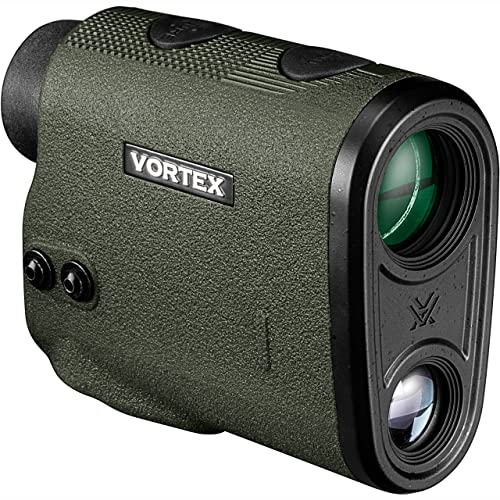
Vortex Diamondback HD 2000 Laser Rangefinder

Leupold RX-1400I TBR/W Gen 2 w/Flightpath Rangefinder

Nikon Forestry Pro II Laser Rangefinder

Vortex Razor HD 4000 Laser Rangefinders

Bushnell BoneCollector 850 Laser Rangefinder

TIDEWE Hunting Rangefinder Camo Rechargeable

Maven RF.1 Hunting Rangefinder
Inside Each Recommended Option
The Sonora HD 1800 sits in a useful middle ground between compact entry-level units and the long-range flagship models. Its 6x magnification and 21mm objective lens pull in enough light for dawn sits, while the HD optical system keeps color and edge sharpness on par with pricier options. HCD (Horizontal Component Distance) mode accounts for angle, which matters any time a deer shows up below you on a hillside.
At 1,800-yard reflective reach and roughly 700-yard game ranging, the Sonora covers most whitetail setups without pushing into terrain where readings get unreliable. It pairs nicely with the lighter Crossfire below for hunters who don’t shoot past open-country distances.
Positive Points
- HD glass keeps edges clean and color faithful through low light
- HCD angle compensation gives true horizontal distance for uphill and downhill shots
- 700-yard game range handles whitetail and similar big game in real hunting terrain
- Fully multi-coated lenses help in dimmer conditions than many entry units
Things To Consider
- Magnification is on the lower side for spotting distant targets clearly
- Reflective max range overstates what you’ll get on wood, hide, and field edges
Key Specs
Made For
Whitetail and eastern big game hunters who want clear optics and angle compensation without paying for a flagship rangefinder.
Look Elsewhere When
Western hunters chasing open ridges and 1,000-yard shots get more range and ballistic detail from the Leupold RX-1400I TBR/W Gen 2 w/Flightpath.
The Crossfire HD 1400 is built for hunters stepping into a first rangefinder and not wanting to wrestle with menus. The 5x magnification and 21mm objective lens keep the body compact at around 4.8 ounces, so it disappears into a pocket or bino harness without a fight. A single-button layout means you’re not learning a dozen modes before your first sit.
Its 1,400-yard reflective ceiling and roughly 750-yard game range cover most eastern whitetail and mule deer scenarios in real hunting terrain. It also shares the Vortex optical family with the Sonora HD 1800 above, though the Crossfire runs a step down in glass refinement and magnification.
Everyday Advantages
- Lightweight frame carries comfortably on long stalks
- Simple controls shorten the learning curve for new hunters
- HD optical system keeps the picture sharp at the price tier
- Solid 750-yard game ranging covers typical setups
Honest Caveats
- Lower magnification limits identifying distant targets clearly
- Fewer ranging modes than the Sonora HD 1800 above
Right Fit For
New hunters who want a no-fuss rangefinder that ranges trees, posts, and deer without a learning curve.
Consider Something Else When
Hunters needing angle-compensated distance and faster target acquisition on western slopes should look at the Leupold RX-1400I TBR/W Gen 2 w/Flightpath instead.
The Diamondback HD 2000 stretches legs into terrain where shorter units struggle. With 7x magnification and a 24mm objective lens, the body pulls in noticeably more light and detail than the Crossfire HD 1400 above, which is a meaningful upgrade for hunters glassing midwestern draws or Great Plains benches. Two target modes (Normal and Last) and two range modes (HCD and LOS) give you options for picking the right reading on a stubborn buck partially hidden behind brush.
The 2,000-yard reflective ceiling and 1,400-yard game range read like flagship numbers, but the Diamondback keeps the price closer to the mid-tier. Owners commonly report the rubber armor and ArmorTek lens coatings holding up through rough handling, which is a fair trade-off if you’re tired of babying optics.
Key Advantages
- 7x magnification and 24mm lens pull in real detail at distance
- Red OLED display holds up in dim dawn and dusk conditions
- ArmorTek coatings and rubber armor handle drops and field wear
- 1,400-yard game range handles most open-country big game
- Tripod adaptability helps steady long readings on a bench
Softer Spots
- Heavier than the Crossfire HD 1400, so pocket carry is tougher
- More modes mean a slight learning curve for new hunters
Feature Snapshot
Best Suited To
Hunters working open plains, big western draws, and anyone who needs longer reach than the Sonora HD 1800 delivers.
Swap It Out When
Backcountry hunters pushing past 1,500 yards and needing ballistic hold data should step up to the Vortex Razor HD 4000.
The RX-1400I TBR/W Gen 2 leans into ballistic data more than the simpler Vortex units above. TBR (True Ballistic Range) factors in angle, temperature, and your load, while Flightpath tells you whether the bullet will clear obstacles between you and the target. For rifle hunters rolling steep coulees, that second number is the difference between a confident shot and a guess.
Where the Diamondback HD 2000 keeps menus tight, this Leupold invites you to dig into its settings. The bright red display reads clearly in dim light, and the ranging engine locks on quickly. It’s overkill for a treestand hunter, but worth it once your shots involve steep terrain.
Points In Its Favor
- TBR and Flightpath deliver ballistic-aware distances on uphill and downhill shots
- Bright red OLED display stays readable in dim conditions
- Fast lock-on ranging engine handles quick target changes
- Leupold build quality tends to hold up across seasons of hard use
Less Ideal Details
- More menu depth than the Crossfire HD 1400, which can slow first-time users
- Premium feature set costs more than entry-level options like the TIDEWE
Who Should Grab It
Rifle hunters in mountain terrain who want angle and bullet-drop data built into a single yardage reading.
A Better Fit Elsewhere
Bowhunters on flat timber don’t need Flightpath and would save money with the Vortex Diamondback HD 2000.
The Forestry Pro II leaves the hunting-only lane and pulls in jobs a regular rangefinder can’t handle. The 3-point hypsometer (a tool that calculates tree or object height using distance and angle measurements) reads distance, height between two points, and slope, which is why foresters and survey crews use it for standing timber work. The 6×21 optical system stays compact, and the waterproof body handles wet brush and rain without complaint.
It’s heavier and more specialized than the Diamondback HD 2000 above, so this isn’t the pick for a fast-paced deer stalk. Its 1,750-yard range and 0.3-second readings make it the right tool when you need a tree’s height, a stand’s angle, and a quick distance in the same session.
Practical Pluses
- 3-point hypsometer reads height between two points for forestry work
- 1,750-yard range with fast 0.3-second readings
- Waterproof construction handles wet conditions
- Dual LCD display presents angle and distance at the same time
Small Caveats
- Specialized menus add bulk compared to hunting-only units like the Crossfire HD 1400
- Heavier build is harder to pocket on long stalks
Quick Facts
Whose Shelf It Belongs On
Foresters, surveyors, and hunters who also measure property lines, tree stands, and elevation changes.
Where A Sibling Pick Shines
A hunter who only ranges deer should pick the Vortex Sonora HD 1800 and skip the forestry-specific features.
The Razor HD 4000 pushes the ceiling on what a hunting rangefinder can read. Four targeting modes (Normal, First, Last, and Extended Laser Range) give you a reading whether the target is a small limb, a deer partially hidden in brush, or a hillside a mile away. The HCD primary mode delivers angle-compensated distance, the way serious rifle hunters prefer it.
It costs more than every other pick on this list, and for many whitetail hunters that cost isn’t justified. Compared to the Diamondback HD 2000, the Razor earns its keep when you regularly shoot past 800 yards or chase sheep, goat, and pronghorn across open terrain.
What Makes Sense
- Extreme range suits open-country western hunting
- Four targeting modes handle tricky and distant targets
- HD optical system keeps the picture sharp at high magnification
- Primary HCD mode gives true shooting distance on slopes
Practical Considerations
- Premium cost is hard to justify for short-range whitetail setups
- More menu depth than entry models like the TIDEWE
Perfect Match For
Western big game hunters chasing pronghorn, sheep, and mule deer across open ridges where distance and angle both matter.
Skip It When
Eastern whitetail setups will do everything they need with the Vortex Diamondback HD 2000 at a lower price.
The BoneCollector 850 leans into what timber hunters actually want. The Realtree Edge finish breaks up the body in tree bark and dry leaves, so it disappears in a stand the way a standard black body won’t. The 50-percent-larger fully multi-coated objective lens pulls in noticeably more light than smaller lenses on competing models, which pays off at dawn and dusk when deer are moving.
Its 850-yard range is shorter than the Vortex units above, which is a fair trade-off for hunters who never shoot past a few hundred yards. Owners commonly note the bright display reads cleanly in low light, which is the real test of a hunting rangefinder.
Useful Highlights
- Realtree Edge finish blends into timber and stand setups
- Larger multi-coated objective lens boosts low-light performance
- Bright display holds up at dawn and dusk
Worth Bearing In Mind
- 850-yard ceiling falls short of the Diamondback HD 2000 and Razor HD 4000
- Camo finish shows scuffs and wear more than a black body
Who It Suits Best
Timber hunters who value a camo body and strong dawn-and-dusk performance over long-range numbers.
Not Your Match When
Hunters needing 1,000+ yard reach on open country should pick the Vortex Diamondback HD 2000 instead.
The TIDEWE keeps things simple and affordable, which is the right brief for a first rangefinder or a backup unit that lives in a pack. It combines 6x magnification with horizontal, vertical, and straight-line distance modes, plus speed measurement for the occasional golf or driving-range crossover. The rechargeable battery replaces coin cells, which is a real convenience in the field.
Compared to the Vortex Crossfire HD 1400 above, the TIDEWE sits at a lower tier for glass quality and overall durability. It’s the honest budget pick when the alternative is no rangefinder at all.
Practical Advantages
- Rechargeable battery removes the cost of coin cells
- Multiple distance modes cover most hunting and range scenarios
- Scan mode tracks moving targets like running deer
Trade-Offs
- Glass and durability fall short of mid-tier picks like the Crossfire HD 1400
- Reflective range numbers drop sharply on real-world targets
Core Details
Right Fit For
Entry-level hunters and budget-conscious shoppers who need a functional rangefinder without flagship optics.
Reach For A Different Pick When
Hunters wanting longer game range and stronger glass should stretch to the Vortex Crossfire HD 1400.
The RF.1 reaches out farther than most hunting units on this list, with reflective readings up to 4,500 yards and tree readings around 3,000 yards. Built-in angle compensation makes it useful for bowhunters and rifle hunters working varied terrain. The waterproof body handles wet conditions in mountain drainages and coastal rain.
Compared to the Razor HD 4000 above, the Maven leans on fewer targeting modes, so it doesn’t try to do everything. The trade-off is a cleaner, simpler interface for hunters who want fast readings without menu diving.
Strong Points
- Long reflective range handles extreme western terrain
- Angle compensation works for both bow and rifle setups
- Waterproof body stands up to wet hunting conditions
- Cleaner interface than multi-mode flagships like the Razor HD 4000
Where It May Fall Short
- Fewer targeting modes than the Razor HD 4000 for tricky shots
- Premium cost over mid-tier picks like the Diamondback HD 2000
Built With In Mind
Backcountry rifle hunters who range targets across big drainages and want a waterproof body that won’t quit in rain.
Not Your Match When
Hunters chasing tight-woods whitetails will find more useful range and a lower price in the Vortex Diamondback HD 2000.
What Matters Most in a Budget Hunting Rangefinder
Range and Real-World Game Performance
Reflective range numbers look impressive on a spec sheet, but game range tells you what you’ll actually see in the field. A 1,800-yard reflective ceiling usually drops to 500 to 800 yards on a deer hiding in brush, and that’s the number that matters for eastern whitetail and most mule deer setups. Match the game range to your typical shot distance rather than chasing the biggest reflective number.
Optics, Magnification, and Lens Coating
Magnification and objective lens diameter work together. Higher magnification helps identify distant targets, but a larger objective lens pulls in more light for dawn and dusk. Fully multi-coated lenses (optical surfaces treated with anti-reflective coatings on every glass-to-air surface) cut glare and improve clarity, which is why the Vortex HD family and Leupold models stand out at similar prices.
Angle Compensation and Ballistic Modes
Angle compensation adjusts for uphill and downhill distance, which keeps shots honest on steep terrain. Basic HCD (Horizontal Component Distance) covers most bowhunters, while TBR (True Ballistic Range) and Flightpath add bullet-drop data for rifle hunters chasing longer shots on mountain game.
Durability, Weather Resistance, and Battery Life
A rubber-armored body and waterproof seals matter more than most spec lists suggest. Range days turn wet, and a rangefinder that survives brush contact and rain lasts longer. Owners commonly note rechargeable units trade coin cell convenience for charging cables, which is worth weighing before you commit.
Common Slip Ups Shoppers Should Sidestep
Where Shoppers Go Wrong
A common mistake is buying on reflective range alone. That 2,500-yard spec usually means 700 to 900 yards on real game, so a unit with a slightly lower reflective number but stronger game ranging often serves better in the field. Skipping the magnification check is a similar trap; a 5x unit looks fine on paper and falls short when you need to identify a distant buck at the edge of a field.
What The Higher Tier Buys
The jump from a budget unit like the TIDEWE to a flagship like the Vortex Razor HD 4000 buys you sharper HD glass, more reliable ranging in low light, and additional targeting modes for tricky shots. Rifle hunters who regularly shoot past 800 yards on open terrain feel that upgrade every season. Bow and eastern hunters who never range past 300 yards usually don’t, and a mid-tier pick like the Vortex Diamondback HD 2000 covers everything they need at a friendlier cost.
Frequently Asked Questions
What range do I actually need for hunting?
For most whitetail and similar eastern big game, 600 to 800 yards of game ranging covers typical setups. Western mule deer and sheep hunters benefit from 1,000+ yards of reach, while bowhunters usually don’t need more than 300 yards.
Is angle compensation worth it for bowhunters?
Yes, on any shot where the target sits above or below your stand. HCD or equivalent modes calculate the true horizontal distance, which is the number your rangefinder should give you for uphill and downhill shots.
Do I need waterproofing?
A waterproof rangefinder handles rain, wet brush, and morning dew without issue. Non-waterproof units can fail in those conditions, which is a real risk on multi-day hunts.
How important is magnification?
Magnification matters more for identifying distant targets than for close-range ranging. 6x to 7x works well for most hunting, while 5x is fine for close-cover setups.
Can a budget rangefinder last for years?
With reasonable care, mid-tier units like the Vortex Diamondback HD 2000 and Leupold RX-1400I tend to last multiple seasons. Budget units like the TIDEWE work, but you may see shorter service life with heavy use.