
Running two or three trail cameras at once means juggling separate apps, SIMs, and battery swaps, all while hoping each unit actually delivers images when a buck walks past. Cellular models solve most of that friction by pushing photos straight to your phone, and the newest crop handles multi-camera setups far more gracefully than earlier generations. Land managers, serious hunters, and anyone tired of pulling SD cards from remote fence posts will find real value in this roundup.
The Picks In Brief
SEHMUA Trail Camera 2 Packs, 2K HD Live Game Camera

Cadrali Solar Trail Camera 4G LTE 64MP 4K Live
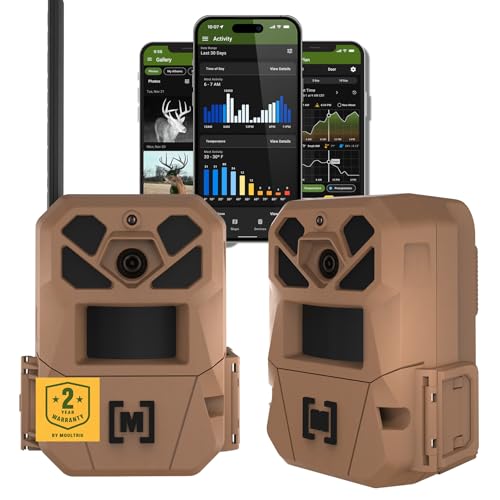
Moultrie Edge 3 Cellular Trail Camera 2-Pack 40MP

Moultrie Edge 3 Cellular Trail Camera 40MP

Moultrie Edge 3 Cellular Trail Camera Solar Power Pack 40MP

MagicEagle Cellular Trail Camera 4G 13,000 mAh Solar Panel

REOLINK 4K Solar Security Camera Wireless Outdoor 4G LTE
Inside Each Recommended Option
Multi-camera shoppers get a head start with the SEHMUA two-pack, which ships a matched duo running 4G LTE on Verizon, T-Mobile, or AT&T. Each unit pairs with the SEHMUA app so you can name cameras by location, water hole, or food plot and switch between them without juggling separate accounts. Built-in solar charging means a rural barn or remote fence line stays powered without running extension cords.
For most property owners, the appeal is the no-Wi-Fi, no-power setup. Stick one camera on a ranch gate and another on a deer trail a half-mile away, and both send images to your phone over cellular. Compared to the single-unit picks later in this list, you skip the second activation fee and configuration step entirely.
Everyday Perks
- Two-pack bundle lowers the per-unit cost for shoppers building a multi-camera system
- AI animal detection filters empty triggers, saving cellular data on quiet days
- Solar panel keeps the battery topped up through extended deployments
- Multi-carrier 4G LTE support improves coverage in rural areas with mixed signal
Things To Consider
- Cellular data plans vary by carrier and region, so monthly costs deserve a quick check before buying
- Solar charging depends on direct sunlight, and shaded forest mounts may need occasional manual charging
Who It Suits Best
Land owners running cameras on barns, farms, or remote food plots where power and Wi-Fi are unavailable.
Consider Something Else When
Shoppers needing maximum image detail should look at the Cadrali Solar Trail Camera 4G LTE 64MP, which offers larger stills.
The Cadrali solar trail camera pushes resolution further than most cellular options, capturing 64MP stills and 4K live video through the companion software. Live view means you can peek at a feeder in real time from your truck, which is genuinely useful when patterning a mature buck or confirming the camera is still aimed where you left it.
Where it differs from the SEHMUA pack above is the single-camera format with stronger imaging hardware. For a multi-camera network, you would buy several Cadrali units, which makes the per-camera math heavier but the daily image quality noticeably crisper. Wildlife watchers who prioritize antler detail and coat patterns will appreciate the upgrade.
A Favorable Mix
- 4K resolution delivers usable footage for antler scoring and species ID
- Remote app access lets you check and adjust settings from anywhere with cellular signal
- Live-streaming option supports sharing clips with hunting partners or family
Worth Noting
- Higher resolution files consume more cellular data, and plan selection matters here
- Best mounted in direct sun for reliable solar top-ups across the season
Quick Facts
Made For
Hunters and watchers who want maximum image clarity from each camera in a multi-camera network.
Swap It Out When
You need a multi-carrier auto-connect system for roaming between properties; the Moultrie Edge 3 family is built for that.
For shoppers starting a serious multi-camera setup from scratch, the Moultrie Edge 3 two-pack lands as a strong foundation. Auto-connect across all four major U.S. carriers means the cameras grab the strongest signal at each site without you manually swapping SIMs. A 0.5-second trigger speed keeps fast-moving deer from vanishing from frame.
Unlike the SEHMUA pair earlier, these lean toward a more mature app ecosystem with reliable cloud storage for hunters who plan to run more than two units eventually. For most buyers building a network that will grow past the starter pair, the Moultrie app handles scale cleanly.
What It Does Well
- 0.5-second trigger captures animals in motion better than slower units
- Four-network auto-connect removes SIM swaps when traveling between properties
- Two-pack pricing shortens the path to a working two-camera setup
- 40MP stills deliver enough detail for scouting and harvest decisions
Trade Offs
- Cloud plans add a recurring cost once the included trial expires
- Best deployed on Moultrie’s own app, so switching ecosystems later can be a chore
Best Suited To
Hunters planning a five-or-more-camera scouting network on rural U.S. hunting land.
A Better Fit Elsewhere
Remote property owners who want solar charging built in should reach for the Moultrie Edge 3 with Solar Power Pack instead.
The single-unit Moultrie Edge 3 exists for one scenario: adding a camera to an existing Moultrie network without buying another pair. Same 40MP sensor, same 0.5-second trigger, same multi-carrier auto-connect that defines this generation. Same app, same dashboard, same cloud organization.
For multi-camera shoppers, this is the natural pick when you already run Moultrie and need to expand coverage by one site. Compared to the SEHMUA two-pack at the top of this roundup, you trade the bundle discount but keep ecosystem consistency.
The Value In It
- Clean fit for existing Moultrie accounts with no app juggling
- Fast trigger and 40MP resolution match the rest of the Edge 3 line
- Auto-connect across carriers works the same at every new site
Small Caveats
- No solar panel included, so battery swaps or AA replenishment are part of ownership
- Cloud subscription requirements match the rest of the Moultrie family
Feature Snapshot
Who Should Grab It
Hunters expanding an established Moultrie Edge network by a single location.
Look Elsewhere When
You need bundled solar charging for a remote mount; the Moultrie Edge 3 with Solar Power Pack covers that case.
Adding a 3.4W solar panel turns the Moultrie Edge 3 into a season-long deploy-and-forget unit, which is exactly what multi-camera shoppers with limited access to their land want. Same 40MP sensor, same 0.5-second trigger, same multi-carrier auto-connect as the bare unit, but with a solar panel aimed at the sky.
Where this differs from the SEHMUA pair at the top is ecosystem depth. The Moultrie app handles scale more gracefully across many cameras, which matters for a six-or-eight-camera scouting network. For most full-season deer hunters, the solar pack pays for itself in saved battery trips.
What Makes Sense
- 3.4W solar panel extends unattended runtime through hunting season
- Multi-carrier auto-connect keeps the strongest signal at remote sites
- 40MP stills and 0.5-second trigger match the broader Edge 3 specs
- Fits cleanly into an existing Moultrie multi-camera setup
Honest Caveats
- Solar panel needs direct exposure and angles toward the sun for best charging
- Higher initial price than the bare Edge 3, which only matters if sun exposure is limited
Perfect Match For
Land managers running remote camera networks through an entire hunting season without site visits.
Where Another Pick Suits Better
Shoppers wanting a higher-resolution single camera should look at the Cadrali Solar Trail Camera 4G LTE 64MP instead.
The MagicEagle camera leans into long runtime with a 13,000 mAh internal battery paired with a built-in solar panel, designed to stay in the woods through unpredictable weather. No-Glow infrared night vision keeps the unit invisible to deer and trespassers alike, and 2K video resolution lands between the Moultrie and Cadrali options on detail.
For multi-camera shoppers, the appeal is endurance in tough locations. Where the Moultrie Edge 3 leans into cloud ecosystem maturity, this one emphasizes battery headroom and stealth. Most remote-property owners find that combination covers the worst-case deployment scenario.
What Stands Out
- 13,000 mAh internal battery extends runtime during cloudy stretches
- No-Glow infrared reduces visible light that spookes wary bucks
- IP66 weather rating handles extended rain and dust exposure
- 2K video with audible recording supports broader documentation needs
Points To Keep In Mind
- Army Green finish shows wear faster than black housings in sunny clearings
- Audible video mode increases power draw, so battery life depends on setting choices
Whose Shelf It Belongs On
Land owners running long, unattended deployments where battery swaps are a real chore.
Not Your Match When
You need mature cloud organization for many cameras; the Moultrie Edge 3 family handles scale more cleanly.
REOLINK lands here as a crossover pick for shoppers running wildlife cameras alongside driveway and gate monitoring. The 4K sensor delivers color video even in low light, and the solar-plus-4G-LTE build mirrors the SEHMUA and Cadrali setups in the no-Wi-Fi, no-cord category.
Where this differs from the dedicated game cameras above is purpose. It does well at security duties like watching equipment at a job site or a cabin, while still capturing passing wildlife. For multi-camera shoppers splitting duties between wildlife and property monitoring, that dual role saves buying two different systems.
Noteworthy Benefits
- 4K imaging supports identification at greater distances for security use
- Solar-powered runtime removes battery swaps at most mounting sites
- Wireless 4G LTE install means no router or Wi-Fi extender required
- Crossover design works for both wildlife watching and property security
Room For Improvement
- Not built as a dedicated hunting trail camera, so scouting-specific features like AI buck detection are limited
- Lens angle favors broader property coverage over deep-woods trail targeting
The Right Fit
Property owners wanting one camera family to handle hunting scouting plus cabin or job site security.
Reach For A Different Pick When
Your focus is pure deer scouting; the Moultrie Edge 3 family is purpose-built for that workflow.
Matching The Right Camera To Your Setup
Choosing the best cellular trail cameras for a multi-camera network comes down to a few attributes that matter more than the marketing claims on the box. Multi-carrier auto-connect ranks high on that list for hunters who move between leases, because it removes the SIM-swapping hassle that frustrates users on single-carrier units. Resolution matters less than most buyers expect, since 30MP and up provides enough cropping room for ID work, and higher numbers mainly bloat file sizes.
Trigger speed deserves attention for fast-moving subjects like running deer or turkeys. A 0.5-second trigger keeps more animals in frame, while slower units produce blank frames that still count against your cellular data plan. Solar charging extends unattended runtime, but only when the panel sees direct sun, so shaded forest mounts still benefit from larger internal batteries or scheduled manual swaps.
Subscription cost matters too. Most cellular cameras rely on cloud plans, and the monthly fee compounds across a multi-camera setup. Build the plan cost into your budget before falling in love with a specific camera body, since a cheaper unit with a pricier plan often costs more over a year than a premium camera with a lower subscription.
Key Considerations Across These Picks
Pitfalls Shoppers Hit
The most common mistake is buying a single-carrier cellular camera for a remote property where that carrier’s signal is weak. Multi-carrier auto-connect avoids the issue entirely, and shoppers running cameras across multiple properties benefit from this even more. Another common slip is ignoring cloud plan limits; a multi-camera network sharing one plan can hit caps faster than expected during peak movement periods.
Where The Extra Money Goes
Spending more on a cellular trail camera generally buys faster triggers, higher resolution, multi-carrier support, and solar charging. For multi-camera setups, the multi-carrier support and solar features deliver the most everyday value, since they directly reduce maintenance trips. Buyers running smaller networks can skip the upgrades, but anyone scaling past three cameras usually finds the premium worth it.
Frequently Asked Questions
How many cellular trail cameras can I manage from one app?
Most camera apps handle five to ten cameras in a single account without performance issues, though exact limits vary by manufacturer. The Moultrie Edge 3 family scales especially well for larger networks.
Do cellular trail cameras work without Wi-Fi?
Yes, cellular trail cameras use 4G LTE to send photos and videos, which means Wi-Fi is not required. This is the main advantage for remote properties and rural hunting land.
What is a good trigger speed for trail cameras?
Around 0.5 seconds is widely considered fast enough for most deer and turkey activity. Slower triggers can produce blank frames on running animals.
Do cellular trail cameras need a subscription plan?
Most cellular trail cameras require a monthly data or subscription plan to transmit images and video over cellular networks. Plan costs and included features vary by manufacturer.
Can solar panels keep a trail camera running indefinitely?
Solar panels extend runtime significantly but depend on direct sunlight exposure. Heavily shaded forest mounts may still need battery swaps during cloudy stretches or winter.