
Hunting season, late-evening hikes, and backyard security checks all share one common headache: the moment the sun drops, your phone flash and stock optics fall short. Cheap night vision monoculars promise a real picture after sunset, and the current 2026 class delivers sharper sensors, brighter infrared output, and surprisingly comfortable ergonomics without breaking your gear budget. This guide walks through six solid options for casual and intermediate use, so you spend less time squinting into the dark and more time actually seeing what’s out there.
A Side-By-Side Look
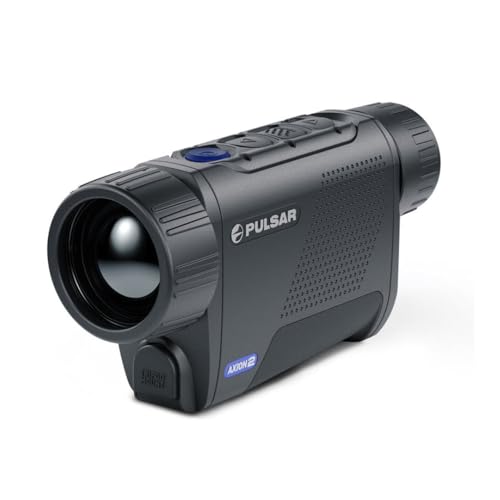
Pulsar Axion 2 35mm Compact Thermal Monocular

Miasazyr Tactical NVG Head Strap & Helmet Mount

GOYOJO 7X Night Vision Monocular with Wide FOV

GOYOJO 1080P HD NVG with IP66 Waterproofing

K&F Concept 8-32X50 Zoom Monocular with Phone Adapter

Stealth CAM X-NVM Digital Hunting Monocular
More On The Choices That Made The List
The Pulsar Axion 2 sits at the top of the thermal tree, packing a magnesium alloy housing (a lightweight metal frame prized for shock resistance) and a 35mm objective lens into a pocket-friendly footprint. Where cheaper monoculars rely on image intensification (amplifying whatever ambient light exists), this unit detects heat signatures, which means it works equally well in fog, brush, and absolute darkness. Three sensitivity tiers let you tune the image for either wide scanning or pinpointing distant targets, a meaningful upgrade for serious wildlife trackers and property patrols.
If you already own budget digital night vision like the K&F Concept further down this list, the Axion 2 represents the leap into professional-grade thermal imaging. You trade some beginner-friendly simplicity for detection range and ruggedness that budget optics simply cannot match.
What Pays Off
- Thermal detection reads heat signatures through light brush and moderate fog, useful for tracking game at long range.
- Magnesium alloy body holds up to drops, moisture, and temperature swings better than plastic housings on budget picks.
- Adjustable signal amplification and contrast let you tune the picture for urban light pollution or open wilderness.
- Compact form factor slips into a jacket pocket, unlike bulkier traditional night vision scopes.
Trade Offs
- Premium thermal hardware sits well above most entry-level night vision monoculars, so it’s only sensible for committed hobbyists.
- Thermal imaging produces a grayscale heat map rather than a natural green-tinted image, which takes adjustment if you’ve trained your eye on traditional night vision.
- Owners commonly report that the menu system rewards a careful read of the manual before first use in the field.
Made For
Experienced outdoors people who need reliable heat-based detection across variable weather and long observation sessions.
Where Another Pick Suits Better
For casual backyard observation on a tighter budget, the Stealth CAM X-NVM gives a friendlier entry point with simpler controls.
This entry breaks pattern on purpose. The Miasazyr isn’t a monocular at all. It’s the mounting harness that turns the GOYOJO units further down this list into hands-free gear, which matters more than most first-time shoppers realize. A head strap with an adjustable NVG mount (a night vision goggle bracket that holds the optic in front of your eye) lets you hike, climb, and scan treelines without losing your optic or fumbling with a neck lanyard every time you raise your binoculars.
Compatibility covers common NVG housings including NVG10, NVG30, G1, and PVS-14 style units, plus action cameras for those who want to record night hikes. Think of it less as a standalone purchase and more as the missing accessory if you already own or plan to own any of the helmet-mounted monoculars in this roundup.
Where It Excels
- Adjustable strap fits a wide range of head sizes and helmet profiles for extended wear.
- Mounting bracket accepts common NVG units and most action cameras for hands-free capture.
- Soft helmet shell keeps the rig stable during fast movement, unlike hard mounts that can shift.
Soft Spots
- This product is a harness rather than an optic itself; it makes sense mainly as a complement to a separate monocular.
- Setup of the mount takes patience on first install, and owners commonly recommend a dry fit indoors to learn the tension knobs before hitting the trail.
Best Suited To
Airsoft players, night hikers, and tactical trainers who already plan to pair it with a compatible monocular.
Look Elsewhere When
Shoppers wanting an all-in-one optic should grab the GOYOJO 1080P HD NVG, which arrives ready to use without extra mounting hardware.
The GOYOJO 7X is the all-rounder, balancing digital night vision clarity with a wide field of view (the width of the scene visible through the optic) that helps with tracking moving subjects. A 27mm objective lens (the front lens that gathers light) and 7X magnification give you enough reach for trail scanning without the narrow tunnel view that plagues high-zoom rivals. The unit is also helmet-mountable, so it pairs naturally with the Miasazyr harness above.
A 1.54-inch HD display and a Starlight CMOS sensor (a sensor tuned to amplify very faint ambient light) handle low-light scenes with surprising detail, and the wide FOV helps when you’re walking wooded paths rather than glassing open fields. Most people using this for night walks and casual property checks will find the learning curve short.
Useful Strengths
- 7X magnification with a wide field of view keeps moving subjects in frame during night walks.
- Starlight CMOS sensor extends useful range in low light without requiring full infrared mode.
- Helmet-mountable for hands-free scanning when paired with the Miasazyr harness.
- Compact body stays comfortable for one-handed use during extended observation.
Things To Consider
- Resolution is modest compared to the 1080P GOYOJO unit further down, which may disappoint anyone hoping for HD-quality photos.
- Battery compartment access takes a moment to locate the first time, so a quick dry run before any long outing pays off.
Right Fit For
Night hikers and tactical training enthusiasts who want one optic that works handheld and helmet-mounted.
A Better Fit Elsewhere
For wet-weather hunting where waterproofing matters more than wide FOV, step up to the GOYOJO 1080P HD NVG with its IP66 rating (a standard meaning resistance to dust and powerful water jets).
The second GOYOJO entry trades the wide field of view of its sibling for sharper 1080P HD imaging, which matters when reviewing recorded footage later. An IP66 waterproof rating (protection against dust ingress and heavy water spray) makes this the pick for damp conditions, rainy hunting trips, and any environment where the cheaper monoculars tend to flinch. The adjustable infrared illuminator (an onboard LED that emits light invisible to the naked eye to brighten dark scenes) lets you tune brightness for close-quarters scouting or longer-range scanning.
A built-in compass adds basic orientation context during extended field sessions, and the helmet-mountable design gives you the same hands-free option as the wider-FOV sibling. Compared to the Pulsar Axion 2, this stays firmly in digital night vision territory rather than thermal, so it’s the friendlier choice for newcomers.
The Value In It
- 1080P HD sensor captures usable photos and video clips for later review or sharing.
- IP66 waterproofing stands up to rain and damp environments where budget monoculars typically struggle.
- Adjustable infrared illuminator lets you tune output for short or medium distance targets.
- Built-in compass adds basic direction awareness for night hikes and trail scouting.
Honest Caveats
- 3X zoom is conservative compared to the 7X GOYOJO model, so very long-range identification falls outside its comfort range.
- HD recording chews through storage, so owners commonly recommend a high-capacity memory card before any extended session.
Quick Facts
Who Should Grab It
Wet-weather campers, surveillance-minded property owners, and hunters who want HD capture without stepping into Pulsar pricing.
Swap It Out When
You mostly scout open country and need heat-signature detection, the Pulsar Axion 2 thermal unit makes more sense than any digital monocular.
The K&F Concept slots into this roundup as the budget-friendly daylight specialist, not a true night vision device. The 8-32X zoom range and 50mm objective lens pull in distant birds, wildlife, and landscape details in good light, while the included phone adapter turns your smartphone into a digiscoping setup (a technique of photographing through an optic with a phone). An FMC (Fully Multi-Coated) lens with a BAK4 prism (a glass type prized for clear edge-to-edge images) keeps the picture bright and contrasty for the price.
The marketed “low light night vision” is best understood as twilight performance rather than full darkness capability. For casual hikers and backyard birders who want one optic that travels, this fills the daylight role honestly, and the phone adapter is a genuinely useful bonus for sharing views.
The Practical Payoff
- 8-32X zoom covers everything from backyard birding to distant ridge scanning with one optic.
- 50mm objective lens gathers enough light for usable twilight viewing.
- Included phone adapter lets you snap and share digiscoped photos without extra purchases.
- FMC multi-coated optics keep the image bright and contrasty at this price tier.
A Few Limitations
- True night vision capability is limited, so this is not the right pick for dark-of-night hunting.
- At 32X magnification, even small hand movements get amplified, so a tripod or monopod improves the experience.
Whose Shelf It Belongs On
Birders, casual hikers, and travel-friendly shoppers who want one zoom optic for daytime adventures at a friendly price.
Another Choice May Suit
For real darkness capability, the Stealth CAM X-NVM digital monocular steps in with proper infrared night vision in roughly the same budget territory.
The Stealth CAM closes out the list as a hunting-oriented monocular with proper infrared filtering (a lens coating that blocks visible light while passing the IR wavelengths the sensor uses, improving contrast in night scenes). A 3x20mm objective lens paired with up to 9X digital zoom handles trail scouting and game identification at moderate distances. The shockproof, no-slip housing is built for rough handling in the field, and the 1.5-inch TFT display (a small internal screen that shows the night vision image) sits comfortably behind the optic for quick glances.
The honest caveat is that the 7-degree field of view is narrower than the wider-FOV GOYOJO 7X unit, so tracking fast-moving animals requires more panning discipline. For stationary trail watching and feeder monitoring, though, this Stealth CAM punches well above its modest price.
Why It Works Well
- Built-in video recording captures sightings for later review, useful when documenting wildlife behavior.
- IR filter sharpens contrast in total darkness compared to monoculars that rely purely on amplification.
- Shockproof, no-slip housing handles field bumps and damp conditions.
- Compact form factor fits comfortably in a jacket pocket for quick scouting stops.
Points To Note
- 7-degree field of view is narrow, so following moving subjects takes more effort than with wider-FOV units.
- Cleaning the objective lens takes care, since exposed front glass collects dust during frequent field use.
Perfect Match For
Trail hunters, feeder watchers, and property owners who want video capture without overspending.
Reach For A Different Pick When
You need hands-free use, the GOYOJO 7X helmet-mountable monocular pairs with the Miasazyr harness for a more flexible carry option.
How To Choose The Right Cheap Night Vision Monoculars Without Overpaying
Pick The Sensor Tech For Your Terrain
True night vision comes in two main flavors, and understanding the difference saves money and disappointment. Digital night vision amplifies available ambient light (including infrared) to produce a visible image, which works well for close-to-medium range observation in typical outdoor conditions. Thermal imaging detects heat signatures instead, which lets it see through light fog and brush but produces a grayscale image rather than a recognizable night scene. The Pulsar Axion 2 above is the only thermal unit in this roundup, while the GOYOJO and Stealth CAM models use digital sensors. For most casual and intermediate use, digital night vision is the friendlier entry point because it reads more like a natural scene.
Match Zoom To Your Typical Range
Magnification numbers tell you how much closer the optic brings distant subjects, but they also narrow the field of view. A wide FOV helps when walking trails or tracking moving subjects, while high zoom helps when glassing distant ridges. The GOYOJO 7X model balances both with reasonable reach and a generous field of view, while the K&F Concept delivers much higher zoom but only for daylight. Think about the distance you actually observe at, then pick the magnification range that matches.
Weather Sealing And Build Materials
A waterproof rating like IP66 (protection against heavy water spray and dust) matters more than shoppers often realize. Plastic housings handle fair weather fine, but moisture intrusion kills electronics faster than drops do. The GOYOJO 1080P HD NVG carries a real IP66 rating, while the Stealth CAM uses a shockproof housing that shrugs off bumps and dampness. If your typical outings include rain, dew, or stream crossings, weather sealing should weigh into the decision.
Key Considerations Across These Picks
Where Shoppers Go Wrong
A common trap is treating any “night vision” label as equal, which leads to disappointment when a daylight zoom monocular arrives and cannot handle a dark trail. Confirm the sensor type before you order, and check whether the advertised range refers to twilight performance or full darkness. Storage is another easy miss, since monoculars with video recording need memory cards that often ship as optional accessories rather than included items.
What The Higher Tier Buys
Stepping up from a digital night vision monocular to a thermal unit like the Pulsar Axion 2 brings meaningful upgrades in detection range, weather tolerance, and housing durability. Magnesium alloy bodies, sealed optics, and adjustable sensitivity modes are the kind of details that justify the price jump for committed users. For anyone who only occasionally scouts after dark, a solid digital monocular covers the use case without the thermal premium.
Frequently Asked Questions
What is the difference between digital night vision and thermal imaging?
Digital night vision amplifies existing ambient light and infrared to produce a visible scene similar to what your eyes would see with more sensitivity. Thermal imaging detects heat signatures and renders them as contrasting temperature patterns, which works in total darkness and through light fog but looks less like a natural scene.
Can cheap night vision monoculars work in complete darkness?
Most digital night vision monoculars rely on a built-in infrared illuminator to light up total darkness, since there is no ambient light to amplify. The range in pitch-black conditions depends on the strength of the illuminator and the size of the objective lens, so check both before you buy.
How far can a budget night vision monocular see?
Detection range varies widely based on sensor quality, lens size, and infrared output. Most digital monoculars in this price tier detect large subjects at roughly 100 to 200 yards in good conditions, while premium thermal units extend that range considerably for heat-signature targets.
Are helmet-mounted night vision monoculars comfortable for long use?
Comfort depends on the weight of the optic and the quality of the head harness. Lighter monoculars paired with an adjustable strap like the Miasazyr mount distribute weight well, while heavier units cause neck fatigue faster. Take breaks during long sessions regardless of setup.
Do night vision monoculars need special care or maintenance?
Most need very little beyond lens cleaning and battery care. A microfiber cloth for the objective and eyepiece, plus fresh batteries or a charged battery pack before each outing, covers routine needs. Avoid exposing the optic to direct sunlight while powered on, since bright light can damage some sensor types over time.