
Mobile hunters live by a simple rule: stay light, stay quiet, stay gone. The right climbing sticks let you slip into a ridge without announcing your arrival, while the wrong ones fight you every step of the way. We focused on sticks, saddles, and safety gear that hold up to miles of bushwhacking and the unavoidable scrape of bark and aluminum. Every pick below solves a specific problem, so skim for the style that matches your terrain and pace.
The Main Contenders

Summit Treestands Viper SD Climbing Treestand

SENFU Treestand Safety Rope Linemans Rope

Kalkal 30FT Reflective Lifeline

Kalkal Tree Stand Harness

Kalkal 20″ Aluminum Climbing Sticks 4-Pack

XOP Vanish Evolution Hang On System
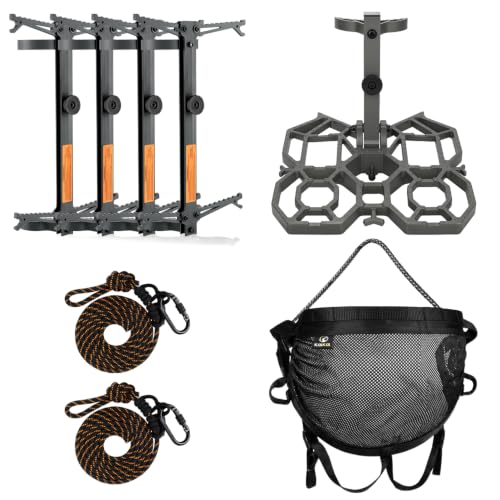
Kalkal Mobile Tree Saddle Hunting Kit

Rivers Edge RE727 Grip Rail 32-Inch 4-Pack
Why These Options Stand Out
The Summit Viper SD is the kind of stand you forget you’re wearing because the aluminum frame trims weight without trimming stiffness. Hunters logging multi-mile walks before sunup appreciate how the suspended foam seat absorbs the kind of awkward shifting that normally leaves your lower back barking by noon. Where most budget climbers feel like a folding chair bolted to a trunk, this one actually encourages the long, quiet sit that mobile hunting demands.
Camo pattern varies by run, so you pick the finish that blends with your region. For someone who values a perch more than a pack, this is the gold-standard starting point.
Standout Benefits
- Lightweight aluminum frame keeps the climb effortless on long approaches
- Suspended foam seat plus cushioned backrest supports multi-hour sits
- Padded armrests reduce shoulder fatigue during glassing breaks
- Solid brand reputation in the climbing treestand category
Worth Noting
- No climbing sticks or tether included, so plan a separate purchase
- Seat width may feel snug for hunters in cold-weather layers
- Camo selection can vary by production run
Feature Snapshot
Right Fit For
Still hunters who plan extended morning or evening sits and want a forgiving seat more than a featherweight pack frame.
Swap It Out When
Backcountry hunters covering miles before daylight should reach for the Kalkal 20″ Aluminum Climbing Sticks 4-Pack instead, since it cuts ounces far harder.
Safety ropes aren’t exciting gear, but the SENFU tether keeps you attached when your boot slips at fifteen feet. The high-strength rating and simple wrap-around installation make it approachable for hunters who have never rigged a lineman’s knot in their life. You thread the rope, slide the knot up the trunk, and your anchor follows you as you climb.
For someone adding a tether to an existing setup without overhauling their whole kit, this is a clean entry point.
Key Advantages
- Wrap-around design installs without complicated knots
- Sliding knot stays put as you ascend, reducing readjustment
- Supports users up to 350 lbs, covering most hunters
- Stows compactly in a pack pocket
Trade-Offs
- Lacks reflective markings for low-light retrieval
- Not a substitute for a full harness system on tall climbs
- Rope fibers may scuff from repeated bark contact
Built With In Mind
Hunters adding first-time fall protection on a budget who want a tether they can deploy without reading a manual.
Where A Sibling Pick Shines
Low-light and pre-dawn hunters get more value from the Kalkal 30FT Reflective Lifeline, which adds visibility when you need to locate your rope in headlamp glow.
Thirty feet of rope covers most stands on the market, and the reflective sheath turns a fumbling headlamp scramble into a quick grab. Kalkal’s lifeline pairs naturally with a saddle or harness system, and it gives you a tether that you can locate without dropping your bow. For early-season sits that begin before legal light, the reflective detail earns its keep the first time you need it.
Hunters who already own a harness and just need a tether should weigh this option against the SENFU rope on fit and length.
Positive Takeaways
- 30-foot length covers tall tree setups
- Reflective sheath improves visibility in low light
- Plays well with most saddle and harness systems
- Light enough to coil in a vest pouch
Honest Caveats
- Reflective coating may dull with heavy bark abrasion over seasons
- Length can tangle if you don’t coil carefully between hunts
Perfect Match For
Hunters climbing in low-visibility conditions who need a long tether they can find without fumbling with a headlamp.
Skip It When
Shorter climbing routes under twenty feet make the extra length overkill, and the SENFU Treestand Safety Rope serves the same purpose in a more compact package.
Harnesses tend to fall into two camps: bulky safety bibs and featherweight minimalist straps. Kalkal’s harness leans toward the second, which matters when every pound of gear competes for space in your pack. Adjustable straps let you tune the fit under layering, so you can add a puffy underneath without compressing circulation.
Mobile hunters covering long distances get the most value here because the harness disappears on your body.
What Earns Its Place
- Lightweight build cuts ounces on long walks
- Adjustable straps fit over seasonal layering
- Breathable fabric helps during warm early-season sits
- Pairs with most third-party tethers
Things To Consider
- Padding is minimal, so long sits on heavy packs may pressure the shoulders
- Lacks integrated tool loops compared to heavier systems
Whose Shelf It Belongs On
Mile-long-walk hunters who need a barely-there harness that still meets basic fall-arrest requirements.
Reach For A Different Pick When
Hunters wanting a complete mobile package should consider the Kalkal Mobile Tree Saddle Hunting Kit, which bundles sticks, platform, and saddle in one shipment.
The 20-inch Kalkal sticks land in the sweet spot for saddle hunters, where shorter sections stack cleaner against bark and lean into the tree without barking the shins of your pack. The aluminum build keeps the four-pack under ten pounds combined, so the load on your back disappears once you’re moving.
Adjustable steps and aggressive anti-slip teeth give you confident footing on crooked trunks. For saddle hunters who want clean sticks without paying premium-tier prices, this 4-pack covers the basics without cutting corners that matter.
What Helps Most
- Lightweight aluminum cuts pack weight across four sticks
- 20-inch length fits saddle setups cleanly
- Anti-slip step texture improves footing in wet conditions
- Adjustable steps accommodate varied trunk diameters
Practical Considerations
- Aluminum can transmit cold in late-season hunts
- Strap quality tends to wear faster than the frame
Feature Rundown
Best Suited To
Saddle hunters building a minimalist mobile setup who want four sticks in a manageable bundle.
A Better Fit Elsewhere
Hunters carrying bulky insulated boots should consider the Rivers Edge RE727 Grip Rail 32-Inch 4-Pack, which gives wider standing room at every step.
The Vanish Evolution bundles the things you’d otherwise piece together: a hang-on stand, climbing sticks, premium pack straps, J-hooks, cam straps, and a fall-arrest system in one box. The cast aluminum frame keeps weight honest, and the sticks nest together so they ride tight against the stand without flopping around on the hike in.
For a hunter stepping into the saddle or hang-on world for the first time, the package simplifies a dozen buying decisions into one. Streamlined packability and silent attachment points round out the appeal.
A Few Strong Suits
- All-in-one bundle simplifies a new mobile hunter’s first setup
- Cast aluminum frame balances strength and weight
- Nesting stick design keeps the pack profile low
- Silent attachment points reduce metal-on-metal noise
Worth Bearing In Mind
- Bundled price runs higher than buying sticks alone
- Ergonomic seat favors average-sized hunters
Quick Technical Notes
Who Will Love This
New mobile hunters who want one purchase that delivers a ready-to-hang setup straight out of the box.
Not Your Match When
Experienced saddle hunters who already own a preferred platform may find the Kalkal 20″ Aluminum Climbing Sticks 4-Pack a more focused upgrade.
The full mobile kit ships with four 6061 aluminum sticks, an oversized foot platform, and a saddle harness, which removes the research rabbit hole for someone buying their first complete setup. The angled platform supports 35 degrees of fine adjustment, so you can dial a level stance on leaning trunks without rocking through your shot.
At roughly twenty-one pounds combined, the kit rides light enough for half-mile approaches. Breathable fabric on the saddle helps on warm September sits, and the deep serrated teeth on the sticks keep your climb quiet.
Strengths Worth Knowing
- 6061 aluminum sticks hold strength without piling on weight
- Adjustable foot platform fits uneven trunks
- Anti-slip step texture grips wet bark
- Breathable saddle fabric reduces sweat during long sits
Some Limits To Consider
- Full kit weight trends heavier than bare-stick four-packs
- Saddle sizing can run warm over a heavy insulated jacket
Spec Overview
Made For
First-time saddle hunters who want one shipment that delivers sticks, platform, and saddle without a separate parts list.
Consider Something Else When
Veteran saddle hunters who already own a preferred platform should pair the Kalkal 20″ Aluminum Climbing Sticks 4-Pack with their existing saddle for a lighter load.
The Rivers Edge RE727 sticks earn their spot with a 32-inch length that fits two feet at once, which sounds trivial until you’ve tried to shift your stance on a narrow step at twenty feet. The powder-coated steel frame leans heavier than aluminum rivals, but the trade-off buys genuine rigidity for hunters carrying bulky winter boots.
Permanent non-slip coating holds up across seasons, and the noiseless strap attachment keeps your approach honest on wary bucks.
Bright Spots
- Wide step fits two boots at once for stable footing
- Permanent non-slip coating resists wear across seasons
- No metal-on-metal contact at attachment points
- Steel frame adds reassuring rigidity on tall climbs
Practical Considerations
- Steel construction adds weight compared to aluminum rivals
- 32-inch length stacks bulkier against the tree on pack-in
Feature Card
Who Should Grab It
Hunters in bulky winter boots who want wider footing than the typical 20-inch saddle stick can offer.
Look Elsewhere When
Long-distance saddle hunters should favor the Kalkal 20″ Aluminum Climbing Sticks 4-Pack, which trims ounces for backcountry miles.
Picking The Right Setup For Your Hunt
Climbing sticks for mobile hunting reward careful matching of gear to terrain. Start by measuring your typical tree height: a four-stick setup in the 16 to 20-foot range covers most public-land scenarios, while longer routes demand a fifth stick or longer individual sections. Weight matters most on the walk in, so aluminum frames usually beat steel unless you routinely hunt in insulated boots that need wider steps.
Stacking and nesting matter more than specs suggest. Sticks that lock together tightly against your stand ride cleaner through brush and slash fewer branches on the way in. Independent sections give you flexibility when trees lean or branch out, letting you skip a rung over an obstacle.
Safety gear should never be an afterthought. A tether matched to your stand height keeps you attached through a slip, and a harness rated for your body weight adds a layer that a rope alone cannot. Saddle hunters get the most comfort pairing breathable mesh harnesses and angled foot platforms, while hang-on hunters want a stand with quiet attachment points above all else.
Pick a system that fits your gait, your tree height, and your typical weather, and the rest of the climb tends to handle itself.
Common Shopping Slip Ups And Where The Money Goes
Mistakes Worth Dodging
Buying sticks first and a saddle second often backfires, because the saddle’s strap pattern dictates how the sticks stack on the way up. New mobile hunters also tend to skip the tether to save weight, which trades ounces for a fall that no rope can undo. Match the rope length to your tallest planned climb, not your average one.
Where The Extra Money Goes
Premium sticks tend to spend their money on weight, nesting, and step texture rather than visible flash. Lighter alloys cut pounds, while deeper serrations and permanent coatings outlast cheaper paint jobs across seasons. You pay for quieter climbs and longer service life, not for a louder brand name.
Frequently Asked Questions
How many climbing sticks do mobile hunters typically need?
Four sticks cover most public-land setups where final stand height lands between 16 and 20 feet. Hunters chasing taller trees or leaning trunks often add a fifth stick for clearance over a low limb.
Are climbing sticks or a hang-on stand better for mobile hunting?
Sticks are sticks, and a hang-on stand is the platform you hang once you reach height, so the two work as one system. Saddle hunters lean on sticks alone, while climbers prefer stands that rise with them.
How important is stick weight for mobile hunting?
Weight compounds across miles, and a four-pack that gains even half a pound per stick adds two pounds to your load before you count the stand. Aluminum trims pounds, while steel buys rigidity that some hunters prefer.
Do I need a safety rope with climbing sticks?
A tether keeps you attached when a boot slips, and it pairs with a harness or saddle for the safest climbs. Skipping a rope trades a few ounces for the kind of mistake you only make once.
How long do climbing sticks typically last?
Aluminum frames commonly outlast a decade of seasonal use with basic strap replacement, while steel frames can run longer with rust prevention. Step coatings wear faster than frames, so expect to refresh texture every few seasons.