
Picking a binocular that disappears in your pack without giving up usable light at dawn matters more than spec sheets admit. Hunters chasing whitetail across an oak ridge or spot-and-stalk elk in steep timber both run into the same trade: smaller glass gathers less light, and a 42mm objective is the practical ceiling before weight starts dragging at your neck. This list focuses on optics that balance size, exit pupil (the width of the light beam leaving the eyepiece), and rugged build for the way real hunters actually move, glassing, kneeling, then pushing forward.
The Leading Options At A Glance

Leupold BX-2 Timberline HD Binoculars 10x42mm (188793)

Vortex Diamondback HD 10×50 Binoculars

Bushnell A3 8×32 Binoculars Folkstone Gray
Bushnell A3 10×32 Binoculars Folkstone Gray

Vortex Viper HD Roof Prism Binoculars 12×50

Leica 8×20 BCA Trinovid Roof Prism Binocular

Bushnell A1 10×25 Binoculars Cilantro Green
Bushnell A1 8×25 Binoculars Cilantro Green
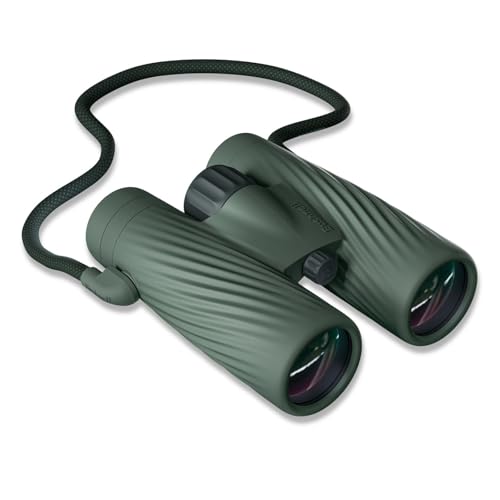
Bushnell A5 8×42 Binoculars Cilantro Green
More On The Choices That Made The List
The Leupold BX-2 Timberline HD is the kind of binocular you forget is around your neck until you need it. Its open-bridge roof prism body (a straight-barrel design where the prisms overlap in a single housing) keeps weight down without making the chassis feel hollow, which matters on a long glassing session above a cut block at last light. Compared to bulkier 50mm designs like the Vortex Diamondback later on this list, the Timberline carries more comfortably all day while still pulling useful detail past 300 yards.
The 10x42mm pairing gives you a 4.2mm exit pupil and enough light gathering for those flat gray mornings when deer just appear at the edge of a clear-cut. Fully multi-coated lenses, meaning every air-to-glass surface has multiple antireflective layers, help with glare when you swing toward open sky. For hunters who cover miles on foot and want a familiar, well-balanced optic, this is a comfortable place to land.
Well-Handled Touches
- Open-bridge roof prism design keeps the body light without feeling cheap
- Advanced Optical System aims at strong color fidelity and edge clarity for early-morning glassing
- Fully waterproof and fogproof, useful in cold November rain or humid southern mornings
- 10x42mm balance gives enough reach for spotting and still scans well at the edges
Things To Consider
- 10x magnification will magnify handshake at full extension, so a steady grip or monopod helps for very long sessions
- Armor texture is grippy but a few owners mention it scuffs visibly after heavy brush use
Quick Facts
Made For
Whitetail and western hunters who spend long days glassing on their feet and want a light, dependable 10×42 that disappears in the pack.
Where Another Pick Suits Better
For someone who chases elk in steep timber and values 8x steadiness, the Bushnell A3 8×32 is a steadier handheld option.
The Diamondback HD 10×50 is a step up in light gathering, and you feel it the second the light gets soft. Larger 50mm objectives pull in noticeably more image brightness in the half hour around sunrise, which is the exact window most big-game hunters live for. Compared to the Leupold BX-2 above, this Vortex trades some compactness for raw low-light performance, and that trade is worth it for anyone glassing canyon walls or alfalfa fields at last light.
Select HD glass elements target better resolution and lower chromatic aberration, which is the colored fringing you sometimes see on high-contrast tree lines. For hunters running western big game where shots open up past 400 yards, the extra reach and brightness of a 10×50 earns its place in the harness. It is the optic to pack when low light matters more than pack size.
Positive Points
- 50mm objectives gather more light, helping during the last 20 minutes of legal shooting light
- HD glass targets better resolution and reduced color fringing on dark tree lines
- Fully multi-coated lenses for cleaner, brighter images than entry-level glass
Worth Noting
- 50mm objectives add noticeable weight and bulk versus 42mm or 32mm designs
- 10x magnification on a larger body can amplify handshake for steady scanning
- Larger chassis is less comfortable for long sits without a chest harness
Who It Suits Best
Western big-game hunters who need every scrap of light at dawn and don’t mind a heavier glass on the chest harness.
Consider Something Else When
For backcountry hunters who count every gram, the Leica 8×20 BCA Trinovid slips into a chest pocket where the Diamondback simply will not.
The A3 8×32 is the binocular you grab when the day is going to be long and the pack is already heavy. An 8×32 sits in a comfortable middle ground: more stable than 10x in the hands, brighter at the edges than compact 25mm pocket glass, and light enough to forget you are carrying it. Compared to the Vortex Diamondback just above, you give up a fair amount of low-light capability, but you gain a chassis that almost disappears on a bino harness.
Bushnell finishes the body with a wave-texture armor that grips well with cold or wet hands, and the IPX7 waterproof rating means it survives an accidental dunk in a creek crossing. EXO Barrier lens coatings help water bead off the objective glass during a drizzle. For hunters who move through thick cover and pull the binos up a hundred times a day, this is a sensible, low-fatigue pick.
The Case For It
- Lightweight 8×32 chassis reduces neck fatigue on all-day stalks
- IPX7 waterproofing handles downpours and accidental drops in water
- EXO Barrier coating helps rain and dust shed off the objective lenses
- Snap-Lock strap system keeps the binos secured on a chest harness during long climbs
Trade Offs
- 32mm objective limits how much light you pull in versus the Vortex Diamondback 10×50
- 8x magnification requires getting closer to your subject for ID-level detail at distance
Right Fit For
Eastern whitetail hunters, spot-and-stalk bowhunters, and anyone who wants steady glassing without a heavy neck load.
Look Elsewhere When
For low-light western glassing where every lumen matters, the Vortex Diamondback HD 10×50 makes more sense than the A3 8×32.
The 10×32 sibling of the A3 trades a little steadiness for noticeably more reach. If the 8×32 above feels a touch short when you are picking apart a far hillside, this version steps that magnification up without forcing you into the bulk of a 42mm or 50mm chassis. The chassis and armor carry over from the 8×32, so the in-hand feel and harness fit are essentially identical, which is helpful for hunters who already run A-series glass.
For ridge-top mule deer scouting or picking out a ram across a canyon, the extra magnification earns its keep. Just know that 10x in a compact body is more honest about shaky hands than 8x is, and a stable hold matters more here than with the lower-powered sibling. Daylight performance is solid; that last 20 minutes of light is where the smaller 32mm objective starts to feel the squeeze.
Strong Points
- 10x reach in a sub-42mm chassis is rare and useful for mid-distance ID
- Same IPX7 sealing and EXO Barrier coating as the rest of the A3 line
- Snap-Lock strap helps prevent the binos from swinging loose during climbs
Room For Improvement
- 10×32 form factor magnifies handshake more than 8×32 does
- Smaller objective gives up some low-light performance compared to 42mm and 50mm options
- Eye relief, the distance your eye sits behind the eyepiece, is tighter for glass wearers at 10x on this chassis
Best Suited To
Hunters who want extra reach in a compact body and mostly hunt in good daylight rather than the last 15 minutes of shooting light.
Skip It When
For a steadier scan-and-go setup at slightly less reach, the Bushnell A3 8×32 right next door is the easier-handling choice.
The Viper HD 12×50 is the long glass of this list, and it earns that label honestly. Twelve power pulls distant sheep country or far coulees into usable detail, and the 50mm objective keeps the image bright enough to actually use that magnification in soft light. Compared to the Diamondback 10×50 earlier, you are reaching further, accepting more handshake, and gaining resolution that pays off in open terrain. It ships with a GlassPak chest harness, which is the right call because at this size a neck strap gets old fast.
The HD optical system targets good color fidelity and edge-to-edge clarity, which matters when you are scanning a long ridge and need to trust what you see at the edges of the image. The trade-off is real: this is a heavier optic, and 12x on a full-size body benefits from a steady hold or tripod. For sheep, goat, and antelope hunters in wide-open country, that trade is the right one to make.
A Strong Showing
- 12×50 reach pulls open-country detail in for positive ID at long range
- HD optical system targets strong color fidelity and edge sharpness
- Includes a GlassPak chest harness, which is the right carry system for this size
Honest Caveats
- Heavier and bulkier than any 32mm or 42mm option on this list
- 12x magnification amplifies shake; a monopod or tripod is helpful for long sessions
- Field of view is narrower than 8x or 10x designs, so finding targets takes more panning
Who Should Grab It
Open-country sheep, goat, and antelope hunters who glass long distances and want to leave the spotting scope at camp.
Another Choice May Suit
For someone hunting timber where shots happen at 80 to 200 yards, the Leupold BX-2 10×42 is a steadier, lighter daily carry.
The 8×20 BCA Trinovid is the most packable optic on this list, and it does not pretend to be anything else. About 8 ounces in a folding roof prism body, it slips into a chest pocket or small daypack without complaint, which makes it a favorite for hunters who count every gram on a long sheep or goat hunt. The 6.6-degree angle of view, which translates to about 360 feet at 1,000 yards, is wide for a binocular this small, and that wide field makes finding and following fast-moving subjects easier than you might expect.
You give up light gathering versus any 42mm or 50mm option, and the smaller 20mm objective simply cannot match them in the last 20 minutes of light. Weather resistance, not full submersion waterproofing, is the rating here, so it handles rain but not a creek dunk. As a secondary glass for scouting, hike-in hunts, or travel, though, the Trinovid is hard to argue with if your budget can stretch.
Practical Advantages
- At roughly 8 ounces, this disappears in a chest pocket or small pack
- Wide 6.6-degree field of view helps track moving game at close range
- Compact 8×20 size leaves room in the pack for a full-size optic in camp
Some Limits To Know
- 20mm objective limits low-light performance compared to 32mm and larger options
- Weather-resistant rather than fully waterproof, so treat it as a fair-weather companion
- Short eye relief is a problem for eyeglass wearers during extended viewing
Whose Shelf It Belongs On
Backcountry and sheep hunters who want an ultralight secondary optic to carry when the full-size binos stay in camp.
Reach For A Different Pick When
For a primary hunting optic that can handle low light and rough weather, the Leupold BX-2 10×42 is the more capable everyday tool.
The A1 10×25 is the smallest optic in the A-series and the easiest to justify as a “stashed everywhere” pair. 10x is ambitious for a 25mm chassis, and the small objective will not give you low-light performance anywhere close to the 42mm and 50mm options higher on this list. What it does give is 10 power in a body that lives in a jacket pocket, which is genuinely useful for scouting new units, glassing a clearing on the walk in, or checking a distant hillside without committing to a full-size optic.
EXO Barrier coating and IPX7 waterproofing are real features at this size, not marketing filler. The SnapLok strap helps keep the binos where you want them during a scramble. Daylight performance is the sweet spot; dawn and dusk are where the small objective shows its limits honestly. As a scouting or backup optic, this is a thoughtful, capable little tool.
Bright Spots
- 10x in a pocketable body, useful for quick ID without a full-size optic
- IPX7 waterproofing is rare in this size class and reassuring in wet weather
- SnapLok strap keeps the binos secured during scrambles and steep climbs
Less-Strong Areas
- 25mm objective delivers noticeably dimmer images at dawn and dusk
- 10x in such a small chassis magnifies handshake more than 8x versions do
- Eye relief is tight for users who wear glasses for extended glassing
Perfect Match For
Hunters who want a pocketable 10x for scouting, scouting new access routes, or carrying as a backup to a larger optic.
Where A Sibling Pick Shines
For steadier daylight scanning with a wider field of view, the Bushnell A1 8×25 sits in the same pocket but feels calmer in the hands.
The 8×25 is the steadier, friendlier version of the A1 pair. Dropping from 10x to 8x cuts handshake, widens the field of view, and makes the optic easier to hand to someone who has not used binoculars in a while. For casual wildlife watching, scouting, or traveling with a partner who wants a usable glass, this is the more generous of the two A1 configurations.
It shares the same IPX7 waterproofing, EXO Barrier coating, and SnapLok strap system as its 10×25 sibling, so the day-to-day ownership experience is identical. The honest read: you are trading meaningful low-light capability for pocketability, and that trade is worth it only when the alternative is leaving binoculars at home entirely. For a long-haul flight or a tourist afternoon, that is a real win.
Real Benefits
- 8x magnification is steady in the hands, even for casual users
- Pocketable 25mm chassis makes it easy to actually bring along
- Same IPX7 sealing and EXO Barrier coating as the larger A-series optics
Where It Is Less Suited
- 25mm objective limits performance in low light compared to 32mm and up
- Limited eye relief for eyeglass wearers during long glassing sessions
- Best treated as a secondary or travel optic, not a primary hunting tool
Built With In Mind
Travelers, casual wildlife watchers, and hunters who want a backup pair that lives in a jacket pocket or daypack.
Swap It Out When
For a primary hunting binocular that can pull duty at dawn, the Bushnell A3 8×32 is a meaningful step up in light and reach.
The A5 8×42 sits at the top of the A-series and behaves like a flagship should. Dielectric prism coatings (thin metallic layers on the prisms that reflect light more efficiently than standard aluminum coatings) and phase correction (adjustments to the prism surfaces that align the light waves for sharper contrast) push more light through the prisms, and the result is a brighter, higher-contrast image than the smaller A-series siblings can manage. The 8×42 form factor is the classic “do-everything” binocular size, and the A5 makes a strong case for that traditional shape.
The kit is unusually complete: a color-matched optics case, color-matched Snap-Lock strap, Snap-Lock lugs, an Allen wrench, and a cleaning cloth. You do not need to chase accessories down. Bushnell’s lifetime coverage backs the build, which is the kind of ownership story that matters when a binocular is going to live in a truck, a pack, and a tree stand for the next decade. Compared to the Vortex Diamondback 10×50 earlier, you trade some reach and last-light brightness for steadier handheld scanning.
Benefits That Matter
- 8×42 form factor balances steady handheld scanning with strong low-light performance
- Dielectric and phase-coated prisms target vibrant, high-contrast images
- Complete accessory kit means no immediate add-on purchases
- Lifetime coverage from Bushnell is a meaningful ownership benefit for long-term hunters
Factors To Consider
- Heavier and larger than 32mm A-series options, so it is not a pocketable pick
- 8x magnification is steady but less reachy than 10x or 12x designs on this list
- Premium coatings and coatings stack drive a higher cost than the smaller A1 and A3 models
Quick Facts
Who Will Love This
Sit-and-glass hunters and longtime outdoorsmen who want a flagship 8×42 with strong coatings, full accessory kit, and long-term coverage.
Not Your Match When
For a backcountry sheep hunter chasing every gram, the Leica 8×20 BCA Trinovid is the lighter pocketable complement to the A5.
How To Choose Compact Hunting Binoculars That Actually Work
Magnification Versus Field Of View
Hunters tend to fixate on magnification, but field of view and steadiness matter just as much. An 8x binocular gives a wider field, which makes finding and tracking game easier, while 10x and 12x reach further but demand a steadier hand. For most hunting scenarios, 8x or 10x hits the practical sweet spot, and 12x earns its place only in genuinely open country.
Objective Size And Exit Pupil
The objective is the front lens, and its diameter (in millimeters) controls how much light the binocular can collect. A 42mm objective is the common compromise between light gathering and packable weight. Exit pupil, calculated as objective diameter divided by magnification, tells you how much of that collected light actually reaches your eye. A 4 to 5mm exit pupil suits most adult eyes in low light; anything smaller starts to feel dim at dawn and dusk.
Weight And Carry System
A binocular you leave in the truck is a useless binocular. A chest harness or comfortable neck strap matters as much as the optic itself, and heavier 50mm designs genuinely benefit from a harness. Lighter 25mm and 32mm options can live in a pocket or bino pouch without one.
Weather Sealing And Coatings
IPX7 waterproofing handles rain and brief dunks, which is plenty for most hunting situations. Lens coatings, such as Bushnell’s EXO Barrier or Vortex’s fully multi-coated systems, help water bead off and improve light transmission. Both are worth prioritizing over cosmetic features.
Key Considerations Across These Picks
Where Shoppers Go Wrong
Plenty of hunters pick magnification first and regret it on the first cold morning when handshake turns a 12x image into a blur. Others fixate on objective size and end up carrying a 50mm optic that they eventually leave at home because their neck hurts. The honest move is to match the binocular to the typical shooting distance and terrain, then test the feel in the hands before committing. A binocular that does not come up smoothly from a chest harness will not be used.
When Paying More Pays Off
Stepping up to a flagship binocular like the Bushnell A5 8×42 or a premium brand like Leica mostly buys you better prism coatings, which means more light through the system and noticeably higher contrast at dawn and dusk. That extra clarity adds up over years of low-light hunting, where most of the season’s real encounters happen. The upgrade is worth it for hunters who spend serious time in the field and want their optic to be the last thing they think about, not the first.