
Calling predators at dusk takes more than luck. You’re squinting through low light, listening for movement, and trying to stay warm enough to stay still for hours. The right setup makes the difference between a frustrating evening and a clean shot. Whether you’re a weekend caller running a handheld light or a dedicated predator hunter building a kit piece by piece, this list rounds up the gear that earns its keep on actual coyote hunts. Knives, packs, lighting, and layering all earn their spots here, picked for the realities of cold mornings, long sits, and rough terrain.
The Essentials At A Glance

ESEE Knives 6P Fixed Blade Knife (Venom Green)

ESEE 4P Survival Fixed Blade Knife with Sawtooth Handle

ALPS OutdoorZ Little Bear Camo Hunting Lumbar Pack

ALPS OutdoorZ Pursuit Pack in Coyote Brown

ALPS OutdoorZ Extreme Upland Game Vest X 2.0

SITKA Gear Core Midweight Zip-T Long Sleeve Shirt
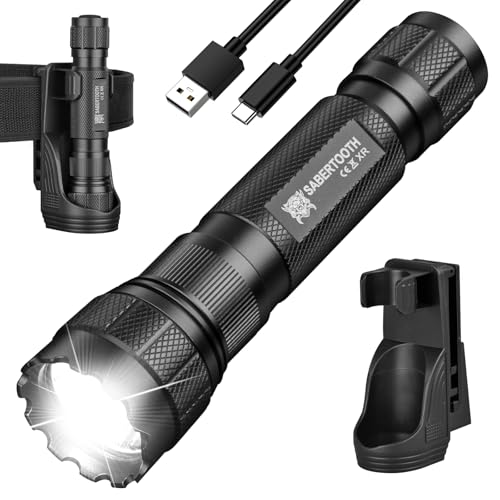
SABERTOOTH Rechargeable LED Police Tactical Flashlight
SABERTOOTH Green Hunting Light Tactical Flashlight 1800LM

SABERTOOTH Red Hunting Light Tactical Flashlight 1800LM
More On The Choices That Made The List
The ESEE 6P is the kind of fixed blade that earns a permanent slot in a truck or pack. Built around a 1095 carbon steel blade (a high-carbon steel known for toughness and easy resharpening in the field) and a G-10 handle (a layered fiberglass laminate that grips well even when wet or cold), it handles heavy skinning, caping, and the kind of camp chores that show up after dark. At nearly 12 inches overall with a 6.5-inch blade, it’s a serious working knife rather than a backup folder.
Predator hunters running multiple dogs or dragging long distances benefit from the full-tang construction, where the steel runs continuously through the handle for maximum strength. The molded polymer sheath locks positively and rides comfortably on a belt. Compared to the ESEE 4P covered later, the 6P trades compact carry for the leverage you want on bigger carcasses.
A Few Strong Suits
- 1095 carbon steel takes a working edge and re-sharpens easily in camp conditions.
- Full-tang build (steel extends through the handle) survives heavy prying without flex.
- G-10 grip stays secure with gloves and stays stable in cold, damp weather.
- 6.5-inch blade length handles full coyote processing in one tool.
- Molded sheath holds firm on a belt during long stalks and rough climbs.
Honest Caveats
- 1095 carbon steel needs a light coat of oil after use to prevent surface rust.
- Larger footprint makes it less comfortable on all-day sits where weight matters.
Key Attributes
Whose Kit It Belongs In
Working coyote hunters, trappers, and ranchers who process game at the truck need a blade that takes abuse without complaint.
A Better Fit Elsewhere
Callers who pack light and stay mobile all evening may prefer the more compact ESEE 4P Survival Fixed Blade Knife.
The ESEE 4P trims the bulk of the 6P into a 4.5-inch blade that still delivers real work. The OEM sawtooth handle design wraps three colors, coyote brown, olive drab, and black, into a tri-camo G-10 grip that looks at home in western terrain and locks in even with gloves on. Total length is 9 inches, weight sits at 7.8 ounces, and the drop-point blade (a straight-spined profile that curves up to a fine tip for controlled skinning) keeps skinning cuts honest.
Mobile callers who carry a setup on a belt rather than a pack benefit from this size. It’s long enough for coyote work yet short enough to stay out of the way when seated against a tree. The blade thickness of .188 inches is heavier than typical skinning knives, which gives it real backbone on the rare jobs that go beyond careful cuts.
Well-Handled Touches
- Sawtooth handle texture (jagged G-10 ridges) keeps grip positive when hands are cold or wet.
- Tri-camo pattern blends into western brush and CRP terrain.
- Drop-point profile supports clean skinning without nicking the hide.
- Lightweight 7.8-ounce build stays comfortable on long belt carries.
Points To Keep In Mind
- Smaller blade limits reach on larger predators like adult boars.
- 1095 carbon steel still wants a wipe-down after each use to stay rust-free.
Made For
Still hunters and light-mobility coyote callers who want a manageable, reliable blade they barely notice until they need it.
Where Another Pick Suits Better
Ranchers running heavy chores or breaking down multiple animals in a session may want the longer reach of the ESEE Knives 6P Fixed Blade Knife.
The Little Bear lives up to its name as a compact lumbar pack (a waist-level pack that sits over the lower back and hips) built for the predator hunter who values mobility. The main compartment, front pocket, and two waist-belt pockets let you stage a calls, batteries, snacks, and a range finder without overbuilding the kit. The padded waist belt adjusts from 30 to 54 inches, which covers most hunters comfortably.
What separates the Little Bear from a basic fanny pack is the removable shoulder harness. Drop the harness and it becomes a true lumbar carry for long sits; add it and you get a fanny-pack setup for run-and-gun calling. Compatible with the brand’s accessory binocular pocket, the pack grows when you need it.
Where It Helps
- Convertible design works as lumbar or fanny pack depending on the hunt.
- Four-pocket layout spreads small gear across the belt and main body.
- Wide 30″ to 54″ waist range fits most body sizes without buying a separate model.
- Padded belt stays comfortable over multi-hour calling sessions.
Practical Considerations
- Smaller main pocket limits capacity for larger optics or extra layers.
- Camouflage pattern may not match every region’s terrain and lighting.
Quick Technical Notes
Right Fit For
Predator callers who keep their kit lean, hike to calling setups on foot, and want a pack that disappears on the sit.
Look Elsewhere When
Hunters carrying bow or full-day loads should consider the ALPS OutdoorZ Pursuit Pack in Coyote Brown instead.
The Pursuit Pack is built for hunters who carry a bow or rifle and want hands free on the trek. An expandable bow pocket and dedicated lashing straps hold a bow securely against the pack body, so you can climb fences, push through brush, and glass terrain without juggling gear. The coyote brown color reads as standard in western terrain where brown brush dominates.
A large main pocket, front pocket, and lower-side mesh pockets give the pack enough storage for an afternoon of calling. The bow-specific layout means a rifle shooter may find the straps less intuitive than a standard scabbard. Hunters who run both archery and rifle setups should consider how often each tool sees use.
The Good Stuff
- Expandable bow pocket keeps a bow secured without a separate sling.
- Lashing straps reduce wobble during active stalks.
- Multi-pocket layout holds calls, gloves, snacks, and a thermos.
- Coyote brown blends into dry brush and rocky terrain.
Things To Weigh
- Bow-focused layout adds bulk for rifle-only hunters.
- Mesh pockets sag under heavier water bottles.
Feature Rundown
Who Should Grab It
Bow hunters working western terrain who want a pack designed around their weapon rather than adapted to it.
Swap It Out When
Rifle-only hunters who want a simpler carry may find the ALPS OutdoorZ Little Bear Camo Hunting Lumbar Pack more streamlined.
The Extreme Upland Game Vest X 2.0 leans into long days on foot with thin shoulder straps designed to clear a mounted shotgun. The vented back panel and waist belt construction move air through the harness, which helps when temperatures climb in open country. An expandable and removable waist belt spans a wide size range, so layering over a base layer in cool weather or a t-shirt in summer both fit cleanly.
Even though this is marketed as an upland bird vest, predator hunters who walk miles of CRP (Conservation Reserve Program grassland) and brush edges get the same value. The shooting-friendly shoulder layout and game pockets translate well to coyote runs that turn into long retrieves.
Bright Spots
- Thin shoulder straps keep a shotgun or rifle stock clear during mounts.
- Vented back reduces heat buildup on active stalks.
- Expandable waist belt fits over bulky layers in cold weather.
- Game pockets handle upland birds or smaller predators.
Worth Bearing In Mind
- Upland focus means less modular attachment for predator-specific gear.
- Vested carry adds heat retention compared to a pack-only setup.
Best Suited To
Bird hunters and predator hunters who walk long distances, want heat management, and value a stock-friendly shooting setup.
Reach For A Different Pick When
Still hunters who set up at a single location and rarely move may prefer the lighter ALPS OutdoorZ Little Bear Camo Hunting Lumbar Pack.
The Core Midweight Zip-T serves as a base or mid layer (a garment worn next to the skin or over a base layer for insulation) that regulates temperature on hunts where the thermometer swings hard. The fabric blend of 96 percent polyester and 4 percent elastane (a stretch fiber that moves with the body) keeps the fit close to the skin without binding, and the midweight fleece construction pulls moisture off the body while still insulating during glassing breaks.
The high-zippered neck lets you open up heat when you’re working a call and zip back up when you settle against a tree. Predator hunters in variable weather, where a 30-degree sunrise climbs to a 55-degree afternoon, benefit most from this kind of mid-weight piece.
Notable Gains
- Midweight fleece insulation handles both cool mornings and warming afternoons.
- Elastane blend (stretch fibers woven into the fabric) gives four-way stretch for shouldering a rifle.
- High-zip neck adapts to changing exertion and temperature.
- Quick-drying fabric stays comfortable during sweat-heavy stalks.
Possible Compromises
- Midweight thickness runs warm during midday peaks.
- Light fleece faces snags in heavy brush.
Specification Snapshot
Who It Suits Best
Cold-season predator hunters who glass hard, walk hard, and need a layer that manages both exertion and waiting.
A Better Fit Elsewhere
Late-season hunters in deep cold may want to layer this Zip-T under a heavier insulated piece rather than wear it alone.
The SABERTOOTH tactical flashlight puts out 1800 lumens (a measure of total visible light, where higher numbers mean a more intense beam) and reaches roughly 1000 feet on its highest setting, which covers the scanning range most coyote hunters actually use. It runs on a rechargeable cell and includes high-bright and soft modes plus a burst mode for quick identification at distance. The white-light beam works well for checking terrain, recovering game, and reading maps in the dark.
Where it differs from a hunting-specific light is the color. White light spooks coyotes more than red or green, so this unit earns its spot as a general-purpose field light rather than a primary scanning beam. Hunters who want a primary spotting tool should pair it with one of the colored SABERTOOTH models covered below.
Benefits That Matter
- 1800-lumen output reaches roughly 1000 feet for field scanning.
- Multiple modes including burst for quick identification.
- Rechargeable cell cuts down on battery replacement cost.
- Compact body fits a duty belt or pack strap.
Soft Spots
- White light spooks predators more than colored hunting beams.
- Peak lumens drain battery faster than lower-output modes.
Perfect Match For
Hunters who need a versatile field light for camp chores, trailing wounded game, and general night navigation.
Not Your Match When
Predator hunters who want stealthy scanning should reach for the SABERTOOTH Green Hunting Light Rechargeable Tactical Flashlight 1800LM instead.
The green-hunting version of the SABERTOOTH XR line uses a high-purity green LED (a light-emitting diode tuned to a specific wavelength, here green, which coyotes see less brightly than white) to scan fields without blowing out a coyote’s vision. Most predators register green light as dimmer than red or white, which gives callers time to spot and set up before the animal reacts. At 1800 lumens with a roughly 1000-foot reach, it covers the same scanning distance as the white model.
A 360-degree rotating holster and hidden USB-C charging port make it a clean field tool. The holster mounts to a belt or pack strap and keeps the light accessible without bouncing. Hunters running wild boar and vermin in addition to coyotes get the same benefit from the green wavelength.
What Makes Sense
- Green LED wavelength is less visible to coyotes and hogs than white.
- 1800-lumen output retains long-throw reach for open terrain.
- Hidden USB-C port keeps the charging interface protected from dust and water.
- Rotating holster fits belts and pack straps without slipping.
Details To Watch
- Green beam is less effective in heavy fog or rain, where it scatters more than red.
- Colored LEDs tend to read dimmer to human eyes at the same lumen rating, so depth judgment takes practice.
Who Will Love This
Coyote and wild boar hunters who call at distance and need a beam that won’t spook game before the shot.
Consider Something Else When
Hunters working brushy close-range terrain where fog is regular should compare the SABERTOOTH Red Hunting Light Rechargeable Tactical Flashlight 1800LM for better penetration.
The red-hunting SABERTOOTH covers the other side of the predator-light conversation. Red wavelengths preserve the human eye’s natural low-light adaptation, which matters during long calling sessions where you want to scan, glass, and shoot without losing night vision. At the same lumen count and reach as the green version, it gives hunters an option when green washes out in fog or against dark timber.
The 360-degree rotating holster and hidden USB-C charging port mirror the green unit, so the choice between red and green comes down to terrain and conditions rather than features. Coyote hunters running mixed terrain, some open and some wooded, often keep both on hand.
A Few Highlights
- Red LED preserves natural low-light vision during long sits.
- Same 1800-lumen output and 1000-foot reach as the green sibling.
- Hidden USB-C port simplifies charging without opening battery compartments.
- Holster system stays accessible on belts and pack straps.
Trade-Offs
- Red beam reads as dimmer to human eyes than white at the same lumens.
- Some predators react more strongly to red than green at close range.
Built With In Mind
Predator hunters who value night-vision retention and work mixed terrain where conditions shift between fog, timber, and open field.
Another Choice May Suit When
Hunters calling primarily in open country with minimal fog may get more range out of the SABERTOOTH Green Hunting Light Rechargeable Tactical Flashlight 1800LM.
Choosing Coyote Hunting Gear That Earns Its Spot
Picking the right coyote gear comes down to matching equipment to the kind of hunting you actually do. A still hunter sitting against a tree for hours has different needs than a mobile caller pushing through CRP on foot, and the gear that fits one style can become dead weight in another. Knife size, pack capacity, layering weight, and light color all change with the hunt.
Knife Selection for Predator Work
Fixed blades dominate the coyote-hunting knife market for good reason. A full-tang design (one where the blade steel extends all the way through the handle) gives the strength needed to break down carcasses without flexing, and the lack of moving parts means no hinges to fail in cold weather. Blade length matters for reach and leverage: 4-inch blades handle light caping and smaller animals, while 6-inch blades cover full-body work with fewer strokes. Carbon steel takes a working edge and resharpens on a pocket stone, though it asks for a light oil coat after each use. Stainless blades trade some edge-holding for rust resistance.
Pack and Carry Choices
Pack style follows hunting style. Lumbar packs work for still setups because they keep weight on the hips without adding back coverage that traps heat. Daypack-style hunting packs make more sense for hunters carrying a bow, extra layers, or a thermos for long sessions. Vest-style carries help bird hunters and active walkers who want a stock-friendly shoulder, but they add insulation that can run hot in mild weather. Adjustable belts matter when you layer clothing under the pack or share gear between hunters of different sizes.
Lighting Wavelengths and Reach
Light color matters more than lumen count for predator hunting. White light spooks game fastest. Green wavelengths read as dimmer to coyotes and most hogs, giving the caller time to identify and set up. Red light preserves the hunter’s own dark adaptation, which helps on long sits where your eyes need to recover between calls. Rechargeable cells cut long-term cost and field battery weight. Holster design matters more than people expect because a bouncing light on a stalk makes noise and slows reaction time.
Layering for Variable Conditions
Coyote seasons run from late summer through deep winter, and the right layering system changes by month. A midweight fleece base or mid layer handles shoulder seasons when temperatures swing hard between sunrise glassing and midday walking. Heavier shells come out for late-season hunts where you sit against cold wind. Fabric blends with stretch fibers allow shouldering without binding the torso, and quick-dry construction handles the sweat from active calling.
Smart Choices Across The Coyote Hunting Kit
Common Pitfalls Shoppers Hit
Buying a light based purely on lumen rating is one trap. A 2000-lumen white light spooks coyotes faster than an 1800-lumen green or red beam, so the right color beats raw output every time. Another common miss is overbuilding the pack. Carrying a full daypack for an evening sit adds weight, noise, and heat that work against the hunt. Match pack capacity to actual load.
Settling on a single light color also limits hunters. Keeping both green and red options covers fog, timber, and open terrain differently. Skipping a knife maintenance plan hurts too, because a clean, lightly oiled blade outlasts a neglected one by years.
Where The Extra Money Goes
Premium tier in this category usually buys better materials and refined ergonomics. Higher-end knives use premium steel that holds an edge longer and resists corrosion better. Top packs add reinforced stitching, modular attachment points, and quieter fabrics that don’t swish on every step. Higher-tier lights bring tighter beam focus for longer effective throw and more consistent color rendering.
The upgrade is worth it for hunters who log many days in the field each season. Casual hunters running a handful of evenings a year get by fine with mid-tier gear that covers the same core functions at lower cost.