
Hunters dialing in for fall whitetail season need a target that matches their bow, draw weight, and shooting style. Paper faces build clean fundamentals, layered foam bags soak up real poundage, and reactive steel turns practice into something that feels alive. Each option below handles a different slice of deer season prep, from back-of-the-truck portability to tournament-grade scoring.
A Quick View Of The Lineup
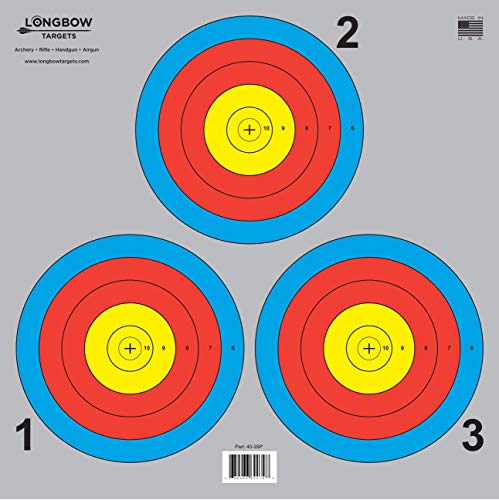
Longbow Targets 40cm Paper Faces, 20 Pack

Birchwood Casey Dueling Metal Shooting Targets

Morrell Lightweight Outdoor Portable Youth Archery Target

Morrell Yellow Jacket Stinger Field Point Archery Target

KAINOKAI Competition Archery Paper Faces 40cm/60cm

Morrell Yellow Jacket Kinetic 1.0 65-Pound Field Target

Birchwood Casey Texas Star Plinking Metal Target

Morrell Double Duty 450 FPS Cube Bag Target

Birchwood Casey Resetting Gallery Metal Target
Inside Each Recommended Option
Paper targets do one thing better than anything else: they show you exactly where your arrow landed without a layer of foam distorting the picture. For archers trying to fix a left-right grouping wobble or test new sight tape, that clarity matters.
The Longbow 40cm faces print to official scoring standards, with each color ring measured at a precise 4cm from edge to edge. That matches what you see at sanctioned shoots, so practice scores carry over to tournament day. Stack them on a frame or staple to cardboard and you are shooting 3-spot layouts from the package.
The Helpful Details
- Official-spec rings make tournament-style scoring practical at home
- Heavy-duty 7pt paper construction resists tearing on arrow pull
- Twenty-sheet bulk pack keeps the cost-per-session low
- 40cm size is small enough to set up anywhere with a backstop behind
Things To Consider
- Paper faces need a backing frame or cardboard, and arrow holes cannot be reused
- Outdoors in wind, the sheets can flap if not properly anchored
Made For
Recurve and compound shooters dialing in tournament form on a tight budget.
Swap It Out When
You want a target that handles broadheads and heavyweight arrows, where the Morrell Yellow Jacket Stinger is the stronger call.
Reactive targets turn a routine range session into a game. The Dueling Tree swings a hit paddle off and rotates an untouched one into view, so accuracy pays off instantly with the satisfying clang of steel on steel.
This Birchwood Casey setup is rated for .22 rimfire, which keeps velocities in check and paddles swinging reliably. It mounts to a standard T-post, so you can drop it at any corner of a back pasture or pull it for storage. Unlike paper targets, you can shoot this for hours without tearing through supplies.
What Makes Sense
- Reactive swing action gives instant feedback on each shot
- T-post mounting works in most outdoor setups without a permanent frame
- Wide base construction resists tipping on hard hits
- Fun head-to-head format for pairs of shooters
Worth Noting
- Limited to rimfire velocities, so centerfire rifle rounds are off the table
- Paddles take dents over thousands of rounds and will eventually need replacement
- Safety glasses and a proper berm behind the target are non-negotiable
Key Specs
Right Fit For
Rimfire plinkers who want a competitive, two-shooter setup without managing paper or foam.
Where Another Pick Suits Better
For pure archery practice at hunting distances, the Morrell Double Duty 450 FPS Cube Bag Target is the more on-target choice.
Getting a kid or a beginner behind a bow for the first time means lowering the bar on weight and intimidation. A bulky 65-pound foam cube does the opposite. The Morrell youth bag targets lower-poundage bows (around 30 pounds) so the bag stops arrows cleanly without feeling like overkill.
It runs 28 inches long, 10 inches wide, and 28 inches tall, giving enough surface area for new shooters to hit. Four shooting spots across two sides double the lifespan per bag. Easy arrow removal also matters here: frustration at the target kills enthusiasm faster than a missed bullseye.
The Value In It
- Lightweight build keeps transport simple for parents setting up
- Easy-pull foam saves wear on lightweight youth arrows
- Multiple spots on each side extend the useful life of the bag
- Safe enough for whole-family sessions in the yard
Trade Offs
- Rated up to about 30 pounds, so adult compounds will chew the foam fast
- Lacks the layered density of the heavier Morrell bags on this list
Best Suited To
Parents introducing archery to kids and youth programs needing a forgiving, low-weight target.
Look Elsewhere When
You shoot a 60-plus-pound compound and need stopping power, where the Morrell Yellow Jacket Kinetic 1.0 steps in.
Backyard shooters need something small enough to live in a garage corner, light enough to move before mowing, and tough enough to take a daily broadhead tune-up. The Stinger checks all three boxes in a footprint that is more cube than full-size bag.
It measures 20 inches on each side with a 12-inch depth, so two sides carry ten bullseye targets total. The E-Z tote handle makes one-handed carrying real, and the weather-resistant cover keeps moisture from soaking into the foam between sessions.
Key Advantages
- Compact cube profile fits on small patios and tight garage floors
- Two-sided design with ten bullseyes spreads wear across the bag
- Easy arrow pull keeps frustration low during long sessions
- Built-in handle moves with you between practice spots
Honest Caveats
- Not rated for the heaviest crossbow speeds
- Smaller face means misses at close range still hit foam that is past its prime
Who It Suits Best
Suburban bowhunters shooting a moderate draw weight who want a target that disappears behind a shed when not in use.
Skip It When
You want tournament-style scoring rings on paper, where the Longbow 40cm Paper Faces deliver more honest feedback.
Paper falls apart in light rain, which usually forces range sessions indoors. The KAINOKAI competition faces sidestep that by switching to a non-woven synthetic that holds up to weather without tearing like newsprint.
The mixed pack ships with both 40cm (compound-style 16-inch) and 60cm (24-inch) ten-ring faces, giving you scoring variety in one order. Compared to the Longbow paper set, you trade traditional feel for all-weather staying power, and for most backyard shooters that is a fair swap.
What Works In Its Favor
- Non-woven construction resists tearing on arrow pull
- Waterproof surface keeps practice going through light rain
- Mixed sizes mirror real tournament face dimensions
- Higher service life than standard paper targets
Points To Note
- Synthetic faces stretch more than paper, so scoring marks can wander
- Still needs a frame, backstop, or stapled cardboard behind it
Feature Rundown
Perfect Match For
Coaches and shooters running outdoor sessions where rain or humidity would trash standard paper faces.
A Better Fit Elsewhere
You want arrow-stopping foam for broadhead testing, where the Morrell Double Duty 450 FPS Cube Bag Target handles that workload.
High-poundage compounds and crossbows blow through cheap foam. The Kinetic 1.0 from Morrell weighs in at 65 pounds and uses an internal layered design to catch high-FPS arrows without pass-throughs, which is the difference between a productive session and chasing arrows into the berm.
It measures 21 by 15 by 20 inches, so you still get the two-sided layout with ten total bullseyes. The carry handles make the weight feel manageable for one person. No speed limit means today’s 350 FPS crossbow and tomorrow’s faster setup both share the same target.
The Case For It
- Multi-layer construction stops high-FPS arrows without pass-through
- Two-sided bag with ten bullseyes spreads shot grouping
- Weather-resistant shell handles year-round outdoor placement
- Carry handles make the 65-pound weight a one-person job
Room For Improvement
- 65 pounds is a lot to drag across a soft field after a hunt
- Field points larger than the arrow shaft risk blowouts, so broadheads need testing
Whose Shelf It Belongs On
Compound and crossbow shooters running serious poundage who want one target that handles everything they own.
Consider Something Else When
You mainly shoot a 30-pound youth bow, where the lighter Morrell youth bag is the more honest match.
Spinning steel is the kind of target that pulls friends off the porch. The Texas Star spins paddles away with each hit, and the audible snap of returning steel gives feedback that no paper or foam can match.
Birchwood Casey builds the star from AR500 steel at 4 feet tall with a 42-inch shooting diameter, and the 6-inch paddles are 3/8-inch thick. The black powder-coat finish resists rust, and the greaseable bearings let you keep the rotation smooth across seasons.
Real-World Strengths
- AR500 steel construction handles rimfire and centerfire plinking
- Spinning paddle action keeps sessions engaging
- Foldable design packs flat for transport to a friend’s place
- Powder-coat finish protects against rust over time
Potential Drawbacks
- Bulk and weight make it less practical for everyday backyard setups
- Paddle hits leave witness marks that fade over thousands of rounds
- Steel demands proper backstop and eye protection every session
Quick Facts
Who Should Grab It
Range hosts and backyard entertainers who want steel that doubles as a conversation piece.
Another Choice May Suit
You want silent, foam-stopped practice for an archery-specific setup, where the Morrell Yellow Jacket Stinger is a quieter neighbor.
Hunters need practice that mirrors real shots, not just paper bullseyes. The Morrell Double Duty puts deer vitals on one side and a dartboard on the other, so you can practice both the fundamentals and the actual moment of truth.
Rated for up to 450 FPS, this cube handles compounds and most crossbows without breaking a sweat. The carrying handles are stitched in for transport, and the layered foam stops arrows deep so they do not push through into the dirt behind the bag.
Strengths Worth Knowing
- Deer vitals layout trains shot placement for actual hunting scenarios
- 450 FPS rating covers both compounds and most crossbows
- Dartboard and bullseye options on the second side build versatility
- Reinforced handles survive regular transport to lease land
Less-Strong Areas
- Cube shape means missed arrows can skid off the bag face
- Broadhead use can shorten foam lifespan if not rotated
Spec Overview
Built With In Mind
Whitetail hunters who want a target that practices the actual shot, not just ring targets.
Reach For A Different Pick When
You shoot centerfire handgun and want steel that resets itself, where the Birchwood Casey Resetting Gallery fits the bill.
Walking downrange to reset plates eats practice time. Birchwood Casey’s Resetting Gallery uses a self-resetting twist design that flings each plate back into position after a hit, so shooters stay on the line and stay focused.
Rated for .38 to .44 magnum centerfire handgun rounds, the gallery handles the recoil-rich loads most recreational shooters bring to the range. The .44 caliber marking on the source details points to the magnum end of that spectrum, so it skips rimfire entirely.
Useful Highlights
- Auto-reset mechanism saves time during high-volume range sessions
- Welded steel plate construction holds up under magnum pressure
- No cords or wires mean quick setup at any range lane
- 3.75-inch target zone keeps focus on precise shot placement
Smaller Caveats
- Centerfire handgun use means a sturdy backstop is mandatory
- Springs and moving parts need occasional cleaning in dusty environments
The Right Fit
Handgun shooters who train with magnum loads and need a target that resets itself between shots.
Not Your Match When
You are shooting arrows and want foam that stops broadheads, where the Morrell Double Duty 450 FPS Cube Bag Target handles archery loads.
What Matters Most Before Choosing Deer Archery Targets
Match The Target To Your Arrow Speed And Weight
Arrow speed, measured in FPS (feet per second), decides whether a foam bag or a paper face can handle your setup. Low-poundage youth rigs under 200 fps work with paper or lightweight foam. Compounds pushing 280 fps need denser layered foam, and crossbows above 300 fps demand high-FPS-rated bags like the Morrell Kinetic 1.0 or Double Duty. Picking a target below your bow’s output means pass-throughs, lost arrows, and a foam bag that disintegrates by midsummer.
Pick Paper, Foam, Or Steel Based On What You Are Practicing
Paper faces, including the Longbow 40cm set and the KAINOKAI competition pack, build honest scoring habits because every arrow hole is permanent. Foam bags like the Morrell Stinger and Double Duty soak up broadheads and let you shoot hundreds of arrows per session without swapping targets. Steel targets like the Birchwood Casey Texas Star and Dueling Tree add reactive feedback that makes plinking sessions feel less like work. Each format teaches a different skill, and most shooters benefit from owning two.
Plan For Storage, Port, And Backyard Realities
Backyard targets live outdoors in weather, get dragged to lease land in truck beds, and sit in garages between seasons. Foam bags need covers or sheltered spots to last multiple years. Steel targets need eye protection and a safe backstop, which rules them out for tight suburban yards. Paper targets demand frames or stapled cardboard but weigh almost nothing. Before committing to a heavy 65-pound foam cube, check whether you actually have the storage and a willing helper to move it.
Key Considerations Across These Picks
Pitfalls Shoppers Hit
Choosing a target based on size alone is one of the most common missteps. A small cube looks tidy in the garage but frustrates high-poundage shooters chasing tight groups, since misses chew through the same foam spots. The opposite trap is buying the biggest bag available and discovering it takes two people to move it across a soft yard. Map the target’s footprint to the space you actually have, not the space you wish you had.
When Paying More Pays Off
Spending up usually buys layered foam density and longer target life. The Morrell Kinetic 1.0 costs more than the youth option because it handles crossbow speeds without pass-throughs, which directly extends the bag’s useful life across seasons. Premium targets also tend to carry longer warranties and better replacement parts, so the per-session cost over a few hunting seasons typically beats buying a budget bag twice.