
A clean cape, a steady hand, and a blade that doesn’t quit halfway through. Field dressing a deer isn’t a job for a box-cutter or a kitchen knife, and the wrong tool turns a half-hour task into a sweaty, frustrating mess. The right knife glides through hide and sinew, stays grippy when your fingers are slick, and survives being wiped on a shop towel and shoved back in a sheath.
This list rounds up five solid options spanning full-on field dressing kits, fixed-blade gutting specialists, and pocketable folders for the hunter who likes one knife that does a little of everything. Most of these are aimed at whitetail hunters, though the larger fixed blades handle elk and moose just as well.
Your Options, Compared

OUTDOOR EDGE RazorPro L Replaceable Blade Hunting Knife

Palmetto Wood Shop Custom Engraved EDC Pocket Knife

Kalkal 8-Piece Hunting Knife Field Dressing Kit

Palmetto Wood Shop Custom Engraved Hunting Pocket Knife
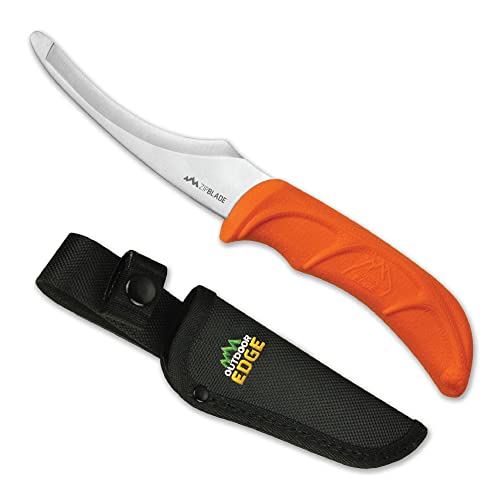
OUTDOOR EDGE Zip Blade 4.0″ Fixed Blade Gutting Knife
More On The Choices That Made The List
Most fixed blades ask you to drag a sharpener along on every trip, then spend the first ten minutes of every morning re-honing an edge. The OUTDOOR EDGE RazorPro L flips that script by using disposable single-edge scalpel-style blades that slide in and out in seconds. The bright orange TPR (thermoplastic rubber) handle is heavily textured, so even with wet or bloody hands the grip stays locked in during the messy moments around the brisket and gut pile.
For solo hunters who run a camp deep in the woods and don’t want to fuss with a strop or stone, the swap-and-go design removes a whole category of hassle. You can dress two or three deer a day and never touch a sharpener. The trade-off is that you’re buying consumable blades long-term, so the up-front savings vs. a premium fixed blade shrink over years of use.
Strong Points
- Thirty replacement blades ship in the box, enough to handle a full season out of the gate
- Orange TPR handle is easy to spot if you set it down in leaves or grass
- Blades swap in seconds, which matters most when the temperature drops and you don’t want to sit still sharpening
- Includes a belt holster for hands-free carry on the harness
Things To Consider
- Replacement blade supply becomes a recurring cost over multiple seasons
- Disposable blades lack the rigidity of a solid fixed blade for heavy prying around joints
Key Specs
Who It Suits Best
Solo whitetail hunters who want a no-fuss blade they can swap in the field and who already know they’ll be replacing blades each season.
Where Another Pick Suits Better
Hunters who prefer one knife they can maintain for a decade should look at the OUTDOOR EDGE Zip Blade reviewed below, which is a solid fixed blade built to be sharpened, not swapped.
The Palmetto Wood Shop pocket folder leans hard into the gift-and-carry side of the hunting world. Closed length is 4.5 inches and weight sits around 5 ounces, so it rides comfortably in a jeans pocket or clipped to a belt. The big draw is the customization: 30 optional icons and up to two lines of laser engraving that won’t fade, which is why this one shows up in groomsmen packs and father-of-the-bride gift boxes as often as it does in hunting kits.
Beyond the personalization, the handle hides a glass breaker, a rope cutter, and a small can opener, so it works as a multi-tool on the trail as much as a knife. Realistically, you wouldn’t use this as your primary dressing blade on a big deer, but as a backup that lives in your pack year-round, it pulls more weight than a standard folder.
Real Benefits
- Custom engraving makes it a memorable gift for hunting partners and family
- Glass breaker and rope cutter add real utility in a vehicle emergency kit
- Removable pocket clip lets you switch between belt and pocket carry easily
Honest Caveats
- Not built for heavy skinning duty; the blade is shorter and thinner than dedicated dressing knives
- Folding mechanism requires cleaning after bloody use to keep debris out of the pivot
Right Fit For
Hunters who want a personalized everyday folder with rescue features and only occasionally need it for small game or backup dressing work.
Consider Something Else When
Hunters processing a full deer alone should reach for the Kalkal 8-Piece Kit further down this list, which includes purpose-built skinning and gutting blades.
Buying knives one at a time means learning which blade you actually needed only after you’re elbow-deep in a deer. The Kalkal 8-piece set sidesteps that by shipping the full processing lineup: a butcher knife, gut hook skinner, boning knife, skinning knife, bone saw, axe, and bone spreader, plus a sharpener and cleaning gloves. Full-tang construction (the blade steel runs the entire length of the handle) keeps each piece solid under lateral pressure, which is the kind of strength you want when popping a sternum or splitting pelvic cartilage.
For a new hunter building a complete kit in one purchase, this covers every task from field dressing through quartering and packing out. Veterans will likely cherry-pick two or three favorites and leave the rest in the roll, but even then, the per-knife cost lands well below what you’d pay buying each blade separately.
Where It Delivers
- Eight tools cover dressing, skinning, deboning, and bone work in a single purchase
- Full-tang handles give the blades backbone for heavier cuts
- Included sharpener and gloves save a separate trip to the sporting goods store
- Good gift option for new hunters who don’t yet own specialty blades
Practical Considerations
- Carrying eight tools in the field is impractical; expect to choose two or three per trip
- Quality control varies more on multi-piece sets than on single-knife purchases
- Storage case bulk makes it a truck-camp knife set rather than a backcountry one
Made For
New and intermediate hunters outfitting a first processing kit, plus family members or hunting clubs buying a shared set for camp use.
Look Elsewhere When
Backcountry hunters who need to keep their pack weight down will find the OUTDOOR EDGE RazorPro L or Zip Blade more practical for a one-blade kit.
The second Palmetto Wood Shop folder on the list is the more field-oriented of the two, with a 3.25-inch partially serrated blade and an assisted-open mechanism that gets the blade out fast when you need it one-handed. Closed length matches its sibling at 4.5 inches, and a black handle with wood accent gives it a more traditional hunting aesthetic than the EDC version. Stainless steel holds an edge well, and the partial serrations help chew through rope or fibrous material in camp.
This is the knife for the truck console, the pack, and the camp kitchen rather than the primary dressing blade. The combination of personalization and practical assisted-open deployment makes it a popular Father’s Day or retirement gift that actually gets used. Hunters with a separate fixed-blade setup will appreciate it as a secondary tool.
Where It Excels
- Assisted-open design deploys the blade one-handed, useful when the other hand is occupied
- Personalized engraving creates a meaningful keepsake for gift-giving
- Compact 4.5-inch closed profile rides well in front pants pockets
Trade Offs
- Smaller blade isn’t ideal for caping or larger skinning work
- Assisted-opening mechanisms benefit from occasional cleaning to keep springs snappy
Best Suited To
Camp and truck carry for hunters who already own a dedicated fixed-blade dressing knife and want a personalized backup or daily folder.
A Better Fit Elsewhere
Hunters who want one tool to handle the entire field-to-freezer workflow should skip this and grab the Kalkal 8-Piece Kit instead, which has purpose-built blades for every step.
Most hunting knives are generalists trying to do everything reasonably well. The OUTDOOR EDGE Zip Blade is a specialist, built specifically to slide under the hide without slicing hair or nicking gut sacs. The 4-inch 420J2 stainless blade (a mid-grade stainless that balances corrosion resistance with easy field sharpening) is heat-treated for flexibility plus edge retention, and the upswept “zipper” geometry gives the tip a curved entry angle that follows the body cavity cleanly. Total length is 8.8 inches with the rubberized blaze orange TPR handle attached.
Guides and processors who handle dozens of deer a season tend to keep one of these in the roll. The included black nylon sheath rides well on a belt, and the orange handle is easy to spot in low light. For the hunter who wants one blade refined for the gutting step rather than a do-it-all compromise, this is the cleanest tool on the list.
Practical Pluses
- Curved gutting geometry reduces the risk of puncturing internal organs
- Heat-treated blade balances flexibility with edge retention for repeated dressing work
- Compact 4-inch blade is easier to control than larger general-purpose hunters
- Orange handle improves visibility if the knife is set down during field work
Less Ideal Details
- Specialized shape handles gutting well but is less versatile for skinning or caping
- Sheath retention can loosen with heavy use; owners often check the snap before trips
Quick Facts
Whose Shelf It Belongs On
Whitetail hunters who process multiple animals each season and want a dedicated gutting blade to pair with a separate skinner.
Swap It Out When
Hunters who want a single blade for both skinning and gutting will get more mileage from the OUTDOOR EDGE RazorPro L reviewed earlier, which handles the full workflow with replaceable blades.
What Matters When Shopping For Deer Field Dressing Knives
Blade Style And Geometry
Fixed blades dominate the dressing world because they clean easily and offer the rigidity needed for the sternum and pelvic work. Gut hooks and upswept tip designs like the OUTDOOR EDGE Zip Blade excel at opening body cavities without nicking organs, while drop-point blades are more general-purpose for skinning and caping. Folding knives are convenient but tougher to clean thoroughly, which is why most guides run a folder as a backup, not a primary tool.
Handle Grip And Visibility
Cold weather, blood, and water all conspire against your grip. Rubberized TPR handles with deep texturing stay locked in even when conditions are sloppy. Bright orange handles are worth their weight in the field because a dropped knife in brown leaves or under a truck seat is a real safety issue. The fixed blades in this list all use that high-visibility approach for good reason.
Maintenance And Sharpening
A knife that can’t be sharpened in camp is a knife that becomes useless by the third deer. Solid fixed blades reward a few strokes on a puck stone or strop. Replaceable-blade systems like the RazorPro L skip sharpening entirely but trade that convenience for an ongoing blade supply. Either approach works, but know which camp you’re in before buying.
Size And Carry Weight
Backcountry hunters running a pack should keep blade count low and weight per knife light. A 4-inch fixed blade covers most tasks without adding bulk, while an 8-piece kit makes more sense around a truck or base camp. The sheath or carry system matters too: a knife that doesn’t ride securely on a belt or pack is a knife you’ll forget or lose.
Before You Pull The Trigger
Where Shoppers Go Wrong
Picking a knife by blade length alone is a common trap. A 7-inch skinner sounds capable but gets awkward when you’re working inside a body cavity. The other mistake is buying a beautiful showpiece blade and never learning to sharpen it; a basic knife that’s kept sharp outperforms a fancy one that’s neglected. Match the knife to your actual workflow, not the image in your head.
The Case For Spending Up
Premium fixed blades earn their higher cost with better steel, full-tang construction, and handle ergonomics that reduce hand fatigue across multiple animals. For hunters who process several deer a year, the upgrade pays off in fewer nicked gut sacs and longer service life. For someone who shoots one deer every few seasons, a mid-range option covers the work just fine, and the extra dollars buy more replacement blades or a quality sharpener instead.
Frequently Asked Questions
What blade length works best for deer field dressing?
Most experienced hunters settle on a 3.5 to 4.5 inch blade for the main dressing work, since shorter blades give more control inside the cavity. Larger skinning and caping blades are added as a second tool rather than a substitute.
How often should you sharpen a dressing knife in the field?
A quick strop or honing stroke every one or two deer keeps the edge working cleanly. If you’re dragging the blade instead of letting it glide, it’s past time. Replaceable-blade systems like the OUTDOOR EDGE RazorPro L skip the question entirely.
Can a folding knife handle deer field dressing?
It can, especially for smaller animals or backup duty, but cleaning a folder after bloody work is more involved and the pivot is a weak point under heavy prying. Most hunters carry a folder as a secondary tool alongside a fixed blade.
How do you clean and store knives after field work?
Wash with warm soapy water, dry thoroughly, and apply a light coat of food-safe mineral oil before storage. Sheaths should be allowed to dry completely to prevent moisture from rusting the blade, and knives stored long-term benefit from a paper-towel wrap inside the sheath to absorb any residual moisture.
Is an 8-piece set worth it for a new hunter?
For someone building a kit from scratch, a set like the Kalkal 8-piece covers every processing step in one purchase and usually costs less than buying four or five blades separately. The trade-off is bulk; you’ll carry two or three pieces into the field and leave the rest at camp.