
Turning a successful hunt into clean, freezer-ready meat depends almost entirely on the edge in your hand. A blunt or poorly shaped blade tears hide, drags through sinew, and turns a two-hour job into a long afternoon. The right setup, whether that means a single versatile fixed blade, a replaceable-blade system, or a full dressing kit, changes everything.
Most hunters find their needs fall into one of three buckets: a do-it-all skinner they can carry all season, a specialty boning knife for breaking down quarters at home, or a complete kit that covers every step from field to table. This roundup walks through all three, with options that range from a heritage American fixed blade to all-in-one processor sets built for a full deer in one go.
A Side-By-Side Look

Buck Knives 119 Special Hunting Knife with Phenolic Handle

OUTDOOR EDGE RazorSafe 5.0″ Replacement Boning/Fillet Blades
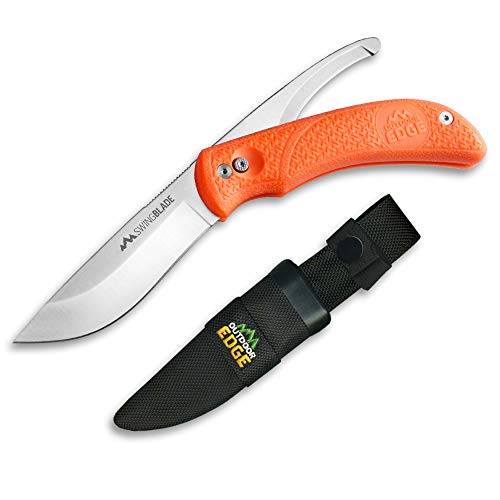
Outdoor Edge Swingblaze Double Blade Hunting Knife (Blaze Orange)

Victorinox Fibrox 6-In Curved Boning & Fillet Knife

OUTDOOR EDGE RazorPro L Replaceable Blade Hunting Knife

KNINE OUTDOORS 8-Piece Deer Knife Field Dressing Kit
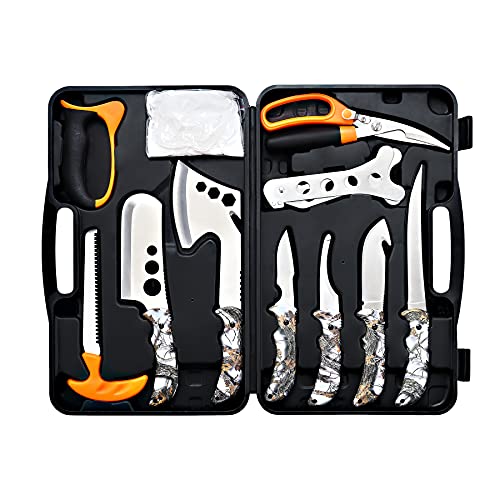
KNINE OUTDOORS 12-Piece Portable Butcher Game Processor Set

KNINE OUTDOORS 12-Piece Field Dressing Kit (Yellow Camo)

Kalkal 8-Piece Full Tang Hunting Knife Set
The Details Behind The Selections
The Buck 119 is the kind of knife that ends up in family hunting packs for decades. It carries a phenolic handle, which is a dense resin-and-cloth composite that shrugs off moisture and cold hands, and pairs it with a clip-point blade shaped for the long opening cuts hunters tend to make first. At 7.5 ounces it has real heft, so it feels planted in the grip rather than skittish when blood makes things slick.
For solo hunters running one deer a season, the 119 covers nearly every cut from skinning the cape to caping out a shoulder mount. It’s a fixed blade, so you commit to a sheath on the belt, but the trade-off is strength and easy cleaning. Compared with the modular systems lower on this list, the 119 asks you to keep it sharp and dry rather than swap a fresh edge in.
Positive Points
- Phenolic handle holds grip in cold, wet, or bloody conditions
- Clip-point blade geometry handles long skinning cuts without wandering
- 7.5 oz weight gives confident feedback during heavy pressure cuts
- Fixed-blade format means easy hosing-off cleanup at the truck
- Long-standing American build with widely available factory sharpening
Trade Offs To Consider
- Single blade means you must maintain the edge yourself in the field
- Heavier than replaceable-blade systems, which can tire out long processing days
Key Product Details
Who It Suits Best
Solo hunters who want one reliable, all-season fixed blade and don’t mind keeping a strop or stone in the truck.
Where Another Pick Suits Better
Hunters who dread field sharpening should reach for the OUTDOOR EDGE RazorPro L, which ships with thirty replacement blades.
This isn’t a knife. It’s the refill pack that keeps a RazorSafe system running, and for hunters who already own the matching handle, it solves the single biggest pain point of replaceable-blade knives: running out of edges mid-season. Each 5.0″ boning and fillet blade is scalpel-sharp out of the box, and the included storage box keeps used blades from rattling around in your pack.
The trade-off is that you must match the blade to the right handle, since these won’t fit every folder. Hunters processing multiple deer per trip will appreciate the convenience, while someone who just bought their first knife should look at the standalone Buck 119 or a full kit instead.
Useful Highlights
- Factory-sharp edge means no stropping between animals
- 5.0″ length handles larger quarters and rib work efficiently
- Hard plastic case keeps spare blades organized in a pack
- Six-pack sizing covers a multi-day hunt without resupply
Worth Noting
- Requires a compatible RazorSafe or RazorMax handle, sold separately
- Used blades must be disposed of carefully, which adds a small chore at cleanup
Who Will Love This
Hunters already running an OUTDOOR EDGE folding handle who want a season’s worth of fresh boning edges on hand.
Look Elsewhere When
You don’t yet own a RazorSafe handle, in which case the OUTDOOR EDGE RazorPro L is the all-in-one starting point.
The Swingblaze solves a specific problem: switching from skinning to gutting without setting one knife down and picking up another. A push-button rotation flips the blade between a 3.6″ skinning profile and a 3.2″ gutting profile, which keeps you moving when the light is fading and your hands are cold. The blaze-orange rubberized TPR handle is easy to spot if you set the knife down in leaves.
The AUS-8 stainless steel holds an edge well, and the nylon sheath rides comfortably on a belt. Compared with the Buck 119’s single-purpose approach, the Swingblaze trades some old-school simplicity for genuine workflow speed. Hunters who like the modular OUTDOOR EDGE style but want something built around field dressing rather than a folding handle will land here naturally.
Real-World Strengths
- Two purpose-built blades in one tool reduces handoffs mid-dressing
- AUS-8 stainless steel balances edge retention with easy resharpening
- TPR handle stays grippy when wet or blood-slicked
- High-visibility orange reduces loss in low light
Points To Note
- Rotating mechanism adds small parts that can loosen with heavy use
- Fixed blade design still requires manual sharpening over time
Made For
Solo hunters who prefer to dress deer alone and want a single tool that handles both skinning and gutting cuts.
A Better Fit Elsewhere
If you’d rather skip sharpening entirely, step up to the OUTDOOR EDGE RazorPro L’s replaceable-blade system.
The Victorinox Fibrox 6″ is the knife most processors reach for once the deer is hanging in the garage. The curved, flexible blade follows bone contours closely, which means cleaner deboning and less wasted meat around the shoulders and hindquarters. The signature Fibrox handle is textured, non-slip, and comfortable through long trimming sessions where a hunting grip would tire your hand out.
This is a kitchen-proven tool, not a hunting knife, and that distinction matters. Hunters needing something to carry in the field should pick the Buck 119 or the Swingblaze. Home processors breaking down quarters at a butcher block will appreciate how light and agile the Fibrox feels compared to heavier outdoor blades.
Notable Gains
- Curved flexible blade hugs bone for tight deboning cuts
- Fibrox handle reduces wrist fatigue over long trimming sessions
- Lightweight design improves precision on detail work
- Widely used in commercial kitchens, so the geometry is proven
Potential Drawbacks
- Not designed for heavy field-dressing pressure or prying tasks
- Flexibility can feel vague to hunters used to stiffer outdoor blades
Right Fit For
Home processors and small-shop butchers breaking down hanging quarters on a block or table.
Reach For A Different Pick When
You need one knife for the truck and the field, in which case the Buck 119 covers both jobs.
Sharpening in the field is a skill, and not everyone wants to learn it. The RazorPro L sidesteps the whole question by shipping with thirty replaceable stainless steel blades, each scalpel-sharp from the package. When a blade dulls or contacts bone, you pop in a fresh one and keep moving. For hunters processing several deer in a single weekend, that convenience adds up fast.
The TPR handle is the same slip-resistant orange found on the Swingblaze, and the included belt holster rides securely during long walks. Unlike the Buck 119’s heritage fixed-blade simplicity, the RazorPro L is a system, and you’ll want to keep spare blades and a used-blade container in your pack. Hunters who already carry a sharpener will find this redundant; hunters who don’t will wonder why they waited.
Noteworthy Benefits
- Thirty blades included covers a full season for most hunters
- Replaceable design eliminates field sharpening entirely
- Non-slip TPR handle performs well in wet or cold conditions
- Belt holster keeps the knife accessible during long stalks
Factors To Consider
- Replacement blades are a recurring cost once the included thirty run out
- Used blades require careful disposal to keep packs and trash safe
- Less heirloom appeal than a heritage fixed blade like the Buck 119
Feature Snapshot
Best Suited To
Hunters who process multiple deer per season and would rather swap a blade than stop to sharpen.
Skip It When
You’re loyal to traditional fixed blades and want a single tool that lasts decades, in which case the Buck 119 is the better fit.
The 8-piece KNINE OUTDOORS kit is the kind of bundle that takes the guesswork out of a first season. It includes a 9.5″ gut-hook skinner, an 8.5″ caping knife, an 8.5″ bone saw, and a two-step sharpener, which together cover most of what a new hunter actually needs in the field. The red-maple camo handles look the part and provide a non-slip grip during messy work.
The 7Cr17MoV steel is a mid-grade stainless that holds an edge reasonably well for the price point. Compared with the larger 12-piece kits further down, this set trims out specialty tools and keeps weight down for younger or newer hunters. Experienced processors may find the steel a step behind the Buck 119’s pedigree, but beginners will appreciate having everything in one bag.
Standout Benefits
- Eight tools cover the core dressing and breaking-down workflow
- Included sharpener keeps edges workable without buying extras
- Yellow or red camo handles match typical hunting aesthetics
- Balanced handle and blade weight for confident control
Things To Consider
- Mid-grade steel requires more frequent sharpening than premium options
- Fewer specialty blades than the 12-piece kits for advanced processors
Perfect Match For
First-season hunters who want a complete starter bundle without piecing tools together individually.
Swap It Out When
You already process multiple deer and want specialty tools like a butcher axe and ribcage spreader, in which case the KNINE OUTDOORS 12-piece set is the upgrade.
This 12-piece kit is the closest thing on the list to an entire processing station in a duffel. It ships with a 12″ boning knife, gut-hook skinner, hawkbill blade, caping knife, gut-hook butcher axe, skinning cleaver, bone saw, ribcage spreader, game shear, portable cutting board, sharpeners, and cleaning gloves. Hunters running a family or crew through multiple deer in a weekend will use almost every tool at some point.
The black-and-blue camo handles are visually distinct from the red-maple kit’s look, and the ergonomic grip pattern stays secure even when conditions turn sloppy. Compared with the 8-piece version, this adds serious tools like the ribcage spreader and butcher axe that meaningfully speed up quartering. The honest read is that beginners may not touch half the kit on day one, but experienced processors will.
The Helpful Details
- Twelve specialized tools cover every step from field to table
- Portable cutting board adds a clean work surface away from home
- Ribcage spreader and butcher axe speed up heavy breakdown
- Cleaning gloves included for safer handling of sharp tools
Points To Keep In Mind
- Larger kit adds real weight and pack volume compared to smaller sets
- Some tools overlap in function, which can feel redundant for solo hunters
Feature Card
Who Should Grab It
Family processors and group processors who want specialty tools for quartering, splitting, and boning in one bundle.
Not Your Match When
You’re a solo hunter chasing one deer per season, in which case the simpler KNINE OUTDOORS 8-piece kit is plenty.
Functionally, this 12-piece kit mirrors the black-and-blue version above: same tool count, same workflow coverage, same portable cutting board and sharpeners. The difference is purely cosmetic, with yellow camo handles instead of black-and-blue. For hunters who prefer a high-visibility aesthetic or already own yellow-themed gear, this colorway matches without compromise.
Yellow handles also stay easier to spot in tall grass or low light, which matters when you’re setting a knife down to drag a deer. Compared with the black-and-blue sibling, the steel, blade shapes, and included accessories are identical, so the choice comes down to look and visibility preference.
Strengths Worth Knowing
- Yellow handles improve visibility in field conditions
- Twelve tools cover full processing from dressing to wrapping
- Ergonomic grip pattern keeps hands secure when wet
- Sharpener and cleaning gloves included
Honest Caveats
- Larger kit may be more than casual hunters realistically use
- Color choice is a matter of taste, not a functional difference from the black-and-blue kit
Built With In Mind
Hunters who want the full 12-piece toolset in a high-visibility colorway that stands out in the field.
Consider Something Else When
You prefer darker gear, in which case the KNINE OUTDOORS 12-piece black-and-blue set offers the same tool load.
The Kalkal 8-piece leans into the heavier end of the kit category. Each tool uses full-tang construction, meaning the steel runs the entire length of the handle rather than just being glued into a plastic or wood grip. That design adds weight but pays off in durability, especially when you’re prying through ribs or working through tough hide.
The kit covers skinning, gut-hook, boning, bone sawing, and a small axe for splitting, plus a bone spreader and cleaning gloves. Camp-based processors who set up at a cleaning station and work methodically through deer will appreciate the planted feel. Compared with the lighter 8-piece KNINE kit, this set runs heavier in hand, which is a benefit for chopping cuts and a trade-off for long packing days.
Good Reasons To Consider
- Full-tang construction adds durability under heavy pressure cuts
- Includes axe and bone saw for full deer breakdown
- Bone spreader speeds up cavity work
- Cleaning gloves included for safer handling
Practical Considerations
- Heavier than comparable kits, which can tire out long field walks
- Larger tool count may be overkill for single-deer hunters
Whose Shelf It Belongs On
Camp-based processors who work at a fixed station and want heavy-duty, full-tang tools for tough breakdown work.
Another Choice May Suit
Backcountry hunters who need to keep weight low should look at the lighter KNINE OUTDOORS 8-piece kit instead.
What To Weigh Before Picking A Deer Processing Knife
Start with the workflow question. Field dressing a deer in low light demands a high-visibility, slip-resistant handle that stays grippy when blood is present, so the blaze-orange TPR handles on the OUTDOOR EDGE Swingblaze and RazorPro L make a real safety difference. Home processors working at a butcher block prioritize blade geometry and weight over visibility, which is where a flexible boning knife like the Victorinox Fibrox earns its place.
Blade steel matters, but not as much as maintenance habits. 7Cr17MoV in the KNINE kits and AUS-8 in the Swingblaze hold working edges through a deer, and a strop in the truck extends that further. Hunters who refuse to sharpen should default to the replaceable-blade systems, since field dulling is the most common reason processing slows down.
Kit size is the next filter. Solo hunters running one deer a year don’t need twelve tools, and the extra weight becomes a real burden on long stalks. Crews and family processors who want to break down multiple deer in a single weekend will use every tool in the 12-piece kits, from the ribcage spreader to the butcher axe.
Carry style rounds out the decision. Fixed-blade hunters value belt sheath security and quick draw, while replaceable-blade owners trade some heritage feel for convenience. Match the tool to the season, not the other way around.
Key Considerations Across These Picks
Common Shopping Slip Ups
The most common mistake is buying a kit for tools you’ll never actually use. Half the blades in a 12-piece set sit untouched by solo hunters, and the weight becomes dead cargo. Conversely, buying a single fixed blade and expecting it to debone quarters efficiently leads to fatigue and wasted meat, since dedicated boning knives like the Victorinox Fibrox are designed for exactly that slow, detail work. Match the kit size to your realistic deer count per season.
Another trap is ignoring handle material. Smooth wood or polished steel handles look handsome on a wall mount but turn dangerous when wet, which is exactly the condition field dressing creates. Rubberized TPR handles, textured Fibrox, or phenolic composites all stay planted when things get messy, and that grip security is what separates a clean cut from a slip.
Where The Extra Money Goes
Higher-tier kits in this category earn their cost through two upgrades: better steel and better ergonomics. Premium stainless holds an edge through multiple deer without intermediate sharpening, and contoured handles reduce hand fatigue over long sessions. Specialty tools like ribcage spreaders and butcher axes also add real workflow speed once you process more than a couple of deer per year.
The honest read is that the upgrade only pays off for hunters who process multiple animals each season. Single-deer hunters will struggle to feel the difference between a budget kit and a premium one, so starting with a focused 8-piece set often makes more sense than chasing the most expensive bundle.
Frequently Asked Questions
What knife do most processors use to break down a deer?
Most experienced processors carry at least two knives: a fixed blade for skinning and gutting in the field, and a flexible boning knife like the Victorinox Fibrox for the detailed work at home. Using one knife for both jobs usually means compromising on whichever task you do less often.
Are replaceable blade knives good for deer processing?
Replaceable blade systems like the OUTDOOR EDGE RazorPro L work very well for hunters who don’t want to maintain a sharp edge in the field. The trade-off is ongoing replacement blade costs and a slightly different feel from a traditional fixed blade.
What is a gut-hook blade used for?
A gut-hook is a sharpened hook near the tip of the blade used to open the hide along the belly without slicing into the gut cavity. It speeds up the field-dressing opening cut considerably once you’ve practiced the angle.
How many knives do you actually need to process a deer?
For a single deer, three tools cover everything: a skinner or hunting fixed blade, a boning knife, and a bone saw. Larger kits help when processing multiple deer in one session or working at a remote cleaning station.
Do I need to sharpen deer processing knives after every use?
A quick strop or hone after each animal extends working time significantly, and a full sharpening every few deer keeps edges performing. Replaceable blade systems skip sharpening entirely by swapping in a fresh edge instead.