
A dove field at first light tests your gear as much as your shooting. Shells pile up fast, your hands stay busy, and a bouncing bag full of birds can throw off your whole rhythm if it hangs wrong. The right belt setup keeps shells accessible, holds birds without smothering them, and stays out of the way when you swing on a fast crosser.
Across seven picks below, you will find shell pouches for trap and skeet, full game belts that carry birds plus water, and a couple of safety-focused add-ons for hunters who move into rougher country or climb into stands. Each one is sized to a real hunting scenario, so you can match the gear to the way you actually hunt.
How The Shortlist Stacks Up
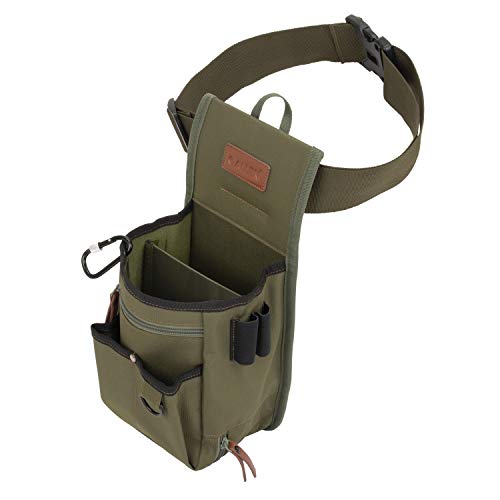
Allen Company Triumph Rip-Stop Shotgun Shell Holder Bag

HUNTARMOR Hunting Dove Belt with Game Pouch

HUNTARMOR Snake Gaiters Leg Guards
UIIHUNT Dove Hunting Belt with Camo Pouches

DynoGoods Dove Field and Game Belt Camo

HUNTARMOR EVA Shin Guards Snake Gaiters

HUNTARMOR Tree Stand Safety Harness
More On The Choices That Made The List
The Allen Company Triumph is built for shooters who burn a lot of shells in a short window, which describes most trap and skeet sessions to a tee. The two-compartment layout keeps live rounds separate from empties, so you are not digging through spent hulls when the next bird breaks.
It rides on a 52-inch waist belt that fits most adult frames without adjustment headaches, and the rip-stop fabric helps shrug off the small tears that come from sliding shells in and out hundreds of times. For clay shooters, this matters more than a fancy game pouch, since birds are not in play and pure shell capacity wins the day.
What Pays Off
- Dual-compartment shell storage keeps live and spent rounds apart, speeding up reloads on the line.
- Rip-stop fabric resists abrasion from constant shell handling, which extends service life on a busy range.
- Side shell loops give you quick access to extra rounds or choke tubes between stations.
- The 52-inch belt fits most adults comfortably, layered over light clothing or a vest.
Things To Consider
- Without a game pouch, this bag is not suited for hunters carrying birds in the field.
- Owners commonly report the belt runs warm in hot weather since it sits directly against the waist.
Who It Suits Best
Trap, skeet, and sporting clays shooters who run high round counts and want fast reloads without a bulky vest.
Where Another Pick Suits Better
Hunters who also want to carry birds should look at the HUNTARMOR Hunting Dove Belt instead, which adds a game pouch and water bottle carrier.
The HUNTARMOR Hunting Dove Belt is the pick for hunters who want one belt that handles shells, water, and birds at the same time. Where the Allen Triumph stays focused on the range, this one moves into the field with a full kit strapped to your waist.
The build uses 1000D fabric with a waterproof treatment, which is a noticeable upgrade over standard canvas when you are kneeling in dew-soaked grass or pushing through brush. Two large shell pockets, a game pouch, and a water bottle carrier can all be detached, so you can strip the belt down for a quick walk to the truck without juggling gear.
A Few Highlights
- Waterproof 1000D fabric holds up to wet grass and thorny cover far better than thin canvas.
- Modular design lets you remove the shell, game, or water pouches for a lighter carry on shorter walks.
- The integrated water bottle carrier keeps hydration in reach without a separate pack.
Worth Noting
- With all three pouches attached, the belt gets noticeably heavy once you stack a limit of birds.
- Waterproof coatings can trap heat against the body during midday hunts in southern climates.
Key Product Details
Right Fit For
Full-day dove hunters in mixed terrain who want shells, birds, and water on a single belt without a separate backpack.
Swap It Out When
Walk-in hunters who want a lighter, camo-forward setup should consider the UIIHUNT Dove Hunting Belt, which keeps the modular pouches in a more streamlined package.
Snake gaiters are not a belt in the traditional sense, but they belong on a dove hunting gear list once you start hunting brushy draws and creek bottoms. The HUNTARMOR Snake Gaiters wrap polycarbonate panels around the lower leg to block fangs, thorns, and cactus needles that share habitat with mourning doves.
Compared to the HUNTARMOR Hunting Dove Belt above, these gaiters solve a different problem: lower-leg protection when you cannot see the ground. The 13-panel layout flexes with your stride, so you are not fighting stiff chaps with every step across uneven terrain.
The Helpful Details
- 13 polycarbonate panels flex with your stride instead of cracking or binding at the ankle.
- Adjustable straps and buckles fit a wide range of calf sizes, including over hunting boots.
- Waterproof shell keeps morning dew and creek splash from soaking through to your socks.
Honest Caveats
- Polycarbonate adds noticeable weight versus plain fabric gaiters on long walks.
- Cleaning mud off the panel seams takes more effort than a smooth fabric chape.
Made For
Hunters working snake-prone country, brushy creek bottoms, and cactus-studded dove fields in the Southwest.
Look Elsewhere When
Hunters in open ag fields with short grass and no thorny cover can skip gaiters and direct their budget toward the UIIHUNT Dove Hunting Belt instead.
The UIIHUNT Dove Hunting Belt sits in the same category as the HUNTARMOR dove belt, but the layout leans into a more breathable, modular build. It comes with two large shell pockets, a game bag pocket, and a water bottle carrier, all finished in duck blind camouflage to blend into marsh and field edges.
Where the HUNTARMOR leans toward heavy-duty waterproofing, this belt is geared toward hunters who want airflow against the body and the ability to mix and match pouch placement. In most dove fields that means a cooler, drier feel across long sits near standing water.
Practical Pluses
- Duck blind camo helps the belt disappear against marsh backgrounds and field-edge vegetation.
- Breathable back panel reduces sweat buildup during midday sits in warm weather.
- Detachable pockets let you reconfigure the rig based on whether you are carrying birds or just shells.
Trade-Offs
- Lighter fabric does not match the abrasion resistance of heavier 1000D belts in thorny cover.
- Buckle hardware is functional but not as robust as some premium-priced alternatives.
Key Product Details
Whose Shelf It Belongs On
Walk-in hunters in warm-weather dove fields who value airflow, camo, and a configurable layout over maximum durability.
A Better Fit Elsewhere
Hunters pushing through dense brush or cactus should consider the HUNTARMOR Snake Gaiters for lower-leg protection instead.
The DynoGoods Dove, Field and Game Belt is the straightforward entry point on this list. It strips out extras like water bottle carriers and modular hardware, leaving two large shell pockets and a single game bag hanging off an adjustable strap.
The 29 to 60 inch adjustment range covers most waist sizes, and the strap will cinch smaller if you remove a pouch. That makes it a sensible pick for younger hunters, occasional trips, or anyone testing a belt setup before committing to a heavier rig like the HUNTARMOR above.
Real-World Strengths
- Wide 29 to 60 inch adjustment fits teens through large adults without modification.
- Simple two-pocket-plus-game-bag layout is easy to explain to a new hunter.
- Lightweight build does not wear you down on short afternoon hunts.
Room For Improvement
- Basic shell pocket capacity may feel tight on high-volume dove shoots in ag country.
- Owners commonly report the camo pattern fading faster than expected after repeated sun exposure.
Best Suited To
Casual weekend hunters, youth hunters, and anyone trying a game belt for the first time before investing in a heavier setup.
Another Choice May Suit
Hunters planning longer field sessions with full limits should consider the HUNTARMOR Hunting Dove Belt, which offers more capacity and tougher fabric.
The HUNTARMOR EVA Shin Guards take a different approach from the brand’s polycarbonate gaiters reviewed above. Instead of flexible panels, they use a semi-hard EVA resin shell (a dense foam-plastic composite) bonded to 1000D Oxford fabric for a stiffer, more impact-resistant barrier.
That makes them well-suited to desert dove fields with cactus, sharp rocks, and thorny mesquite. Where the polycarbonate gaiters flex more freely, the EVA shell absorbs kicks and scrapes without transmitting force to your shin.
Why It Works Well
- Semi-hard EVA shell absorbs impacts from rocks and brush without bruising the shin.
- Stab-resistant material offers solid protection against thorns and cactus needles.
- Oxford fabric backing breathes better than fully rubberized gaiters in dry heat.
Points To Keep In Mind
- Stiffer shell restricts ankle flex more than the polycarbonate panel design above.
- Bulkier profile can snag on low brush when pushing through dense cover.
Key Product Details
Perfect Match For
Desert and rough-country dove hunters who deal with cactus, sharp rocks, and thick brush on every walk in.
Reach For A Different Pick When
Hunters who need a more flexible gaiter for long hikes should consider the HUNTARMOR Snake Gaiters Leg Guards instead.
The HUNTARMOR Tree Stand Safety Harness rounds out the list because dove season overlaps with early bowhunting, and many hunters run both. This harness is padded, adjustable, and designed to strap you to the tree before your boots leave the platform.
It is not a shell belt or game bag, but it earns its place in the same gear kit as the belts above. If you already carry a dove belt into the field, adding a stand harness means one less thing to remember on the mornings you switch from birds to whitetails.
Positive Points
- Padded construction reduces pressure on hips and lower back during long sits.
- Adjustable straps fit over light early-season layers or heavier late-season clothing.
- Lightweight design is easy to pack alongside a dove belt in the same gear bag.
A Few Limitations
- Padding compresses over time on multi-season hunters who wear the harness weekly.
- Does not include a lineman-style climbing belt for hunters who hang stands without ladders.
Key Product Details
Who Should Grab It
Multi-season hunters who run both dove fields in the morning and elevated stands later in the fall.
Not Your Match When
Hunters sticking strictly to walk-in dove hunts without any tree stand time should focus their budget on a shell and game belt like the UIIHUNT Dove Hunting Belt instead.
What Matters Most When Picking Dove Hunting Belts
Match Capacity To Your Round Count
The fastest way to ruin a dove hunt is a belt that runs out of room before noon. Shell pockets sized for one full box of 12-gauge shells per side handle a typical morning without reloads, but volume hunts in big sunflower fields often push you well past that. Larger belt rigs like the HUNTARMOR Hunting Dove Belt absorb that overflow with room to spare.
Think about how many shells you actually cycle through in a sitting, then add a safety margin. A belt that feels slightly oversized on the first hunt tends to feel exactly right by the third.
Decide Between Modular And Fixed Layouts
Modular belts with detachable pouches are flexible, but every buckle is a potential failure point under field stress. Fixed-layout belts feel simpler and lighter, which suits shorter walks and casual trips. Your hunting style dictates which trade-off you prefer: flexibility on changing days, or simplicity on repeat setups.
Weight And Breathability On Long Sits
Belts sit against your lower back all morning, so material choice matters more than it seems. Heavy waterproof fabrics handle wet grass well but trap heat, while breathable camo-backed belts dry faster but scuff easier. Matching fabric to climate often matters more than matching it to brand.
Safety Gear Belongs In The Same Kit
Dove season opens before archery in many states, so hunters often run both a belt and a tree stand harness on the same morning. Choosing gear that packs together cleanly, like the HUNTARMOR harness paired with a compact shell belt, keeps the truck organized and the morning quick.
Key Considerations Across These Picks
Where Shoppers Go Wrong
Many first-time dove belt shoppers fixate on game bag size and forget shell pocket capacity, then spend the hunt reloading from a vest pocket. A better move is matching shell storage to the volume of shooting you actually do, and treating the game bag as the supporting feature.
Another common trap is buying the heaviest, most armored belt for a casual farm-pond dove shoot. A simpler belt like the DynoGoods handles light pressure without weighing you down, and a tougher rig makes more sense once you commit to longer, rougher fields.
When Paying More Pays Off
Higher-tier belts earn their cost through fabric weight, seam reinforcement, and modular hardware that holds up to repeated seasons. If you hunt doves five or more times a year, that durability adds up fast. For one or two outings a season, the extra cost rarely justifies itself over a budget-friendly option.
Frequently Asked Questions
How Do Dove Hunting Belts Differ From Regular Shell Belts?
Dove hunting belts combine shell storage with a game bag to carry harvested birds, while plain shell belts only hold ammunition. The combined setup is useful because it frees your hands for shooting and reloading on fast-flushing birds.
What Size Game Bag Do Most Dove Hunters Need?
A small game bag is fine for quick limit hunts, while a larger pouch is better for group hunts where multiple hunters share a single bag. Choose based on your typical harvest, and remember that birds take up more room than they look.
Are Snake Gaiters Necessary For Dove Hunting?
Gaiters are valuable when hunting brushy draws, cactus fields, or areas with rattlesnakes and copperheads. In open ag fields with short grass, they add bulk without much benefit.
Can Dove Belts Fit Over A Heavy Jacket?
Most adjustable dove belts fit over light to mid-weight clothing, but extra adjustment range helps in cold weather. Removing pouches can also free up strap length for layered outfits.
Do These Belts Work For Upland Bird Hunting Too?
Many dove belts double as pheasant and quail belts since the shell and game bag functions are similar. Heavy roosters can stress smaller belts, so check the construction before carrying big birds.