
A trail camera earns its place by doing one job reliably: showing you what’s happening in places you can’t stand watch all day. The eight models below cover that brief from different angles. Some send photos straight to your phone over cellular, some keep it simple with an SD card you swap on visits, and a few let you pull files from the tree line using a phone app over direct WiFi. Pick the format that fits how you hunt, watch wildlife, or guard property, and the rest follows.
A Side-By-Side Look
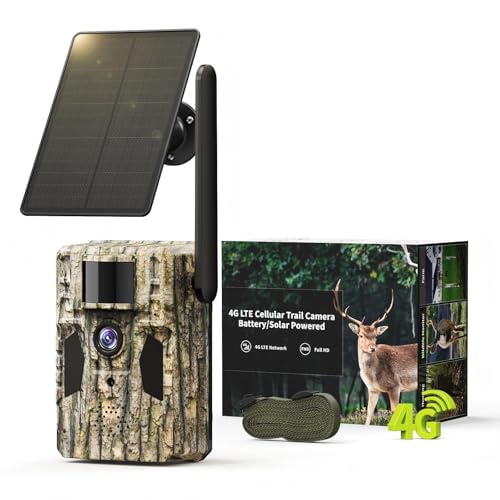
Zonetiger 4G LTE Cellular Trail Camera with 1-Year Free Data, Solar Powered 64MP 4K Game Camera

GardePro X66 Pro Cellular Trail Camera, Rechargeable Battery
SEHMUA 3rd 4G LTE Cellular Trail Cameras with 48MP Photo 2K Live Streaming
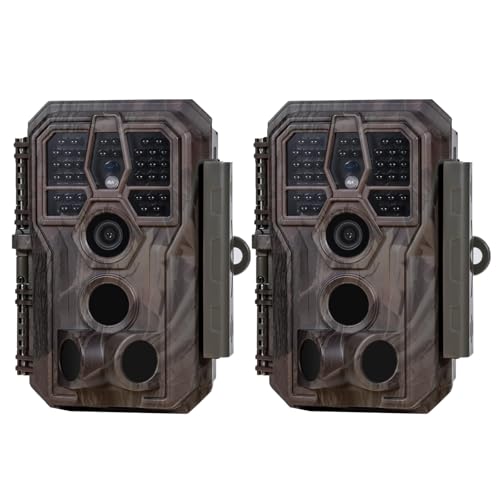
GardePro E5S 2-Pack Trail Camera, 64MP Photo & 1296P HD Video

Solar Trail Camera, 4G LTE Trail Cameras with Night Vision, 4K Live Video, 64MP Wildlife Game Camera
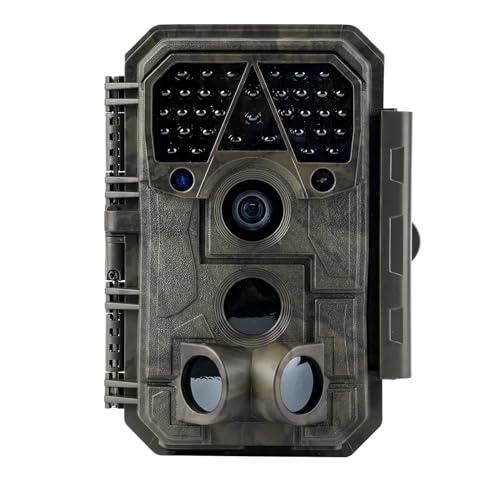
Meidase P70 Trail Camera, 64MP 1296p, No-Glow IR Night Vision, Motion Activated

Meidase P300 Pro WiFi Trail Camera, Dual-Antenna 165ft Range, 7800mAh Battery

Meidase P300 WiFi Trail Camera, Dual-Antenna 165ft Range
What Each Pick Brings To The Table
The Zonetiger sits at the top of this list because it tackles the two chores that wear down a trail camera fastest: keeping the battery alive and getting images out of the woods. A solar panel feeds the internal cell, so daily trigger counts don’t drain it overnight. The 4G LTE radio (cellular data connection, meaning it uses mobile phone networks rather than home internet) ships with a year of included photo data, which lets you check a food plot or gate from the cab of a truck instead of making the hike.
For anyone managing a far-flung lease or watching a remote cabin, that combination matters more than raw image size. The 64MP sensor and 4K video capture antler detail and movement patterns, while GPS tagging helps you keep track of multiple units across a property.
Where It Helps
- Solar panel stretches field time between manual charges, a real plus for cameras hung 20 feet up a post oak
- One year of free photo data lowers the first-year cost for new cellular users
- Auto network switching picks the strongest carrier signal in the area, useful near coverage borders
- GPS coordinates make it easier to locate a unit if it gets bumped by wildlife or wind
- App control means you can adjust sensitivity and check status without climbing the tree
Things To Consider
- The included plan covers photo transfers; live video viewing and video downloads need a paid add-on
- Solar panels need clear sky exposure, so dense canopy can shorten runtime between manual top-ups
- SIM activation depends on regional carrier coverage, which can be patchy in remote hunting parcels
Feature Snapshot
Who It Suits Best
Outfitters and landowners with multiple remote locations who want push alerts and minimal hands-on maintenance.
Look Elsewhere When
The Meidase P70 is a smarter call if you only scout within walking distance and don’t want to pay for cellular service.
GardePro built the X66 Pro for the person who’s already running two or three units and wants a sensible way to share data costs. The rechargeable, replaceable battery pack is the first thing most people notice: instead of fumbling with AAs in the dark, you swap a charged brick and keep moving.
The live view function and on-demand HD requests mean you can check the camera when something specific is happening, instead of waiting on a scheduled push. For folks running cameras on a schedule of trail rotations, that’s the difference between walking in blind and knowing what’s waiting.
What Helps Most
- Shared data plans let several cameras pull from one monthly bucket, lowering per-unit cost
- Replaceable battery pack saves time over loading eight individual AAs on each visit
- Live view gives quick visual confirmation of bait or feeder activity
- Monthly or annual plan options let you match spend to season length
Honest Caveats
- An active data subscription is mandatory even for basic photo uploads, so factor that into yearly cost
- Live view and HD requests consume data quickly, so light users may leave bandwidth unused
- Rechargeable packs need a charging routine; cold weather can cut effective capacity on long winter sits
Right Fit For
Hunters managing a small grid of cameras who like the option to peek at a scene without driving out.
A Better Fit Elsewhere
The Zonetiger 4G LTE Cellular Trail Camera with 1-Year Free Data is worth a look if you’d rather avoid a monthly bill during the first year.
The third-generation SEHMUA leans into live streaming, which is the feature most people don’t realize they want until they have it. Picture a kid watching a doe and fawn walk through a clearing in real time from a kitchen table. That’s the draw here.
Beyond the streaming novelty, the 48MP stills and 2K video give you solid reference footage. No-glow infrared at 940nm (a wavelength of light invisible to deer and other animals, so the camera doesn’t spook them) keeps the unit from announcing itself to wary bucks. For someone who treats scouting as entertainment, this camera earns its keep.
Where It Excels
- Live streaming over 4G is a genuine upgrade over scheduled photo pushes
- No-glow infrared is the right choice for security-minded placements
- 48MP images hold up to cropping when you want to zoom on a specific animal
- App-based settings changes let you tweak trigger sensitivity from home
Worth Noting
- Streaming chews through data and battery, so plan around a strong signal and a charged pack
- Monthly data plan adds an ongoing cost on top of the hardware
- 2K video is sharp but not as crisp as the 4K options in this list
Best Suited To
Wildlife watchers and family households who want to share sightings live with kids or friends.
Consider Something Else When
Pick the Zonetiger 4G LTE Cellular Trail Camera with 1-Year Free Data if you’d rather trade streaming for included data and a solar panel.
Most people start with one camera, then realize they need two. The GardePro E5S pack skips that second purchase by shipping a matched pair in the same box, both pulling from a non-cellular, non-WiFi design that just records to an SD card.
That stripped-down approach is a strength, not a weakness. Without a cellular radio or wireless transmitter drawing power, the E5S sips batteries compared to its connected cousins. For someone who already makes weekly rounds to check feeders and food plots, the simplicity is a relief.
Everyday Perks
- Two-camera setup covers a scrape line and a feeding site at the same time
- No monthly fees keep ownership costs predictable year over year
- Low power draw extends battery life well beyond connected cameras in the same conditions
- 64MP stills plus 1296P video produce usable scouting clips
Minor Gripes
- You’ll need to physically visit each camera to retrieve footage, which adds up over a large property
- No remote alerts mean longer gaps between sightings
- SD cards aren’t always included, so budget for storage separately
Who Should Grab It
Traditional hunters who already drive a route to check cameras and prefer offline reliability.
Where Another Pick Suits Better
Choose the Meidase P300 Pro WiFi Trail Camera if you want the option to pull files from your truck without climbing.
The Cadrali shares a solar-panel design with the Zonetiger at the top of this list, but swaps in 4K live video for the higher-stakes wildlife watcher. If you want to see birds of prey land on a perch or watch a coyote approach a bait pile from your living room, the 4K feed handles the suspense.
For a homestead with horses, a vineyard with deer pressure, or anyone watching predators on a remote ridge, the combination of solar charging, 4G LTE, and crisp streaming hits a sweet spot. The unit is waterproof and motion activated, so it stays put through storms without babysitting.
Advantages To Know
- 4K live feed over cellular is rare in this category and ideal for sharing real-time scenes
- Solar panel keeps the camera topped up through long stretches of warm weather
- Night vision delivers usable footage after dark for security and predator watching
- Remote access via app removes the need to physically visit the camera for setup tweaks
Room For Improvement
- 4K streaming consumes data fast, so a generous plan is a near-must
- Solar output dips in winter at northern latitudes, which may require occasional manual charging
- Higher ongoing cost than a non-cellular alternative like the GardePro E5S
Feature Snapshot
Made For
Homestead owners and outdoor enthusiasts who want a camera that streams wildlife in near-real time.
Not Your Match When
Skip toward the Meidase P300 WiFi Trail Camera if you prefer cheap, no-subscription scouting on a tight budget.
The Meidase P70 is what most people picture when they imagine a trail camera: a rugged box, no screen, no subscription, and a sensor that just keeps shooting. It’s also the easiest camera on this list to hand to a kid or first-time hunter because the basics are simple. Drop in an SD card, snap it to a tree, walk away.
The f/1.6 aperture lens (a wider opening that lets more light reach the sensor, improving low-light performance) and 100-foot no-glow night vision put this model ahead of older budget cameras in the same price neighborhood. You can run a property line or a backyard feeder without thinking about data plans or apps.
Well-Handled Touches
- 64MP stills paired with 1296P video give you a real scouting record at a modest price
- No-glow infrared keeps the camera invisible to deer and predators after dark
- Fast 0.1-second trigger speed reduces the chance of catching only an empty frame
- Wide-aperture lens sharpens low-light captures at dusk and dawn
Trade Offs
- No cellular or WiFi means you walk to the camera for every batch of files
- Battery life depends heavily on how busy the location is, with heavy traffic sites draining cells faster
- No live view means you can’t peek without a trip
Feature Snapshot
Who Will Love This
Beginners, weekend hunters, and anyone who wants a simple, dependable camera without subscriptions.
Skip It When
Pick the Meidase P300 WiFi Trail Camera if you want the convenience of pulling files from your phone within camera range.
The P300 Pro takes the standard P300 formula and adds two things most people ask for after their first season: a bigger battery and a memory card in the box. The 7800mAh pack means fewer trips up the tree, and the included 64GB industrial SD card (rated for constant read/write cycles, unlike consumer cards) skips the extra shopping step.
Direct WiFi via the Meidase app pairs your phone with the camera at the tree, no home router or cellular signal required. For a public-land hunter who can’t always get bars, that’s the right kind of connectivity. You walk up, open the app, and pull the files you want.
The Value In It
- 7800mAh battery handles long deployments in low-traffic spots
- Dual antennas extend reliable WiFi range up to about 165 feet in open conditions
- 64GB industrial SD card is included and ready to write
- 0.1-second trigger speed and 64MP stills match the rest of the Meidase lineup
Some Limits To Know
- Direct phone connection only, no home router or cellular compatibility
- WiFi range shrinks through thick brush or metal buildings, so test in your actual setup
- Larger battery adds a bit of weight to the mount
Feature Snapshot
Perfect Match For
Hunters on public land or in cellular dead zones who still want a quick way to grab files from the truck.
Swap It Out When
Pick the SEHMUA 3rd 4G LTE Cellular Trail Cameras with 48MP Photo 2K Live Streaming if remote push alerts matter more than local file pulls.
The original P300 is the lighter sibling of the Pro version above. Same dual-antenna WiFi, same fast trigger, same clean app pairing, but with a slimmer battery profile that suits shorter sets and lighter mounts.
For someone who’s still dialing in their camera placement, the P300 is forgiving. You can move it from one tree to another without worrying about extra bulk, and the 120-degree detection angle covers a wider slice of approach path than older narrow-beam units.
What Makes Sense
- 120-degree detection angle catches animals entering from the side, not just head-on
- 0.1-second trigger pairs well with high-traffic mineral licks or scrapes
- 100-foot no-glow night vision keeps the unit hidden from wary bucks
- WiFi pairing over direct connection avoids monthly fees entirely
Points To Note
- Smaller battery than the Pro version, so expect more frequent recharges on busy sites
- Direct phone pairing means you still need to walk within range for every file pull
- No cellular option if you later decide you want push alerts
Feature Snapshot
Built With In Mind
DIY camera placement tinkerers who like moving units around and don’t want to overpay for features they won’t use.
Where A Sibling Pick Shines
Pick the Meidase P70 when you want an even simpler offline camera and don’t need the WiFi pull at all.
Buying Guide: What Separates One Trail Camera From The Next
Picking a trail camera comes down to three honest questions: how will you get the photos, how long do you need it to run unattended, and how much image detail do you actually use. Answer those honestly and the right pick snaps into focus.
Connectivity Choices That Match Your Routine
Cellular cameras send files over 4G LTE networks to your phone, so you check a feed without leaving the road. They’re convenient for remote properties but require an ongoing data plan. WiFi models like the Meidase P300 Pro pair directly with your phone at the tree, no subscription, no cellular signal needed. Non-connected cameras like the Meidase P70 just record to an SD card you swap on visits. There’s nothing wrong with that approach if you already make weekly rounds.
Trigger Speed And Recovery Time
Trigger speed (the delay between an animal entering the detection zone and the camera snapping a photo) is the spec that decides whether you catch a deer or a tail disappearing. 0.1-second triggers are fast enough for almost any game. Recovery time (how quickly the camera is ready for the next shot) matters on busy scrapes where multiple animals pass in quick succession. Side sensors add a wider detection angle and help catch movement that’s not perfectly centered.
Image Quality And Night Vision
Megapixel counts above 40MP are useful for cropping or for reading ear tags at distance, but more pixels alone don’t make a better camera. Pair high resolution with a fast lens (a wide f/1.6 aperture lets in more light) and you get sharper dusk and dawn photos. No-glow infrared LEDs (light-emitting diodes that produce illumination invisible to animals) keep the camera hidden from wary bucks and are worth the small premium for security-minded placements.
Key Considerations Across These Picks
Common Shopping Slip Ups
First-time buyers often chase megapixel counts while overlooking trigger speed, then wonder why their nighttime shots miss the action. Another common trap is buying a cellular camera for a property with no signal; the hardware works fine, but uploads stall. Make sure the location gets bars before paying for a connected model, and match the SD card class (a speed rating, with higher classes handling faster data writes) to the camera’s video specs so files don’t corrupt mid-season.
Where The Extra Money Goes
Higher-tier trail cameras earn their cost with three upgrades: longer battery life, faster triggers, and sharper optics in low light. Solar panels add real value in sunny, open setups but pay back slowly under heavy canopy. Premium models also tend to include better weather sealing, which matters for cameras that live through snow and spring rain. Skip the extras if you only scout during a single season; spend on them if a camera will stay mounted year-round.
Frequently Asked Questions
What resolution do I really need in a trail camera?
Anything from 20MP upward gives you usable scouting photos. The 64MP units on this list earn their keep when you want to crop in on ear marks or count antler points without losing detail.
Do cellular trail cameras work without cell service?
No. Cellular models rely on a 4G LTE signal to upload photos, so a camera in a dead zone won’t transmit. Non-cellular picks like the Meidase P70 or GardePro E5S handle that scenario better.
How long do trail camera batteries last?
It depends on traffic, temperature, and whether the camera uses a cellular radio. A low-traffic site with AAs can run for months, while a busy scrap with a 4G connection may need recharging every few weeks.
Is no-glow infrared worth the premium?
For deer hunting and security, yes. No-glow LEDs at 940nm are invisible to most wildlife, so animals don’t spook or learn to avoid the camera the way they sometimes do with red-glow units.
Can I use a trail camera for home security?
Many hunters double up their cameras as driveway or backyard watchers. The no-glow models work especially well for that since they don’t announce themselves to people passing by.