
Running a feeder in the back forty means wrestling with weather, curious raccoons, and a schedule that nobody can keep by hand. The right hardware quietly spins out corn at dusk, holds up to spring rain, and lets you stay focused on patterning the herd instead of climbing a ladder every other day. This shortlist covers seven game feeders built for different approaches, from simple block-style mineral stations to fully programmable digital kits that run themselves.
How The Shortlist Stacks Up
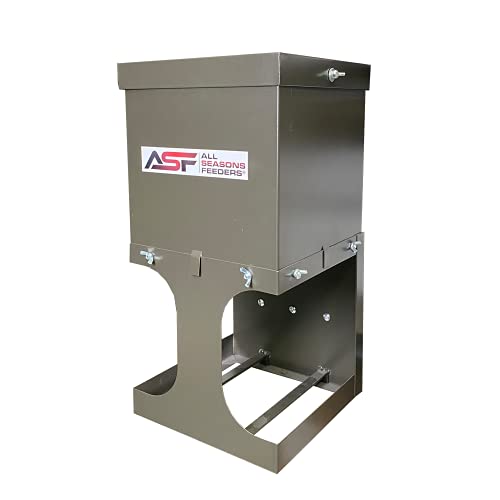
ASF All Seasons Feeders EZ Block Feeder

Tomaki Game Feeder Digital Timer Kit

Highwild 6V/12V Universal Digital Timer 2-Pack

Wildgame Innovations Trophy Hunter 6V Analog Kit

Tomaki 6V Deer Feeder Kit with Metal Bracket

Banks Outdoors Gravity Feed Bank 150 lb

Wildgame Innovations Trophy Hunter 6V Digital Kit
What Each Pick Brings To The Table
The ASF EZ Block Feeder is a no-nonsense station built for hunters who want to drop a mineral or salt block in the woods and let it do the talking. Unlike the timer-driven kits later in this list, this one asks nothing of you once it’s hung, which makes it a quiet workhorse for trail edges, food plot corners, and farm fence lines.
It’s geared toward people who already trust block supplements and want a frame that holds up to the seasons without fuss. For small properties or supplemental attraction outside your main spin-corn setup, it’s a low-effort tool that earns its spot.
Well-Handled Touches
- Powder-coated steel frame resists rust through wet winters and humid summers.
- Slots accept standard-sized salt, mineral, and wormer blocks without trimming.
- Simple hang design works on trees, T-posts, and dedicated feeder posts alike.
- Open frame makes it easy to swap a licked-down block in under a minute.
- Affordable entry point for new property owners testing a location.
Honest Caveats
- Open design exposes blocks to heavy rain, which can dissolve mineral blocks faster than covered setups.
- No spinning mechanism, so it won’t pattern deer to a precise time of day like a timer-based feeder.
Who It Suits Best
Small-acreage owners and food plot managers who already rely on block supplements and want a rugged frame to hold them through every season.
Reach For A Different Pick When
You need timed, hands-free corn disbursement and prefer the Banks Outdoors Gravity Feed Bank 150 lb for a large-capacity, no-power alternative.
The Tomaki 6V/12V digital timer is built for DIYers who already have a barrel, a motor, and a solar panel, and just need the brain. It drops into a wide range of existing feeder rigs, which is exactly the kind of flexibility you want when you’re rebuilding or upgrading one feeder at a time.
You’ll find this timer most useful in the early planning phase, when you’re dialing in exactly how many times a day to spin corn. For hands-on land managers, it strikes a nice balance between capability and price.
What Helps Most
- Up to 8 daily feed times give you room to mimic dawn, dusk, and midday patterns.
- 6V/12V compatibility widens battery and solar options for off-grid setups.
- Digital interface removes the guesswork that older analog dials leave behind.
- Straightforward wiring makes it approachable for first-time builders.
Points To Keep In Mind
- Battery is not included, so factor in a 6V or 12V source before checkout.
- It’s a timer only, not a complete kit, so you’ll need a barrel, motor, and mounting hardware to run a full feeder.
Made For
Hobbyists and budget-minded tinkerers who already own or want to assemble a custom feeder rig with precise digital control.
Not Your Match When
You’d rather skip the wiring and grab a turnkey solution like the Tomaki 6V Deer Feeder Kit with Metal Bracket, which bundles motor, timer, and bracket in one box.
The Highwild 2-pack is the kind of thing a multi-property manager quietly appreciates. Where the single Tomaki timer targets one feeder, this bundle covers two rigs at once, so you can run identical programs on opposite ends of a lease or across adjoining food plots.
It suits folks who treat feeders as a system rather than a single tool. The same scheduling language applies across both units, which keeps your pattern consistent wherever the herd decides to wander.
The Helpful Details
- Each timer programs up to 8 daily feed times, matching the most demanding spin schedules.
- Adjustable feed duration from 1 to 30 seconds lets you fine-tune the spin window.
- Three motor speed settings (low, medium, high) match feed type and coverage goals.
- Universal 6V/12V compatibility fits most DIY feeder builds and replacements.
Some Limits To Know
- No battery included, so the value shrinks if you still need to source power for two units.
- Two timers mean twice the programming on first setup, which takes patience the first afternoon.
Right Fit For
Landowners running two or more feeder sites who want synchronized timing and the option to swap a unit between rigs later.
Skip It When
You only manage a single feeder, in which case the standalone Tomaki Game Feeder Digital Timer Kit covers the job without the extra unit.
The Wildgame Innovations Trophy Hunter 6V Analog Kit is the rig you hand to a friend who’s never set up a feeder before. The analog timer trades digital precision for a dial-and-pointer interface that doesn’t ask you to read menus in fading daylight.
It runs on the same high-torque 6V motor that powered the early Trophy Hunter line, which has been around long enough that replacement parts and troubleshooting tips are easy to find. For someone getting their first lease dialed in, that familiarity matters.
Real Benefits
- Plug-and-play design skips the wiring diagrams most newcomers dread.
- High-torque 6V motor handles standard spin plates without bogging down.
- Analog dial keeps the learning curve short and the field adjustments fast.
Trade Offs
- Analog timer limits you to a small number of fixed feed windows, not 8 programmable slots.
- Battery and barrel are not included, so total cost climbs once you add the essentials.
Who Should Grab It
New feeder owners and first-time lease holders who want a forgiving, time-tested kit without the complexity of digital programming.
Where Another Pick Suits Better
You need multiple precise spin times per day, in which case the Wildgame Innovations Trophy Hunter 6V Digital Kit gives you finer control on the same 6V platform.
The Tomaki 6V metal kit is the bundle for people who don’t want to chase parts across three different listings. It pairs a digital timer with a metal mounting bracket and the motor hardware, so once it lands on your porch you’re basically ready to bolt it onto a barrel and go.
It leans toward the working-landowner crowd who value a metal bracket over plastic when the feeder hangs on a post all winter. Compared to the all-plastic Wildgame Trophy Hunter analog kit, this one feels more like a piece of equipment than a starter toy.
Advantages To Know
- All-in-one bundle cuts the part-hunting out of a fresh feeder build.
- Digital timer supports up to 8 daily feed times with adjustable spin duration.
- Metal mounting bracket handles wind and weather better than plastic tabs in our view.
- Weatherproof design suits year-round outdoor mounting.
A Few Limitations
- Still requires a 6V battery and a feeder barrel to complete the build.
- Motor speed and run time options may feel like overkill for a small property.
Best Suited To
Landowners who want one box, one mounting session, and a metal bracket ready to take a beating through hunting season.
Consider Something Else When
You’d rather skip digital programming entirely and go with the Wildgame Innovations Trophy Hunter 6V Analog Kit for a simpler analog experience.
The Banks Outdoors Gravity Feed Bank is a completely different animal from the timer-driven kits above. There’s no motor, no solar panel, and no schedule to set. You pour corn in the top, gravity trickles it down through adjustable ports, and the herd feeds itself whenever it walks by.
That simplicity is the whole point. On a remote lease where running wires and swapping batteries is a chore, a 150 lb gravity feeder that asks for nothing but a refill every few weeks is genuinely useful. Hunters running a long-season supplemental program gravitate to this style for its reliability.
A Strong Showing
- 150 lb capacity stretches refill intervals across multiple weeks.
- Adjustable feeding ports let you dial the flow rate to match herd pressure.
- Single-post design protects antler growth on bucks brushing through.
- Watertight cover keeps feed dry and fresh through heavy rain.
- 42-inch feed port height puts the payout right at a mature buck’s nose.
Things To Consider
- 4×4 mounting post is not included and needs to be set 3 feet into the ground.
- No timing function, so it can’t pattern deer to a specific hour of the day.
Whose Shelf It Belongs On
Long-season supplemental feeders, remote lease managers, and anyone who prefers zero electronics over the wiring a timer kit requires.
Look Elsewhere When
You want deer conditioned to show up at a specific dawn or dusk window, which is where the Wildgame Innovations Trophy Hunter 6V Digital Kit earns its keep.
The Wildgame Trophy Hunter 6V Digital Kit is the polished sibling of the analog version reviewed earlier. Same 6V platform, same familiar power control unit, but now you’re programming feed windows on a digital display rather than turning a dial by feel.
It’s the natural upgrade for hunters who started on the analog kit and want more granular control without learning a new brand. For properties where you want deer showing up on a reliable clock, this kit has been the reference 6V digital option for a long time.
Good Reasons To Consider
- Digital interface supports multiple programmable feed times per day.
- Weather-resistant housing handles multi-season exposure in a fixed tree stand setup.
- Drop-in upgrade path for anyone already running a Trophy Hunter 6V system.
- Widely available replacement parts and accessories thanks to the brand’s long market run.
Less-Strong Areas
- 6V battery sold separately, so initial cost climbs once you add the essentials.
- Programming the digital timer in low light can take a few minutes until you learn the menu.
Perfect Match For
Hunters who already run Wildgame equipment and want a refined digital kit that slots into the same ecosystem without a rebuild.
A Better Fit Elsewhere
You’d rather skip the 6V battery and motor sourcing entirely, in which case the Banks Outdoors Gravity Feed Bank 150 lb delivers capacity with zero electronics.
What Matters Most Before Choosing Game Feeders
A feeder only earns its keep when it matches how you actually hunt. Start with the power source: 6V battery kits are the most common, solar-friendly, and easy to top off, while gravity feeders skip power entirely. Decide whether you need timed disbursement (to pattern deer to a window) or steady availability (to support a herd through stress periods like late summer or post-rut). That single answer narrows the field from seven picks to two or three.
Next, weigh capacity against refill effort. A 150 lb Banks Outdoors bank might mean a refill every three or four weeks, but a smaller timer-driven barrel often needs a refill every one or two. Think about how far you drive to check it: remote leases favor big, low-maintenance setups, while accessible plots let you run smaller kits with finer control.
Build material is the silent differentiator. Powder-coated steel and metal brackets like the Tomaki 6V kit shrug off weather better than plastic tabs, especially on a post that gets bumped by equipment. Finally, consider the kit’s flexibility. A 2-pack like the Highwild timers gives you multi-site coverage, while a single integrated kit keeps everything in one box. The right pick is the one that lines up with your hunting style, not the one with the most features on paper.
What The Higher Tier Buys And Where To Watch Your Step
Where Shoppers Go Wrong
The most common trap is buying a digital timer kit when a simple block feeder or gravity bank would solve the problem. Hunters chasing precision sometimes overlook that timed disbursement only matters when you’re actively patterning the herd. Another pitfall is forgetting the 6V or 12V battery, which is almost never included, and watching the real cost climb at the register. Finally, mounting hardware catches a lot of first-timers off guard: gravity feeders need a 4×4 post set deep in the ground, and timer kits need a stable barrel and bracket to keep the spin plate aligned.
What Separates Premium From Basic
Premium feeder kits invest in weatherproof housings, metal brackets, and digital timers that survive year-round exposure without corroding or losing their program. The extra spend typically shows up in motor longevity, enclosure sealing, and the number of programmable feed times. Whether that upgrade pays off depends on how long you plan to leave the feeder out and how often you want to fiddle with adjustments. For a single hunting season on a small plot, basic analog or block-style gear is plenty. For multi-season use on a long-term lease, the higher tier earns its keep through fewer service trips and a steadier spin pattern.