
A hunting day pack carries everything that decides whether your morning in the field feels smooth or constant fumbling: ammo, snacks, rain shell, rangefinder, water, and the optics you reach for at the worst moment. Choose wrong and you’ll feel every strap by mile two. Choose right and the pack disappears, which is exactly what you want when a buck steps into the cut at 6:40 a.m.
The Main Contenders

YVLEEN Hunting Backpack with Rifle & Bow Holder

Banded Arc Welded Wader Storage Dry Bag

Drake Waterfowl Camo Daypack Mossy Oak Bottomland (DA1011-006)

BOG Kinetic Lightweight Day Pack for Hunting

Badlands ATX All-Terrain Xtreme Tactical Hunting Pack

Badlands Superday Hunting Backpack
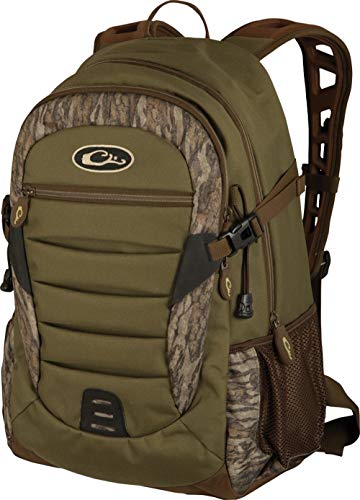
Drake Waterfowl Hunting Daypack Mossy Oak Bottomland Large
The Strengths Of Each Pick
The YVLEEN Hunting Backpack lands first because it tries to be the only pack a newer hunter needs. It carries a rifle or a bow on the outside, swallows layers, calls, and a thermos inside, and shrugs off light rain thanks to a waterproof camo shell. For someone who hasn’t built a kit yet, that versatility removes the usual first-year paralysis about what to bring.
Compared to the heavier BOG Kinetic reviewed later, this one trades frame support for simplicity. You won’t want to load it like a pack mule, but for tree-stand mornings and short stalks it earns its keep. The camo pattern blends well in mixed hardwood terrain, and the dedicated weapon holder frees both hands when climbing a ladder stand.
Practical Advantages
- Dual weapon carry works for rifle hunters and bowhunters without swapping straps
- Waterproof shell keeps optics dry through light rain and morning dew
- Multiple internal compartments separate clean layers from dirty waders
- Lightweight enough for half-day sits without shoulder fatigue
Things To Consider
- No internal frame means heavy loads press against the small of the back over long miles
- Camo pattern is one option, so matching a specific region may be tough
Who It Suits Best
First-year hunters who want a single pack for rifle and bow seasons without buying specialized gear for each.
Consider Something Else When
The Badlands ATX suits you better if you hike long distances into public land and need modular attachment points.
The Banded Arc Welded Wader Storage Dry Bag isn’t a backpack in the traditional sense. It’s a 900-denier armor-coated haul sack with welded seams, designed for hunters who trudge through cattail sloughs and come back dripping. The whole point is keeping spare clothes, calls, and lunch dry when the rest of you isn’t.
Unlike the YVLEEN pack above, this one has no shoulder straps to speak of, just a padded shoulder strap and carry handles. You sling it from the boat, drag it through a ditch, and toss it in the truck. For duck and goose hunters wading into layout blinds, that simple approach beats padded hip belts every time.
Good Reasons To Consider
- Welded 900-denier exterior resists abrasion from ice, branches, and boat gunwales
- Fully waterproof construction protects electronics and base layers in standing water
- Wide-mouth opening makes stuffing waders and decoy bags fast at the truck
- Carry handle plus padded shoulder strap simplifies short portages
Honest Caveats
- Lacks frame support, so a fully loaded bag becomes a shoulder-only carry on longer walks
- Solid black exterior offers zero concealment when set down in the marsh
Right Fit For
Waterfowl hunters who walk into wet ground every trip and need a tough, fully waterproof gear hauler.
Look Elsewhere When
The Drake Waterfowl Daypack in Mossy Oak Bottomland fits better if you want camo concealment plus internal organization.
The Drake Waterfowl Daypack bridges the gap between a standard backpack and a classic duck blind bag. At 18.5 by 11.5 by 8.5 inches, it holds shells, snacks, and a hand warmer without the bulk of a frame pack. The Mossy Oak Bottomland pattern disappears against cypress knees and flooded timber in ways solid camo never does.
Compared to the Banded dry bag above, this Drake is built for the walk-in, not the wade. EVA shoulder straps and a padded back panel make the carry comfortable, and the hydration sleeve turns it into a true day pack. For early teal season when you’re moving between small holes, that balance of comfort and capacity is hard to beat.
Where It Excels
- Compact 18.5-inch profile fits inside layout blind boats and low brush without snagging
- Built-in hydration sleeve and tube port support long morning sits
- HD2 fabric shrugs off briars and wet grass better than basic polyester
- Mossy Oak Bottomland pattern is a proven waterfowl concealment print
Worth Noting
- Smaller main cavity won’t swallow a full lunch and decoy bag together
- One-size-fits-most cut may sit high on shorter torsos
Quick Facts
Made For
Duck and goose hunters who walk into public marsh and want concealment plus hydration in one compact pack.
Skip It When
The Drake Waterfowl Large Daypack fits you better if you carry full lunches, extra layers, and a small thermos on every sit.
The BOG Kinetic earns its place as the long-mile pick. Built around a lightweight aluminum frame and a 420D micro-ripstop shell, it balances 2400 cubic inches of cargo room against a build that won’t drag you down on a two-mile ridge hike. YKK zippers (the durable hardware standard trusted across outdoor gear) hold up to repeated glove-hand use.
Where the YVLEEN pack covers beginner basics, the BOG focuses on the mobile western hunter. Hypalon-reinforced MOLLE webbing (Hypalon is a tough, abrasion-resistant rubberized fabric used on high-wear zones) lets you strap a tripod, spotting scope, or bivy to the outside. A detachable gun or bow boot and a matching rain cover come in the box, which removes two accessories you’d otherwise shop for separately.
Where It Helps
- Aluminum frame transfers weight to the hips for sustained travel
- Included rain cover handles pop-up storms without an extra purchase
- MOLLE attachment straps adapt to tripods, bows, or spotting scopes
- Hydration-compatible sleeve holds a 3-liter reservoir for all-day water
Trade-Offs
- 3.1-pound empty weight is heavier than frameless day packs once stripped down
- Frame geometry favors medium-to-tall torsos
Feature Snapshot
Best Suited To
Spot-and-stalk hunters covering serious distance who still want a single pack that hauls a spotting scope and a lunch.
Reach For A Different Pick When
The Badlands Superday fits you better if your hunting involves short walks to a fixed stand and you want simpler organization.
The Badlands ATX is the smallest pack in the brand’s All-Terrain Xtreme line, and that compact footprint is exactly why some hunters want it. It’s water-resistant, fully featured, and built tough enough for rough country, but it doesn’t balloon into a multi-day hauler when you only need a day’s worth of gear.
Where the BOG Kinetic above is built for long miles, the ATX is built for tight terrain and quick transitions. It plays well with Badlands’ SWAP accessory system, hydration reservoirs, and the Bino Connect harness, so you can bolt on a bino chest rig without third-party mods. For western rifle hunters who glass a lot and shoot fast, that modularity saves steps.
What It Does Well
- Compact size moves easily through brush and tight timber
- SWAP-compatible platform accepts Badlands modular accessories
- Water-resistant shell handles light rain without a separate cover
- Bino Connect harness compatibility keeps optics accessible
Points To Note
- Smaller volume means careful packing for all-day hunts
- Best paired with Badlands accessories, which adds to total cost
Feature Card
Who Will Love This
Western spot-and-stalk rifle hunters running tight terrain and wanting a modular system without hauling a full frame pack.
A Better Fit Elsewhere
The Badlands Superday suits you better if you hunt from a fixed location and want a simpler, larger-volume daily pack.
The Badlands Superday leans into the simple truth that most whitetail hunters don’t walk far, they sit still. It gives you a no-nonsense day-pack layout with enough room for grunt calls, rattle bags, a snack, and an extra layer, without the bulk or weight of a frame pack. The brand’s reputation for tough fabrics carries over here.
Compared to the Badlands ATX above, this one trades modular accessory mounts for a quieter, more traditional layout. If your season is mostly climbing into a ladder stand or sitting a ground blind before dawn, that simplicity is a feature. You grab the pack, walk the property edge, and get to work.
What Earns Its Place
- Streamlined design suits fixed-location hunting styles
- Badlands’ known fabric durability holds up to brush and rough hides
- Day-pack volume covers snacks, calls, and a layer without bloat
- Lighter carry than frame packs on short property walks
Some Limits To Know
- No internal frame support for hauling meat or heavy loads out
- Limited modular mounting compared to the ATX sibling
Perfect Match For
Whitetail hunters running ladder stands and ground blinds on private land who want a simple, durable daily pack.
Swap It Out When
The BOG Kinetic fits you better if you need an aluminum frame and rain cover for longer mobile hunts.
The Drake Waterfowl Large Daypack rounds out the list as the longer-sit option for committed waterfowlers. It carries the same Mossy Oak Bottomland pattern as the smaller Drake reviewed earlier, but with extra room for a thermos, full lunch, and a heavier layer system. For hunters who park once and stay through the morning flight, that space matters.
Where the smaller Drake favors mobility between holes, this one favors comfort during long waits. Both share the HD2 fabric build and similar organization, so the choice comes down to how much you carry, not which features you get. For late-season hunts with bulky cold-weather gear, the larger size earns its weight.
The Helpful Details
- Larger main cavity swallows full lunches and cold-weather layers
- HD2 fabric matches the proven Drake Daypack durability
- Mossy Oak Bottomland pattern provides trusted waterfowl concealment
- Hydration support keeps water accessible during long sits
- Doubles as a roomier everyday backpack off-season
Practical Considerations
- Bigger footprint is harder to pack into small layout boats
- Heavier carry when fully loaded for long walks
Essential Details
Built With In Mind
Dedicated waterfowl hunters running long morning sits who want extra capacity without leaving the Drake ecosystem.
Another Choice May Suit
The Drake Waterfowl Daypack (DA1011-006) fits you better when you want a smaller, more mobile profile for moving between spots.
What Really Matters Before Choosing Hunting Day Packs
Volume Versus Mobility
Capacity drives how much you can haul, but a 3000 cubic inch pack only helps if you can carry it across your hunting terrain. Short property walks and truck-bound blinds favor compact 1500 to 2000 cubic inch designs like the Badlands Superday or Drake DA1011. Ridge hikes and spot-and-stalk routes reward larger frame packs like the BOG Kinetic that shift weight to your hips. Mismatched packs are the usual culprit behind a sore back at mile three.
Concealment and Pattern
Camo print is functional, not decorative. Waterfowl hunters benefit from patterns like Mossy Oak Bottomland that mimic flooded timber and marsh vegetation. Whitetail hunters in hardwood and pine mixes often prefer leafy break-up patterns over solid greens. If your hunting covers multiple environments, a quieter neutral color may outwork a loud pattern that only blends in one place.
Hydration and Weather Handling
Hydration sleeves turn a backpack into a day system, especially on sits longer than three hours. Built-in tube ports keep the hose accessible without removing the pack. Pair that with a rain-resistant shell or included cover, and a sudden storm no longer ends your hunt. Dry gear matters more than any single feature for cold, wet mornings.
Where Shoppers Go Wrong and What The Higher Tier Buys
Common Slip-Ups Worth Dodging
Plenty of hunters buy a pack based on volume alone and ignore the carry system. A 3000 cubic inch frameless pack feels enormous until you load it with optics, a thermos, and rain gear, then it pulls on your shoulders all morning. Others pick camo by color preference instead of matching their actual hunting environment. The most useful habit is to load the pack with realistic weight and walk a half mile before committing.
When Paying Up Pays Off
Higher-tier packs earn their price through better frame geometry, tougher fabrics, and quieter hardware. YKK zippers, Hypalon-reinforced stress points, and welded seams all show up where manufacturers cut corners on budget models. For hunters who log 30+ days a season, those upgrades prevent mid-season failures. Casual weekend hunters often do fine with mid-tier options and can spend the difference on optics instead.