
You spend the season chasing whitetails or pushing through late-season slush, and the wrong boots end a hunt before it starts. Cold feet, soaked socks, and slicked-out lugs turn a long sit into misery, and most generic rain boots collapse the moment the temperature drops. The picks below cover rubber-and-neoprene hunting boots built to keep your feet warm, dry, and planted, with options spanning frigid late-season stands to mild-fall scouting trips.
The Essentials At A Glance

MUCK Mossy Oak Woody Max Boot

Showave Mid Calf Deck Boots
HUK Rogue Wave Fishing & Deck Boot

MUCK Arctic Pro Insulated Boot

MUCK Arctic Sport Tall Boot

Hunthor 800g Insulated Hunting Boots

LaCrosse Alphaburly Pro 18″ 400G
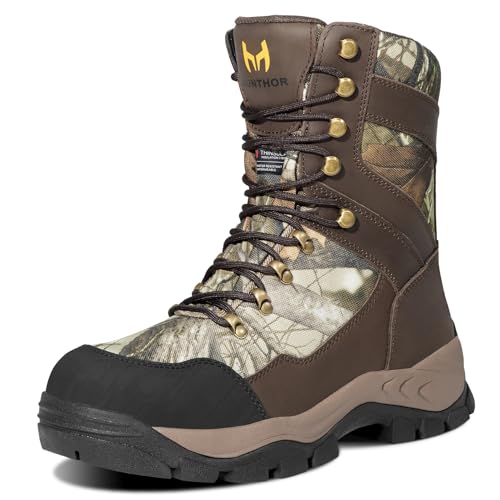
Hunthor 1000g Insulated Hunting Boots
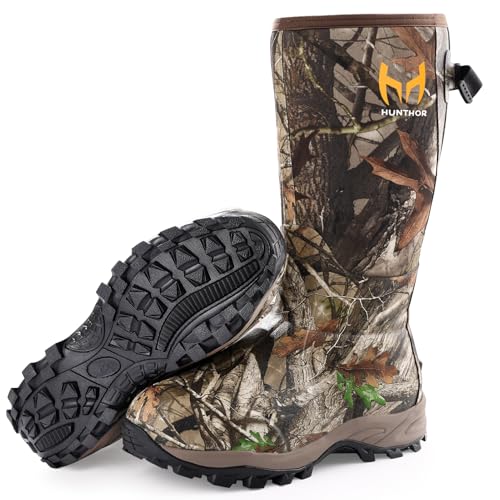
Hunthor 6mm Neoprene Camo Boots
The Woody Max sits in the sweet spot for most hunters: deep enough to shed creek crossings, warm enough for a long November sit, and quiet enough that deer don’t pin your approach to a rubber squeak. Built around a stretch-fit neoprene top and a fleece lining, it seals at the calf and traps body heat without forcing you to size up.
Compared with the heavier Arctic Pro below, the Woody Max gives up a few degrees of rated warmth in exchange for noticeably better agility on a stalk. For hunters who log real miles on foot, that trade often matters more than the last 10 degrees of cold rating.
Positive Takeaways
- Fleece-lined interior holds warmth during multi-hour sits on cold ground.
- High-grade rubber shell shrugs off briars, mud, and shallow creek crossings.
- Stretch-fit topline seals at the calf and keeps debris out of the boot.
- Camouflage pattern helps break up your silhouette from a deer’s eye line.
Things To Consider
- The Mossy Oak camo finish shows scuffs faster than solid rubber, so plan on a quick rinse after thorny hunts.
- Rated for moderately cold weather rather than deep-freeze late season.
Who It Suits Best
Whitetail hunters working mid-season conditions where the thermometer hovers around freezing and footing changes between dry ridge and wet creek bottom.
Consider Something Else When
You spend December and January on a frozen stand; the MUCK Arctic Pro Insulated Boot is rated for harsher cold and pays for itself the moment the mercury drops well below zero.
The Showave deck boot isn’t a hardcore hunting piece, and that’s exactly the point. It’s a straightforward mid-calf rubber pull-on that handles a wet scouting loop, a damp treestand climb, or a soggy chore without complaining or costing much. Hunters on tight budgets who mostly see shoulder seasons get a lot of mileage from this style.
Where the MUCK Woody Max above layers in fleece and serious cold ratings, the Showave relies on basic waterproofing and a simple design. It runs lighter on the foot and easier on the wallet, which is the right balance for casual hunters.
Features That Help
- Mid-calf height keeps pant cuffs and socks dry on damp walks.
- Pull-on silhouette slips on and off without laces in cold truck-stop parking lots.
- Low price point leaves room in the budget for other gear.
Trade Offs
- No real insulation layer, so sub-freezing sits feel brutally cold.
- Basic tread gives up grip on steep slopes and slick hardwood leaves.
- Rough field use tends to scuff the rubber after a single season.
Made For
New hunters, occasional scouts, and anyone who mostly sees rain rather than snow and wants a simple boot to keep socks dry.
Look Elsewhere When
You regularly face freezing temperatures or long stalks; the MUCK Arctic Sport Tall Boot delivers far more warmth for only a modest step up.
The Rogue Wave is built around a full neoprene and rubber upper, which is shorthand for waterproofing plus insulation in one stretchy shell. Anglers and hunters who spend hours on slick boat decks or wet shoreline get a boot that grips, drains, and stays comfortable across a full day of standing water.
It differs from the MUCK Woody Max above in focus: the HUK is tuned for traction and marine use, while the MUCK leans toward stalking warmth and camo concealment. Reach for the HUK when your hunt is half wade, half wait.
Everyday Wins
- Rubber-and-neoprene upper keeps water out and warmth in during long wet sits.
- GRIP-X outsole pattern bites into slick algae-covered surfaces.
- Molded EVA footbed cushions the legs on all-day stands.
- Reinforced webbing pull-straps make wet-boot removal painless at the truck.
Honest Caveats
- Lower shaft height trades water protection for ankle mobility.
- Designed for warm-blooded conditions more than deep cold.
Feature Snapshot
Right Fit For
Bank anglers, marsh hunters, and coastal shooters who wade more than they stalk and need traction above all.
Reach For A Different Pick When
You’re after a tall camo pattern for whitetail stalking in dry woods; the MUCK Mossy Oak Woody Max Boot covers that scenario more directly.
For hunters who push into late-season conditions where the thermometer dives well below zero, the Arctic Pro earns its reputation. The combination of thermal foam underfoot, a fleece boot lining, and a tall rubber shell delivers warmth that holds through the kind of long, motionless stand where lesser boots surrender within an hour.
It costs more than the Woody Max above, and for good reason: the comfort range is engineered for the kind of cold that makes your fingers stop working, not just the kind that makes your toes chilly. Hunters in the Plains, Upper Midwest, or Canada will recognize the value immediately.
Useful Strengths
- Engineered comfort range handles deep sub-zero cold without losing toe warmth.
- Fleece lining adds softness against the foot for long sits.
- Tall rubber shaft keeps snow and freezing water well below the calf.
- Solid rubber construction shrugs off ice-encrusted terrain and rocky streambeds.
Things To Weigh
- Premium warmth comes with a heavier boot that tires legs on long stalks.
- Spends most of its rating unused in regions with mild winters.
Technical Sheet
Best Suited To
Late-season stand hunters, ice anglers, and anyone working the kind of frozen morning that punishes underprepared feet.
Skip It When
You chase deer in mild southern climates and rarely see freezing temps; the Hunthor 6mm Neoprene Camo Boots handle that workload at lower cost.
The Arctic Sport slots just below the Arctic Pro in the MUCK cold-weather hierarchy, trading a few degrees of comfort range for a more friendly weight and a slightly easier break-in. Hunters chasing midwinter whitetails, trudging out to a frozen pond, or commuting to a barn in deep snow find a comfortable balance here.
Versus the Woody Max earlier in this list, the Arctic Sport runs warmer but adds noticeable weight and bulk. The trade is worth it for hunters who face real snow and slush rather than occasional frost.
What Works In Its Favor
- Rated for cold snaps down to -40 °F while keeping reasonable walking weight.
- Contoured midsole supports the arch during long hours on frozen terrain.
- Fleece lining feels comfortable straight out of the box, even in deep cold.
- Tall shaft seals out deep snow and ankle-deep slush.
Practical Considerations
- Heavier than the Woody Max, so long-distance stalkers notice the load.
- Excess warmth is wasted in shoulder-season hunts above freezing.
Whose Shelf It Belongs On
Snowmobilers, ice anglers, and any hunter whose season runs from late November through February in serious cold.
A Better Fit Elsewhere
You’re hunting mild fall deer seasons where warmth rarely matters; the Hunthor 800g Insulated Hunting Boots cover the same wet-terrain role at lower cost.
The Hunthor 800g boot enters the conversation as a price-conscious alternative to higher-end MUCK and LaCrosse options, while still delivering real rubber construction and an EVA midsole. For hunters who need genuine insulation rather than just waterproofing, the 800-gram rating covers most of the deer-hunting calendar.
Compared with the Showave deck boot earlier, this Hunthor steps up with actual insulation and a thicker build. Compared with the MUCK Woody Max, it cuts some refinements to land at a friendlier number.
The Case For It
- 800g insulation handles typical late-fall and early-winter hunts in most regions.
- EVA midsole adds cushion without bulk, easing foot fatigue.
- Rubber exterior keeps boots sealed through wet grass and shallow creek crossings.
- Cost leaves room for layering socks and other cold-weather gear.
Soft Spots
- Brand recognition is lighter than MUCK or LaCrosse, so resale and warranty support matter more.
- Traction design isn’t optimized for slick mud or ice as well as premium rubber outsoles.
Quick Facts
Who Will Love This
Budget-minded deer hunters who hunt across a mix of wet and cold conditions and don’t need the absolute warmest boot on the market.
Swap It Out When
You regularly face hard freezes or icy slopes; the MUCK Arctic Sport Tall Boot is purpose-built for those conditions.
The Alphaburly Pro has been a fixture in the hunting-boot world for years, and the recipe hasn’t changed much because it didn’t need to. Natural rubber, neoprene insulation, and an aggressive tread pattern handle the kind of swampy, mucky terrain where lesser boots get sucked off your feet.
Versus the MUCK Woody Max earlier, the LaCrosse runs cooler at 400G Thinsulate Ultra rather than MUCK’s fleece-heavy build. That makes it a better choice for hunters who walk hard and generate heat, rather than sit still in deep cold.
Advantages To Know
- Natural rubber shell resists moisture and shrugs off abrasive cover.
- Active Fit design grips the calf and keeps the boot from slipping during long walks.
- 400G Thinsulate Ultra insulation balances warmth with breathability for active hunters.
- Aggressive tread pattern handles mud, muck, and snow without packing out.
- EVA footbed cushions the foot across multi-hour stalks.
Factors To Consider
- Heavier than minimalist rubber boots, so ultralight hunters feel the load.
- Insulation rating tops out well before what the MUCK Arctic Pro delivers.
- Requires occasional cleaning to keep scent-free rubber from holding brush odors.
Perfect Match For
Bowhunters and still-hunters working swampy timber, marsh edges, and other wet terrain where traction and waterproofing outrank deep warmth.
Where A Sibling Pick Shines
You face deep-freeze late-season hunts; the MUCK Arctic Pro Insulated Boot is built for that exact cold range.
The 1000g Hunthor lands squarely in the deep-cold camp, offering heavyweight insulation at a friendlier cost than comparable premium models. Hunters working late muzzleloader seasons, midwinter coyote sets, or icy deer stands in northern climates find a boot designed to keep feet warm when the wind chill numbers look more like phone numbers.
It builds on the same EVA midsole platform as the 800g Hunthor earlier, but stacks in another 200 grams of insulation. That changes the boot’s personality entirely, pushing it from a versatile late-fall choice into a focused deep-cold specialist.
Useful Highlights
- 1000g insulation handles the kind of cold where lesser boots fall short fast.
- EVA midsole keeps weight manageable despite the heavy thermal package.
- Rubber shell keeps snowmelt and slush from seeping through to socks.
- Lower price than premium deep-cold competition widens accessibility.
Possible Compromises
- Heavy insulation overheats on active stalks in moderate temperatures.
- Less field-proven than legacy brands, so long-term durability is harder to predict.
Built With In Mind
Hunters running cold-weather hunts from late muzzleloader season through late-winter coyote sets in regions where sub-zero mornings are routine.
Not Your Match When
You chase early-season deer in mild climates; the Hunthor 800g Insulated Hunting Boots deliver the right balance of warmth and mobility for those hunts.
The Hunthor 6mm Neoprene camo boot closes out the list as a pattern-matched, midweight option aimed at hunters who care as much about breaking up their silhouette as they do about staying dry. A 6mm neoprene build supplies real waterproofing and enough insulation for cool-weather hunts without the bulk of a deep-cold specialist.
Versus the camo MUCK Woody Max earlier, this Hunthor trades some premium-build refinements for a more accessible price. Hunters who want camo-pattern waterproofing without stretching the budget will appreciate the swap.
Well-Handled Touches
- Camo pattern helps the boot disappear into fall foliage and brush.
- 6mm neoprene core balances waterproofing with light insulation for cool conditions.
- Rubber exterior handles creek crossings and wet underbrush.
- Mid-calf height works well with typical hunting pants and gaiters.
Where It May Fall Short
- Not built for sub-freezing still-hunts where heavy insulation matters.
- Brand support trail is thinner than legacy competitors, so warranty claims take more legwork.
The Right Fit
Still-hunters and bowhunters chasing whitetails in dry fall cover where camo concealment and quiet waterproofing outrank extreme warmth.
Another Choice May Suit
You hunt late-season snow more than early-season leaves; the Hunthor 1000g Insulated Hunting Boots deliver stronger warmth for those conditions.
Picking The Right Hunting Muck Boots For The Conditions You Actually Face
The right hunting boot starts with a clear-eyed read of your climate, terrain, and hunting style. Cold ratings matter, but they only matter when paired with the kind of terrain you cover and how much you move on a typical day.
Match The Insulation To Your Temperature Range
Insulation ratings, measured in grams, tell you how much thermal material is built into the boot. Lightweight 400G to 800G boots handle cool-weather hunts and active walking, while 1000G and higher ratings target still-hunts in deep cold. Hunters in the upper Midwest and Canada push toward the heavier end, while southern hunters usually stay in the lighter range.
Think About How Much You Walk
A heavy, deeply insulated boot feels fine on a sit but wears down your legs on a five-mile stalk. Active hunters should weight traction, weight, and flexibility higher in the choice. Still-hunters can prioritize warmth without paying much attention to mobility.
Choose Traction For Your Terrain
Muddy creek bottoms, slick hardwood leaves, and frozen slopes each demand different outsole designs. Lugged rubber outsoles shed mud and grip uneven ground, while flatter patterns work better on boat decks and graded trails.
Don’t Skip Sock Layering
A quality merino or synthetic sock layer improves any boot’s performance. Thin liner socks under heavier outer socks wick moisture and add insulation without forcing you to size up.
Key Takeaways Before You Commit
Wrong Turns To Avoid
Choosing a boot strictly by insulation rating often backfires. A 1000G boot feels great on a January stand but turns your feet into furnaces during an October stalk. Match the rating to your actual hunting calendar rather than chasing the highest number on the spec sheet.
Where The Extra Money Goes
Premium boots tend to deliver better rubber compounds, tighter seams, and longer warranties. The extra cost also buys stronger outsoles and more consistent insulation, which pays off when a boot gets year-round use across multiple seasons.
Frequently Asked Questions
What insulation rating do most deer hunters actually need?
Most deer hunters work conditions between 20 °F and 50 °F, which makes 400G to 800G boots the most common sweet spot. Deep-cold specialists and northern hunters often push higher.
How do rubber hunting boots fit compared to regular boots?
Rubber boots typically run true to size, but you may want to size up half a size to accommodate thick hunting socks. A boot that’s too tight compresses insulation and cuts warmth fast.
Can I use the same boot for hunting and fishing?
Yes, especially with traction-focused designs like the HUK Rogue Wave and MUCK Woody Max. Anglers and hunters often overlap on boot choice because both demand waterproofing and grip on wet surfaces.
How long do quality rubber hunting boots usually last?
Owners commonly report three to five seasons of regular use from premium rubber hunting boots before seams or outsoles give out. Storage away from direct sunlight and routine cleaning of mud and debris extend that lifespan noticeably.
Do camo-pattern boots help concealment, or is it overkill?
For still-hunting and bowhunting, camo boots break up your silhouette at ground level where deer often look. Rifle hunters in open terrain see less benefit, but a pattern never hurts in variable cover.