
A reliable radio is the difference between a productive hunt and a frustrating one. You need to coordinate with your party across thick timber, rolling ridges, or wide-open grain fields without losing the signal at the worst possible moment. The right handheld or mobile setup keeps everyone connected, surfaces weather alerts before the storm hits, and lets you call in a spot without shouting across a valley. Below is a curated shortlist of options built for hunters who treat comms as essential gear, not an afterthought.
How The Shortlist Stacks Up

Midland T10 X-Talker FRS Walkie Talkie, 2 Pack

Midland MXT275 15W MicroMobile GMRS Two-Way Radio

Midland LXT600VP3 FRS Walkie Talkies, 2 Pack

HYS Handheld Radio Holder – Belt Clip & Mount

Midland GXT1000VP4 GMRS Two-Way Radio, 2 Pack

Midland GXT1000X3VP4 GMRS Two-Way Radio, 3-Pack

Midland T51VP3 X-TALKER Walkie-Talkie, 2 Pack
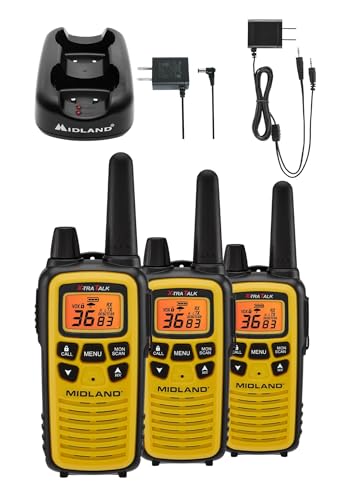
Midland LXT630X3VP3 FRS Walkie Talkies, 3-Pack

Midland LXT500VP3 22 Channel FRS Walkie Talkies
The Details Behind The Selections
The T10 sits at the entry point of the Midland lineup, and that shows up in how stripped-down the controls feel. You get scan, call tones, and a basic channel knob without buried menu codes or layered settings to memorize. For a hunter working a small woodlot or staying within a few hundred yards of base camp, that simplicity is the whole point.
Two FRS (Family Radio Service) handhelds arrive in one box, so a buddy setup costs nothing extra. Compared to the more advanced GMRS picks later in this shortlist, the T10 trades raw power for portability, and most backcountry users will appreciate that trade when packing into a stand.
Strengths Worth Knowing
- 22 scannable FRS channels let you find a clear line without interference from other parties nearby.
- Compact housing slips into a jacket pocket or chest pouch without adding noticeable weight on a long stalk.
- Two-pack format means no extra purchase needed for a hunting partner.
- Button access stays simple enough to operate with cold hands or gloved fingers.
Things To Consider
- FRS power output is modest, so range drops sharply in dense timber or hilly terrain.
- No weather alert scanning, which matters if you hunt where storms build fast.
- Battery life varies widely depending on how often you transmit, and spares are worth carrying.
Key Product Details
Made For
Newcomers outfitting a first hunting kit or occasional weekend hunters who want minimal setup.
Skip It When
Range matters more than simplicity, in which case the Midland GXT1000VP4 pairs up with better credentials.
The MXT275 leaves the handheld category entirely. This is a mobile unit designed to bolt into a truck or ATV, drawing power from the vehicle and pushing 15 watts through an external antenna. Hunters running a base camp from a pickup, or coordinating a drive through big country, get a setup that handhelds simply cannot match.
GMRS (General Mobile Radio Service) operation means you tap into more channels and higher output than FRS allows, and that license is straightforward to obtain. Where the T10 above covers a short walk between stands, the MXT275 covers miles between ridges.
Benefits That Matter
- 15-watt output delivers serious range, especially when paired with a quality roof-mounted antenna.
- Vehicle integration means no battery anxiety during a multi-day hunt.
- Repeater-capable channels extend coverage in areas with local repeater infrastructure.
- Sturdy housing tolerates cab vibration and temperature swings better than plastic handhelds.
Trade-Offs To Consider
- Mobile form factor means it stays in the truck, useless on a spot-and-stalk foot hunt.
- GMRS operation requires an FCC license, a small but real step.
- Installation takes more effort, from antenna mounting to power routing.
Feature Snapshot
Right Fit For
Truck-based hunters who run a vehicle-driven hunt and want command-post style comms.
Reach For A Different Pick When
Most of your hunting happens on foot, in which case the Midland GXT1000X3VP4 handheld trio makes more sense.
The LXT600VP3 sits in the comfortable middle of Midland’s handheld line. You pick up 36 FRS channels instead of the T10’s 22, which gives noticeably more room to dodge interference on crowded weekends. Channel scan, dual power options, and a familiar Midland menu make this a confident step up for hunters who already know the basics.
Where the T10 is the training-wheels pick, the LXT600VP3 is the one you grab when you actually care about channel congestion and battery flexibility. Rechargeable packs or AA backups both work, and that redundancy matters when a hunt stretches into a second day.
Everyday Wins
- 36 channels plus privacy codes cut through chatter on busy public land.
- Dual power supports both rechargeable packs and AA cells for field swaps.
- Channel scan speeds up finding active traffic without manual dialing.
- Two-pack format keeps a partner covered without a second purchase.
Honest Caveats
- Range still falls short of GMRS options in dense cover.
- No NOAA weather scanning, a noticeable gap for storm-prone regions.
- Plastic shell handles light rain but not extended downpour without care.
Quick Facts
Best Suited To
Hunting crews of two to four who want a dependable license-free setup with enough channel headroom for busy areas.
Swap It Out When
Weather alerts are essential to your safety plan, in which case the Midland T51VP3 scans NOAA broadcasts.
Not every hunting radio in your kit is a radio. This HYS holder is the accessory that decides where your handheld lives when you are not holding it, and the answer matters more than most shoppers realize. Aluminum alloy construction keeps it light on a belt but rigid enough to survive a real workday.
The universal round-knob fit covers a wide range of HT radios and speaker mics from Cobra, Baofeng, Motorola, Kenwood, Yaesu, and others. For hunters running different radios across the family or moving gear between vehicles, that compatibility pays off.
Reasons It Performs
- Aluminum build resists bending and holds shape under repeated mounting cycles.
- Cross-brand compatibility removes the headache of brand-specific mounts.
- Doubles as belt clip and vehicle or table mount for flexible placement.
- Lightweight design keeps belt load minimal during long walks.
Small Caveats
- Mounting hardware may not match every installation surface out of the box.
- Round-knob radios fit best; oddly shaped handhelds may need an adapter.
- Not a radio itself, so it only makes sense as a complement to a primary handheld.
Whose Shelf It Belongs On
Hunters who already own a handheld and want a smarter way to keep it accessible in the truck or on a stand.
Where A Sibling Pick Shines
You need comms in the box too, in which case the Midland LXT600VP3 covers both radio and basic mounting needs.
The GXT1000VP4 is where Midland’s handheld lineup starts feeling like serious hunting gear. You get 50 GMRS channels, JIS4 weatherproofing that shrugs off rain and snow, and enough output to push a signal through real cover. This is the radio you grab when the hunt does not stop for bad weather.
Compared to the FRS-only LXT600VP3 earlier in this list, the GXT1000VP4 trades license-free simplicity for measurable range and durability. Hunters who move between states or chase late-season weather will appreciate the upgrade immediately.
A Few Highlights
- 50 GMRS channels deliver significant range improvement over FRS handhelds.
- JIS4 splash and rain resistance keeps comms alive in wet conditions.
- Privacy code options help carve out clear lanes on congested frequencies.
- Two-pack format covers a hunting duo without a second purchase.
Points To Note
- GMRS operation requires an FCC license, a small administrative step.
- Larger antenna and housing make it less pocket-friendly than slimmer picks.
- Higher power draw means more frequent charging than entry-level units.
Perfect Match For
Hunters who push into rough weather and need a handheld that survives more than a sunny day in the stand.
Look Elsewhere When
You run three or more hunters and want matching units, since the Midland GXT1000X3VP4 ships as a three-pack.
The GXT1000X3VP4 takes everything the two-pack version delivers and adds a third handheld to the box. For groups running a spotter, a driver, and a shooter, that third radio is the difference between coordinated and chaotic. 50 channels, 142 privacy codes, and NOAA weather scan all carry over.
This is the practical choice for hunting leases or family crews. Where the GXT1000VP4 above leaves you short one radio, this version closes the gap without forcing a separate purchase later.
Notable Gains
- Three matching units keep a full crew on the same channel and settings.
- 142 privacy codes offer serious flexibility for clean group comms.
- NOAA weather alerts and SOS functions add safety layers beyond basic talk.
- Rechargeable battery packs reduce ongoing battery spend.
Where It May Fall Short
- GMRS license requirement applies to every operator in the party.
- Three units mean three times the charging management.
- Heavier than basic handhelds, so belt carry gets bulky fast.
Feature Rundown
Who Should Grab It
Larger hunting parties of three or more who want matching radios without mixing brands.
Consider Something Else When
Your group only runs two people, since the GXT1000VP4 two-pack avoids the unused third unit.
The T51VP3 earns its spot by doing one thing the rest of the FRS lineup here skips: NOAA weather scanning and alerting. The radio sweeps 10 weather band channels, locks onto the strongest signal, and sounds an alarm when severe weather threatens. For hunters in the Plains, Southeast, or anywhere storms build fast, that is not a luxury.
22 FRS channels and 38 privacy codes cover the everyday talking side of the job. Compared to the LXT600VP3, you trade a few channels for that weather awareness, which is a fair exchange in the right region.
Useful Highlights
- NOAA weather scan alerts you to incoming storms without checking a phone.
- AMBER alert broadcast capability adds a public-safety bonus.
- Two-pack format covers a hunting partner out of the box.
- 38 privacy codes reduce cross-party chatter on shared channels.
Some Limits To Know
- FRS power limits long-range performance in heavy cover.
- Weather alerts depend on NOAA broadcast coverage in your area.
- Channel count is lower than the LXT600VP3 reviewed earlier.
Built With In Mind
Hunters who work in storm-prone regions and want their radio to double as a weather early-warning tool.
Another Choice May Suit
Range tops your priority list, in which case the GXT1000VP4 delivers stronger transmission through cover.
The LXT630X3VP3 earns its nickname honestly: a hi-vis yellow faceplate that refuses to get lost in a truck seat, a brush pile, or a leaf-covered forest floor. Drop one in the woods and you have a real chance of spotting it before the hunt ends. That kind of practical detail matters more than any spec sheet suggests.
Underneath the bright shell sit 121 privacy codes, three eVOX hands-free levels, and water-resistant construction. The 3-pack format suits spotting crews or family groups who want everyone tuned to the same channel.
Practical Advantages
- High-visibility yellow faceplate cuts search time if a radio is dropped.
- 121 privacy codes offer strong interference rejection.
- Water-resistant housing handles drizzle and brief immersion without panic.
- eVOX hands-free operation simplifies calls when packing out or climbing.
Things To Weigh
- Yellow color may draw attention in stealth-first hunting scenarios.
- FRS power output limits range compared to GMRS options.
- Three units mean more charging and more batteries to manage.
Who It Suits Best
Tracking and recovery crews, youth hunters, or anyone who has ever spent twenty minutes digging through a truck for a dropped radio.
Not Your Match When
Stealth is critical and bright colors would give away your position to wary game.
The LXT500VP3 keeps things simple and affordable. 22 FRS channels, channel scan, and dual power options cover the basic communication needs without the price tag of a GMRS setup. For hunters putting together a kit on a tight budget, this is the entry-level Midland that still feels like real gear.
Where the T10 earlier in this list serves absolute beginners, the LXT500VP3 is for shoppers who want a step up in build and battery flexibility without crossing into GMRS pricing. Rechargeable packs plus optional AAA backup add a small but meaningful layer of field resilience.
The Case For It
- Channel scan trims time spent manually searching for clear frequencies.
- Dual power options support rechargeable or disposable cells.
- Keypad control layout stays intuitive for first-time users.
- Cost-effective option for outfitting multiple hunters on a budget.
Possible Compromises
- FRS-only operation caps range in challenging terrain.
- No weather alert scanning, a real gap in storm-prone hunt zones.
- Build quality is solid but not weather-sealed for extended wet use.
Perfect Match For
Cost-conscious shoppers outfitting a hunting party without needing GMRS power or weather alerts.
A Better Fit Elsewhere
You hunt in wet or storm-prone country and want NOAA alerts, where the Midland T51VP3 adds that layer.
What To Think Through Before Choosing Your Hunting Radio
Picking a radio starts with the terrain you actually hunt. Flat ground with line-of-sight is forgiving to almost any FRS handheld, while thick timber and steep ridges punish weak signals and force a move toward GMRS or mobile setups. Decide where your hunts fall before chasing channel counts.
Licensing is the next fork in the road. FRS radios are license-free and easy to share with friends, but GMRS radios deliver real range gains at the cost of a simple FCC license. For hunters who travel between states or want repeater access, GMRS is worth the paperwork.
Power source shapes field reliability more than most buyers expect. Rechargeable packs are tidy but need a charging plan for multi-day trips. Dual-power handhelds like the LXT600VP3 and LXT500VP3 swap in AAs when the pack dies, and that flexibility rescues more hunts than any spec bump.
Weather awareness belongs on the checklist for anyone hunting outside cell coverage. NOAA scanning radios like the T51VP3 catch severe storm warnings before your phone does, and in remote country that early heads-up can change plans or save a life. Hunters in tornado alley or mountain storm zones should treat weather alerts as required, not optional.
Key Considerations Across These Picks
Where Shoppers Go Wrong
Treating advertised range as gospel is the most common trap. Manufacturers list maximum range under open, flat conditions that almost no hunter actually works in. Real-world performance in wooded or hilly terrain runs well below the headline number, so match your radio to your worst-case environment, not your best-case one.
Overbuying channels is the other easy miss. More than 22 FRS channels sounds impressive, but most hunting parties settle on two or three frequencies and never touch the rest. Privacy codes matter more than raw channel count when you are trying to avoid cross-party chatter on public land.
When Paying More Pays Off
Higher-tier radios earn their keep through durability and weather resistance, not just raw power. JIS4-rated handhelds like the GXT1000VP4 keep working when cheaper units give up in a downpour, and that reliability compounds over years of use. Weather alert scanning and SOS functions add safety layers that budget picks skip.
For hunters running larger parties, a 3-pack like the GXT1000X3VP4 simplifies outfitting and ensures matching settings across every unit. Mobile units like the MXT275 cost more once you add an antenna and installation, but the range gain justifies the spend for truck-based hunters who need command-post style coverage.
Frequently Asked Questions
What is the difference between FRS and GMRS radios?
FRS (Family Radio Service) radios are license-free and capped at lower power output, making them simple to use but limited in range. GMRS (General Mobile Radio Service) radios require a simple FCC license but deliver significantly more power, channel options, and repeater compatibility for longer-range communication.
How far can hunting radios actually transmit?
Advertised ranges assume open, flat terrain with no obstructions. In real hunting conditions with trees, hills, or buildings, expect a fraction of the maximum rating. FRS handhelds may cover a few hundred yards in heavy cover, while GMRS handhelds and mobile units can push several miles under better conditions.
Do I need a license to use these radios?
FRS radios require no license and can be used by anyone. GMRS radios require an FCC license, which is straightforward to obtain and covers an entire family. Buying a GMRS radio without the license means operating illegally, even casually.
Are NOAA weather alerts really useful while hunting?
In regions with fast-building storms or limited cell service, NOAA alerts provide critical early warning that a phone cannot match. Hunters in tornado-prone, mountain, or remote areas gain a meaningful safety advantage from radios that scan weather bands automatically.
How long do batteries typically last on a hunting radio?
Battery life varies widely depending on how much you transmit and which power setting you use. Continuous heavy use may drain a pack in a single day, while intermittent use can stretch across several days. Carrying spare batteries or a charging solution is wise for multi-day hunts.