
A factory antenna does its job until it snags on a garage door, brushes a branch, or just plain looks dated on a newer truck. Low profile antennas solve that by sitting close to the bodywork without giving up much in signal quality. The trick is finding the right shape for the right job: a stubby for a daily-driven pickup, a rugged puck for a fleet vehicle, a low dome for a 5G router in a workshop. This list walks through six solid options across different use cases, from rubber replacement whips to multi-element cellular domes built for harsh installs.
A Closer Look At The Lineup

Proxicast 5-in-1 4×4 MIMO 4G/5G + GPS Antenna

Votex Short Rubber Antenna for Chevrolet Silverado 1500

Proxicast 5-in-1 Low-Profile 2×2 5G + 2×2 WiFi + GPS Vehicle Roof Antenna

AMFRNE 7″ Bronco Short Antenna (2021-2026)
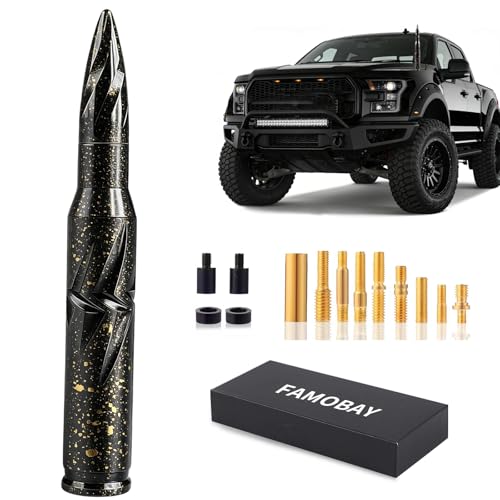
Famobay Stubby Bullet Antenna (5.5 inch, Iridescent)

Proxicast Ultra Low Profile MIMO WiFi Puck Antenna
A Breakdown Of The Leading Choices
When a single antenna needs to pull in four cellular streams plus GPS without adding bulk, this Proxicast dome delivers. The 2.4-inch height keeps it under most clearance bars, while the heavy-duty stainless steel through-hole mount and high-impact ABS radome shrug off weather and the occasional bump. It’s the kind of low profile antenna you spec for a work truck, a transit van, or a remote telemetry box where downtime isn’t an option.
Compared with a simple whip, the MIMO (Multiple Input Multiple Output, meaning multiple radio chains working together for faster, steadier throughput) layout here matters when signal is weak. Four isolated cellular elements mean your router can bond across antennas, which generally holds a connection where a single-element puck might drop it. Fleet operators running video, ELD (Electronic Logging Device) systems, or live tracking tend to appreciate that redundancy.
Real-World Strengths
- IP67 waterproofing handles rain, wash cycles, and road spray without letting moisture creep in.
- Five leads in one housing cut down on roof clutter, which helps with clearance and aesthetics.
- Vandal-resistant construction is useful on shared vehicles, utility cabinets, and remote installs.
- The through-hole mount with no exposed cabling reduces snag points and discourages tampering.
Worth Noting
- The 7/8-inch mounting hole requires careful drilling and a weatherproof gasket on metal panels.
- Five separate coax leads can be tricky to route cleanly inside a cab or enclosure.
- Owners commonly report that SMA (threaded coaxial connector) terminations need a firm hand-tightening to avoid intermittent connections.
Key Specs
Made For
Fleet managers, mobile-office operators, and anyone outfitting a vehicle or enclosure that needs four cellular streams and GPS without a tall roof appendage.
Consider Something Else When
The Votex short rubber antenna is a better fit if all you want is a clean AM/FM replacement on a Silverado, without the complexity of a multi-lead cellular array.
Stock Silverado whips have a habit of catching car-wash brushes and low-hanging branches, and the Votex short rubber replacement trims that risk down to a 6 3/4-inch profile. The antenna is built from EPDM rubber (a dense, weather-tolerant synthetic rubber that handles heat, cold, and UV well) with a flexible core that bends instead of snapping when something does brush it. For a truck that sees parking garages and tight trails, that flexibility pays off fast.
Unlike the Proxicast dome above, this is a direct AM/FM replacement designed specifically for Chevrolet Silverado 1500 models from 2006 through 2027. Installation is a simple screw-on swap, which makes it a good first mod for anyone wary of drilling holes or routing coax.
What It Does Well
- Heat tolerance up to roughly 257°F makes it a sensible pick for hot-climate and southern drives.
- The flexible rubber construction reduces the chance of breakage on brushy trails and automatic car washes.
- Vehicle-specific fit means no extra adapters or trim ring tricks.
- The shorter profile cleans up the roofline for a more modern look.
Trade Offs
- Shorter antennas can pull in slightly weaker AM stations in rural areas compared to a long factory whip.
- It’s designed for the Silverado 1500 only, so it’s not useful for Sierra or other GM trucks.
- Over time, the rubber finish may dull in harsh UV, which is typical for any rubber mast.
Who It Suits Best
Silverado 1500 owners who want a clean, low-snag look without giving up their local FM stations and who don’t want to mess with cellular routing.
Look Elsewhere When
If you drive a Ford Bronco or another SUV, the AMFRNE 7-inch Bronco short antenna is the parallel fit for that model line.
This is the sibling to the 4×4 MIMO dome, tuned for connected cars that need cellular, Wi-Fi, and GPS all working at once. The 3-inch IP67 housing holds two 5G/LTE elements, two dual-band Wi-Fi elements, and a GPS/GNSS (Global Navigation Satellite System, which includes GPS plus other satellite constellations) feed, making it a strong match for first responders, command vehicles, and overlanders running a mobile hotspot. Coverage extends across major US carriers, including FirstNet and CBRS (Citizens Broadband Radio Service, a shared mid-band spectrum used for private LTE networks).
Where the Votex whip is purely about AM/FM, this Proxicast dome replaces a stack of separate antennas with one rugged footprint. For a vehicle that doubles as a mobile office, that consolidation is a real upgrade.
Notable Gains
- One mount replaces a cellular stick, a Wi-Fi puck, and a separate GPS patch.
- Dual-band Wi-Fi support covers 2.4, 5.8, and the newer 6/7 GHz bands used by Wi-Fi 6E and Wi-Fi 7 gear.
- The vandal-resistant dome fits transit, telematics, and public-facing vehicles without drawing extra attention.
- Its through-hole design keeps all cabling inside the roof, so there’s nothing to clip or pry off.
Honest Caveats
- You’ll still need a router or modem with the right number of antenna ports to actually use those leads.
- Routing five coax cables through a headliner takes patience on most vehicles.
- In dense urban canyons, performance depends as much on the router as on the antenna itself.
Feature Snapshot
Best Suited To
Mobile professionals, public-safety fleet builders, and overlanders who want cellular, Wi-Fi, and GPS from a single rugged roof footprint.
Skip It When
The Proxicast Ultra Low Profile MIMO WiFi puck is the cleaner choice for a stationary indoor Wi-Fi install where you don’t need cellular or GPS.
The factory Bronco antenna is roughly twice this length, and on a rig that spends weekends in the brush, that’s an open invitation to a broken mast. The AMFRNE 7-inch spiral replacement keeps the radio happy and the antenna out of harm’s way, with a flexible coil design that bends when it has to. It’s a direct swap for both the full-size Bronco and the Bronco Sport across recent model years.
Compared with the Votex Silverado whip, this is a smaller, more tightly coiled build that suits a vehicle already wearing other short-profile accessories. For a Bronco that sees car washes, tree-lined trails, and tight garages, the shorter reach is the main draw.
A Strong Showing
- Vehicle-specific fit removes any guesswork about adapters or thread size.
- The flexible spiral design is more forgiving in brush and tight parking situations.
- The black finish blends with most factory roof colors and aftermarket wraps.
- Quick screw-on install needs no extra tools, which matters on trail-side repairs.
Points To Keep In Mind
- Shorter masts can lose a bit of FM range in remote areas compared to a full-length antenna.
- It’s specific to Ford Bronco models from 2021 onward, so it won’t cross over to F-150s or Rangers.
- Owners commonly report that the coil can collect debris on muddy trails, which is a normal maintenance item.
Whose Shelf It Belongs On
Bronco owners who want a short, trail-friendly antenna that doesn’t fight the rest of their off-road gear.
Reach For A Different Pick When
The Famobay stubby bullet antenna covers a broader range of trucks, including F-150s, Ram trucks, and Silverados, when you need a multi-fit option.
Where the Votex and AMFRNE replacements are designed for one vehicle each, the Famobay stubby plays the field. It fits a long list of full-size trucks, including Dodge Ram 1500/2500/3500 from 1990 onward, Ford F-Series Super Duty from 1990 onward, Chevy Silverado HD models, GMC Denali, and Jeep pickups. The iridescent finish is the eye-catcher, but the internal copper coil is what keeps AM/FM reception clear.
At 5.5 inches, this is among the shortest options here, which makes it a strong match for trucks that see a lot of car washes or tight garages. For a daily-driven pickup that also wants a custom look, the broad vehicle compatibility is a real plus.
What Helps Most
- The copper coil design helps reduce static compared to a plain metal stub.
- Tool-free screw-on install makes it easy to swap back to stock before a dealer visit.
- The iridescent color shift adds a noticeable visual change without going neon.
- Broad vehicle compatibility covers most popular full-size pickups on the road.
A Few Limitations
- It’s an AM/FM-only antenna, so it won’t help with cellular, GPS, or Wi-Fi setups.
- The short length can pull in slightly less signal at the edge of FM range.
- The decorative finish is more polarizing than neutral black or chrome replacements.
Right Fit For
Truck and SUV owners across Ram, Ford, Chevy, GMC, and Jeep who want a quick style upgrade with tool-free installation.
Where Another Pick Suits Better
The Votex short rubber antenna is the cleaner fit if you drive a Silverado 1500 and want a heat-tested EPDM build over a color-shifted stubby.
Step away from vehicles for a moment. This puck is a Wi-Fi-specific low profile antenna, just 0.65 inches tall and 3.2 inches across, with two RP-SMA leads on a 3-foot coax pigtail. The omnidirectional radiation pattern means it pulls signal from every direction without aiming, which matters when you’re tucking it into a kiosk, a vending machine, a control panel, or a NEMA-rated enclosure (a standardized weatherproof cabinet used for outdoor electronics).
Where the Proxicast 5-in-1 vehicle dome handles cellular plus GPS plus Wi-Fi, this puck is a focused tool for indoor or sheltered Wi-Fi rigs. In a workshop, a maker space, or a small office with metal obstructions, that focus can actually outperform a jack-of-all-trades rooftop.
The Helpful Details
- The ultra-low profile slips into NEMA enclosures and cabinets without clearance issues.
- Through-hole screw mount keeps cabling inside the enclosure, which discourages tampering.
- Tri-band support covers 2.4, 5.8, and 6 GHz networks for current Wi-Fi 6E and Wi-Fi 7 routers.
- 2×2 MIMO layout helps maintain throughput in cluttered indoor RF environments.
Things To Weigh
- It’s a Wi-Fi-only antenna, so it can’t pull in cellular or GPS signals.
- 3-foot leads may be short for larger enclosures, so plan your router placement.
- Omnidirectional gain is moderate, so very long-range links still want a directional panel.
Quick Facts
Built With In Mind
Workshop owners, kiosk builders, and anyone needing a low-profile, tamper-resistant Wi-Fi antenna inside an enclosure.
A Better Fit Elsewhere
The Proxicast 5-in-1 vehicle dome handles cellular plus GPS in one mount when you need more than just Wi-Fi on the roof.
What To Weigh Before Choosing A Low Profile Antenna
Mount Type And Vehicle Compatibility
The single biggest decision is whether the antenna is vehicle-specific or universal. The Votex Silverado and AMFRNE Bronco options are direct-fit replacements that screw onto the factory stud with no extra hardware. Universal options like the Famobay stubby cover a long list of trucks, but you want to confirm the thread pitch before ordering. For non-automotive installs, the Proxicast pucks and domes use threaded through-hole mounts that require a drilled hole and a weatherproof gasket.
Signal Type And Frequency Bands
Low profile antennas come in three broad flavors. AM/FM replacements handle local radio only. Cellular domes add LTE and 5G bands, sometimes with Wi-Fi and GPS stacked in. Dedicated Wi-Fi pucks focus on 2.4, 5.8, and 6 GHz networks. Matching the antenna to the bands you actually use matters more than squeezing in extras. For most people, a stubby whip is plenty for FM, while a fleet vehicle needs a multi-element dome.
Build Material And Environment
Rubber whips flex and forgive brush contact, which is useful on trucks. ABS plastic radomes (the hard plastic shells covering the antenna elements) with stainless mounts handle weather and pressure washing. Coiled copper internals help maintain reception in shorter bodies. In hot, sunny climates, EPDM rubber tends to outlast plain silicone, and metal finishes hold up better than painted coatings over time.
Trade-Offs Between Height And Range
Every low profile antenna trades a bit of range for a cleaner look and snag resistance. For AM/FM, that trade-off is usually small in cities and noticeable only in rural areas. For cellular, taller antennas generally pull in weaker signals better, so a 2-3 inch dome is a reasonable compromise. Wi-Fi puck antennas favor omnidirectional coverage over raw gain, which is the right call for enclosed spaces.
Key Takeaways Across These Picks
Where Shoppers Go Wrong
The most common slip is choosing a stubby whip for a cellular router or expecting an AM/FM replacement to boost phone signal. These antennas handle different jobs, and the wrong one won’t help. Another trap is assuming shorter always means weaker. Modern coiled designs and high-gain pucks close the gap more than people expect, especially in cities with strong tower coverage. Finally, overlooking the mount can hurt you later. A vehicle-specific swap is straightforward, but a through-hole dome needs careful drilling, a gasket, and weather-sealed routing.
What The Higher Tier Buys
The premium Proxicast domes cost more because they consolidate four or five radios into one rugged housing. That buys you fewer roof penetrations, cleaner cable management, and stronger performance in weak signal areas where MIMO diversity matters. A budget whip is fine for daily driving, but a connected vehicle or a fleet rig benefits from the upgrade. The honest read is that the extra spend pays off when the antenna has to do real work in the field, and matters less when it’s just a styling swap.
Frequently Asked Questions
Do low profile antennas reduce radio reception?
A shorter mast usually loses a small amount of range compared to a full-length whip, especially in rural areas with weak signals. Modern coiled designs and high-gain pucks limit that drop. In cities, the difference is often negligible.
Are low profile antennas safe for car washes?
Rubber and dome designs are generally safe for automatic car washes, where a tall rigid whip can bend or snap. Always confirm the manufacturer’s note before running a brush-style wash.
Can I use a vehicle antenna indoors?
Some domes and pucks are rated for indoor or outdoor use, but AM/FM whips are designed for a vehicle ground plane (the metal body of the car that the antenna uses as part of its signal path) and won’t perform well indoors. Use a Wi-Fi puck for indoor installs.
Do I need to drill a hole for a low profile antenna?
Direct-fit replacements like the Votex and AMFRNE options screw onto the factory stud with no drilling. Multi-element domes and pucks typically require a through-hole mount, which needs careful drilling, a gasket, and weatherproof routing.
Will a stubby antenna affect GPS or satellite radio?
AM/FM stubbies don’t carry GPS or satellite signals. For those, you need a dedicated GPS element or a multi-radio dome that includes the right bands.