
Starting a new hobby can feel like walking into the woods without a map, and metal detecting is no exception. The right starter gear turns a frustrating afternoon of false signals and sore shoulders into a genuine adventure, whether you’re combing a backyard, walking a beach, or letting a kid chase dimes in the park. This roundup focuses on beginner-friendly metal detectors and the digging tools that actually hold up after a season of use. Each pick was chosen for real-world usability, not just spec sheets, so the gear matches where and how you’ll actually hunt.
The Picks In Brief

Garrett Pro-Pointer AT & Edge Digger
CKG Metal Detector Shovel

Garrett Pro-Pointer AT Waterproof Detector

Minelab EQX 06 Double-D Smart Coil

CKG Carbon Metal Detecting Set
CKG Metal Detecting Shovel Set
Bounty Hunter TK4 Tracker IV

Bounty Hunter Tracker IV Kit

Bounty Hunter Junior Metal Detector
A Deeper Look At The Lineup
This bundle pairs the Garrett Pro-Pointer AT with a matching edge digger, giving beginners a single purchase that covers both pinpointing and recovery. The pinpointer is rated submersible to 20 feet, which matters more than it sounds: most starter detectors only handle shallow puddles, and a pinpointer that follows you into creek beds and surf zones keeps you digging while others stay dry. Three sensitivity levels let you dial in for small gold-style targets or back off around trashy iron, and the one-button control means you won’t fumble through menus when you’re crouched over a hole.
For new detectorists who already own a main detector but want to stop guessing where to dig, this combo solves a real frustration. The edge digger trims clean plugs in turf, which matters on private property and parks where you want to leave the lawn looking untouched.
What Helps Most
- 20-foot waterproof rating covers creek beds, lake edges, and shallow surf without worry
- Three sensitivity settings help isolate tiny finds next to junk iron
- Single-button operation keeps focus on the dig, not the menu
- Matching edge digger cuts neat plugs that close back cleanly
Things To Weigh
- This is a pinpointer, not a full detector, so you still need a separate main unit
- Orange body shows dirt quickly during long muddy sessions
Made For
Beginners who already own a full-size detector and want a reliable waterproof pinpointer for shoreline and creek hunting.
Consider Something Else When
The Bounty Hunter TK4 Tracker IV is a better fit if you need a complete first detector rather than an add-on pinpointer.
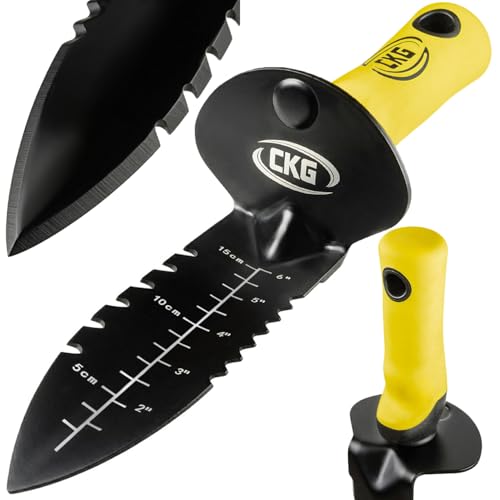
The CKG digging shovel is built like a small hand tool that took steroids: a heavy-duty blade with double serrated edges and a welded handle joint designed to resist bending. Compared to the Garrett edge digger in the previous pick, this one leans more toward aggressive ground and stubborn roots than delicate turf work. A sheath knife rides along in the kit, which is genuinely useful for cutting through ivy, opening bags, or trimming back the overgrowth that hides good targets in the first place.
For beginners who plan to hunt old yards, wooded edges, and sites where soil has hardened, the reinforced build earns its weight. It handles intense work without the flex you feel in cheaper trowels, and that matters when you’re prying up a deeply buried coin.
A Favorable Mix
- Welded handle-blade joint resists bending in compacted soil
- Double serrated edge cuts through roots and tough turf
- Sheath knife included for clearing brush and opening recovery bags
- Versatile across gardening, camping, and detecting sessions
Trade Offs
- Heavier than a standard garden trowel, which adds fatigue on long walks
- Aggressive serrations are overkill for manicured lawn sites
Right Fit For
Detectorists hunting in tough, root-heavy, or compacted-soil sites where a flimsy trowel would bend on the first hole.
Look Elsewhere When
The CKG Carbon Metal Detecting Set is the better match if you cover long distances and want a noticeably lighter carry.
The standalone Garrett Pro-Pointer AT is the same waterproof handheld covered in pick #1, sold without the edge digger for those who already own one. Where this version earns its place in a beginner’s kit is the bright orange body, which is easier to spot when you set it down in tall grass or set it on a beach towel. The fast retune feature narrows the detection field on demand, which helps when you’re zeroing in on a small target sitting next to a piece of iron trash.
Beginners moving beyond dry parks into shallow water and shoreline hunts will appreciate not having to baby the tool near waves. Three sensitivity levels cover everything from coins to small gold-style pieces, and the single-button layout means less fumbling in cold or wet hands.
Notable Gains
- 20-foot submersible rating opens up creeks, lake edges, and surf
- Fast retune shrinks the detection field on command
- High-visibility orange case reduces losses in grass or sand
- Single-button control simplifies cold-weather and gloved use
Points To Note
- Battery life varies with sensitivity setting, so carry spares for long days
- Stealth mode is helpful but easy to trigger if the button gets bumped in a bag
Best Suited To
New detectorists who want a do-it-all waterproof pinpointer they can grow into across parks, beaches, and freshwater sites.
A Better Fit Elsewhere
The Bounty Hunter Junior Metal Detector is the better match if the user is a young child and a full handheld pinpointer is too advanced.
The Minelab EQX 06 is a replacement search coil built specifically for the Equinox series, not a standalone detector. The Double-D coil pattern, which uses two overlapping signal loops, handles trashy sites better than the concentric coils on many entry-level machines, separating good targets from junk iron more cleanly. A skidplate comes in the box, and that little plastic cover is the unsung hero of coil ownership since it takes the abrasion instead of the coil face.
For beginners who already invested in an Equinox, this coil is the logical next step once you’ve mastered the basics. It shines on difficult terrain, and its sensitivity to small targets makes it well suited to coin and jewelry recovery in littered ground.
Real Benefits
- Double-D pattern separates targets in high-trash areas
- Tuned sensitivity helps recover small coins and thin jewelry
- Waterproof construction handles wet grass and shallow water
- Included skidplate protects the coil face from scuffs
Some Limits To Know
- Only fits Minelab Equinox detectors, so check compatibility first
- Adds weight and changes balance compared to a stock coil
Feature Snapshot
Who Should Grab It
Equinox owners ready to upgrade their coil for better performance in trashy parks, beaches, and relic sites.
Swap It Out When
The Bounty Hunter Tracker IV Kit is the smarter starting point if you don’t yet own a Minelab detector.
The CKG carbon set pairs a full-size spade shovel with a hand trowel and pouch, all built around carbon-fiber-style components to cut weight. The 39-inch spade handle is significantly easier to carry than the heavy-duty steel option in pick #2, which matters on long walks between sites. The carbon handle is rated to support over 170 pounds, so the lightweight design does not come at the cost of digging force.
Beginners covering large fields, beaches, or permission-granted farmland will feel the difference in their shoulders by hour two. The included pouch gives you a place to stow finds without juggling them in your pockets.
The Upside
- Carbon-style construction cuts fatigue over long sessions
- Handle rated for serious digging pressure despite the light weight
- Two-tool set handles both primary digging and fine recovery
- Pouch keeps small finds organized on the go
A Few Limitations
- Carbon components cost more than basic steel trowels
- Lighter blade may flex in extremely rocky ground
Quick Facts
Whose Shelf It Belongs On
Detectorists who log long walks and want a digging kit that disappears in the bag instead of dragging them down.
Where Another Pick Suits Better
The CKG Metal Detector Shovel is a better match if you dig mostly in stubborn soil and prioritize brute strength over weight savings.
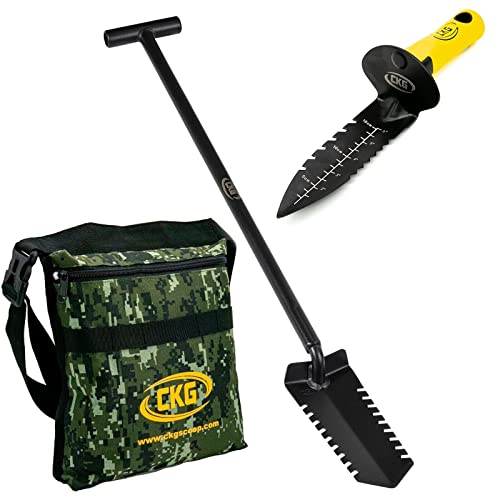
This CKG set bundles a heavy-duty digging tool with a knife and a pouch, packaged for detectorists on the move. The double serrated edge handles roots and tough turf, while the included pouch keeps small finds, gloves, and the knife together so nothing gets left at the car. It shares DNA with the brand’s heavier standalone shovel in pick #2 but ships as a more complete travel kit.
For beginners who hunt multiple sites in a single trip or travel to detecting clubs and rallies, the bundled layout cuts decision fatigue. You get a sturdy digger, a cutting tool, and a place to put your finds in one package.
Useful Strengths
- Double serrated edge powers through roots and hardened soil
- Knife included for cutting brush and opening gear bags
- Pouch organizes small finds and accessories in the field
- Compact bundle suits travel between multiple hunting spots
Honest Caveats
- Bundle weighs more than a single-tool starter option
- Knife adds a sharp edge that needs careful handling around kids
Perfect Match For
Hobbyists who bounce between sites and want a self-contained digging kit ready to throw in the car.
Reach For A Different Pick When
The CKG Carbon Metal Detecting Set is a smarter pick if you hike long distances and need to shed ounces.
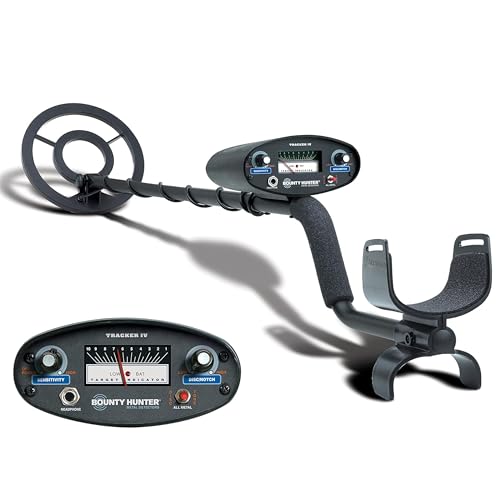
The Bounty Hunter TK4 Tracker IV is a complete entry-level metal detector with an 8-inch waterproof coil and three search modes, and it’s where many American detectorists cut their teeth. Discrimination, tone, and all-metal modes let beginners experiment with filtering trash, which is the skill that separates random digs from productive hunts. The 8-inch coil strikes a useful balance between ground coverage and the ability to navigate around playground equipment, picnic tables, and other obstacles.
For first-time adult detectorists who want one purchase that gets them into the field immediately, this is the kind of straightforward kit that pays for itself in recovered coins within a few weekends. It’s also light enough that teens can handle it without complaint.
Positive Takeaways
- Three search modes let beginners learn discrimination gradually
- 8-inch waterproof coil covers parks, beaches, and shallow water
- Lightweight frame reduces arm fatigue on long walks
- Simple interface gets you hunting within minutes of setup
Worth Bearing In Mind
- Stock coil struggles in highly mineralized soil without ground-grind tweaks
- No waterproof rating on the control box, so rain needs caution
Feature Rundown
Who Will Love This
First-time adult detectorists who want a complete, ready-to-hunt machine that handles parks, yards, and dry beach sand.
Skip It When
The Bounty Hunter Junior Metal Detector is the better match if you’re shopping for a child rather than an adult beginner.
The Tracker IV Kit bundles the same detector as the TK4 in pick #7 with a digger and pouch, giving beginners everything in one box. For shoppers who don’t already own recovery tools, this combination eliminates the second trip to the store. The 8-inch waterproof coil and three detection modes carry over from the standalone version, so you get the same core performance with extras ready to use.
Budget-conscious beginners who want a complete starter package without piecing together components will appreciate the simplicity. It’s also a thoughtful gift option since the recipient doesn’t need to source additional accessories.
Key Advantages
- All-in-one bundle cuts setup time for first hunts
- Three search modes teach discrimination by feel
- 8-inch waterproof coil works across parks and beaches
- Lightweight build suits teens and adults alike
Potential Drawbacks
- Stock digger is serviceable but not built for tough soil
- Control box isn’t waterproof, so rain demands care
Right Fit For
Beginners who want a ready-to-go kit with detector, digger, and pouch included in a single purchase.
Consider Something Else When
The CKG Carbon Metal Detecting Set is the better match if you need a digging tool that can take real abuse.
The Bounty Hunter Junior is built specifically for kids ages six and up, with a shorter shaft, lighter frame, and simplified controls that won’t frustrate small hands. A 6.5-inch coil keeps the swing manageable, and beep alerts plus a discrimination mode give children instant feedback when they pass over a coin or pull tab. The detector finds coins up to five inches deep and larger metal objects up to roughly three feet below the surface, which covers most backyard scenarios.
For families introducing a young child to the hobby, this is a far better choice than handing them an adult detector. It’s also a way to gauge interest before investing in a grown-up machine for the household.
Strong Points
- Kid-sized and lightweight for comfortable handling
- Adjustable length grows with your child
- Beep alerts offer clear, simple feedback on finds
- Discrimination mode helps filter obvious trash
A Few Limitations
- Smaller coil covers less ground than adult models
- Detection depth suits starter finds, not deep relics
Feature Card
Who It Suits Best
Families with children ages six and up who want a starter detector sized and priced for young hands.
Where A Sibling Pick Shines
The Bounty Hunter TK4 Tracker IV is the better match for adults ready for more capable all-terrain hunting.
What Matters Most Before Choosing Metal Detectors For Beginners
Coil Size And Waterproofing
Coil size determines how much ground you cover per swing and how well you maneuver around playground equipment, grates, and other obstacles. Most entry-level machines use 8-inch coils, which balance coverage and agility. Beginners searching parks and yards benefit most from this size, while kids often do better with 6.5-inch coils on junior models. Waterproofing matters more than beginners expect: a waterproof coil lets you hunt wet grass, shoreline puddles, and shallow creek beds without babying the gear. The control box is rarely waterproof, so rain still calls for caution.
Detection Modes And Discrimination
A discrimination mode is the single feature that saves beginners the most frustration. It filters out iron trash like nails and foil so the detector doesn’t beep on every buried scrap. All-metal mode picks up everything and is great for learning how the machine reacts to different targets, while tone mode adds audio variation between target types. Starting in all-metal, then gradually adding discrimination, helps new detectorists learn what their local sites actually contain.
Comfort, Weight, And Adjustability
A detector you’ll carry for three hours has to fit your body. Lightweight frames under four pounds reduce arm and shoulder fatigue, especially for younger users and longer sessions. Adjustable shafts matter when the detector will be shared among family members or used by a growing child. A padded grip and balanced coil also help on the back-swing, which is where most fatigue shows up by the second hour.
Pinpointers And Digging Tools
Once you find a target, you still have to recover it, and that’s where most beginners underestimate the workload. A handheld pinpointer (a small probe that zeroes in on the target inside the dug hole) saves time and reduces plug size, while a sturdy digging tool keeps you from bending trowels on the first afternoon. Bundles that include a digger or pouch are useful for shoppers who don’t want to source accessories separately. Heavier blades suit tough soil, lighter carbon-style shafts suit long walks.
Common Shopping Slip Ups And Smart Upgrades
Where Shoppers Go Wrong
The most common beginner mistake is buying a detector without checking whether it suits the terrain you actually have access to. A backyard hobbyist doesn’t need deep-reach relic modes, and a beach hunter needs waterproofing far more than pinpoint precision on dry land. Another trap is overlooking shaft weight: a heavy detector becomes a coat rack after two hours. Skipping the digging tool is a frequent oversight too, since a flimsy garden trowel bends in compacted soil and turns a fun hobby into a frustration. Beginners also sometimes buy complex multi-frequency machines meant for experienced users, which adds settings they’ll never touch in the first season.
When Paying More Pays Off
Stepping up from a basic entry-level detector usually buys you better discrimination, deeper target response, and tougher weather sealing. For beginners planning to hunt beaches or relic sites regularly, the upgrade pays off in fewer trips back to the car to swap settings. For casual backyard hunters, the jump rarely justifies the cost. The honest read: spend more when your hunting sites demand it, and stay practical when your weekends mostly involve local parks and yards.
Frequently Asked Questions
How deep can a beginner metal detector find coins?
Most entry-level detectors reach coin-sized targets at roughly five to eight inches in normal soil, with larger objects detectable deeper. Conditions like soil type, mineralization, and target orientation affect real-world depth, so don’t expect lab-perfect numbers in the field.
Do I need a waterproof metal detector as a beginner?
A waterproof coil is worth having for wet grass, shallow puddles, and beach hunts, and most starter coils carry that rating. The control box is typically not waterproof, so submersion calls for a dedicated underwater model rather than a beginner detector.
Can kids safely use a beginner metal detector?
Yes, with a detector sized for their height and weight, plus adult supervision around digging tools and any sharp accessories. Junior models keep the swing manageable and the weight light enough for small arms.
What’s the difference between a pinpointer and a metal detector?
A metal detector sweeps broad ground to locate targets in a wide area, while a pinpointer zeroes in once you’re already digging a hole. Together they cut recovery time and reduce the size of the plug you need to cut.
Should I buy a bundle or separate pieces?
Bundles save time and often cost less than buying components individually, which suits beginners who want to start hunting immediately. Experienced hobbyists sometimes prefer to pick each piece separately as their skills and needs develop.