
A pillow can change the character of an overnight hike, especially after a long day on uneven ground. I chose these options around pack size, support, material, drying behavior, and the different places hikers rest, from alpine campsites to transit seats. My shortlist covers lightweight inflatable designs, memory foam, and two-pillow sets for people balancing comfort with limited pack space.
A Closer Look At The Lineup

Sea to Summit Aeros Ultralight Pillow, Sea Foam
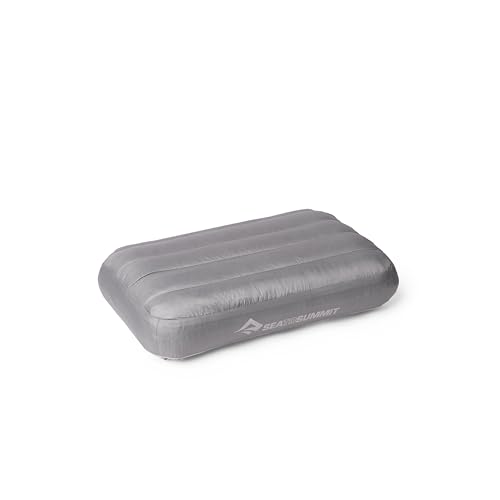
Sea to Summit Aeros Down Inflatable Pillow

Klymit Luxe Hybrid Inflatable Pillow, Grey

Sea to Summit Aeros Ultralight Traveller Neck Pillow, Grey

Sea to Summit Aeros Premium Traveller Neck Pillow, Navy

REDCAMP Two-Piece Camping Pillow Set, Blue
alkamto Compressible Memory Foam Camping Pillow
Taking A Closer Look At The Options
The regular Aeros places weight and bulk ahead of loft, which makes it a natural fit for hikers carrying a sleeping bag and insulation on a fast-moving trail. Its 20D polyester knit face feels softer against the head than many visibly rugged camping fabrics, while the scalloped base follows the shoulders in back, side, or upright positions.
That shape makes it more versatile than a basic inflatable rectangle, although campers seeking a deeply plush surface may prefer the Aeros Down. Packed small enough for a shirt pocket, the regular version appeals most to hikers who want reliable support without surrendering much room in the pack.
Points In Its Favor
- The shirt-pocket packed size leaves more room for food and trail layers.
- Polyester knit fabric balances low weight with a soft sleeping surface.
- Shoulder contours provide more targeted support than a flat air pad.
- The mini valve supports quick inflation, firmness adjustment, and fast packing.
Small Caveats
- Its light cushioning may feel modest beside a memory foam pillow.
- Air pillows can retain a shaped impression during long-term storage, so fully releasing the air helps prevent creases.
Quick Facts
Built With In Mind
This suits fast-and-light hikers, thru-hikers, and campers who regularly compress their gear into a small pack.
Where A Sibling Pick Shines
Travelers seeking more softness will find the Sea to Summit Aeros Down Inflatable Pillow more suitable.
The Aeros Down adds loft to the familiar inflatable format, making it more convincing after a demanding day on rough terrain. Down insulation is a fine material that traps air to create soft cushioning, and here it supplements the air chamber rather than replacing it. For back sleepers who like a little give, that combination can feel more accommodating than a taut air surface.
The tradeoff appears in moisture exposure and price, although technical fabrics are designed to reduce weight and withstand wet conditions. Compared with the regular Aeros Ultralight, this version targets campers who prioritize comfort over the absolute minimum packed footprint.
A Few Highlights
- Down cushioning adds a softer contact layer for overnight campsites.
- The inflatable structure remains easy to compress after a long day.
- Firmness can be tuned for a flatter or more supportive feel.
- Quick deflation makes morning pack-down less cumbersome.
- Moisture-focused fabric construction suits variable outdoor conditions.
Honest Caveats
- Down insulation needs a dry storage pouch during damp trips.
- The premium cushioning adds little benefit to hikers who use a pillow only occasionally.
Feature Snapshot
Made For
Comfort-focused backpackers and hikers sleeping at exposed campsites benefit most from the added down layer.
Another Choice May Suit
The Sea to Summit Aeros Ultralight Pillow, Sea Foam offers a smaller and lighter alternative for ultralight hikers.
A hybrid pillow fits naturally into trips that begin on a plane or in a car and continue onto a trail. The Klymit Luxe compresses to 3 by 7 inches and weighs 6.2 ounces, giving it a defined advantage for mixed transport days. Its hybrid construction aims to divide responsibility between air support and a cushioned component, producing a more substantial center than a basic inflatable.
That middle ground may feel well suited to hammock campers and travelers who dislike the direct springiness of fully air-filled pillows. In my view, the compromise is sensible, though the regular Aeros Ultralight still takes the lead for hikers who protect every gram of pack weight.
Everyday Wins
- The 3-by-7-inch packed size fits into small side pockets.
- A 6.2-ounce weight remains practical for a portable travel pillow.
- Hybrid cushioning offers support without a completely flat sleeping surface.
- One design works across cars, planes, campsites, and hammocks.
Possible Compromises
- The hybrid core takes more room than a fabricless inflatable model.
- Campers may need time to adjust to the firmer center after using a plush home pillow.
Who It Suits Best
It best serves backpackers who split their time among hiking, driving, flying, and hammock sleeping.
Look Elsewhere When
Pure ultralight hikers will find less pack impact with the Sea to Summit Aeros Ultralight Pillow, Sea Foam.
This neck pillow addresses the part of hiking that happens before camp: the bus ride, flight, or long drive toward the trailhead. Its narrow center helps the shape sit against a vehicle headrest, while the inflatable wings support the neck without occupying the full width of a seat. That makes it more useful in transit than the camping-focused Klymit Luxe.
The adjustable closure allows firmness to be changed according to seat angle and personal preference. It may feel less substantial than the premium neck option, but the ultralight model is easier to keep accessible in a daypack and works well for short naps during long journeys.
Benefits That Matter
- The narrowed center fits more closely to car and aircraft headrests.
- Adjustable closure lets the neck support tighten or relax.
- Quick inflation makes it convenient during layovers and rest stops.
- The compact format moves easily between home, vehicle, and trail pack.
Less Ideal Details
- The shape supports the neck and head but does not replace a full camp pillow.
- Valve seals can collect grit on dusty trips, so the surface needs a light wipe before storage.
The Details
Right Fit For
It fits travelers who arrive at the trail by plane, train, car, or bus and need a compact neck support.
Swap It Out When
Camp-focused hikers will find more head support with the REDCAMP Two-Piece Camping Pillow Set, Blue.
Where the Ultralight Traveller prioritizes a small footprint, this premium neck pillow places more emphasis on cushioning for extended sitting. The ergonomic outline follows the neck and head, and the narrowed middle reduces bulk against seat backs. That combination is useful during a long train ride or a flight where posture gradually shifts.
Compared with the grey Aeros Ultralight Traveller, this navy model appears intended for people who will use the pillow for repeated journeys rather than occasional power naps. The trade-off is extra material and bulk, so a hand-carry bag designed around a very small kit may not accommodate it as neatly.
What Works In Its Favor
- Contoured wings support both the head and neck during travel.
- The narrowed center reduces interference with vehicle headrests.
- Adjustable inflation supports different seat positions and firmness preferences.
- The navy finish is less conspicuous in a travel bag than a bright accent color.
Where It May Fall Short
- It offers less space efficiency than the Aeros Ultralight Traveller.
- Inflatable cushions need regular pressure checks because air slowly escapes over time.
Who Will Love This
Frequent train and air travelers benefit from the fuller neck support during multi-hour journeys.
Reach For A Different Pick When
Minimal pack size matters more than cushioning for backpackers choosing the Sea to Summit Aeros Ultralight Pillow, Sea Foam.
Two small pillows shift this choice away from solo ultralight travel and toward shared camps, couples, and families dividing a vehicle. Each piece uses a flannel shell, nonwoven lining, and 250-gram spun-cotton filling, creating a fabric construction that feels more conventional than an inflatable chamber. The set weighs 320 grams, so two occupants carrying one must divide that burden.
The soft structure is the main attraction. In a camper van, the pair can serve as sleeping pillows or back supports, a flexibility the other camping models lack. Solo hikers may still appreciate the familiar textile feel, but carrying an unused second pillow is not an efficient pack choice.
A Few Strong Suits
- Two matching pillows suit couples, children, and shared sleeping arrangements.
- Flannel shells create a softer feel than the featured inflatable models.
- Spun-cotton filling provides conventional cushioning for tents and camper vans.
- The combined 320-gram weight remains manageable for vehicle-based camping.
Practical Considerations
- Textile pillows retain more packed volume than deflated air models.
- Owners commonly air or wash them between trips for odor control, subject to the care instructions.
Core Details
Best Suited To
Couples, families, and camper-van travelers gain the most from having two coordinated pillows.
Another Choice May Suit
Solo backpackers who prize pack volume will find the Klymit Luxe Hybrid Inflatable Pillow, Grey more practical.
Memory foam provides a different kind of support from air: it compresses under the head and then gradually returns to shape. This alkamto model compresses for packing and includes a travel case, making it more substantial than the Aeros options for base-camp sleepers. Its two cotton covers and viscose outer layer also create a more familiar home-pillow feel after a long day under load.
The soft material suits side sleepers and anyone sensitive to pressure from an inflated surface, assuming they can accept the extra packed bulk. Fast hikers may still prefer an inflatable that collapses into almost nothing. For car camping or backpacking with room to spare, this option puts texture and contour ahead of minimum weight.
A Strong Showing
- Memory foam molds around the head for a softer pressure-reducing feel.
- The compressible core makes it easier to fit inside a larger hiking pack.
- A viscose outer layer adds a cooler, smoother sleeping surface.
- Removable cotton covers simplify separation during cleaning and packing.
- The included case provides a convenient place for a compressed pillow.
Small Limitations
- Foam retains more shape in a pack than a deflated inflatable pillow.
- The cotton covers need time to dry fully after wet-weather use.
Important Details
Made For
Side sleepers and car-camping hikers benefit most from foam contouring and washable textile layers.
Consider Something Else When
Low pack volume is the priority for hikers who prefer the Sea to Summit Aeros Down Inflatable Pillow.
What Matters Before Choosing A Hiking Pillow
Weight And Packed Size
A pillow with excellent sleep comfort still has to share a pack with shelter, sleep insulation, food, water, and clothing. Air pillows usually win on volume because they deflate nearly flat, while memory foam and fiber-filled models occupy more space. Repeated-route hikers should consider both carried weight and how easily the pillow fits into the remaining compartment.
Sleeping Position And Support
Back sleepers often benefit from flatter inflation, while side sleepers may want a wider pillow that fills the space between the ear and shoulder. Neck pillows serve a separate purpose and are most effective in vehicles, aircraft, and trains. Hiking pillows should support the head without becoming so tall that it bends the neck.
Materials And Moisture Exposure
Polyester and technical fabrics move through packing cycles more easily than absorbent cotton, while down and foam create additional comfort at the cost of moisture management. Inspect seams, valve placement, and outer surfaces before a trip. Drying damp equipment completely is a basic storage practice because trapped moisture can produce odors and mildew.
Cleaning And Long-Term Storage
Air models can be wiped down and deflated after use, while removable textile covers need more attention during washing and drying. Always let foam and filled pillows dry fully before compression. Periodic airing also helps storage bags and cases avoid collecting moisture between trips.
Practical Choices Across The Category
Where Shoppers Go Wrong
Choosing by softness alone can create pack frustration, especially on routes with limited volume. Compare inflated dimensions, packed dimensions, and the space required for a separate case. Neck support and head support solve different problems, so one model rarely handles transit and tent sleeping equally well.
The Upgrade Payoff
Down insulation and memory foam add a noticeably different sleeping texture, but neither disappears into a pack like a basic air chamber. The extra expense is more defensible for repeated campers, side sleepers, and routes with a reliable pack. Minimalists receive better utility from spending that allowance on shelter or sleep insulation.
Frequently Asked Questions
Are inflatable pillows suitable for hiking?
Inflatable pillows suit hiking because they combine support with a small deflated size. Their performance depends on firmness, material, and expected use. A campsite model serves the head better than a neck-focused design.
Which pillow is lightest for backpacking?
The Sea to Summit Aeros Ultralight Pillow, Sea Foam is designed around a small packed footprint and light construction. Exact carried weight depends on the complete setup. Inflatable models are generally easier to compress than memory foam.
Can an inflatable pillow be used in a hammock?
An inflatable pillow can support the head in a hammock, though a broad shape may prevent fabric pressure around the face. Campers may need a small towel for forehead contact. The Klymit Luxe Hybrid Inflatable Pillow, Grey suits mixed hammock and travel use.
How should a camping pillow be stored?
Dry the pillow completely, release trapped air from inflatable models, and compress filled pillows only within their intended range. Long-term moisture can lead to odors or mildew. Keep storage containers clean and dry.
Are memory foam pillows too bulky for hiking?
Memory foam generally takes more pack volume than an air pillow because it does not collapse completely. It remains a practical choice for hikers with a roomy pack or car-based camping. Frequent fast-moving hikers may prefer an inflatable design.
The Takeaway
The strongest choice depends on the trip. Fast hikers may favor the compact regular Aeros, comfort-focused backpackers can consider the down version, and mixed travelers may prefer Klymit’s hybrid approach. Shared camps benefit from REDCAMP’s pair, while foam remains useful for campers with room to carry it. Choose the shape and packing method that match the trip rather than the category in general.