
A binocular harness keeps optics centered, reduces neck strain, and places small essentials within reach during long hunts. That matters most in wooded terrain, where balance, quiet access, and secure storage can shape a more comfortable day in the field. I focus on fit, carrying capacity, weather protection, and practical features for mobile hunters, birders, and hikers.
A Snapshot Of The Selections

Muddy Pro 1075 Hunting Backpack, Mossy Oak

Muddy Pro 500 Lumbar Pack, Mossy Oak
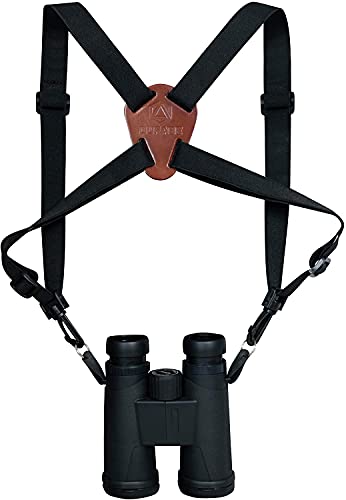
OUFABE X-Shaped Binocular Harness Strap for Hunting, Birding and Hiking

MOXULE Bino Harness Chest Pack

KUIU PRO Bino Harness with One-Hand Lid

Muddy Outdoors PRO BINO Harness

Bushnell Prime 10×42 Binocular and Vault Bino Caddy
Taking A Closer Look At The Options
This is a full backpack rather than a dedicated binocular harness, so it suits hunters carrying more equipment than a small chest rig can handle. Wide, padded shoulder straps spread the load across the upper body, while the sternum and waist straps help keep the bag from shifting during long walks.
The Mossy Oak Bottomland pattern blends into many woodland settings, and expandable storage adds flexibility for organizing layers, food, or hunting accessories. Compared with the Muddy Pro 500 Lumbar Pack, this model carries more, but it also feels less streamlined.
Good Reasons To Consider
- Wide shoulder straps provide cushioning for longer periods of walking.
- Sternum and waist straps add stability across uneven ground.
- The expandable kangaroo pocket supports quick access to frequently used items.
- Elastic side pockets give small essentials a separate place to sit.
Things To Consider
- Its backpack format does not keep binoculars at eye level like a chest-mounted harness.
- More pockets and straps mean more surfaces to clean after muddy conditions.
Built With In Mind
It best serves hunters moving with substantial gear over longer distances.
Where A Sibling Pick Shines
The Muddy Pro 500 Lumbar Pack is a quieter, more compact choice for hunters who carry only essential accessories.
The Lumbar Pack places storage around the waist, reducing the arm and shoulder burden of a conventional backpack. Its 500-cubic-inch, 8-liter main compartment holds a compact hunting load without forcing the wearer to carry a large frame.
The zipperless lid is useful for quiet access during mobile hunting, while the front stash pocket keeps smaller objects separate. Unlike the OUFABE X-Shaped Binocular Harness Strap, this pack has more storage but less direct support for optics.
Useful Strengths
- Quiet lid access suits stalks where sudden zipper noise could be distracting.
- The adjustable waist belt helps distribute carried gear around the hips.
- Two quiet-zippered waist pockets create easy-to-reach storage for small tools.
Small Caveats
- The 8-liter volume can feel limited for hunters bringing cold-weather clothing.
- Binocular retention and chest-level access depend on the separate carrying system.
Quick Facts
Made For
It suits mobile hunters who prefer waist-based storage and quiet access over a full backpack.
Another Choice May Suit
The KUIU PRO Bino Harness with One-Hand Lid offers a more protective, dedicated case for frequently used binoculars.
The X-shaped layout is a simple alternative to a padded chest pack, spreading the binoculars across the upper torso while keeping the center of the chest relatively open. That design makes sense for birders, hikers, and hunters who carry only binoculars and a few small items.
For quiet woodland observation, the strap shape can be more discreet than a broad case. The tradeoff is limited storage, so rangefinders, maps, and other accessories may need a separate pack.
Key Advantages
- The X-shaped structure distributes binoculars across the shoulders and upper chest.
- A minimal profile suits hiking and birding where bulky storage is unnecessary.
- The harness format keeps optics from swinging as heavily as a loose shoulder carry.
Where It Is Less Suited
- It offers less organization than the MOXULE Bino Harness Chest Pack.
- A minimal strap may provide less padding for long periods of walking.
Right Fit For
It best fits hikers and birders who prioritize low bulk over accessory storage.
Look Elsewhere When
The MOXULE Bino Harness Chest Pack is a stronger fit for people carrying rangefinders and a phone.
MOXULE turns the harness into a small chest pack, combining binocular storage with room for a rangefinder, phone, and related accessories. The detachable rangefinder pouch is especially useful for hunters who want a dedicated place for distance measurement.
The main compartment measures 8.07 by 6.3 by 2.95 inches, giving many binocular models room inside. For a hunter moving quietly through brush, the organized pockets may be more useful than the smaller OUFABE harness, although the added bulk needs consideration.
Practical Pluses
- Interior mesh pouches help separate small items from the binoculars.
- A front phone pocket keeps a phone visible without occupying the main compartment.
- Back mesh storage and a rain-cover pocket broaden the carrying options.
- Bottom MOLLE straps add attachment points for compatible accessories.
Practical Considerations
- Multiple compartments can become harder to organize over time.
- The larger footprint may feel unnecessary for short birding outings.
Feature Snapshot
Who It Suits Best
It suits hunters who need more than a simple binocular strap and carry several devices.
A Better Fit Elsewhere
The KUIU PRO Bino Harness with One-Hand Lid is a better fit for weather-sensitive trips where enclosure matters more than pocket count.
The KUIU PRO focuses on protecting binoculars and making them reachable without a two-handed search through pockets. Its fully enclosed lid helps limit exposure to rain, snow, dust, and debris, a practical advantage during wet woodland hunts and changing weather.
One-hand operation is useful while balancing uneven terrain or holding climbing equipment. The fleece-lined fabric and foam shims also add a softer feel, although the case may be more substantial than the OUFABE harness for people who carry very little.
The Case For It
- The enclosed lid helps protect optics from weather and airborne debris.
- One-hand access keeps binoculars convenient during movement.
- Fleece lining adds a gentle surface around the optics.
- Foam shims provide cushioning within the case.
Points To Note
- The protection-focused design takes more space than a minimal harness strap.
- Its pocket-based organization is less extensive than the MOXULE Bino Harness Chest Pack.
Built With In Mind
It fits hunters and birders who need dependable protection from changing outdoor conditions.
Reach For A Different Pick When
The MOXULE Bino Harness Chest Pack better serves people who need dedicated rangefinder and phone storage.
The Muddy Outdoors PRO BINO Harness is built around soft, quiet handling and a close-to-body design for mobile hunting. Its U-shaped opening helps access the binoculars, while the soft-lined interior cushions the lenses and reduces direct contact with the case walls.
Several lashing points and extra storage make it more flexible than the simple OUFABE strap. It is a natural fit for tree-stand or still-hunting setups, where reduced fabric noise and compact storage can matter more than high accessory capacity.
The Practical Payoff
- Soft poly brush fabric helps limit movement noise during close-range hunting.
- The cushioned interior protects lenses from bumps and contact.
- Additional pockets create useful organization without the size of a full backpack.
- A padded back panel supports comfortable carry over extended periods.
Soft Spots
- The soft lining may need occasional brushing to remove dust and debris.
- Its color options suit hunting environments better than formal or urban use.
Who Should Grab It
It suits hunters who value quiet handling, soft protection, and compact storage near the torso.
Swap It Out When
The KUIU PRO Bino Harness with One-Hand Lid is a better match for trips with frequent rain or snow.
This combination pairs 10×42 binoculars with the Vault Bino Caddy, removing the need to match a separate harness to an unfamiliar set of optics. The 10×42 format is a familiar general-purpose configuration for hunting, birding, and hiking.
The caddy’s magnetic closure supports one-hand access, while its soft-touch exterior is intended to reduce noise from movement. Compared with the Muddy Outdoors PRO BINO Harness, the advantage is the bundled setup; the trade-off is less flexibility for people who already own a preferred harness.
What Earns Its Place
- The 10×42 binocular format is versatile across several outdoor activities.
- A magnetic closure makes the caddy easier to open with one hand.
- Soft-touch material helps limit movement noise in quiet settings.
- The modular caddy keeps the optics and carrying system together.
Potential Compromises
- A bundled setup may be less useful for experienced users with established optics.
- The caddy should be kept clear of sharp objects that could damage the binoculars.
Who Will Love This
It suits a hunter or birder starting a new setup who wants binoculars and a carrying case together.
Not Your Match When
The Muddy Outdoors PRO BINO Harness is a better fit for a hunter already equipped with binoculars.
What To Consider Before Choosing A Binocular Harness
Carry Position And Access
A chest harness keeps binoculars close and centered, which is useful during scanning and hiking. A lumbar pack shifts storage toward the hips, and a backpack handles larger loads but takes up more space. Choose based on the gear carried, not merely the silhouette.
Weather Protection And Quiet Handling
Wet ground, branches, and dust can all affect binoculars. An enclosed lid and padded lining provide a stronger barrier than a simple strap. Quiet fabric and restrained closures also help during close-range observation, where repeated rustling can give away position.
Pocket Layout And Fit
Pockets are useful only when each item has a clear place. A rangefinder pouch helps hunters who measure distances regularly, while a phone pocket adds everyday utility. Adjustable straps and waist supports should distribute weight without pulling the harness into an uncomfortable position.
Capacity Without Bulk
More storage can help on long days, but every added layer increases snag points and bulk. A simple strap works well for binoculars alone, while a chest pack earns its size through organized accessory storage. Check the internal dimensions before placing larger binoculars inside a compact case.
Practical Details Before Field Use
Common Shopping Slip Ups
A harness that looks roomy may not fit the shape or dimensions of a particular binocular set. Measure the optics first, then check closure security, strap adjustment, and pocket placement. Borrowing gear for a short walk can expose poor fit more easily than a long day in the woods.
What Separates Premium From Basic
Premium designs tend to improve protection, padding, access, and load distribution. Those features matter in wet terrain, dense brush, or long hikes where a basic strap may not provide enough coverage. The additional cost is most useful for people carrying optics frequently rather than storing them occasionally.
Frequently Asked Questions
Are binocular harnesses comfortable for long hikes?
Comfort depends on padding, strap adjustment, and how closely the load sits to the body. A balanced harness can remain workable on long walks, while poor adjustment may create pressure points.
Can a binocular harness hold a rangefinder?
Yes, a model with a dedicated rangefinder pouch keeps that device separate from the binoculars. Pouches vary in size, so checking dimensions matters before purchase.
Do waterproof harnesses protect binoculars completely?
Water-resistant materials can reduce exposure to light rain and splashes, but seams, closures, and openings still matter. Storing binoculars in a protective case remains sensible during heavy rain or extended wet weather.
Is a chest pack better than a backpack for hunting?
A chest pack keeps binoculars accessible and closer to the torso, while a backpack carries more equipment. Mobility and quick observation usually favor the chest pack; larger loads favor the backpack.
How should a binocular harness fit?
The harness should sit securely without restricting arm movement or digging into the shoulders. Straps need adjustment, and the binoculars should not bounce excessively while walking.
Final Thoughts
The right binocular harness depends on terrain, carried equipment, and how often the optics move from storage to active use. A quiet, close-fitting harness works well for lightweight setups, while chest packs and lumbar packs add organization for longer days. Matching the carrying system to the actual gear makes the biggest practical difference.