
A fixed blade can handle camp chores, fishing trips, hunting tasks, and everyday utility work without the complexity of a folding knife. The difficult part is finding an affordable model with a suitable blade, secure grip, and dependable sheath. I compare blade construction, dimensions, handle materials, carry options, and specialized uses to narrow the field for commuters, outdoor users, beginners, and experienced hands.
The Essentials At A Glance
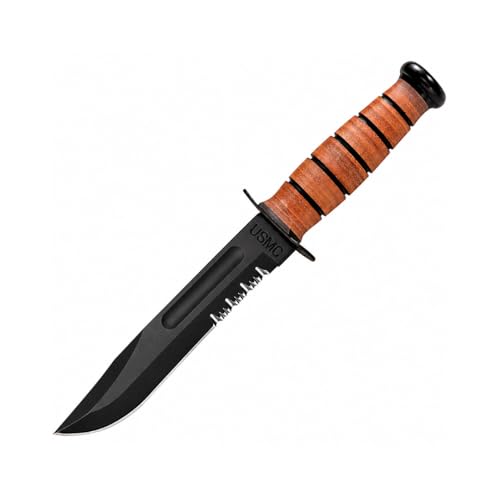
KA-BAR USMC Fighting 7-Inch Partially Serrated Knife

Morakniv Floating Fine-Edged Knife

Toferner Celtic Hand-Forged Pocket Knife

KA-BAR Dog’s Head Utility 7-Inch Knife

KA-BAR BK22 Becker Campanion 5.25-Inch Knife

KA-BAR KB1256 Short Black Straight-Edge Knife
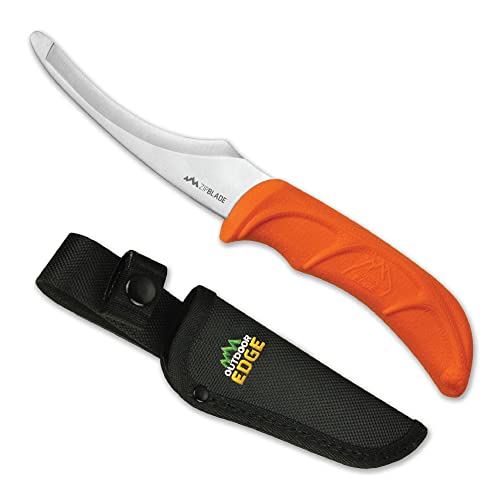
OUTDOOR EDGE Zip Blade 4-Inch Hunting Knife
The Details Behind The Selections
The full-size USMC pattern offers substantial cutting capacity without becoming one of the oversized options in this roundup. Its 7-inch 1095 Cro-Van blade, partly serrated profile, and stacked leather grip suit camping, hunting, and demanding campsite tasks.
Compared with the shorter KA-BAR models later in the list, this version favors reach and leverage over compact packing. Depending on the task and sheath setup, it appears more substantial for repeated utility work, though that same size makes it less discreet.
Everyday Wins
- The combination edge separates cleaner general cuts from the saw-like pull of the serrated section.
- 1095 Cro-Van carbon steel provides a durable working edge for outdoor chores that can handle more abuse than a thin utility blade.
- The 7-inch blade offers useful reach for cutting cord, preparing kindling, and handling larger materials.
- A stacked leather handle and included sheath create a conventional, straightforward carry package.
Things To Consider
- Carbon steel requires regular drying and oiling, particularly after exposure to rain, mud, or salt water.
- The 11.88-inch overall length is substantial beside a compact day pack.
Key Specs
Built With In Mind
Experienced campers and hunters who prefer a full-size, serviceable blade benefit most from this KA-BAR.
A Better Fit Elsewhere
Packable users benefit more from the Morakniv Floating Fine-Edged Knife on wet outdoor trips.
Water changes how a knife is used, and this Morakniv is designed around that reality. Natural cork contributes buoyancy, while the lime finish makes the tool easier to locate after it enters the water. That is a more useful safety-oriented design feature than simply adding another black handle.
At 49 grams, it is dramatically lighter than the leather-handled KA-BAR options. For anglers, canoeists, and campers who carry minimal gear, the stainless blade and flexible 1.4 mm profile favor light utility over heavy chopping.
Real Benefits
- Buoyancy helps the knife remain at the surface after an accidental drop near a canoe or shoreline.
- The high-visibility lime color reduces the time spent searching through grass or shallow water.
- Low weight and a slim blade profile pack easily into a day pack, tackle box, or canoe accessory pouch.
- Stainless steel suits damp environments with less demanding corrosion care than carbon steel.
Small Caveats
- The thin edge is better for detail work and light cuts than forceful chopping.
- Cork grip material may need closer inspection after repeated soaking and drying.
Feature Facts
Made For
Anglers, canoeists, and lightweight campers gain the most from its floating, high-visibility design.
Another Choice May Suit
The KA-BAR USMC Fighting 7-Inch Partially Serrated Knife better serves demanding camp tasks requiring more blade mass.
The Toferner stands apart visually, with hand-forged construction and a traditional Celtic-inspired profile rather than the tactical lines found on the KA-BAR models. It carries more visual and traditional character, which matters for display, gifting, or a personal collection.
Its spring steel blade and included black leather case add practical substance to that appearance. For light cutting tasks, the hand-finished edge appears approachable, but the limited dimensional information makes it harder to compare confidently with the more precisely specified hunting knives.
Everyday Perks
- Hand forging creates a distinctive appearance with visible character between individual pieces.
- The black leather case provides a straightforward way to protect and carry the knife.
- Spring steel supports a practical edge for routine opening, slicing, and light workshop tasks.
- The traditional styling gives it more appeal as a collectible or gift than most tactical profiles.
Things To Watch
- No blade length or overall weight is provided, making carry size difficult to estimate.
- The leather case may retain moisture during humid storage and should be opened after wet trips.
- Traditional styling may matter less to users focused primarily on hunting performance.
Right Fit For
Collectors, gift shoppers, and users who value hand-forged traditional design benefit most from this model.
Reach For A Different Pick When
The KA-BAR BK22 Becker Campanion 5.25-Inch Knife offers clearer size information for practical pack planning.
The Dog’s Head follows the full-size utility direction established by the USMC model, with a 7-inch clip-point blade and familiar 1095 Cro-Van steel. The emphasis is straightforward field service rather than floating, collecting, or highly specialized game processing.
Its leather handle and sheath suit campers who keep a knife secured at a campsite or vehicle. Compared with the smaller Becker Campanion, this model offers a longer working surface, though the packable KB1256 may be easier to manage during long hikes.
What Works In Its Favor
- The 7-inch clip point supports general cutting, camp preparation, and routine field tasks.
- 1095 Cro-Van steel is suited to owners prepared for occasional sharpening and basic blade care.
- Stacked leather gives the handle a traditional feel and avoids dependence on a folding mechanism.
- The included sheath keeps the blade covered during transport and storage.
Practical Considerations
- Leather and carbon steel both need careful storage after wet or dirty use.
- The full-size format may feel cumbersome in a small day pack.
- The specification set provides less detail than the measured KA-BAR alternatives.
The Right Fit
Campers and outdoor workers who prioritize blade reach and conventional field service benefit most.
Consider Something Else When
The OUTDOOR EDGE Zip Blade 4-Inch Hunting Knife better targets narrow game-processing tasks.
The 5.25-inch Becker Campanion offers a measured middle ground between a full-size KA-BAR and a small detail knife. Its drop-point blade, made from 1095 Cro-Van steel and hollow ground, favors controlled, general-purpose cuts around camp.
The Ultramid handle resists moisture better than the leather grips on several other picks, and the lanyard hole adds another attachment option. A polyester sheath with a front pocket makes this a practical choice for hikers who prefer a compact fixed blade.
Advantages To Know
- The 5.25-inch blade balances useful cutting capacity with a more packable profile.
- Hollow grinding supports a fine, precise cutting profile for camp food preparation and detail work.
- The synthetic Ultramid handle is a practical change from moisture-sensitive leather.
- A lanyard hole and sheath pocket improve attachment and small-item storage.
Worth Noting
- The drop point and slender format are less suitable for forceful chopping than a thick utility blade.
- 1095 carbon steel still needs drying and light oiling after harsh weather exposure.
Quick Facts
Whose Shelf It Belongs On
Hikers, campers, and beginners seeking a compact, general-purpose fixed blade fit this profile well.
Where A Sibling Pick Shines
The KA-BAR USMC Fighting 7-Inch Partially Serrated Knife offers more reach and a combination edge.
Shortening a familiar field knife changes more than pack volume, and the KB1256 uses that space wisely. Its 5.25-inch blade and 9.25-inch overall length preserve familiar utility proportions while reducing bulk compared with the earlier full-size KA-BAR selections.
The 1.25-inch straight edge favors clean slicing over the USMC model’s saw-like section. For camp kitchens, cord preparation, and general daily tasks, that predictable edge can be easier to manage, particularly for an owner learning basic fixed-blade care.
The Practical Payoff
- The 9.25-inch overall length is easier to pack than an 11.88-inch fixed blade.
- A straight 1.25-inch edge provides a straightforward profile for common cutting tasks.
- Kraton G is a practical thermoplastic elastomer handle material for campsite use.
- The included leather sheath supports conventional belt or pack carry.
Honest Caveats
- The straight edge is less suitable than a combination edge for heavy sawing tasks.
- Leather storage gear can absorb moisture and needs air circulation after wet use.
- The 5.25-inch blade may still feel substantial for minimalist pack setups.
At A Glance
Who Should Grab It
Campers and beginners wanting a recognizable, packable straight-edge fixed blade benefit most.
Swap It Out When
The Morakniv Floating Fine-Edged Knife better serves trips involving water and minimal pack weight.
A narrow 4-inch blade serves a more specific purpose than the general-purpose KA-BAR models. The Zip Blade is shaped for opening game, separating skin from tissue, and making controlled cuts around the gutting area during hunting work.
Stainless steel and a hand-finished edge reduce the care demands associated with carbon steel, while the rubberized orange TPR grip remains visually distinct in a hunting kit. It lacks the versatility of a combination edge, but that focused geometry is the reason to consider it.
Strengths Worth Knowing
- The narrow profile supports precise cuts beneath hides and during initial game processing.
- A 4-inch blade offers focused control without the reach of a full-size utility knife.
- 420J2 stainless steel suits exposure to moisture during long hunting days.
- The orange rubberized handle improves visual identification and grip texture.
- The black nylon belt sheath provides a practical field carry option.
Where It Is Less Suited
- The specialized profile is less efficient for camp chopping, carving, or general utility work.
- Stainless steel can be more demanding to sharpen than the carbon steel used by several KA-BAR models.
- The black nylon sheath offers less detail about retention, drainage, and attachment options.
Technical Highlights
Best Suited To
Hunters who regularly process game and value controlled, specialized blade geometry benefit most.
Skip It When
The KA-BAR BK22 Becker Campanion 5.25-Inch Knife better serves camping and multipurpose kitchen tasks.
Choosing The Right Blade For The Job
Blade geometry should lead the decision because it determines how a fixed blade behaves. A drop point supports controlled general cuts, while a clip point offers reach and a pronounced tip. Narrow gutting profiles favor precision, and combination edges add a serrated section for tougher fibers. Each shape carries a trade-off between control, versatility, and aggressive cutting.
Steel And Edge Care
Carbon steel, including 1095 Cro-Van, is common among the KA-BAR models here. It can support a durable working edge but reacts to moisture and benefits from drying and light oiling. Stainless steel reduces that maintenance burden, though edge geometry still matters. Fine-edge users should expect occasional sharpening as a normal part of ownership.
Size And Carry Method
A 4-inch hunting blade fits a specialized field kit better than a 7-inch utility knife. Conversely, the longer KA-BAR models provide more reach for cord, kindling, and camp preparation. Backpack space, sheath placement, and the likelihood of carrying one knife or several tools all matter more than raw size alone.
Handles And Sheaths
Leather feels traditional and can be replaced, though it demands more attention around rain and humidity. Synthetic grips such as Ultramid and Kraton G handle damp conditions more simply. Sheath construction should match the environment: nylon suits active outdoor use, while leather can provide secure coverage for a vehicle or campsite kit.
Intended Work Matters
A general camping knife should be versatile, but a hunting knife can be more focused. Fishing users gain from buoyancy and visibility, traditional-design shoppers may prioritize forging and appearance, and experienced field hands often value familiar blade geometry. Narrowing the task first prevents a decorative knife from looking like a tool, or a specialized tool from appearing unnecessarily narrow.
Avoiding Costly Knife Mistakes
Mistakes Worth Dodging
Choosing by appearance alone can leave a decorative profile poorly matched to demanding work. Edge type, blade length, and sheath fit deserve more attention than color or handle styling. Buyers should also account for steel maintenance, since carbon steel and stainless steel need different care routines.
What Separates Premium From Basic
Higher-tier models may use refined steel, better fit and finish, stronger hardware, or more thoroughly engineered sheaths. Those improvements can matter for frequent field users, collectors, or anyone who values consistent factory sharpness. For occasional camping and light utility tasks, a simpler model with sound materials can remain the more sensible choice.
Frequently Asked Questions
Are cheap fixed blade knives suitable for camping?
Many handle routine tasks such as cord cutting, food preparation, and kindling work. Models with carbon steel require more care around moisture than stainless steel designs.
Which blade size works best for general utility?
A 5-inch to 7-inch blade offers a practical balance of cutting capacity and packability. Specialized 4-inch hunting models prioritize controlled processing cuts instead.
Is stainless steel easier to maintain?
Stainless steel generally tolerates wet conditions better than carbon steel. Both materials still need proper storage, cleaning, and occasional sharpening.
What matters most in a fixed blade sheath?
Secure blade coverage, reliable attachment, and compatibility with the intended carry method are essential. Material and drainage features become more important during wet or high-activity trips.
Should beginners choose a serrated blade?
A combination edge can provide versatility for cord, rope, and general cuts. A straight edge is usually easier to manage for simple food preparation and controlled slicing.
Final Verdict
The KA-BAR USMC offers serious full-size utility, while the Morakniv Floating Fine-Edged Knife is the clear choice for waterborne trips. The Toferner emphasizes traditional forging, the BK22 balances size and utility, and the KB1256 keeps the straight-edge format manageable. For hunting work, the OUTDOOR EDGE Zip Blade provides the most focused geometry in the group. Match the knife to the actual task, then maintain the edge and storage gear consistently.