
Clip-on night vision turns an ordinary optic or smartphone into a more capable tool after dark, but the hardware varies sharply in resolution, mounting method, and thermal performance. I focus on field hunters, wildlife observers, and night-shift drivers who need dependable low-light visibility rather than novelty features. The seven options below range from thermal scopes to monoculars, a riflescope module, and driving glasses, with clear trade-offs for each use.
The Lineup, Simplified

LIEMKE MERLIN-35 Clip-On Thermal Scope

GRIRIW 80×100 Phone-Clip Monocular

RIX Pocket K2 Thermal Monocular
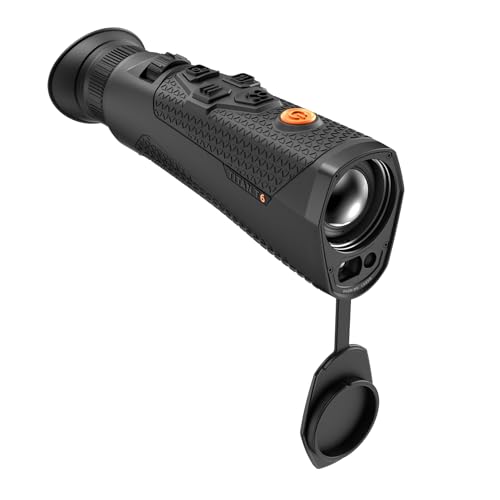
RIX Titan-T6 35mm Thermal LRF Monocular

RIX Stride ST3 Lite Helmet Thermal

Chicool Polarized Night Driving Glasses

HUVIOVED 850Nm Clip-On Night Vision
Inside Each Recommended Option
The MERLIN-35 starts with the strongest reason to choose thermal over ordinary night vision: it detects temperature differences rather than merely amplifying available light. Its 384 x 288 VOx ceramic detector and 17-micron pixel pitch suit hunters moving between open fields and wooded edges, where partial cover and uneven backgrounds complicate target identification.
The pre-mounted arrangement also offers more flexibility than the basic HUVIOVED module covered later. A compatible booster adapter can turn it into a handheld monocular, which may be useful during a long trail or roadside pause. The trade-off is greater cost and a bulkier setup, so mobile phone users will find the GRIRIW option more approachable.
Reasons It Performs
- Thermal contrast helps separate warm subjects from cool vegetation and terrain.
- Handheld or mounted use supports changing field positions.
- The 384 x 288 sensor provides a practical balance of detail and portability.
- Pre-mounted hardware reduces the need to assemble a separate clip-on module.
Practical Considerations
- The hunting-specific configuration is less natural for general wildlife watching than a handheld monocular.
- Compatibility with a particular optic and booster adapter needs confirmation before mounting.
- Exterior lenses require careful cleaning after dust, rain, or mud exposure.
Feature Snapshot
Built With In Mind
Hunters who alternate between a mounted thermal setup and handheld observation benefit most from its flexible architecture.
A Better Fit Elsewhere
The RIX Pocket K2 serves mobile observers who prioritize pocketability over a mounted hunting configuration.
The GRIRIW design links a 100-magnification monocular to a phone, making recorded viewing and basic image sharing part of the setup. That arrangement fits roadside wildlife trips and travel days where carrying a separate thermal unit would add weight. Compared with the LIEMKE MERLIN-35, this option looks more accessible, though its exact sensor performance is less clearly defined in the available specifications.
A larger eyepiece and aperture are intended to improve comfort and light gathering during long observation sessions. Those details matter more for steadiness than headline magnification, especially because small distant subjects can jump around at extreme zoom. I would treat the 80×100 figure as a capability rather than a reason to use maximum magnification in every situation.
Points In Its Favor
- Phone attachment creates a practical route to saving and sharing observations.
- High magnification supports distant landscape and wildlife viewing.
- The larger eyepiece may reduce neck and eye strain during extended sessions.
Honest Caveats
- Maximum magnification can amplify hand movement and make small subjects harder to hold in view.
- The source provides no thermal sensor, frame-rate, or wavelength specifications.
- Phone and clamp alignment may require adjustment during travel.
- Low-light results depend heavily on the included optics and ambient light.
Made For
Travel-oriented wildlife observers benefit from the phone connection and portable monocular format.
Look Elsewhere When
The LIEMKE MERLIN-35 is the stronger match for hunters who need documented thermal detection rather than magnified phone-assisted viewing.
The Pocket K2 takes a different route from the clip-on designs: it is a self-contained thermal monocular built around portability. A 256 x 192 sensor, 12-micron pixels, and 50 Hz refresh rate give it a documented thermal foundation, while Wi-Fi adds a route to a phone for remote viewing or image handling. That combination suits short wildlife-watching trips and quick roadside scans.
The 800 x 600 OLED screen is a meaningful step up for pattern recognition because a higher-resolution display can render thermal detail more legibly. The limitation is the lower sensor resolution compared with the RIX Titan-T6. Depending on the distance and temperature contrast involved, the Pocket K2 may be enough for nearby observation but less suitable for identifying tiny subjects across broad terrain.
Where It Helps
- Compact construction suits pockets and lightweight field kits.
- NETD below 25 mK supports sensitivity to subtle temperature differences.
- Wi-Fi adds flexible phone-assisted viewing.
- The 50 Hz rate can make moving scenes appear less jerky than lower-refresh systems.
Small Caveats
- The 256 x 192 sensor provides less spatial detail than the Titan-T6.
- Battery life and weather resistance are not defined in the supplied data.
- Phone connectivity adds another device to charge during field use.
Technical Notes
The Right Fit
Mobile wildlife observers who prioritize compact thermal equipment benefit most from the Pocket K2.
Reach For A Different Pick
The RIX Titan-T6 better serves field users who need finer thermal detail and an integrated laser rangefinder.
The Titan-T6 is built for users who need more than simple heat detection. Its 640 x 480 thermal sensor, 35 mm objective, 50 Hz refresh rate, and 1920 x 1080 OLED display provide a materially more detailed imaging package than the Pocket K2. That extra definition is useful in wooded hunting grounds where branches, grass, and distant animals overlap visually.
An integrated laser rangefinder adds distance data, while the ballistic calculator supports field planning for shooting scenarios. The stated detection distance reaches 1,818 yards, though real results depend on weather, target contrast, and terrain. The trade-off is a larger, costlier handheld unit, making the Pocket K2 more logical for simple compact observation.
Real Benefits
- 640 x 480 thermal resolution provides stronger subject definition.
- The 35 mm objective balances magnification and field awareness.
- Integrated ranging reduces the need to carry another distance tool.
- NETD below 20 mK supports sensitivity to subtle thermal differences.
Potential Drawbacks
- The larger thermal system is less convenient for long walks than the Pocket K2.
- Ranging and ballistic features add controls that require familiarization.
- Maximum detection distance should not be treated as consistent performance across all environments.
Feature Breakdown
Who Will Love This
Experienced field users benefit from the Titan-T6 when thermal detail, ranging, and ballistic data justify the larger setup.
Consider Something Else
The RIX Pocket K2 is the better match for lightweight observation where ranging and maximum detail are secondary.
The Stride ST3 Lite is the most unusual entry here because it is designed around a true 1x base magnification on a helmet mount. One-to-one viewing preserves a natural sense of scale, which can help hands-free users scan terrain without losing peripheral awareness. That format serves patrol work, hunting, and vehicle-based observation more directly than conventional magnified spotting.
Its 384-class thermal format and wide field of view fit the same general role as the LIEMKE MERLIN-35, but the mounting strategy is much more focused. I see the strongest case for hands-free field use, although helmet balance and accessory compatibility can determine comfort in a long session. Handheld and vehicle configurations add welcome flexibility, assuming the relevant mounting points are available.
Everyday Advantages
- True 1x magnification supports natural scene perception.
- A wide field of view assists movement detection and navigation.
- Hands-free mounting leaves both hands available for other tasks.
- Handheld and vehicle roles broaden its use beyond a fixed helmet setup.
A Few Limitations
- Helmet fit and weight distribution need evaluation during extended use.
- Vehicle use may require a stable interior mounting solution.
- One-to-one viewing is less suitable for identifying tiny distant subjects.
Quick Facts
Whose Shelf It Belongs On
Hunters and patrol users who need wide, hands-free thermal awareness benefit most from the Stride ST3 Lite.
Where A Sibling Pick Shines
The RIX Titan-T6 serves distant-target observation better because it offers higher thermal resolution and laser ranging.
The Chicool glasses sit apart from the optical devices here: they filter glare rather than capture thermal or intensified night imagery. Polarization reduces reflections from wet pavement, while the yellow tint is intended to improve perceived contrast around headlights and street lighting. For a night commute, that can be more relevant than carrying an electronic device in the vehicle.
The over-glasses format is the central convenience, particularly for people who already wear a prescription. The catch is that a yellow filter does not create true night vision, and the source does not provide lens dimensions, frame materials, or transmission data. Depending on local driving conditions, some motorists may prefer clear lenses or handle glare by cleaning the windshield instead.
Key Advantages
- Polarization helps reduce reflected glare from wet roads.
- The over-glasses shape accommodates an existing prescription frame.
- Yellow tinting is designed to improve perceived low-light contrast.
Practical Considerations
- These glasses do not provide image intensification or thermal sensing.
- Lens tint may be unsuitable for very dark roads or enclosed driving areas.
- Fit over bulky frames may vary across face shapes.
Right Fit For
Nighttime drivers dealing with rain reflections and prescription eyewear may find these glasses useful.
Another Choice May Suit
The RIX Stride ST3 Lite is the more relevant option for patrol drivers who need actual low-light thermal awareness.
The HUVIOVED module approaches night vision through a clip-on camera, infrared illuminator, and 4.3-inch LCD mounted behind a riflescope. This screen-based arrangement is easier to interpret than looking through a small tube, and the zoomable infrared source is specified to support a field of view reaching 400 yards in darkness. The infrared illuminator requires the night-vision device, so the components function as a system.
Installation uses a connecting tube and clamps, with instructions intended to make assembly straightforward. That accessibility may appeal to first-time owners, though optical alignment, crosshair visibility, and clamp security deserve attention before relying on the module. Unlike the thermal options, this unit depends on infrared illumination and cannot identify heat differences independently.
Positive Takeaways
- The 4.3-inch LCD makes the night scene easier to inspect.
- Zoom supports closer examination of distant dark areas.
- Infrared illumination extends visibility in complete darkness.
- The supplied instructions support a structured installation process.
Points To Note
- Clamp alignment can affect crosshair visibility during installation.
- The infrared source must operate with the night-vision module.
- Field performance depends on compatible optics and careful lens adjustment.
- Exterior components require regular cleaning in dusty conditions.
Core Details
Built For
First-time scope owners seeking a screen-based clip-on format benefit from the guided assembly and large display.
Swap It Out
The LIEMKE MERLIN-35 better serves thermal-focused hunters who need detection independent of infrared illumination.
Choosing The Right Low-Light Setup
The useful starting point is the viewing method. Thermal devices detect temperature differences and work without visible illumination, while infrared-assisted modules depend on an active 850 Nm illuminator. Digital night vision amplifies available light differently again, and driving glasses only manage reflections and perceived contrast. Each category serves a different night task.
Resolution should be judged separately from magnification. A high magnification enlarges distant subjects but can make movement more noticeable, while a lower magnification helps maintain context. For mounted hunting use, detector resolution, display quality, and optic compatibility matter more than a headline zoom number.
Mounting is the next practical filter. Clip-on modules need a compatible tube or adapter and a stable connection. Helmet devices require balanced mounting, while handheld monoculars are easier to carry but occupy one hand. Existing equipment should be measured before ordering, especially where rail or clamp standards are unclear.
Field maintenance deserves a place in the decision. Thermal lenses, illuminated modules, and LCD screens all collect dust, moisture, and fingerprints, and damaged coatings can affect image clarity. Protective storage, lens cloths, and a dry place for the device can prevent avoidable ownership problems.
Practical Details That Shape The Choice
Mistakes Worth Dodging
Confusing magnification with image quality can lead to disappointment. A distant subject may look larger while revealing less detail, especially in poor weather. I would also avoid assuming every clip-on fits every scope, since tube diameter, eyepiece clearance, and mounting hardware can determine compatibility.
What Separates Premium From Basic
Higher-tier equipment commonly adds thermal sensitivity, higher sensor resolution, better displays, ranging, or hands-free mounting. Those additions make sense for frequent field work, while casual phone-assisted viewing may not justify the added bulk or complexity. The best fit depends on the actual environment and the level of detail required after dark.
Frequently Asked Questions
What Is Clip-On Night Vision?
Clip-on night vision adds an optical or electronic imaging device to an existing scope or eyepiece. It can use thermal detection, image intensification, or an infrared-assisted camera.
Is Thermal Clip-On Better Than Digital Night Vision?
Thermal systems detect temperature differences and can work without ambient light. Digital systems may provide sharper conventional imagery but often depend more heavily on available light or infrared illumination.
Can Clip-On Night Vision Fit Any Scope?
No. Tube dimensions, eyepiece clearance, adapters, and clamp layouts vary, so compatibility needs confirmation before purchase.
Which Option Is Most Portable?
The RIX Pocket K2 is designed around a compact handheld format. Helmet-mounted options reduce the need to hold a device but require a suitable mount and balanced fit.
Are Yellow Night Driving Glasses the Same As Night Vision?
No. Yellow polarized glasses reduce glare and may improve perceived contrast, but they do not create thermal images or intensified night vision.
Final Thoughts
The LIEMKE MERLIN-35 and RIX Titan-T6 suit serious thermal observation, while the Pocket K2 favors portability. The Stride ST3 Lite serves hands-free field work, and the HUVIOVED module offers a screen-based clip-on approach. The Chicool glasses address driving glare rather than night imaging, so matching the device to the actual nighttime task matters more than treating every option as equivalent.