
Compact spotting scopes solve a specific outdoor problem: bringing distant wildlife, athletes, and landscape details into view without hauling a full-size optical setup. I focus on magnification, objective lens size, portability, focusing, weather resistance, and included accessories to separate genuinely useful travel gear from options that are merely small. The lineup covers glass-bodied scopes, pocket-oriented monoculars, a tripod bundle, and a digital model with a built-in display.
A Quick View Of The Lineup

Maven CS2A 26-66x85mm Spotting Scope with ED Glass, Waterproof and Fogproof, Multi-Coated Optics
QLoztyse Red Brown Compact Spotting Scope
MotiveTech 8×24 Compact Spotting Scope, Gold
Aosekaa 8×24 Compact Spotting Scope, Gold

GUANIEE 25-75×80 Spotting Scope with Tripod and Phone Adapter
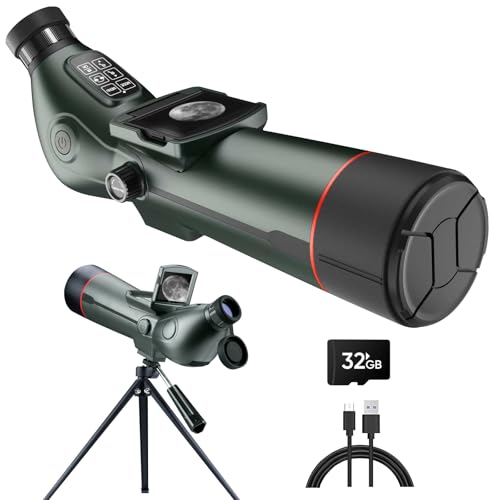
GUANIEE Digital Spotting Scope with 4K Screen, Tripod, and 32GB SD Card

Maven CS.1 15-45x65mm Angled Spotting Scope with ED Glass
Why These Options Stand Out
The Maven CS2A pairs a 26-66x magnification range with a large 85mm objective lens, making it the most substantial optical design in this group. The broad aperture gathers more light for wildlife viewing and first light, while the higher magnification helps reveal distant feathers, terrain, and animals.
For birders moving between forest edges and open fields, that combination is more useful than an 8×24 monocular-style scope. It remains portable in a dedicated kit, although the larger 85mm end creates a noticeable step up in bulk. The magnesium frame also gives it a more practical feel for repeated outdoor handling.
Everyday Advantages
- The 85mm objective supports brighter, more detailed views during dawn and shaded birding.
- ED glass reduces color fringing around high-contrast branches and distant subjects.
- The 26x lower magnification makes locating wildlife easier before zooming in.
- Waterproof and fogproof construction suits variable field conditions.
- Fully multi-coated optics support contrast and transmission through the magnification range.
Trade Offs
- The 85mm objective makes this less pocketable than the 24mm compact models.
- Maximum magnification demands steadier positioning, especially without a tripod.
Key Attributes
Who Will Love This
Experienced birders and wildlife observers who prioritize detail and light gathering over the smallest possible case size.
A Better Fit Elsewhere
The Aosekaa 8×24 Compact Spotting Scope, Gold suits casual hikers who value portability over optical complexity.
QLoztyse takes a deliberately simple approach with a single-barrel compact scope in red brown. That format resembles a monocular, which means one-handed use and less neck-mounted bulk during long walks, roadside stops, or casual sightseeing.
The available information supports travel and casual stargazing more clearly than technical wildlife work. I would treat it as a lightweight companion for general observation, not as a substitute for a scope with documented magnification and lens diameter.
Strong Points
- The single-barrel design simplifies packing and one-handed viewing.
- Its compact format suits travel days, casual astronomy, and landscape observation.
- The red-brown finish gives it a more traditional visual character than the gold options.
Details To Watch
- No magnification or objective diameter is stated, limiting technical comparison.
- A travel case is not listed, so protective storage may require a separate pouch.
- Owners may find the scope more useful for broad observation than fine bird identification.
Made For
Casual travelers and casual stargazers who want a small, straightforward optical tool without a tripod bundle.
Where A Sibling Pick Shines
MotiveTech 8×24 Compact Spotting Scope, Gold provides a documented magnification and focus specification for more deliberate outdoor viewing.
MotiveTech centers this 8×24 scope on athletic events, where 8x magnification can make a distant field, track, or stadium detail easier to follow. The 24mm objective keeps the body in a genuinely compact class, and adjustable focus helps keep the viewing process direct.
Compared with the Maven CS2A, this is a much less specialized optic. The trade-off is equally clear: lower magnification suits a spectator seated or standing farther from the action, while serious wildlife observation may reward the larger Maven objective and broader zoom range.
Advantages To Know
- The 8×24 format offers a useful middle ground between naked-eye viewing and high zoom.
- Adjustable focus helps maintain clarity across changing subject distances.
- The gold finish gives the compact body a distinctive appearance.
Small Caveats
- The lower 8x limit may feel modest for distant birds or small landscape details.
- A tripod and carrying case are not included in the supplied information.
- Lens coatings, weather sealing, and weight are not documented, so field expectations should stay realistic.
Quick Facts
Right Fit For
Families and casual sports spectators who want an easy-to-carry scope for outdoor games and public events.
Consider Something Else When
GUANIEE 25-75×80 Spotting Scope with Tripod and Phone Adapter is the stronger fit for target shooters and observers needing substantially more zoom.
Aosekaa’s 8×24 specification lands in the same portable class as the MotiveTech option, but the supplied description emphasizes travel and outdoor observation. That makes it easy to pack for a hike, park visit, or roadside stop where a larger tripod setup would be inconvenient.
The result is a sensible lightweight option for moderate distance viewing, though the modest 8x magnification cannot match the reach of the GUANIEE 25-75×80. For closer landscapes and broad outdoor scenes, the smaller format may be more pleasant to carry than a higher-zoom scope.
Well-Handled Touches
- The 8x magnification is easy to use for general outdoor scenes.
- The 24mm objective supports a smaller pack footprint.
- The gold finish gives this practical travel option a more distinctive appearance.
Some Limits To Know
- The limited magnification may not reveal fine detail in distant subjects.
- No tripod, pouch, or weather-resistance details are included in the source data.
- Outdoor owners should keep the optic in a protective case to reduce impact and scratch risk.
Built With In Mind
Hikers, travelers, and casual nature observers who prefer a small monocular-style tool for moderate viewing distances.
Another Choice May Suit
QLoztyse Red Brown Compact Spotting Scope may be a better casual-travel choice for stargazing and sightseeing where technical specifications matter less.
GUANIEE takes a different approach from the 8×24 monocular-style models, offering 25x to 75x magnification and an 80mm objective lens. That larger setup is more appropriate for target shooting, archery, birding, and wildlife viewing where distance detail matters more than pocket size.
The included full-size adjustable tripod, carrying bag, and phone adapter create a more complete field kit. The tripod expands from 18.3 to 59.3 inches, which gives the scope a steadier platform at higher magnification and can be useful for fixed-position viewing.
A Few Strong Suits
- Variable 25-75x magnification provides substantial flexibility for distant subjects.
- The 80mm objective gives the scope more light-gathering potential than the 24mm compact options.
- The adjustable tripod supports steadier viewing at high magnification.
- The carrying bag helps protect the scope during transport.
- The phone adapter supports shared views and basic field documentation.
Possible Compromises
- The tripod and bag make the setup bulkier than a true pocket optic.
- High magnification can expose small vibrations, so careful focusing matters.
Feature Breakdown
Best Suited To
Target shooters, archers, and dedicated outdoor observers who need more magnification and a complete support setup.
Where Another Pick Shines
Maven CS.1 15-45x65mm Angled Spotting Scope with ED Glass is the more natural fit for birders prioritizing glass specification and angled viewing.
This digital scope shifts the focus from pure glass viewing to recording. A flip-open 2.8-inch display makes framing and playback more convenient without requiring a separate phone adapter, while automatic focus reduces the need to work a conventional focusing ring.
The listed magnification reaches 350x, and 4K image capture is intended for wildlife documentation, stargazing, and outdoor observation. I would treat those figures as digital zoom capabilities rather than a direct substitute for a 350x glass optic, especially because the electronic viewing chain can change perceived detail.
Bright Spots
- The built-in display simplifies recording and playback in the field.
- Automatic focus makes the scope more approachable for casual users.
- The included tripod supports steadier framing for wildlife and night-sky views.
- The 32GB SD card removes the need to purchase storage immediately.
- The carrying bag helps organize the electronic scope and tripod.
Room For Improvement
- Digital zoom and glass magnification do not behave identically.
- The electronics and tripod make the package less compact than a single-barrel scope.
- Battery and charging details are not supplied.
For Creators
Wildlife photographers, casual documentarians, and families who want recorded field views more than traditional optical magnification.
Not My Match For
Maven CS2A 26-66x85mm Spotting Scope is the better fit for serious glass-based observation without a digital display.
The Maven CS.1 offers a 15-45x range, a 65mm objective, and an angled viewing design. That middle ground is more versatile than an 8×24 travel monocular, while remaining less specialized than the GUANIEE scope’s 25-75x range and larger 80mm objective.
ED glass helps reduce chromatic aberration, a color-fringing effect that can soften edges around high-contrast subjects. The angled eyepiece is useful for birding and scanning, and the listed waterproof and fogproof construction supports outdoor use across changing weather conditions.
Why It Works Well
- The 15-45x range balances field scanning with detailed observation.
- A 65mm objective provides a more substantial light-gathering design than the 24mm compact scopes.
- ED glass supports clearer edges and more faithful color.
- The angled eyepiece is practical for birding and wildlife scanning.
A Few Limitations
- It is less pocketable than the Aosekaa 8×24 Compact Spotting Scope, Gold.
- The angled body needs a clear surface and support during longer field sessions.
Technical Reference
Whose Shelf It Belongs On
Birders and hunters who want a versatile angled scope for daylight wildlife, landscape detail, and moderate zoom.
Reach For A Different Pick When
GUANIEE 25-75×80 Spotting Scope with Tripod and Phone Adapter suits target shooters who prioritize maximum zoom and included support gear.
What Matters In A Travel Spotting Scope
Magnification And Field Of View
Magnification determines how much a distant subject appears enlarged, but higher numbers are not automatically better. An 8×24 model is easier to carry and steadier at the sporting event, while a 25-75×80 setup offers more reach for target and wildlife viewing. The objective lens diameter affects light gathering, so a larger lens generally helps in shaded or low-light conditions.
Portability And Support
A compact barrel saves space in a daypack, yet a tripod can make a higher-powered scope much easier to use. Adjustable support is especially useful for long wildlife sessions or target viewing where a shaky image becomes frustrating. A carrying case also matters more than many casual lists suggest, since compact optics are easily knocked against other gear.
Glass Or Digital Viewing
ED glass is aimed at direct optical viewing, with coatings and lens design shaping contrast and color. A digital scope instead adds a screen, recording, autofocus, and storage, which can be valuable for documentation. Digital magnification should not be treated as equivalent to optical magnification because the image is being viewed and enlarged electronically.
Key Details Before Choosing
Mistakes Worth Dodging
A compact scope with high magnification can still be frustrating without a stable viewing position. Shoppers should compare objective diameter, focus method, weather resistance, and included support gear rather than relying on zoom alone. Carrying a protective case also helps prevent scratches and impact damage during travel.
What Separates Premium From Basic
Premium glass scopes generally spend more on lens elements, coatings, body materials, and weather sealing. The premium CS2A and CS.1 make sense for regular birding or wildlife work where clarity, range, and durability matter. A basic 8×24 model remains more appropriate for occasional travel viewing and casual events.
Frequently Asked Questions
What magnification is best for birdwatching?
A 15x to 45x range offers a practical balance for locating birds and inspecting distant details. Higher magnification can help with tiny subjects, although steadier positioning becomes increasingly important.
Are compact spotting scopes suitable for stargazing?
Compact scopes can work for casual night-sky viewing, especially portable monocular-style models. Dedicated astronomy equipment may provide a more comfortable experience for extended observation.
What does an 80mm objective lens provide?
An 80mm objective lens gathers more light than a smaller 24mm lens. That difference can help during dawn, dusk, shaded birding, and other scenes with limited illumination.
Is a tripod necessary for a spotting scope?
A tripod is not essential for every casual use, but it becomes more valuable at higher magnification. It reduces shake and makes prolonged wildlife, target, and stargazing sessions easier to manage.
Can a digital spotting scope replace a glass model?
A digital model adds recording, autofocus, and a built-in display. A glass spotting scope generally remains the more direct choice for traditional viewing, while the digital option is stronger for documentation and sharing.
Final Verdict
The Maven CS2A suits serious glass-based observation, the CS.1 offers a versatile angled alternative, and the GUANIEE models serve target shooters and documentarians. For basic travel use, the Aosekaa, MotiveTech, and QLoztyse options prioritize smaller size over advanced specifications. The right choice depends on magnification, light gathering, support, and recording needs.