
A good decoy spread should look believable, move with the water, and stay put through changing conditions. Waterfowl hunters often need more than floating shapes: a hen decoy can complete the scene, strap weights keep the spread in place, and foam construction helps reduce noise and unnecessary movement. I’ve grouped seven options by their practical role, including duck-specific decoys, goose decoys, blind storage, and anchoring accessories. The rubber duck set is not a hunting decoy, so I’ve treated it as a party and water-play option rather than part of a field spread.
The Picks In Brief

Rig’Em Right Lock and Load Blind Bag

DMSKY 100 Pack Rubber Ducks

Dave Smith Upright Hen

Rig’Em Right Flexible Strap Weights
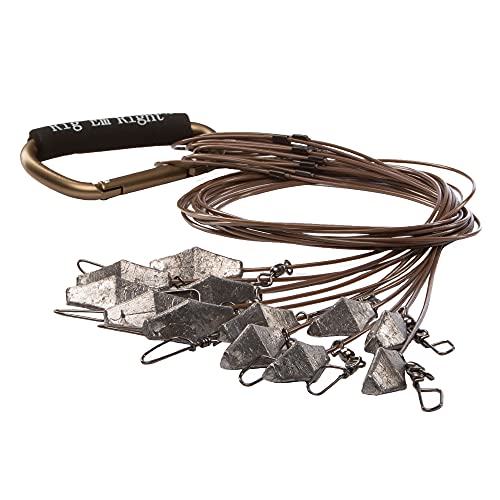
Rig’Em Right Tangle Free Cable Anchors

Avian-X Honkers Full Body 6-Pack

Heyday Green Wing Teal 6-Pack
Taking A Closer Look At The Options
This bag is built for the awkward part of a hunt that happens outside the decoy spread: carrying and organizing blind-side gear. Its narrow profile should sit more easily inside a layout blind than a bulky general-purpose bag, while exterior clips offer another way to keep it close at hand.
For hunters working from a cramped layout blind, the separated storage areas may be the main reason to choose it. Compared with a loose pile of pouches, this setup gives ammunition, eyewear, a drink, and smaller essentials separate places.
Useful Highlights
- Narrow construction suits the limited space inside a layout blind.
- Exterior clips provide flexible attachment to blind straps.
- A molded ammunition compartment has a firm, protective bottom.
- Clear interior pockets help keep small items visible and sorted.
Things To Consider
- Its narrow shape may feel limiting for bulky clothing or oversized gear.
- Clip placement depends on the blind’s strap layout, so setup varies by shelter.
Made For
This fits hunters who use a layout blind and need a compact place for organized, frequently accessed equipment.
Where A Sibling Pick Shines
Rig’Em Right Tangle Free Cable Anchors suit the spread itself, while this bag is better for carrying blind equipment.
The DMSKY set is a large collection of small rubber ducks, not a purpose-built waterfowl decoy set. It makes more sense for a birthday party, classroom activity, pool-themed event, or group craft session where a large number of inexpensive pieces is useful.
Each duck is described as approximately 2 to 2.5 inches and made from rubber with a painted finish. Assorted colors and styles also make the set convenient for decorating containers, filling favors, or giving children several choices at once.
A Favorable Mix
- The 100-piece count suits large groups and repeated activities.
- Assorted colors and designs add variety to party displays.
- The compact size works for stocking stuffers, baskets, and favors.
- Rubber construction is simple for children to handle during water play.
Practical Considerations
- These toys are not sized or designed as duck-hunting decoys.
- Many pieces may create unnecessary clutter for a single outdoor display.
- Painted surfaces should still be checked for wear before repeated water use.
Right Fit For
This option fits party hosts, teachers, and families needing a large supply of small rubber ducks for non-hunting activities.
Another Choice May Suit
Heyday Green Wing Teal 6-Pack is the better fit for a waterfowl spread because its foam construction is designed for floating decoy use.
Standing bird silhouettes add vertical variation to a spread, and that is the clearest role for this Dave Smith hen. The upright posture can make a field pattern feel less uniform than a group of low, sitting decoys, particularly around dawn or in a setup where birds are feeding naturally.
This is not a duck-specific decoy, so I would pair it with the intended species rather than treat it as a complete waterfowl layout. The stated package dimensions are 21.59 by 29.21 by 60.96 centimeters, with a package weight of about 1.996 kilograms.
The Helpful Details
- Upright positioning creates a natural vertical focal point.
- Resin construction is described as durable for repeated field handling.
- The detailed profile can complement a more varied spread.
- The package weight indicates a manageable piece for transport.
Room For Improvement
- Its species and posture make it less useful for a duck-only setup.
- One hen cannot provide the repetition usually seen in a full spread.
- Storage needs may take more room than compact foam decoys.
Who Will Love This
This works for turkey-focused hunters who want a recognizable upright bird to anchor a mixed field pattern.
Consider Something Else When
Rig’Em Right Flexible Strap Weights are more directly useful for holding duck and waterfowl decoys in place.
Decoys that look right but drift can spoil the look of an otherwise careful setup. These strap weights focus on that practical problem by tying decoys down at the keel, with twelve 8-ounce weights included for spreading them across a waterfowl arrangement.
The flexible construction also makes storage relatively straightforward: the strap can be wrapped around the keel rather than leaving a rigid tangle. For hunters working in water with a moderate amount of wave action, the low profile is less noticeable than tall hardware.
Well-Handled Touches
- Twelve weights provide useful coverage for a multi-decoy spread.
- Each weight is listed at 8 ounces, giving a consistent base.
- Keel attachment keeps the decoy’s body profile less interrupted.
- Flexible straps pack down more neatly than rigid hardware.
Small Caveats
- They secure decoys but do not replace checking for submerged debris.
- Mud, vegetation, and rough ground can complicate installation.
- The included count may not cover a very large spread.
Built With In Mind
This fits duck and waterfowl hunters who need an uncomplicated way to keep multiple floating decoys stationary.
A Better Fit Elsewhere
Rig’Em Right Tangle Free Cable Anchors may suit exposed locations where more reach and cable-based positioning are useful.
Cable anchors give a decoy more separation from its attachment point, which can help maintain a deliberate spread instead of letting every float gather in one cluster. The pre-rigged format is appealing for a dawn setup because the weights, cable, and clip arrive ready to position.
Compared with strap weights, this system offers greater reach from the connection point. In deep or moving water, that can be helpful, though the actual performance depends on depth, current, and how the cable is placed.
Bright Spots
- Pre-rigged components reduce assembly steps at the water’s edge.
- The coated cable is intended to resist tangles during handling.
- Weighted ends help keep decoys positioned away from the shoreline.
- A padded carabiner provides a more substantial attachment point.
Worth Noting
- Extra cable length can create a larger pack to carry and store.
- Wrong placement may create visible lines or pull decoys into an unnatural pattern.
- Strong current can require careful spacing between each anchor.
The Right Fit
This suits hunters creating a spread with deliberate spacing in open water or a gently moving shoreline setup.
Look Elsewhere When
Rig’Em Right Flexible Strap Weights are simpler for shallow water and compact layouts where reach is not necessary.
The Honkers Fusion Pack is built around variation, with six full-body Canada goose decoys arranged as one sentry, two walkers, and three feeders. That mix lets a spread communicate movement rather than presenting six identical silhouettes, which is useful for a larger goose-focused layout.
Flocked heads arrive attached at the factory, so there are no loose stems to fit or align before the first setup. The visible body and head details make this a more substantial presentation than simple silhouette decoys, though the full-body format will take more room in a vehicle.
Notable Gains
- Six distinct poses make the spread feel active and less repetitive.
- The mix of sentry, walking, and feeding birds supports visual variety.
- Flocked heads add a textured look without separate assembly.
- Full-body forms provide a stronger silhouette than basic profile decoys.
Potential Drawbacks
- This is a goose-focused set, not a duck decoy pack.
- Six full-body pieces require more transport space than small foam decoys.
- The detailed finish may show handling marks more readily than a simple molded shape.
Who Should Grab It
This fits Canada goose hunters who want a visually varied full-body spread and accept the extra carrying volume.
Swap It Out When
Heyday Green Wing Teal 6-Pack is the more relevant choice for hunters building a lighter, duck-specific floating spread.
For a portable duck spread, material and keel design matter as much as paint. The Heyday Green Wing Teal 6-Pack uses closed-cell EVA resin, a hollow body, and a dual-keel layout intended to reduce weight and produce steadier movement on the water.
The material is described as quieter and lighter than traditional plastic Green Wing Teal decoys, while the textured finish adds detail without relying only on paint. In my view, those traits are especially useful for hunters carrying a complete spread across uneven ground, although the foam surface should be kept clean after use.
Good Reasons To Consider
- HollowCore construction reduces the amount of material carried.
- Dual keels are intended to create smoother water movement.
- Closed-cell foam naturally floats and avoids plastic-like surface noise.
- Textured detailing improves the appearance before paint is considered.
Details To Watch
- A six-piece pack may be modest for a large, spread-out layout.
- Foam can collect dirt at the keel and should be rinsed after muddy setups.
- The specialized construction is less relevant for hunters seeking a goose silhouette pack.
Best Suited To
This is a strong fit for duck hunters who value low weight, natural flotation, and controlled movement over a small spread.
Another Choice May Suit
Rig’Em Right Tangle Free Cable Anchors are the better companion when positioning stability is more important than adding more floating decoys.
Choosing A Decoy Setup That Works In The Field
Match the species first
A duck-focused layout benefits from floating duck shapes with realistic movement, while goose hunting calls for larger full-body forms. The DMSKY rubber ducks belong in party and water-play settings, not in a serious waterfowl spread.
Think about movement and noise
HydroFoam is a closed-cell EVA resin that is lighter and quieter than conventional plastic. A dual keel is also intended to reduce erratic drifting, which can make a small spread look more deliberate. These features matter most for hunters who move between spots or work near calm water.
Separate appearance from anchoring
Decoy paint, flocking, and body posture control how the spread looks. Straps and cable anchors control where the pieces stay. For most waterfowl hunters, the practical sequence is to choose the decoy shapes first, then match the anchoring system to depth, current, and available space.
Key Details That Shape A Waterfowl Spread
Common Shopping Slip Ups
The biggest mistake is choosing a decoy only by species name without checking whether it floats, moves, and anchors as needed. A large collection of attractive pieces can still look wrong if the poses, spacing, or attachment hardware don’t match the water conditions.
What The Higher Tier Buys
Higher-end options may spend more on detailed surfaces, flocked heads, resin bodies, or smoother flotation behavior. That can be worthwhile for a compact, portable duck setup or a realistic goose presentation, but extra detail does not replace correct placement, secure anchoring, and regular maintenance.
Frequently Asked Questions
Are foam duck decoys quieter than plastic ones?
Closed-cell foam is generally less dense and less reflective than hard plastic, which can reduce sound during movement. The surrounding water and the way decoys are handled still affect noise.
How many decoys make a useful duck spread?
The right number depends on water depth, visibility, and the species being imitated. A six-pack can be enough for a compact setup, while larger spreads need more room and more anchoring points.
Can decoy strap weights be reused?
They are reusable hardware when stored dry and inspected before each setup. Check the strap, weight, and connection point for mud damage or wear.
Are full-body Canada goose decoys suitable for duck hunting?
They are designed for goose hunting, so they may dominate a duck scene or create the wrong scale. Duck-specific profiles are usually more consistent for a duck layout.
What should I look for in decoy anchors?
Water depth, current, and the distance from shore all matter. Strap weights work well for straightforward placement, while cable anchors provide more reach in open water.
Closing Thoughts
The right choice depends on the spread, not simply the species name. Heyday’s foam Green Wing Teal set stands out for portable duck setups, Rig’Em Right anchors help control placement, and the Avian-X pack serves goose-focused patterns. Choose the accessories and decoy styles that match the actual water conditions, then inspect everything before the first setup.