
Game cameras turn a blind spot into useful evidence, whether I’m monitoring a wooded hunting path, a ranch gate, or livestock at a remote feeder. The difficult part is matching the power source, coverage pattern, connectivity, and mounting hardware to the actual site. I’ve selected five cameras and two supporting accessories, each with a distinct role in an outdoor monitoring setup.
A Fast Comparison Of The Options

Camojojo 1/4-20 Rotating Mounting Bracket

Stealth Cam Revolver PRO Cellular Camera

Stealth Cam 12V Battery

CAMLOCKbox Steel Security Box for Spartan/GoCam

TACTACAM Reveal X 3.0 Cellular Camera

Cinnado 4G LTE Solar Wireless Camera
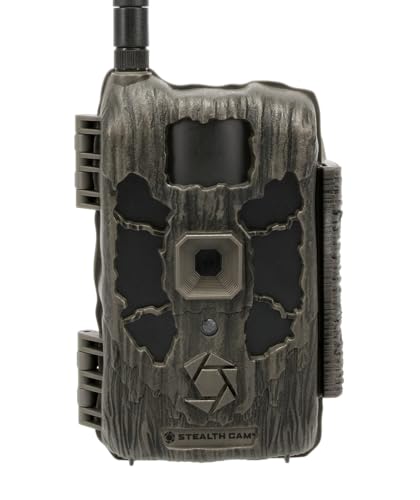
Stealth Cam Deceptor Max 2.0 Camera
Why These Options Stand Out
A camera can detect the right activity yet still miss the useful angle. The Camojojo bracket solves that positioning problem with a 1/4-20 threaded insert and horizontal and vertical adjustment, which lets a tree-mounted camera cover a trail, feeding area, or gate more precisely.
This is an accessory rather than a camera, but it is the practical starting point for an existing setup. I see the strongest fit for hunters and property monitors who need to reposition a unit without repeatedly building a new mounting point.
What Stands Out
- Adjustable rotation changes the field of view without relocating the whole support.
- The 1/4-20 insert provides a standard connection for compatible cameras.
- Strap and screw hardware support different tree and wall installations.
- The included Allen wrench and guide simplify initial assembly.
Installation Details
- Camera compatibility depends on a properly sized 1/4-20 connection.
- Exposed fasteners may need occasional tightening after severe weather or repeated movement.
At A Glance
Made For Adjustable Setups
Hunters and property monitors who regularly reposition cameras gain the most from this bracket.
A Better Fit Elsewhere
The TACTACAM Reveal X 3.0 Cellular Camera better serves monitoring sites that require cellular transmission rather than mounting flexibility alone.
Wide coverage is the Revolver PRO’s defining feature. Its 360-degree design reduces the need for several cameras around an open clearing, while the 40MP photo mode, 1440P video, and 30-frame-per-second capture provide detailed daytime and nighttime records.
That panoramic view is valuable at a broad feeding area or near intersecting game trails, though cellular reception remains essential for remote viewing. Compared with the fixed-angle Camojojo setup, the Revolver handles monitoring and positioning as one integrated device.
Bright Spots
- Full 360-degree visibility can replace several overlapping viewpoints.
- The 40MP mode captures fine detail for identification and landscape context.
- 1440P video at 30 frames per second records smoother movement.
- Cellular transmission supports remote access where wired connectivity is impractical.
- Day-and-night operation suits changing outdoor conditions.
Connectivity Trade Offs
- Remote access depends on cellular coverage at the mounting location.
- A complex panoramic model may cost more and consume more power than a basic fixed camera.
Technical Sheet
Built With Open Land In Mind
Scouters monitoring wide clearings or several intersecting trails benefit most from the panoramic field of view.
Another Choice May Suit
The Cinnado 4G LTE Solar Wireless Camera better fits off-grid locations where solar assistance reduces routine battery servicing.
The Stealth Cam 12V Battery shifts the power problem away from frequently exchanged loose batteries. Its external battery-box format is aimed at trail cameras used during extended scouting periods, including cold-weather deer seasons where dependable power becomes harder to maintain.
That makes it a supporting component rather than a complete monitoring solution. I’d pair it with a compatible camera, cable arrangement, and enclosure appropriate for the site, then verify those connections before leaving the location unattended.
The Helpful Details
- External 12V power is useful for remote cameras with limited access.
- A battery-box design keeps the power system together in one location.
- Cold-season positioning makes it relevant to deer-season scouting.
- Longer runtime can reduce the frequency of field visits.
Points To Note
- Compatibility depends on the camera’s battery requirements and connection method.
- Moisture management around terminals remains important during rain or seasonal condensation.
- The provided information does not identify a battery-capacity value, so runtime expectations should remain tied to the connected camera.
Made For Cold-Season Scouting
Hunters operating compatible cameras in cold or inaccessible terrain gain the most from consolidated 12V power.
Consider Something Else
The Cinnado 4G LTE Solar Wireless Camera offers a more self-contained alternative for sites with suitable sunlight and cellular reception.
Exposed cameras benefit from physical protection, and the CAMLOCKbox uses all-steel construction rather than a light plastic shell. The enclosure is shaped for Spartan and GoCam trail cameras, preserving access while adding a substantial barrier around a camera mounted in a high-traffic or accessible location.
Its powder-coated camouflage finish also helps the enclosure blend into outdoor surroundings. Compared with the Camojojo bracket, which improves positioning, this accessory addresses impact, handling, and weather exposure around the camera itself.
Notable Gains
- Sixteen-gauge steel provides rigid protection for an exposed camera.
- Powder coating adds an outdoor-oriented protective finish.
- Modeled fit supports repeatable camera placement.
- Enclosure access allows the camera to be removed for maintenance.
Where It May Fall Short
- The enclosure is limited to compatible Spartan and GoCam models.
- Its steel construction adds weight to a tree or wall installation.
- Owners should inspect strap, screw, and lock points periodically because outdoor vibration can loosen hardware.
Core Details
The Right Fit For Exposed Units
Hunters using compatible cameras near roads, cabins, livestock areas, or frequently visited woods gain useful physical protection.
Look Elsewhere
The Camojojo 1/4-20 Rotating Mounting Bracket better serves a stationary camera that needs angle adjustment rather than a protective enclosure.
The Reveal X 3.0 focuses on a practical cellular problem: one carrier may work at a location while another does not. Its integrated SIM selects the stronger available AT&T or Verizon signal, reducing the need to swap providers manually or abandon a site with inconsistent single-network reception.
For a ranch, hunting blind, or remote property, that flexibility can matter more than panoramic coverage. Night vision and waterproof construction suit outdoor use, while the stated battery life of more than six months makes planned field visits easier, depending on activity and signal conditions.
A Few Highlights
- Automatic carrier selection improves flexibility across changing signal conditions.
- Night vision supports monitoring after sunset and in dim woodland areas.
- Waterproof construction suits exposed seasonal deployments.
- Claimed battery life above six months reduces routine maintenance frequency.
Realistic Limits
- At least one compatible cellular network still needs usable signal at the site.
- Frequent motion, weak reception, and cold conditions can reduce practical battery life.
Feature Snapshot
Who Will Love This
Scouters with variable AT&T or Verizon reception gain the most from automatic network selection.
Swap It Out
The Stealth Cam Revolver PRO Cellular Camera better fits open areas where 360-degree coverage matters more than battery longevity.
Remote property monitoring does not always include a Wi-Fi router, and the Cinnado routes live viewing through 4G LTE instead. Its 2K resolution, 360-degree pan-and-tilt coverage, and two-way audio make it relevant to barns, gates, livestock pens, ponds, cabins, and construction sites.
Solar assistance is the major ownership advantage, particularly where a distant location makes battery replacement inconvenient. That benefit depends on adequate sunlight, while live functions still need service from Verizon, AT&T, or T-Mobile. The camouflage housing helps the camera blend into less conspicuous placements.
Well-Handled Touches
- 4G LTE removes the need for a Wi-Fi router at the monitoring site.
- Solar assistance supports a lower-maintenance remote installation.
- The 360-degree pan-and-tilt range covers multiple directions from one position.
- Two-way audio adds interactive monitoring for property and livestock checks.
- Compatibility with three major carriers expands location options.
Conditions To Check
- Solar charging performs poorly where shade or heavy foliage limits direct exposure.
- Pan-and-tilt operation may track a fixed schedule rather than animal movement, so a trail camera may be a better choice for selective scouting.
- The camera still requires cellular reception for remote features.
Built With Remote Sites In Mind
Ranchers and cabin owners monitoring sunny locations with cellular service gain the most from solar-assisted operation.
Where Another Pick Shines
The Stealth Cam Deceptor Max 2.0 Camera better fits selective wildlife monitoring where selectable photo resolution and 1440P recording take priority.
The Deceptor Max 2.0 gives scouts a wide choice of image detail, with selectable 4MP, 8MP, 16MP, and 40MP photo settings. Dual-core processing handles image capture and cellular uploads concurrently, while compression preserves visual information as data moves from the camera.
Its 1440P video mode adds another layer for movement analysis, and integrated AI is intended to improve image clarity and detail. Compared with the Cinnado’s property-oriented pan-and-tilt design, the Stealth Cam feels more focused on flexible wildlife imagery and selective scouting output.
Strong Points
- Selectable resolution settings balance detail with storage demands.
- The 40MP maximum provides a high-detail option for close identification work.
- Dual-core processing supports simultaneous capture and uploading.
- 1440P video supplies useful detail for recording moving subjects.
- Integrated processing improves clarity and detail within the image workflow.
Possible Compromises
- The highest photo resolution can require more storage and cellular data than lower settings.
- Remote uploads remain dependent on usable cellular reception.
Important Details
Who Should Grab It
Wildlife scouters who want selectable still-image resolution and cellular uploading benefit most from this camera.
Reach For A Different Pick
The TACTACAM Reveal X 3.0 Cellular Camera better serves sites where automatic AT&T and Verizon network selection is the priority.
Choosing The Right Field Setup
Match Coverage To The Landscape
A narrow trail usually calls for a fixed camera aimed along the expected path. Open clearings, barn corners, and intersecting trails benefit from wider coverage, making the Revolver PRO’s 360-degree view or the Cinnado’s pan-and-tilt movement more useful than a basic directional model.
Check Cellular Service Before Committing
A cellular label means little without usable service at the precise mounting location. I compare coverage across the relevant networks, pay attention to terrain obstructions, and avoid placing a camera where a weak signal would make recorded media more important than remote viewing. The Reveal X 3.0’s multi-carrier selection provides useful flexibility, but it cannot create service where none exists.
Balance Resolution Against Storage
Resolution affects image detail, file size, and cellular data consumption. The Deceptor Max 2.0’s selectable settings make that trade-off adjustable, while 40MP captures can suit identification work but may place heavier demands on storage and uploads. Lower settings can be more practical for routine monitoring with frequent animal activity.
Match Power To The Location
AA battery works well for convenient, moderate deployments, but remote and cold-weather sites may benefit from the Stealth Cam 12V Battery. Solar-assisted models reduce manual power servicing, though panel exposure and seasonal weather still matter. I also check enclosure access, strap security, and cable routing before leaving a camera unattended.
Consider Protection And Positioning Together
The Camojojo bracket improves camera direction, while the CAMLOCKbox enclosure protects a compatible camera from handling and weather exposure. Neither replaces the other, and the correct pairing depends on whether positioning or physical security is the larger concern. Fasteners should still receive routine checks after storms or prolonged outdoor use.
Keeping Outdoor Setups Sensible
Mistakes Worth Dodging
Choosing a camera before checking the site often leads to wasted placement. Confirm the viewing angle, cellular service, power access, and mounting surface first; otherwise, a capable model may still produce an incomplete setup. A physical location check is especially important in steep terrain, dense woods, and signal-shadow zones.
What Separates Premium From Basic
Premium cameras tend to invest in broader coverage, higher selectable resolution, more advanced processing, or more flexible cellular connections. Those additions suit demanding scouts and remote properties, while a fixed, non-cellular camera can remain sensible for close-range wildlife monitoring. The useful upgrade is the feature that removes an actual coverage or maintenance problem.
Frequently Asked Questions
Do cellular game cameras work without Wi-Fi?
Cellular game cameras transmit through a mobile network rather than local Wi-Fi. They still require usable service from a supported carrier at the mounting location.
Is a 360-degree camera useful on a narrow trail?
Wide coverage makes more sense around an open clearing, bend, or group of intersecting paths. A narrow straight trail may benefit more from a focused field of view and stable mounting angle.
Are higher-resolution photos always better?
Higher resolution can preserve more detail, but larger files use more storage and cellular data. Match the setting to the identification detail and recording frequency required at that site.
Does solar charging eliminate battery maintenance?
Solar assistance can reduce routine battery changes, though shaded locations and poor weather limit charging. Remote installations still need periodic checks of the panel, connections, and remaining power.
How should I secure a game camera?
Use an appropriate strap or screw-based mount, inspect it after strong wind, and consider a compatible steel enclosure for an exposed camera. Security hardware reduces casual interference but does not make the location immune to tampering.
Final Thoughts
The strongest setup depends on coverage, power, and access rather than resolution alone. I’d choose the Revolver PRO for broad panoramic monitoring, the Reveal X 3.0 for flexible cellular connections, and the Cinnado for sunny off-grid property checks. The Camojojo bracket, 12V battery, and CAMLOCKbox enclosure then solve the physical details that make long-term outdoor placement more practical.