
Low-light hunting calls for more than magnification. Glass clarity, a usable exit pupil, quick focus, and a steady view determine whether moving deer remain visible beneath tree cover or disappear into the darkness. I consider compact 10×32 glass for mobile hunters, steadier 8×42 binoculars for wildlife watching, and a thermal monocular where heat signatures matter more than conventional optics. The final two entries are telescopes rather than hunting binoculars, and I include them to clarify where they fit without presenting them as direct substitutes.
The Shortlist At A Glance
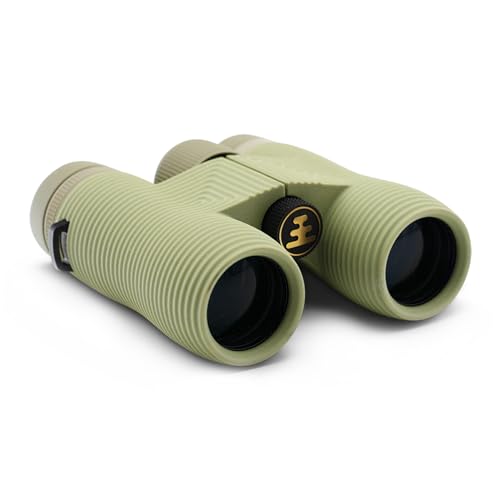
Nocs Provisions Field Issue Compact 10×32 Binoculars

Vortex Triumph HD 10×42 Binoculars

Celestron Nature DX ED 8×42 Binoculars

Bushnell Trophy XLT 10×42 Binoculars and Harness

ATN BlazeSeeker 6 Thermal Monocular

Celestron Travel Scope 80mm Telescope Kit

Celestron StarSense Explorer LT 80AZ Telescope
Why These Options Stand Out
At 16.7 ounces, these binoculars sit more comfortably beside a pack than in a chest pocket. Their 10×32 configuration favors a wide, bright view for moving through timber, while the compact focus wheel supports quick target acquisition. I see the strongest fit among mobile hunters who scan frequently and carry glass over long distances.
Fully coated optics, a Bak4p prism, and sealed construction support clear outdoor use, but brightness still depends on ambient light. Compared with the Vortex Triumph HD 10×42, this model prioritizes portability over the larger light-gathering format.
The Good Stuff
- The 16.7-ounce body reduces load during long approaches.
- A 10x magnification balances detail with a usable field of view.
- The oversized focus wheel permits quick, controlled changes.
- Waterproof, fog-proof, and scratch-resistant construction suits harsh field conditions.
Points To Note
- The 32-millimeter objective gathers less light than a 42-millimeter design.
- Owners should keep both eyepieces and the focus wheel clear of mud before adjusting them.
Key Specs
Made For
Mobile hunters moving through wooded country benefit most from its compact weight and quick handling.
Another Choice May Suit
The Vortex Triumph HD 10×42 fits stationary dawn and dusk watches better for people wanting more light-gathering capacity.
The 10×42 format gives this model more room for incoming light than the Field Issue 10×32. That makes it a more natural fit for dawn, dusk, and shaded wildlife observation, especially for people who spend long periods scanning from a fixed position. Adjustable eyecups and a diopter also support a personalized fit.
The honest trade-off is weight. This is a more substantial field tool than a compact scouting binocular, and hand tremor can become noticeable with 10x power. Still, the multicoated lenses, sealed body, and focus controls create a convincing general-purpose package.
What It Does Well
- The 42-millimeter objectives support low-light image gathering.
- Multicoated lenses promote edge clarity and light transmission.
- Adjustable eyecups improve comfort during long watches.
- A diopter helps balance the view for uneven eyesight.
Worth Noting
- Its size carries more weight than the Nocs Field Issue.
- For long walks, common owner advice favors a neck strap or padded harness and secure lens caps.
The Right Fit
Stationary hunters and wildlife observers gain the most from its conventional 10×42 balance.
Swap It Out When
The Nocs Provisions Field Issue Compact 10×32 Binoculars suit hikers who rank pack weight above low-light brightness.
Lower magnification makes the Celestron Nature DX ED 8×42 steadier during wildlife tracking. In my view, that stability can matter more in real low-light conditions than squeezing out extra detail with a 10x design. The 42-millimeter objective retains a useful balance of light gathering and portability.
Extra-low-dispersion glass reduces color fringing around high-contrast edges, which helps separate silhouettes from branches. Compared with the Vortex Triumph HD, this Celestron model offers less reach but a calmer field for following deer, birds, and other moving subjects.
Where It Delivers
- 8x power produces a steadier image for moving wildlife.
- ED optics limit colored fringes around branches and horizons.
- 42-millimeter objectives support dawn and shaded-forest viewing.
- Waterproof construction suits hiking and birding routes.
Honest Caveats
- Less magnification limits fine detail on distant subjects.
- Its birding emphasis makes it less specialized than the ATN thermal option.
Feature Snapshot
Who Will Love This
Birders and casual wildlife trackers benefit from its steady, natural-looking view.
Where Another Pick Shines
The Vortex Triumph HD 10×42 Binoculars serve hunters who need more detail at greater distances.
The included harness is the detail I notice first. It transfers the 25-ounce load from my neck to my torso, keeping the Trophy XLT 10×42 Binoculars accessible during long wildlife watches. That makes the bundle practical for stationary observation, even though its weight exceeds the compact Nocs option.
Fully multicoated optics, a roof-prism design, and 15.2 millimeters of eye relief support clear outdoor viewing and comfortable eye spacing. For twilight hunting, the larger objective helps, but the fixed harness may feel restrictive during fast hiking.
A Few Highlights
- The deluxe harness keeps weight away from the neck.
- Multicoated lenses support brightness and edge definition.
- A fast center-focus wheel simplifies repeated adjustments.
- Generous eye relief accommodates varied facial anatomy.
- O-ring seals and nitrogen purging help resist moisture and fog.
Practical Considerations
- The 25-ounce body is heavy for extended walking.
- Harness fit should be adjusted before a long outing to prevent rubbing.
Quick Facts
Built With In Mind
Long stationary watchers benefit from the harness and substantial 10×42 configuration.
A Better Fit Elsewhere
The Nocs Provisions Field Issue Compact 10×32 Binoculars fit mobile hunters better.
The ATN BlazeSeeker 6 changes the low-light equation by detecting heat differences rather than relying entirely on reflected light. Thermal imaging can reveal concealed animals against dark backgrounds, making it valuable for overnight scouting. It is a handheld monocular, though, so this pick requires a different viewing habit from binocular glass.
The 1.2x to 9.6x variable magnification and 256×192 sensor offer flexible framing, while the 32GB storage bundle supports recording. Detection range depends on body heat, weather, distance, and contrast, so I would not treat the sensor size as a promise of consistent identification.
Notable Gains
- Thermal imaging remains useful without moonlight or artificial light.
- Variable magnification supports both broad scanning and closer inspection.
- SharpIR processing can improve the clarity of displayed thermal detail.
- Stored media supports later review of recorded wildlife activity.
Less-Strong Areas
- Single-monocular use leaves one eye uncovered.
- Thermal differences can be subtle in warm weather or long-range scenes.
- Electronics require disciplined storage and battery care.
Technical Highlights
Who It Suits Best
Night hunters and serious wildlife observers benefit from heat-based detection.
Not My Match When
The Celestron Nature DX ED 8×42 Binoculars suit daylight wildlife watchers better.
The Celestron Travel Scope 80mm belongs in a camp-sky kit, not a hunting belt. Its 80-millimeter aperture gathers enough light for lunar and bright-night-sky viewing, while the backpack and smartphone adapter simplify transport. I value it for family trips where astronomy is a side activity rather than the main event.
Coated glass and a refractor design create a straightforward, low-maintenance entry point. Unlike the ATN BlazeSeeker, it views distant celestial objects rather than heat signatures, and its narrow astronomical field makes wildlife scanning impractical.
Strengths Worth Knowing
- The 80-millimeter aperture provides a bright starting point for lunar viewing.
- The backpack supports transport to campsites and observing areas.
- A refractor design keeps the optical setup visually simple.
A Few Limitations
- It is not suitable for deer, bird, or general wildlife hunting.
- Tripod stability and careful alignment remain important for focused views.
Made For
Families and casual astronomy starters benefit from the portable, self-contained format.
Reach For A Different Pick When
The Celestron StarSense Explorer LT 80AZ Telescope suits those wanting guided sky finding.
Phone-guided setup distinguishes the StarSense Explorer LT 80AZ from the simpler Travel Scope. The telescope analyzes the sky and calculates its position to direct the observer toward celestial targets, reducing the frustration of learning by sight alone. That makes sense for a backyard or campsite introduction to astronomy.
This remains a telescope, not low-light hunting glass. Its real advantage is navigation assistance, and a phone still needs protection from moisture and dust outdoors. Compared with the Travel Scope, the added guidance helps beginners spend less time locating objects.
Benefits That Matter
- Phone-assisted alignment lowers the learning curve for beginners.
- The 80AZ mount provides a simple alt-azimuth setup, which means altitude and azimuth movement.
- Real-time position guidance helps users identify celestial targets.
- The refractor format remains approachable for family observing.
Things To Weigh
- Smartphone guidance depends on a compatible, functioning phone.
- Neither tripod nor optical tube protects nearby electronic equipment from moisture.
Who Should Grab It
New astronomy observers benefit from phone-guided setup and celestial positioning.
Skip It When
The Nocs Provisions Field Issue Compact 10×32 Binoculars suit wildlife observation better.
Matching Optics To The Hunt
Magnification changes how a binocular feels as much as how much detail it shows. A 10x model helps identify distant subjects but magnifies hand movement, while 8x glass usually produces a steadier view. I match the format to the activity rather than treating greater magnification as automatically better.
Objective diameter deserves equal attention because more lens area can collect additional light. A 42-millimeter objective generally gives a brighter conventional view than a 32-millimeter one, although coatings, optical quality, and environmental conditions shape the result. Night hunters covering distance may accept the extra weight for that light-gathering advantage.
Coatings reduce light loss and surface reflections, while ED glass limits colored fringing around high-contrast edges. Neither feature creates usable darkness on its own. The practical test is whether the subject remains distinguishable from a wooded background without excessive glare, blur, or eye strain.
A thermal monocular creates a separate decision because it detects heat rather than amplifying available light. It can help with overnight detection, although atmospheric conditions, target contrast, and thermal crossover affect the image. Hunters who need both conventional detail and thermal capability may prefer separate tools.
Buying Low-Light Glass Without Regret
Start with the light. A 10×42 format makes sense for stationary twilight observation, while a compact 10×32 pair is easier to carry during mobile scouting. An 8×42 model offers a steadier image for tracking movement. Magnification beyond 10x generally demands a tripod or exceptionally steady hands.
Ergonomics deserve equal attention because a technically capable optic becomes frustrating after several hours. Check eye relief, focus-wheel travel, diopter adjustment, and weight distribution. The included harness may be valuable for a long watch, yet it can interfere with quick movement across uneven ground.
What Low-Light Performance Really Requires
Glass coatings, objective size, optical correction, and image stabilization influence low-light performance. A larger objective usually collects more light, but quality optics and a steady view determine how usable that light becomes. Thermal devices add another layer, detecting heat differences instead of reflected illumination.
Mistakes Worth Dodging
I avoid choosing by magnification alone, since a cluttered 10x view can lose an animal faster than a steady 8x view. I also account for carrying weight and cold-weather battery needs instead of pretending every glass handles every hunt equally. A tripod helps with long-distance observation, but its setup can slow movement through dense cover.
Premium Glass Versus Specialized Tools
Higher-priced binoculars may improve coatings, optical correction, sealing, and focus controls. Those benefits show up in edge clarity, comfortable repeated use, and dependable operation, but they do not make poor technique disappear. Spending more is most useful for hunters who regularly face darkness and long observation sessions.
Frequently Asked Questions
Are 10×42 binoculars good for low light?
They offer a useful balance of magnification and light gathering. Their larger objective helps in twilight, though steady handling remains important.
Is 8x or 10x better for hunting?
8x usually produces a steadier image for tracking movement. 10x shows more distant detail but can magnify hand shake.
Are 10×32 binoculars good for hunting?
They suit mobile hunters who value compact weight. A 42-millimeter objective usually provides a brighter view for stationary low-light use.
Can thermal monoculars work without moonlight?
Thermal imaging does not depend on moonlight in the same way conventional glass does. Contrast, temperature, distance, and weather still shape the image.
Do I need a tripod for hunting binoculars?
A tripod helps with extended 10x observation. Handheld use remains more practical during quiet, mobile approaches.
Final Verdict
I favor the Vortex Triumph HD 10×42 for balanced low-light use, the Nocs Field Issue 10×32 for mobility, and the ATN BlazeSeeker for overnight heat detection. The Celestron Nature DX ED 8×42 is a strong wildlife alternative, while both telescopes belong in an astronomy kit rather than a hunting bag. Matching the optic to the terrain and the kind of light available matters more than chasing a single specification.