
Foldable hiking sticks add stability on uneven trails, reduce strain during long descents, and pack neatly into a daypack. The right pair should match the route, fit comfortably in your hand, and collapse to a size that doesn’t dominate your luggage.
I compared the materials, adjustment ranges, packed weight, locking systems, and grip styles across this lineup. The picks range from carbon fiber models for distance-focused hikers to aluminum poles for people who value adjustability, familiar hardware, and straightforward care.
A Quick View Of The Lineup
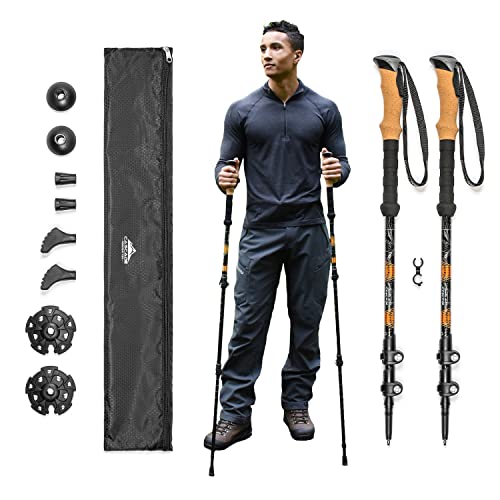
Cascade Mountain Tech Aluminum Trekking Poles

Foxelli Collapsible Aluminum Trekking Poles

TheFitLife Carbon Fiber Trekking Poles
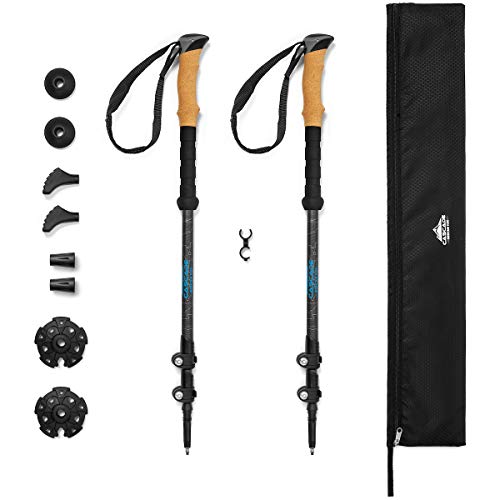
Cascade Mountain Tech Carbon Fiber Trekking Poles

Hiker Hunger Outfitters Foldable Hiking Poles


AISUNOUTDOOR Adjustable Aluminum Trekking Poles
What Each Pick Brings To The Table
Aluminum gives this pair a practical balance for everyday trails, where a forgiving shaft and familiar quick-lock hardware can matter more than shaving every gram. The 26-to-54-inch adjustment range covers a wide span of walking heights and makes shared family gear easier to configure.
Unlike the lighter carbon choices later in the lineup, this model is likely more reassuring during repeated community use. On paved paths, loose gravel, and moderate descents, the extended grip offers room for lower hand placement and steadier pacing.
What Helps Most
- Quick adjustment suits changing terrain and shared use.
- Aluminum construction resists everyday knocks better than a delicate carbon shaft.
- Extended grip provides options for controlled downhill positioning.
- The supplied tip kit adds practical ground-contact options.
Practical Considerations
- The wide 26-to-54-inch range adds bulk compared with compact travel poles.
- Owners should check the locks periodically because grit can enter external adjustment joints.
Made For Everyday Trails
These poles suit beginners, family hikers, and walkers who want one adjustable pair for pavement, campsites, and changing trail surfaces.
Where Another Pick Suits Better
TheFitLife Carbon Fiber Trekking Poles suit distance hikers who place more value on low carried weight than aluminum durability.
Foxelli places the emphasis on carrying weight rather than total packed size. Each aluminum pole weighs 9.4 ounces and retracts to 21 inches, a useful combination for travelers moving between hotels, trailheads, and public transportation.
The cork grips provide a softer, more tactile surface than molded foam, especially during long walking days. Compared with Cascade Mountain Tech Aluminum Trekking Poles, the adjustment system offers similar trail flexibility with a noticeably lighter stated carry weight.
Where It Excels
- A 9.4-ounce pole weight supports easier long-distance carrying.
- Cork grips feel more natural during extended walks.
- The 24-to-54-inch range handles varied body sizes.
- Flip locks allow quick length changes on trail.
- All-terrain accessories broaden mixed-surface use.
Small Caveats
- The 21-inch packed length may still be awkward in a small daypack.
- External locks can collect mud and should be brushed clean after wet routes.
Feature Snapshot
Right Fit For Walkers
Travelers, long-distance walkers, and hikers who prefer cork grips will get the most useful balance from Foxelli.
Consider Something Else When
Hiker Hunger Outfitters Foldable Hiking Poles better suit travelers who prioritize a compact hinged design over the lowest stated pole weight.
Carbon fiber makes this a natural fit for hikers who track every item in their pack. The material is valued for its high strength-to-weight ratio, meaning a sturdy shaft can be substantially lighter than a comparable aluminum design.
That low mass matters during long-haul treks, especially once a water filter, shelter, and food are already loaded. The expected benefit is less arm fatigue and easier pack management, though the source does not provide a specific weight or packed length.
The Case For It
- Carbon fiber construction favors low carried weight.
- Shock-absorbing behavior supports smoother use on sustained descents.
- Poles can help establish rhythm across flat, rising, and falling terrain.
Trade-Offs To Consider
- The limited specifications make detailed comparison with aluminum models difficult.
- Carbon shafts deserve careful loading around sharp rocks and vehicles where points could strike the sides.
- Collapsible sections may create more joints and connection points than a single rigid shaft.
Built With Distance In Mind
Long-distance hikers and fast walkers benefit most from the low material weight and terrain-spanning support.
Look Elsewhere When
Cascade Mountain Tech Aluminum Trekking Poles better suit casual hikers who prefer a wider stated height range and more familiar aluminum hardware.
Cascade Mountain Tech takes a more compact approach here, pairing carbon fiber with an eight-ounce pole weight. That makes the model appealing for backpackers who carry trekking poles for stability but dislike dead weight between camps.
Quick adjustable locks reduce setup time at trail junctions or after a rest stop. Compared with TheFitLife Carbon Fiber Trekking Poles, this listing provides a clearer weight figure, though the two remain close in core material and intended use.
What Works In Its Favor
- An eight-ounce stated weight keeps pack weight modest.
- Carbon fiber supports a useful balance of strength and low mass.
- Quick adjustment suits changing users and terrain positions.
- Low weight makes the poles easier to carry between short trail segments.
Details To Watch
- No stated adjustment range makes fit comparison less direct.
- Carbon fiber calls for more care around sharp impacts than aluminum.
At A Glance
Who Should Grab It
Backpackers, thru hikers, and experienced walkers who prioritize low weight will find this design especially practical.
Another Choice May Suit
Foxelli Collapsible Aluminum Trekking Poles better suit walkers who value a stated adjustment range, cork grips, and aluminum construction.
True hinged folding differs from simple telescoping: the shaft separates into shorter sections rather than merely shrinking along one continuous axis. That distinction makes this model relevant to travelers managing limited luggage space, particularly on trips involving frequent changes of accommodation.
The aluminum construction keeps the approach familiar, while metal locks support repeated height changes. Unlike the Foxelli model, the source does not supply a packed dimension, so the folding format is the clearest reason to consider it.
Reasons It Performs
- Folding sections pack into a shorter, easier-to-store form.
- Metal locks provide direct height adjustment.
- Cork and EVA grip materials offer two tactile surfaces.
- Aluminum suits routine hiking and travel use.
- The hinge design appeals to travelers moving between locations.
Possible Compromises
- Hinges and locks create more places to inspect after sustained use.
- No stated weight or packed length limits precise size-and-carry comparison.
- Folding joints may feel less streamlined than telescoping shafts.
Feature Facts
Best Suited To Travelers
Travelers, overnight hikers, and minimalists benefit from the hinged construction and mixed grip materials.
Reach For A Different Pick When
Foxelli Collapsible Aluminum Trekking Poles suit walkers who need a documented 9.4-ounce weight and 21-inch packed length.
The Trek-Z places grip comfort at the center of its design. Cork feels responsive as hand position changes during climbs and descents, and it avoids the bulkier appearance of a large foam grip.
Aero-grade aluminum is the shaft material, chosen for low weight and resistance to ordinary bending and denting. Compared with Cascade Mountain Tech Carbon Fiber Trekking Poles, this pair carries more material in the shaft, which may appeal more to casual walkers than speed-focused hikers.
Everyday Advantages
- Cork grip adds tactile comfort on long walks.
- Collapsible construction supports easier packing.
- Aluminum handles routine bending and denting well.
- The design fits occasional hikes and cross-country routes.
A Few Limitations
- The source provides no exact weight, height range, or packed length.
- Aluminum is usually heavier than equivalent carbon fiber designs.
- Dirt should be kept away from telescoping sections to preserve smooth movement.
Who Will Love This
Long-day walkers and occasional hikers who favor cork grips and aluminum construction will appreciate the Trek-Z.
Where A Sibling Pick Shines
Cascade Mountain Tech Carbon Fiber Trekking Poles better serve hikers whose main priority is the lowest stated weight.
The AISUNOUTDOOR pair is framed for women and children, and its narrower adjustment range shapes the use case. A 43-to-51-inch span may suit many family walks, though taller walkers may find the upper limit restrictive.
Aluminum construction offers familiar strength for paved paths, park trails, and travel days. The stated weight of almost 11 ounces per pole keeps the equipment reasonably portable, although the source does not define the included raincoat’s size or role.
Positive Points
- Height adjustment supports different walkers within one family.
- The near-11-ounce weight is practical for trips and day walks.
- Collapsible shafts reduce storage demands.
- Aluminum handles common knocks during regular outdoor use.
Worth Noting
- The 43-inch minimum may not suit children who need a much lower setting.
- The narrower range offers less versatility than Foxelli’s 24-to-54-inch adjustment.
- Owners should clean the adjustment mechanism after sandy outings.
Key Attributes
Whose Shelf It Belongs On
Families walking paved paths and moderate trails will find this pair most convenient when everyone falls within its stated height range.
Swap It Out When
Foxelli Collapsible Aluminum Trekking Poles better serve taller or smaller walkers who need a much broader 24-to-54-inch range.
What To Prioritize Before Choosing Trekking Poles
Start with fit. Proper height lets the arm move naturally while the pole supports downhill movement, so a broad adjustment range can serve a household better than a fixed-height design. Measure the intended users and confirm compatibility with their walking style before ordering.
Next, compare packed weight with physical size. Carbon fiber generally favors low carried mass, while aluminum is often the more practical choice for repeated handling. Folding hinges shorten storage, but telescoping poles may be easier to adjust on uneven ground.
Grip choice also affects long outings. Cork provides a firm, natural texture, while EVA is softer and more forgiving. A wrist strap and grip shape matter, although specific strap information is limited in the available listings.
Two Details That Shape The Decision
Common Shopping Slip Ups
A compact listing does not necessarily reveal the packed length or weight, so backpackers may be surprised by the final volume. Check the height range carefully, especially for family gear, because a narrow adjustment span can exclude taller or shorter walkers.
What The Higher Tier Buys
Higher-tier poles often reduce weight through carbon fiber, advanced grips, or more specialized folding mechanisms. Those improvements matter most for long-distance trips; local walkers gain more from comfortable grips, durable locks, and an adjustment range that fits.
Frequently Asked Questions
Are foldable trekking poles lighter than telescoping poles?
Not necessarily. Foldability improves storage, while shaft material and design more directly determine weight.
Which material is best for long hikes?
Carbon fiber favors low carried weight, while aluminum often tolerates harder knocks more readily.
How do I choose the correct pole height?
Use the listed adjustment range to match the primary hiker and follow the maker’s sizing guidance before setting the final length.
Are cork grips suitable for wet trails?
Cork feels comfortable on normal walks, although frequent rain may require more careful drying and cleaning.
Can children use adult trekking poles?
Only within the stated height range. The AISUNOUTDOOR pair fits many walkers from 43 to 51 inches.
Final Verdict
The right pair depends less on the category label than on fit, weight, grip, and pack size. Cascade Mountain Tech covers a wide height range, Foxelli offers documented low weight, TheFitLife and Cascade Mountain Tech Carbon Fiber Trekking Poles prioritize lighter materials, and Hiker Hunger Outfitters focuses on hinged packing. Choose the configuration that suits the actual route and the people carrying it.