
Women’s trekking equipment often asks too much: lightweight enough for travel, steady on descents, and comfortable across long days. These picks range from compact carbon poles to durable aluminum models, with three hiking pants included as complementary trail apparel rather than walking aids.
The key differences center on weight, packed length, adjustment range, grip shape, and material. Carbon construction reduces carrying weight, while aluminum generally favors durability and lateral strength. Pants add mobility, storage, and weather resistance, bringing extra packing considerations.
A Fast Comparison Of The Options

LEKI Traveller Carbon Trekking Poles
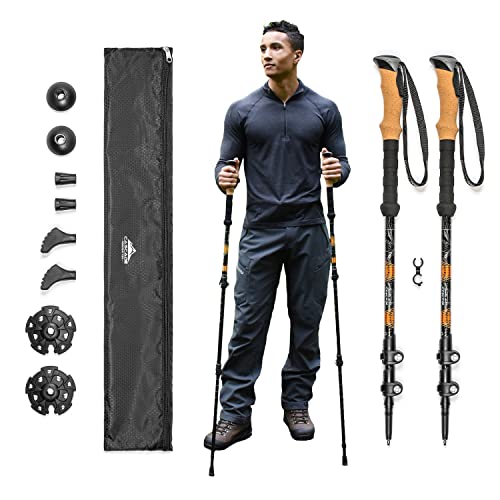
Cascade Mountain Tech Aluminum Trekking Poles

TREKOLOGY Trek-Z Foldable Aluminum Trekking Poles

LEKI Lhasa Trekking Poles

Toomett Women‘s Hiking Cargo Pants UPF 50
Toomett Convertible Zip-Off Hiking Pants

Toomett Women’s Safari Hiking Pants
Why These Options Stand Out
Air travelers gain little from poles that consume half a suitcase. LEKI addresses that problem with a carbon design that adjusts from 90 to 130 cm and collapses to roughly 26 inches, making the Traveller easier to store in a luggage compartment or daypack.
Its Nordic Shark grip follows a curved hand shape, which matters during long descents and crowded urban walks. Compared with the aluminum options here, it should appeal most to hikers who prioritize low carried weight, though I’d keep it on conventional maintained trails rather than force it through severe sideways stress.
Key Advantages
- The quarter-pound construction reduces bulk in luggage and long carry-on approaches.
- Dual Speed Lock 2 Plush latches permit a generous 40 cm adjustment range.
- The packed length suits travelers moving between cities and trailheads.
- The shaped grip gives palm and finger placement during sustained support.
Worth Noting
- Carbon suits weight-conscious walkers but may be less forgiving than aluminum under hard lateral loads.
- Locks and tips still need routine inspection after being compressed repeatedly in transit.
Made For
These poles best serve flight-based travelers, distance walkers, and hikers who regularly carry gear in tightly packed luggage.
Another Choice May Suit
Cascade Mountain Tech Aluminum Trekking Poles suit walkers who value a wider adjustment range and more tolerant construction over minimum weight.
The aluminum construction gives this model a different personality from LEKI Traveller Carbon. Aluminum tends to tolerate knocks and sideways pressure more readily, a practical distinction for rocky trails, crowded passes, and poles frequently strapped to outdoor packs.
A 26-to-54-inch range makes these poles unusually accommodating across different users. The extended lower grip also offers a second hand position on descents, although the bulk of that broad adjustment range may exceed what compact travelers need.
The Helpful Details
- Aluminum construction is a sensible choice for rough routes and frequent transport.
- The broad height range supports multiple trail users without separate equipment.
- Quick-lock adjustment allows length changes with fewer interruptions.
- The extended grip provides extra control on steep, sustained descents.
Trade Offs
- Aluminum adds more weight than carbon for the same general walking role.
- Owners should rinse dirt from the locks after muddy routes to limit grit around moving joints.
- The longest setting may feel unnecessary for children or shorter hikers.
Core Details
Best Suited To
This model works well for families, beginners, and hikers who regularly cover rocky or uneven terrain.
Swap It Out When
LEKI Traveller Carbon Trekking Poles make more sense for travelers who need a much smaller packed length.
Transit storage shapes the Trek-Z’s design more than maximum packed length. Its folding and collapsible construction can separate into smaller sections, which is useful in buses, rental cars, and luggage where rigid poles are inconvenient.
Aluminum keeps the material practical for ordinary trails, while adjustment supports different walkers. I’d consider those segmented joints an extra maintenance point, so checking each connection before a descent matters for anyone depending on them for balance.
Positive Points
- Multiple collapsible sections ease storage in compact travel spaces.
- Lightweight aluminum supports a balance of portability and routine durability.
- Adjustment makes the pair adaptable to different users.
- The format suits walking sticks, trails, and travel where support is optional.
Small Caveats
- More folding joints mean more places for dirt, loosening, or wear to develop.
- Carbon options may feel lighter during a full day of walking.
Feature Snapshot
Built With In Mind
Trek-Z suits travelers and older walkers who value compact storage and adjustable support more than carbon-level lightness.
Look Elsewhere When
LEKI Lhasa Trekking Poles fit dedicated hikers who prefer telescoping shafts and a stated 25.2-inch packed length.
The Lhasa sits between LEKI’s ultralight carbon model and heavier aluminum setups. Its stated weight remains below half a pound, yet the all-aluminum build should appeal to hikers who expect packs, gates, and transport to create occasional hard knocks.
That makes it a sensible middle ground for regular trekking. The 90-to-125 cm adjustment range is narrower than Cascade Mountain Tech’s, but the 25.2-inch packed length remains practical for organized travel and regular trail use.
A Strong Showing
- Low weight supports easier carrying over long approaches.
- Aluminum offers reassuring durability for rocks, roots, and crowded storage.
- Dual Speed Lock Plus latches provide clear adjustment across 35 cm.
- The compact packed size fits comfortably into most full-size packs.
Points To Note
- Aluminum is heavier than LEKI Traveller Carbon Trekking Poles.
- Its height range cannot cover the full 26-to-54-inch span offered by Cascade Mountain Tech.
Key Product Details
The Right Fit
The Lhasa best fits regular hikers and trekkers who want compact aluminum poles with a broad but practical adjustment range.
Where A Sibling Pick Shines
Cascade Mountain Tech Aluminum Trekking Poles suit households sharing one adjustable pair across a wider range of heights.
This entry is hiking apparel rather than a walking pole, so it doesn’t provide balance or downhill support. It complements the LEKI and Cascade Mountain Tech choices by addressing leg comfort, sun coverage, and secure storage during warm-weather hikes.
The UPF 50 designation indicates a high sun-protection rating, while the cargo cut creates dedicated room beyond ordinary pockets. I’d still treat fit and fabric hand as the deciding details, because hiking trousers can feel restrictive on steep climbs without enough give.
The Case For It
- UPF 50 fabric targets stronger sun exposure on open trails.
- Quick drying is useful during humid hikes and variable weather.
- Zippered cargo pockets keep small trail items from shifting.
Less Ideal Details
- It cannot replace trekking poles on rough descents or uneven ground.
- The available source data does not detail fabric stretch or exact pocket placement.
- Pocket closures should be checked before washing to avoid trapped grit.
Made For
These cargo pants suit warm-weather hikers who need substantial pocket capacity and high sun coverage.
Consider Something Else When
LEKI Lhasa Trekking Poles serve hikers who need actual balance and load support rather than additional legwear.
Changing trail temperatures are the problem this convertible pair addresses. Removing the lower legs turns full-length pants into shorts without requiring an entirely separate garment, reducing the volume of clothing carried during warm-weather trips.
The lightweight, quick-drying construction also makes sense for camping and travel. Like the other pants here, it remains clothing rather than a walking aid, so I’d pair it with TREKOLOGY Trek-Z poles for routes where balance and joint support are useful.
Everyday Perks
- Zip-off legs adapt quickly to rising trail temperatures.
- Lightweight fabric keeps the garment manageable in daypacks.
- Quick drying helps the pants recover between sweaty hikes.
- Convertibility reduces the number of pieces needed for mixed conditions.
Potential Compromises
- Convertible zippers require alignment and careful closure around the lower leg.
- No pole support is provided on loose or uneven terrain.
Who Will Love This
These pants suit hikers, campers, and travelers moving between warm daytime trails and cooler morning conditions.
Reach For A Different Pick When
Toomett Women‘s Hiking Cargo Pants suit walkers who prioritize secure cargo storage and high sun protection over zip-off versatility.
The safari-oriented design carries more clothing details than the other two Toomett choices. Four pockets, rear slash storage, an adjustable waist, and a full gusset create a practical layout for hiking, hunting, and warm outdoor work.
A Teflon treatment adds spill resistance, which is useful around wet grass or campsite meals but does not make the fabric waterproof. The convertible format also lets walkers regulate coverage, though the several functional sections may feel busier than a streamlined trail trouser.
Good Reasons To Consider
- Four-pocket storage supports organized access to trail essentials.
- The removable waistband allows fit adjustments over layers.
- A gusseted crotch adds mobility during scrambling and deep steps.
- Spill resistance helps during outdoor meals and damp vegetation.
- Convertible legs accommodate changing heat and ground conditions.
Small Limitations
- The feature-heavy layout can feel less streamlined than lightweight travel pants.
- Spill resistance still permits ordinary fabric cleaning and does not replace rain protection.
Whose Shelf It Belongs On
These pants suit hikers and safari travelers who need adjustable storage, spill resistance, and mobility across changing terrain.
A Better Fit Elsewhere
Toomett Convertible Zip-Off Hiking Pants offer a simpler route for walkers whose main priority is changing between pants and shorts.
Choosing Poles And Trail Clothing That Fit
Material and packed size determine how poles feel and travel. Carbon lowers carried weight, while aluminum usually tolerates rough handling more readily. Hikers checking luggage should compare packed length as closely as extended height, since a compact pole can matter more than a small adjustment advantage.
Grip and adjustment need to match the walker. An anatomical or extended grip can reduce hand fatigue during long descents, while quick locks ease frequent length changes. A broad adjustment range is useful for families sharing equipment, although shorter hikers may never need its upper settings.
Terrain and support should guide the final choice. Boardwalks, maintained trails, and descents suit lighter carbon designs, while rough routes may reward more forgiving aluminum shafts. Trekking poles support balance and reduce loading on the legs, but they don’t replace suitable footwear or route judgment.
Pants serve a different role from poles. Sun protection, quick drying, convertible legs, and pocket access matter for warm trails, while a gusset improves mobility around the crotch. I check pocket security, waist adjustability, and fabric care before choosing outdoor trousers for a long day.
Common Sense Before The Trail
Mistakes Worth Dodging
Choosing by appearance alone overlooks the details that determine usefulness. Packed length, fit over clothing, lock operation, and terrain matter more than style. For pants, I’d check the waist range, zipper placement, pocket capacity, and care instructions before committing.
What Separates Premium From Basic
Higher-tier poles often gain strength through refined materials, shaped grips, better locks, and more controlled packing geometry. Those improvements can matter for frequent trekkers, but a well-matched aluminum pair may serve an occasional hiker more sensibly than a premium model used twice a year.
Frequently Asked Questions
What height should trekking poles be?
Most walkers benefit from a setup that allows a relaxed elbow bend while the tip meets the ground. Personal height, walking posture, and slope angle influence the correct setting, so both poles should be adjusted to feel balanced.
Are carbon or aluminum hiking poles better?
Carbon poles favor low weight and fast packing, while aluminum poles generally handle knocks and lateral pressure more readily. Frequent travelers may prefer carbon, whereas rough trails and shared equipment often favor aluminum.
Do hiking poles help on steep descents?
Properly fitted poles add stability and can reduce loading on the knees during controlled descents. They still require sound footing, grip technique, and careful placement, particularly on mud, roots, or loose rock.
What grip is most comfortable?
Comfort depends on hand size, sweat level, and walking duration. Extended grips provide extra positioning on descents, while curved grips follow the hand more closely, so fit matters more than a universal shape.
Can hiking pants replace trekking poles?
No. Pants provide coverage, storage, and weather management, while trekking poles support balance and help manage loading on descents. They serve complementary roles in a practical hiking clothing system.
Wrap Up
I favor LEKI Traveller Carbon for air travel, Cascade Mountain Tech Aluminum for broad adjustment, and LEKI Lhasa for a balanced trekking setup. TREKOLOGY Trek-Z stands out for segmented storage, while the three Toomett pants cover sun, storage, and convertible-weather needs. Choose the pole or garment that solves the specific problem on your route, then confirm the fit before a long day outside.