
Carrying water should feel balanced, not like adding another awkward load to an already busy day. I compare capacity, fit, reservoir access, fabric, and storage for hiking, cycling, running, and long trail days, with special attention to the details that shape comfort after several hours. The right pack carries enough without becoming bulky, keeps the hose accessible, and remains manageable on rough ground.
The Leading Options At A Glance

Osprey Raven 10L Women’s MTB Backpack

Unigear Tactical 3L MOLLE Backpack

CLTAC Small MOLLE Hydration Pack Camo

Everfun 18L Insulated Hydration Backpack

CROSSGEAR 1.5L Running Hydration Vest

Origem 22L Hydration Backpack 3L Bladder
Why These Options Stand Out
The Osprey Raven 10L is built around movement on a bicycle, where a conventional day pack can shift across the torso. Its winged shoulder harness and AirMesh-covered hip belt spread contact across wider areas, which should feel more settled during bike-park laps or rough woodland trails.
That stability makes it a strong choice for technical riders who still want a compact 10L pack. Compared with the larger Everfun 18L, the Raven carries less general-purpose storage, but that lower volume feels purposeful rather than restrictive on a ride.
Practical Advantages
- The winged harness helps limit side-to-side movement on uneven trails.
- The AirMesh hip-belt wrap improves cushioning and distributes weight.
- A dedicated tool roll organizes trail-repair items without opening the main compartment.
- The 10L capacity suits compact layers, water, and ride essentials.
Things To Consider
- The 10L body offers less clothing room than the Origem 22L.
- The cycling-focused shape may feel less natural during long hikes loaded with camping gear.
- Reservoir maintenance requires regular drying and hose cleaning to prevent trapped moisture.
Key Specs
Built With In Mind
Technical mountain bikers on rocky trails gain the most from its cycling-specific support and compact profile.
A Better Fit Elsewhere
Long-distance hikers carrying insulation and extra clothing suit the Origem 22L Hydration Backpack 3L Bladder better.
The Unigear Tactical 3L MOLLE Backpack bridges outdoor work, hiking, and cycling with a tougher fabric choice than most compact hydration packs. The 1050D nylon is a dense, abrasion-resistant material, while the reservoir compartment adds insulation against temperature changes during long departures.
An external fill port reduces the need to reach deep into the body, a useful detail during a busy campsite stop. The tactical styling gives it a different character from the trail-focused Osprey Raven, though the same MOLLE-compatible layout will feel more at home on hunting or climbing trips than on fast runs.
What Stands Out
- The 3L reservoir reduces refill frequency on long hikes.
- Insulation in the hydration compartment helps moderate temperature swings.
- The external fill point makes reservoir access more direct.
Minor Gripes
- A tactical appearance may stand out more than some hikers prefer.
- The insulated reservoir sleeve adds bulk and requires more attention during drying.
Feature Snapshot
Made For
Hunters, climbers, and hikers carrying a 3L reservoir across mixed outdoor activities benefit from the rugged MOLLE construction.
Consider Something Else
Runners wanting less visual bulk may prefer the lighter-profile CROSSGEAR 1.5L Running Hydration Vest.
The CLTAC Small MOLLE Hydration Pack Camo is designed more as a modular attachment than a conventional hiking backpack. Its fit for a 4-by-6-inch MOLLE panel makes it most practical alongside a compatible vest or larger pack, keeping water and small essentials close without extending the main silhouette.
That compact approach contrasts with the stand-alone 18L Everfun. For fast hikers accustomed to working from a vest platform, the reduced bulk may be an advantage, although the attachment requirement limits flexibility for anyone moving between hiking, cycling, and travel.
Useful Highlights
- 500D nylon balances light weight with resistance to everyday wear.
- The included bladder creates a ready-to-use modular hydration setup.
- YKK zippers suit frequent opening and repeated field use.
Small Caveats
- Its 4-by-6-inch compatibility requires a suitable MOLLE attachment area.
- Capacity is limited for clothing, food, and gear normally placed in a full-size pack.
Core Details
Right Fit For
Vest-based hikers who prefer modular storage benefit from its compact MOLLE footprint.
Another Choice May Suit
Hikers carrying warm layers and snacks are better served by the Origem 22L Hydration Backpack 3L Bladder.
Everfun takes the all-purpose approach with an 18L body measuring 18.5 by 10.5 by 6 inches. That volume can hold a light jacket, snacks, and a compact first-aid kit without turning the pack into an expedition load, while eight pockets make smaller gear easier to locate.
The layout should suit day hikes, cycling outings, and festivals where small items need separate homes. A zippered mesh compartment protects valuables, and the lined pocket gives delicate belongings a softer surface, although the larger body carries more bulk than the cycling-focused Osprey Raven.
A Strong Showing
- The 18L main compartment balances clothing room with manageable size.
- Eight pockets reduce the need to unpack the main compartment.
- A 2L or 3L bladder option gives a choice for different route lengths.
Points To Note
- Multiple pockets can become difficult to inspect without routine cleaning.
- The 18L body may feel expansive on short, fast trail runs.
- Bladder cleaning and complete air-drying remain necessary after use.
Who It Suits Best
Day hikers and festival attendees carrying mixed essentials appreciate the balance of capacity and pocket access.
Where A Sibling Pick Shines
Technical mountain bikers gain more support from the Osprey Raven 10L Women’s MTB Backpack.
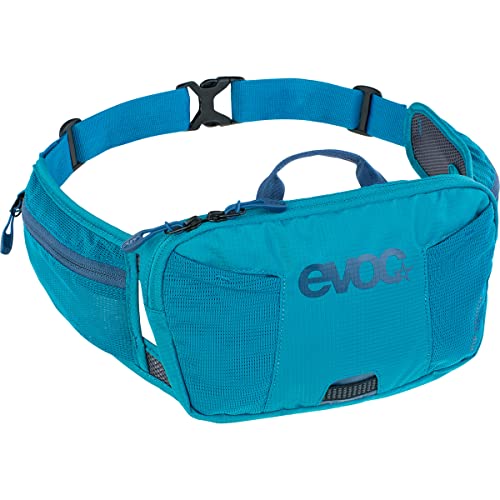
The EVOC 1L Hip Pouch shifts hydration toward a different kind of outdoor trip: short bike tours and trails where a full backpack is unnecessary. Its four storage areas provide room for compact essentials, while the Air Pad System adds structure and cushioning around the waist.
That makes it a practical companion for riders already carrying tools in hip-belt pockets. I see the EVOC as a supplementary storage option rather than a standalone water-carrying system, particularly during full-day hiking where clothing and reserves require a larger body.
A Favorable Mix
- The 1L capacity keeps bulk close to the hips.
- Two dedicated belt pockets separate frequently used items.
- Two additional compartments expand the available organization.
- The Air Pad System improves contact and comfort around the waist.
Worth Noting
- Its water resistance provides protection from light moisture, not complete waterproofing.
At A Glance
Whose Shelf It Belongs On
Short-distance cyclists and trail riders appreciate the low-profile organization and waist-based comfort.
Look Elsewhere
Hikers needing reservoir capacity and layered clothing storage should choose the Unigear Tactical 3L MOLLE Backpack.
The CROSSGEAR 1.5L Running Hydration Vest is built for pace rather than volume. Its 1.5L food-grade reservoir is modest, but that lighter demand suits a 5K trail run or a fast hike where a larger water supply would add unnecessary bulk.
The adjustable bite valve and quick-release straw make drinking less disruptive while moving, and the wide opening supports routine filling and cleaning. Compared with the 3L Unigear Tactical 3L MOLLE Backpack, this setup is more specialized, with less reserve capacity and fewer reasons to carry bulky outdoor equipment.
Advantages To Know
- The 1.5L reservoir keeps weight down on fast routes.
- A wide opening makes filling, scrubbing, and drying easier.
Honest Caveats
- A 1.5L capacity offers limited reserve during hot or remote hikes.
- Fast-flowing trail movement may expose fit differences that only appear over distance.
- The hose and bite valve need regular cleaning after every substantial outing.
Who Will Love This
Trail runners and fast hikers prioritizing low weight benefit from the compact reservoir and drink-access setup.
Swap It Out
All-day hikers will find more useful water volume in the Everfun 18L Insulated Hydration Backpack.
The Origem 22L Hydration Backpack 3L Bladder covers the broadest hiking role in this group. Its 3L food-grade EVA reservoir and 22L body leave room for water, clothing, snacks, and supporting equipment, while the included rain cover adds protection during unsettled weather.
Ten storage spaces keep that larger load organized, including an insulated bladder sleeve. For long hikes, that capacity is more useful than the running-focused CROSSGEAR vest, although the 18.1 by 9.8 by 6.3-inch body may feel excessive for short outings or fast travel.
Bright Spots
- The 3L reservoir suits longer routes and warm conditions.
- A 22L body carries clothing and snacks without a separate storage bag.
- Ten spaces make larger equipment easier to organize.
- The included rain cover helps protect contents during wet weather.
Where It May Fall Short
- Its full-size body adds bulk on short or fast hikes.
- The rain cover and reservoir sleeve make packing more involved.
- Food-grade EVA components still need thorough cleaning and complete drying.
Essential Details
Best Suited To
Longer-distance hikers carrying extra layers, snacks, and a substantial water reserve fit the 22L layout well.
Reach For A Different Pick
Technical mountain bikers gain a more ride-focused harness and hip-belt system with the Osprey Raven 10L Women’s MTB Backpack.
Choosing a Pack for the Route Ahead
Capacity Needs To Match the Load
A compact 1L pouch works well for short bike rides, while a 1.5L reservoir suits faster trail movement. Day hikes often need an 18L body, and longer routes benefit from 22L capacity plus a 3L reservoir. More space adds useful carrying options, but it can also make an outing feel heavier.
Fit Matters More Than Capacity
Harness shape, hip-belt contact, and load distribution determine comfort over time. A winged cycling harness can stabilize a bike pack, while a padded running vest keeps weight close to the torso. Body proportions and clothing layers also affect how each suspension system feels.
MOLLE Adds Modular Storage
MOLLE refers to a webbing grid used to attach pouches and accessories to compatible gear. It creates flexibility, but the attachment area must match the pack or vest. Modular setups can reduce the need for a larger main compartment, provided the connection remains secure during movement.
Reservoir Care Affects Ownership
A wide opening simplifies filling and scrubbing, while insulated sleeves moderate water temperature. The hose, bite valve, connector, and reservoir interior should be dried completely after use. Routine care helps prevent trapped moisture and keeps the drinking system easier to maintain.
Practical Details That Shape the Choice
Common Shopping Slip Ups
Choosing only by reservoir volume can create an unbalanced pack. A 3L reservoir inside a 10L body may lack room for clothing, while a large dry bag can overwhelm a short route. Capacity, storage, and intended activity need to be considered together.
What Separates Premium From Basic
A higher-tier hiking pack often adds a more supportive harness, stronger fabric, organized tool storage, or a larger reservoir. Those refinements help during long or technical routes, though a compact cycling pouch or running vest remains more appropriate for shorter outings.
Frequently Asked Questions
How Big Should a Hydration Backpack Be for Hiking?
A 10L to 18L pack suits many day hikes, while 22L models accommodate extra clothing and longer routes. Reservoir volume also depends on route length, climate, and refill access.
Is a 3L Reservoir Too Large for Hiking?
A 3L reservoir is practical for long or warm hikes, but it may add unnecessary weight for short trails. Fast hikers and runners often prefer a smaller 1.5L setup.
Are MOLLE Hydration Backpacks Comfortable?
MOLLE packs can be comfortable when the harness and hip belt fit properly. Compact models also work well as add-on storage, provided the attached vest or pack keeps the connection secure.
Should a Hiking Pack Have a Rain Cover?
A rain cover is useful in exposed or changeable weather, though it is not a substitute for keeping essential gear in sealed storage. Packs with lined or sheltered compartments offer additional protection.
How Do I Keep a Hydration Bladder Clean?
Rinse the reservoir, hose, connector, and bite valve after use, then allow every part to air-dry completely. A wide reservoir opening makes internal cleaning and drying easier.
Final Thoughts
The Osprey Raven 10L Women’s MTB Backpack fits technical cycling best, while the Unigear and CLTAC options favor MOLLE versatility. Everfun suits organized day hikes, EVOC handles compact bike-tour storage, CROSSGEAR favors fast movement, and Origem carries the most complete setup for longer routes. The honest choice comes down to route length, load, and the time spent carrying it.