
Waterproof hiking boots face a demanding job: keeping feet dry without feeling stiff, heavy, or awkward on long walks. I focus on ankle coverage, weather protection, traction, cushioning, and construction details for wet trails, daily commutes, and rough work environments. The list includes traditional hiking boots, low-profile footwear, and steel-toe work boots, so the right fit depends on terrain, ankle support, and protection rather than appearance alone.
The Lineup, Simplified

Columbia Transverse Hike Waterproof

Timberland Low-Profile Hiking Boots

Merrell Moab 3 Mid Hiking Boot

Merrell Moab 3 Hiking Shoe

Merrell Moab 3 Mid Waterproof Boots

HI-TEC Yosemite WP Mid Waterproof Boots
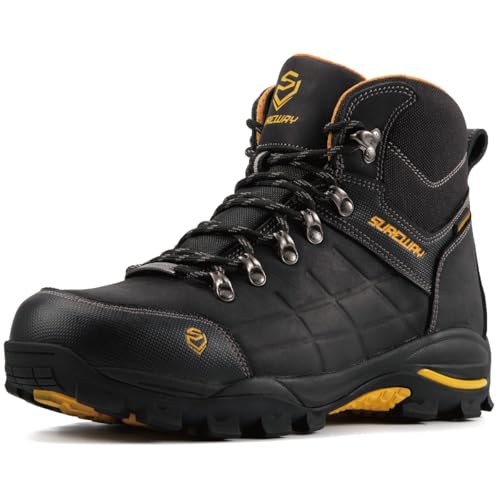
SUREWAY Men’s 6 Inch Waterproof Leather Work Boots
More Details On My Top Picks
Columbia combines a leather upper, waterproof-breathable construction, and responsive cushioning in a package suited to wet trails and long days outside. Breathability matters because trapped moisture can feel nearly as troublesome as surface water, particularly during steady climbs or descents.
The balance is more versatile than a heavy work boot or a narrow trail shoe. For day hikers and weekend walkers, it appears practical; on highly technical ground, the lighter construction may offer less isolation than the Merrell mid models.
Where It Helps
- Waterproof-breathable construction addresses rain and damp trail conditions
- Leather construction gives the upper a substantial, durable character
- Responsive cushioning supports long walks without a bulky appearance
- Lightweight build suits regular hikes and everyday outdoor use
- Multiple colors and sizes widen outfit and fit options
Honest Caveats
- Leather requires routine care to manage mud, salt, and moisture
- The listed construction does not confirm a safety toe or puncture-resistant plate
Core Details
Made For
Weekend hikers, everyday walkers, and commuters who regularly encounter wet pavement or muddy paths.
A Better Fit Elsewhere
Merrell Moab 3 Mid Hiking Boot may suit hikers who prioritize a more structured mid-cut silhouette and trail-oriented cushioning.
Timberland takes a deliberately casual approach here, pairing black nubuck with silver hardware and rope laces. Nubuck has a fine, suede-like surface that can look refined with jeans or outdoor trousers, though it dislikes standing water and rough mud.
This low-profile pair works well for short woodland walks, park paths, and travel days where a technical mid boot may look excessive. Compared with Columbia Transverse Hike Waterproof, it prioritizes style over weather-focused construction, and that distinction matters in prolonged rain.
Everyday Perks
- Black nubuck creates a refined casual appearance
- Low-cut shape pairs easily with everyday clothing
- Silver hardware adds subtle visual definition
- Rope laces reinforce the hiking-inspired look
Worth Noting
- The supplied details do not confirm waterproof construction
- Nubuck commonly needs careful brushing and water-resistant treatment
- Low-cut ankle coverage offers less support on rough terrain
Technical Sheet
Right Fit For
Casual hikers and travelers who want dark nubuck footwear for mild, mostly dry conditions.
Another Choice May Suit
Columbia Transverse Hike Waterproof better serves hikers who need confirmed waterproof and breathable construction.
The Moab 3 Mid centers on a supportive footbed, a softer cushioned midsole, and a grippier Vibram outrigger, according to the supplied product context. A midsole is the layer between foot and ground that absorbs impact, while an outsole compound determines traction.
Those details make more sense for long, uneven hikes than for polished daily outfits. The mid-cut design adds ankle coverage, but the source does not explicitly identify this version as waterproof, so wet-weather protection remains a key uncertainty.
A Strong Showing
- Supportive insole favors extended time on foot
- Softer midsole cushioning softens demanding trail miles
- Mid-cut profile offers more ankle coverage
- Vibram outrigger is designed for stronger grip
- The construction suits mixed hiking and trekking use
Possible Compromises
- Waterproof construction is not confirmed in the supplied details
- Trail-focused cushioning may feel bulkier around town
Feature Snapshot
Who It Suits Best
Long-distance hikers with prior trail experience who prioritize cushioning, grip, and ankle coverage.
Where A Sibling Pick Shines
Merrell Moab 3 Mid Waterproof Hiking Boots provide a clearer fit for hikers who need confirmed wet-weather protection.
Taking the Moab 3 construction in a low-cut form changes the practical focus from ankle coverage to easy movement. It should feel less substantial than the Merrell Moab 3 Mid Hiking Boot, making it more convenient for short hikes, errands, and travel days.
The supportive insole, cushioned midsole, and Vibram outrigger still point toward trail capability, depending on terrain and fit. Waterproofing is not confirmed for this version, so it is a poor first choice for sustained rain or deep puddles.
Advantages To Know
- Low-cut shape allows unrestricted ankle movement
- Supportive insole remains useful on long walks
- Cushioned midsole improves comfort over hard pavement
- Grippier outsole supports mixed outdoor surfaces
Details To Watch
- Waterproof construction is not identified
- Less ankle support may reduce confidence on rocky descents
- Dust and mud can work into a low-cut upper during long hikes
Built With In Mind
Day hikers, travelers, and casual walkers who favor lighter footwear with trail-oriented cushioning.
Consider Something Else When
HI-TEC Yosemite WP Mid Waterproof Boots suit hikers who want both a lower weight profile and confirmed waterproof construction.
Confirmed waterproofing is the defining distinction between this model and the standard Merrell Moab 3 Mid Hiking Boot. That feature makes it more relevant for rainy ridges, muddy approaches, and shoulder-season walks where damp ground is likely.
The mid-cut shape also preserves the ankle coverage and cushioned platform associated with the Moab 3 line. The honest limitation is that waterproof membranes can reduce airflow, particularly during warm climbs, so spacing and moisture management still matter.
What Pays Off
- Waterproof construction directly supports wet-weather hikes
- Mid-cut height improves coverage around the ankle
- Supportive insole suits long days on uneven ground
- Soft cushioning helps absorb repeated trail impacts
- Vibram outrigger supports traction on varied terrain
Small Caveats
- Reduced ventilation may matter during warm, sustained climbs
- Waterproof footwear still benefits from routine cleaning and drying
Built With In Mind
Hikers who regularly cross muddy, rainy, or snow-melted terrain and want more protection than a low-cut shoe.
Look Elsewhere When
Merrell Moab 3 Hiking Shoe fits warm-weather day hikers who value reduced weight and ankle freedom over waterproofing.
The Yosemite WP Mid combines waterproofing, breathable construction, and a lightweight approach. “WP” identifies the waterproof version, while the breathable aspect is important during steady movement because it can help manage heat and internal moisture.
Its mid-cut shape feels more trail-oriented than Timberland Low-Profile Hiking Boots but less substantial than SUREWAY Men’s 6 Inch Waterproof Leather Work Boots. The supplied source is sparse, so precise cushioning, outsole, and material claims would go beyond what I can confirm.
Useful Touches
- Waterproof construction handles rain and damp ground
- Breathable design supports warmer outdoor activity
- Lightweight construction reduces bulk on long walks
- Mid-cut profile adds useful ankle coverage
Practical Considerations
- Breathable waterproof components require regular cleaning
- The source does not confirm a safety toe or exact outsole compound
- Fit around the mid-cut may feel less accommodating than a structured boot
Quick Facts
Who Will Love This
Frequent walkers who regularly face damp paths and prefer a lighter mid boot over heavy leather footwear.
Reach For A Different Pick When
SUREWAY Men’s 6 Inch Waterproof Leather Work Boots suit people who need work-oriented construction and protective toe options.
This six-inch boot belongs in a different lane from the lighter trail models. Its leather upper, waterproof construction, and steel-or-soft-toe option point toward job sites, warehouses, and outdoor work where protection matters more than streamlined weight.
A six-inch shaft also offers substantial coverage, although it may feel restrictive during long drives or steep hikes. Owners commonly approach leather work boots with routine cleaning and conditioning, which can manage dried mud and surface scuffs.
What It Does Well
- Leather construction suits demanding work environments
- Six-inch height delivers substantial ankle coverage
- Waterproof design supports wet and muddy job sites
- Steel or soft toe choices accommodate different work needs
Factors To Consider
- The steel or soft toe variant must match workplace requirements
- Leather needs regular cleaning and conditioning
- Work boots may feel heavy on recreational trails
Included Details
Whose Shelf It Belongs On
Construction, utility, and industrial workers who need a waterproof leather boot with a suitable toe configuration.
Swap It Out When
Merrell Moab 3 Mid Waterproof Boots better suit recreational hikers who want cushioning and lighter trail-focused construction.
Choosing Waterproof Footwear for the Terrain
Start with ankle coverage
A low-cut shoe keeps the foot flexible and packs easily, making it sensible for short trails and frequent travel. A mid boot surrounds the ankle more fully, which can feel steadier on uneven descents, roots, and loose ground. The six-inch SUREWAY profile moves further into work-boot territory and may feel less natural during a recreational hike.
Separate waterproofing from weather resistance
Waterproof construction is designed to block water penetration, while weather-resistant materials mainly slow wind and light moisture. The Columbia and Merrell waterproof mid models make more direct claims for wet environments, whereas the Timberland pair is better understood as a casual hiking-style boot. Always check the product details for the exact version, since closely related models may use different constructions.
Consider cushioning and outsole placement
An insole supports the foot, a midsole absorbs impact, and the outsole grips the ground. The Merrell Moab 3 models emphasize a supportive footbed, cushioned midsole, and Vibram outrigger. Other listings provide less detail, so I would avoid assuming similar comfort or traction without further confirmation.
Think about maintenance and fit
Leather generally needs routine cleaning and conditioning, while waterproof membranes require care to keep dirt from degrading the surrounding materials. Fit should account for heel movement, toe room, and the socks typically worn on the trail. Wider feet or high insteps deserve extra attention, particularly with mid-cut and six-inch shafts.
Avoiding Common Footwear Mistakes
Mistakes Worth Dodging
A waterproof label does not eliminate the need for proper sock and lacing choices, and low-cut footwear rarely matches the ankle support of a six-inch work boot. The biggest mistake is choosing by appearance while ignoring the actual route, carrying load, and duration of wear.
What Separates Premium From Basic
Higher-end hiking models often invest in more precise cushioning, outsole compounds, waterproof membranes, and upper materials. Those additions matter most across long distances, wet ground, and rough terrain, while short urban walks may not justify a bulky or heavily structured design.
Frequently Asked Questions
Are waterproof hiking boots uncomfortable for long walks?
They can be, particularly when the upper is bulky or ventilation is limited. Cushioning, lacing, thick socks, and proper fit matter more than the waterproof label alone.
Is a mid-cut hiking boot better than a low-cut shoe?
Mid-cut boots suit uneven trails and added ankle support. Low-cut shoes move more freely and work well for day hikes, travel, and lighter loads.
Can waterproof work boots be used for hiking?
They can handle light trails, but their bulk and rigid construction may reduce comfort over long distances. Trail-focused footwear usually offers a better balance of cushioning and mobility.
How should waterproof leather boots be maintained?
Brush away dried dirt, clean the upper with an appropriate product, and allow the boots to dry naturally. Leather conditioning can help preserve suppleness, while the waterproof membrane still needs routine care.
What should I wear inside waterproof hiking boots?
Moisture-wicking socks help manage perspiration and reduce the discomfort of wet feet. A snug, seamless pair is usually easier to wear beneath structured hiking footwear.
Final Verdict
The Merrell Moab 3 Mid Waterproof Boots make the clearest fit for wet recreational trails, while Columbia Transverse Hike Waterproof offers a balanced leather alternative. Timberland suits casual wear, HI-TEC emphasizes lighter construction, and SUREWAY belongs on demanding work sites. Matching the boot to the route and workday matters more than chasing a single do-everything design.