
Hunting before dawn calls for light that reveals trails, equipment, and movement without spilling a bright beam across the surrounding woods. Red output can reduce the disruptive effect of white light on dark-adapted eyes, while a headlamp keeps both hands available for a firearm, bow, navigation tool, or game cart.
The seven options below vary considerably, though. Some provide dedicated red illumination, others emphasize white-light reach, and one is actually a handheld flashlight rather than a headlamp. I separate the genuine red-light choices from broader hunting lights and explain where each one fits.
The Picks In Brief

OLIGHT ArkPro Ultra Flat Flashlight

Nitecore NU25 Triple Output Headlamp

FX FFEXS Rechargeable 5-Mode Headlamp

Nightstick XPP-5450G Green Headlamp
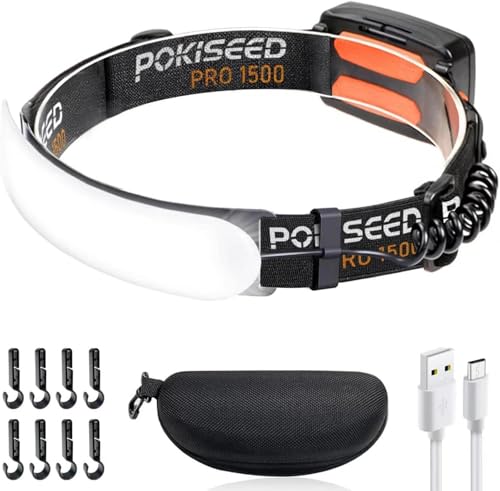
POKISEED 1500-Lumen Wide-Beam Headlamp

EverBrite 350LM Color Output Headlamp

DanForce LUMINUS Red Headlamp
What Each Pick Brings To The Table
The ArkPro Ultra brings several light sources to a flat handheld format, but it is not a headlamp. Its green beam suits hunters who want low-disruption illumination, although a mounted light would be more convenient while both hands remain occupied.
For camp setup, night walks, or scanning equipment, the combination of broad white light and focused output is unusually versatile. I consider it a useful companion for a hunter who already owns a separate headlamp.
What Stands Out
- Four output types combine general lighting, distant focus, ultraviolet, and green illumination.
- The broad flood pattern helps illuminate a campsite without frequent head movement.
- The green mode is more directly relevant to low-light hunting than the ultraviolet setting.
- Its flat handheld design suits pack retrieval better than a head-mounted lamp.
A Few Limitations
- Green light is not equivalent to dedicated red output, so this does not fully satisfy a red-light shopping list.
- One hand stays occupied during long walks, and the light may be less convenient than a secured headband.
Key Product Details
Built With In Mind
Camp-based hunters who already carry a dedicated red headlamp will find the ArkPro useful as a supplemental handheld light.
Where Another Pick Suits Better
The Nitecore NU25 Triple Output Headlamp is the better fit for hunters who need genuine red illumination while keeping both hands free.
The NU25 is a natural choice for mobile hunters who want a red mode without accepting a bulky headlamp. Its main white beam reaches 360 lumens and 88 yards, while a separate red source provides softer night illumination.
At 0.99 ounces before the headband, the lamp is easy to carry on long approaches. The high-CRI source, which renders color more naturally, also helps with close inspection, although red remains the more relevant hunting mode.
Strong Points
- The sub-ounce lamp body disappears easily into a pocket or game bag.
- Dedicated red light supports quieter map reading and equipment checks.
- The 360-lumen main output handles trails, camp tasks, and trail-side repairs.
- USB recharging removes disposable batteries from routine packs.
Small Caveats
- The 88-yard reach is modest compared with the longer-reach options in this list.
- Owners should inspect the headband and charging port after repeated outdoor use because both are exposed to moisture and dirt.
Technical Highlights
Made For
Hunters covering long distances on foot benefit most from the low weight and dedicated red mode.
A Better Fit Elsewhere
EverBrite 350LM Color Output Headlamp offers more color choices and seven modes for hunters who want broader control.
The FFEXS prioritizes simple rechargeable lighting for running, hiking, camping, and general hunting preparation. Its five modes provide flexibility, but the available information does not identify a dedicated red source, so it belongs on this list mainly as a category contrast.
The 1,200mAh battery makes it practical for owners who dislike carrying spare cells. For close trail work, a 160-lumen output appears reasonable, though heavier fog or dense cover could make it feel modest.
Bright Spots
- Five lighting modes add flexibility for moving, campsite, and close-range tasks.
- The rechargeable battery simplifies packing compared with a disposable-cell design.
- Hands-free positioning leaves both hands available for bows, tools, or game handling.
- The stated 160-lumen output targets everyday trail and campsite visibility.
Where It May Fall Short
- No dedicated red output is identified, making it unsuitable for strict red-light hunting setups.
- Lower output may provide less penetration through heavy vegetation than the brightest models here.
- The rechargeable cell requires access to charging equipment during extended trips.
Who It Suits Best
Casual hikers and beginning hunters who mainly need rechargeable hands-free light will find it practical.
Reach For A Different Pick
Nightstick XPP-5450G Green Headlamp serves hunters working in demanding environments where a more specialized beam is needed.
The XPP-5450G is built around a green spotlight rather than broad red illumination. That narrower focus makes it useful for scanning trails and equipment, particularly where low-light color control matters more than lighting an entire campsite.
Two brightness levels, 90 and 50 lumens, provide a sensible balance between distance and longer use. Three AAA batteries make power straightforward, though replacing cells may be less convenient than a rechargeable setup during a multi-day trip.
What Helps Most
- The 90-lumen mode reaches farther for trail scanning than lower-output green lamps.
- A 50-lumen setting extends practical use for map reading and campsite navigation.
- Intrinsic safety makes the model relevant to demanding industrial and outdoor environments.
- Green output reduces some of the disruptive effect associated with bright white light.
Practical Considerations
- Green light is not a substitute for dedicated red illumination, which may discourage close observation of game.
- Disposable AAA cells add pack weight and require battery inventory during extended outings.
- The focused pattern is less convenient for filling a broad campsite with even light.
Feature Rundown
Right Fit For
Hunters entering fields, work zones, or other hazardous sites benefit from its specialized green spotlight.
Another Choice May Suit
The Nitecore NU25 is lighter and includes true red light for ordinary overnight map reading.
The POKISEED emphasizes coverage rather than discreet red lighting. Its 230-degree beam and 1,500-lumen maximum illuminate a large area, which helps around camp, at a worksite, or beside a loaded truck before dawn.
The rear taillight and side clips add practical utility, although they do not transform the main white beam into a red hunting light. For hunters setting up in darkness, the broad field may be more useful than preserving every trace of dark adaptation.
What It Does Well
- The 230-degree spread reduces the need to turn the head while working around camp.
- A 5,000mAh battery favors extended use away from vehicle power.
- USB Type-C charging fits modern portable power setups.
- The taillight improves visibility around a campsite and the clips support hard-hat use.
Trade-Offs
- No dedicated red source is identified, making it a weak match for red-sensitive hunting protocols.
- The wide beam can illuminate companions and animals farther than a close-range red mode.
- Owners should rinse dirt from the clips and charging port after dusty fieldwork to reduce wear.
Core Details
Whose Shelf It Belongs On
Hunters who value campsite coverage and vehicle organization benefit more from its broad beam than from low-light color control.
Swap It Out When
The EverBrite 350LM Color Output Headlamp is the stronger choice for genuine red illumination around camp.
Among these options, the EverBrite makes the clearest case for a conventional red-light headlamp. It combines red, green, and white sources with seven modes controlled by two buttons, giving hunters quick access to the color appropriate to map reading, campsite work, or trail visibility.
The white output reaches 350 lumens and 196 feet, which covers immediate outdoor tasks. A built-in 1,500mAh battery is rechargeable, although its fixed construction means it cannot be replaced with a spare cell mid-trip.
Well-Handled Touches
- True red output gives hunters a dedicated low-disruption nighttime mode.
- Seven modes allow a transition from close white illumination to colored lighting.
- Two-button operation reduces menu hunting during a dark setup.
- The 350-lumen maximum handles camp tasks and nearby trail sections.
Points To Keep In Mind
- The non-removable battery limits flexibility on remote, multi-day trips.
- Its 196-foot white-light reach remains modest compared with focused handheld models.
- Charging contacts need occasional cleaning after dusty or wet use.
Details At A Glance
Who Will Love This
Hunters who alternate between camp tasks and quiet red map checks will find the three-color design especially useful.
Consider Something Else When
The Nitecore NU25 Triple Output Headlamp is lighter for long walks where weight matters more than multiple color modes.
The LUMINUS combines a 1,080-lumen white source with red illumination and a zoomable beam, making it more versatile than a strictly red lamp. That balance suits a hunter who needs distance on the trail and restrained light around camp.
USB recharging keeps power management simple, while the adjustable headband supports steady hands-free placement. The IPX54 rating helps against splashes, although it is not the strongest water-resistance figure among the brighter models here.
Useful Touches
- The red mode provides a dedicated low-light option for maps and equipment.
- A zoomable 1,080-lumen white beam can shift between nearby tasks and trail scanning.
- USB recharging supports routine overnight use without disposable cells.
- Hard-hat compatibility broadens its value for field crews who also hunt.
Some Limits To Know
- Its higher-output design may be excessive for close campsite work where red is sufficient.
- IPX54 protection handles splashes but does not indicate suitability for full submersion.
- Headband tension and the battery housing may need inspection after repeated transport in a crowded pack.
Best Suited To
Hunters who alternate between bright trail navigation and discreet red checks benefit from this combination.
A Better Fit Elsewhere
The EverBrite 350LM Color Output Headlamp is lighter and more color-focused for hunters who rarely need maximum white output.
Choosing The Right Light For Low-Light Hunts
Red light deserves attention, but beam pattern and runtime often matter more over an entire hunt. A headlamp that looks useful on a short walk can become frustrating after several hours of map reading, gear sorting, and pre-dawn setup.
Prioritize The Color You Need
True red illumination is the defining feature for many low-light hunting routines. Green can also provide controlled visibility, while bright white light remains useful for camp tasks but may disrupt dark adaptation and reveal movement farther away.
Match Beam Coverage To The Route
A wide beam fills a campsite and nearby clearing with fewer head movements. A narrow spotlight reaches farther down a trail, though it may leave the immediate surroundings darker. Hunters who travel varied terrain often benefit from more than one beam pattern.
Check Power And Weather Needs
Rechargeable power is convenient for routine outings, while disposable cells can be valuable in remote areas. Compare expected runtime with water-resistance details, and treat both as part of the same field-readiness decision rather than separate specifications.
Two Details That Shape Headlamp Choice
Mistakes Worth Dodging
A red mode is not the same as red light. White flood, green spotlight, and low-mode white output create different visibility. I would also check the physical battery arrangement before packing for several nights away from a charging point.
What Separates Premium From Basic
Higher output can help on open terrain, but added modes and color controls may matter more during camp work. The worthwhile upgrade is the feature that removes a real obstacle, not simply a larger headline number.
Frequently Asked Questions
Are Red Headlamps Better For Hunting?
Red light can reduce the disruptive effect of white light on dark-adapted eyes. It is still visible to others, so control remains necessary.
Is Green Light Suitable For Hunting?
Green illumination can be useful for trail navigation and equipment checks. Some animals may detect it readily, so it does not guarantee concealment.
How Bright Should A Hunting Headlamp Be?
Nearby camp tasks need less output than open-trail scanning. White reach, red availability, beam width, and runtime matter more than one maximum number.
Are Rechargeable Headlamps Better Than Battery Models?
Rechargeable models reduce loose battery handling during routine use. Replaceable cells can be more practical for remote trips where charging equipment is unavailable.
Do Water-Resistance Ratings Make A Headlamp Submersible?
No. A rating such as IPX6 or IPX54 indicates resistance to particular water exposures, not permission to submerge the lamp.
Final Verdict
The EverBrite 350LM Color Output Headlamp offers the most direct red-light fit, while the Nitecore NU25 wins attention for its exceptionally low weight. The DanForce LUMINUS adds stronger white reach, and the Nightstick XPP-5450G serves green-light specialists. Choose around the colors, coverage, and power method that match the actual hunt.