
A good trail camera answers two practical questions: what crossed the trail, and when did it pass? I selected this mix for hunters and property stewards who need dependable scouting, broad acreage coverage, cellular uploads, or longer runtime in remote terrain. The list includes standalone cameras, multi-camera bundles, a 12V battery box, a solar setup, and a power bank that removes battery weight from the camera.
The Main Contenders

Cuddeback Power Bank

Stealth Cam Revolver PRO 40MP

Stealth Cam 12V Battery

TACTACAM Reveal X Gen 3.0

TACTACAM Reveal X 3.0 Solar Kit

MUDDY Pro Cam 14 3-Pack
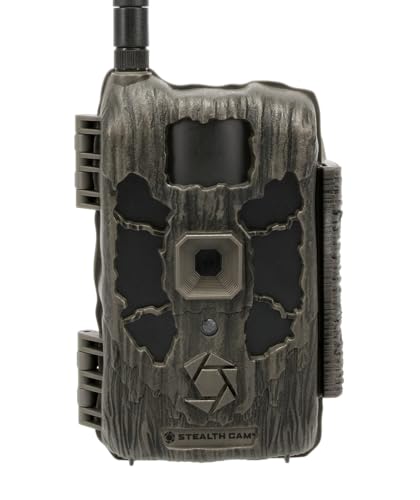
Stealth Cam Deceptor Max 2.0
What Each Pick Brings To The Table
The Cuddeback Power Bank is an accessory rather than a camera, yet it changes how existing Cuddeback setups can operate. Its external battery can run a compatible camera with or without batteries installed inside the camera, which simplifies long scouting trips and reduces the need to carry spare cells.
Compatibility is the deciding detail. This power solution fits CuddeLink and Tracks cameras, but it does not create a general-purpose power solution for competing brands. I favor it for hunters with a Cuddeback-focused fleet, especially where carrying loose batteries would be inconvenient.
The Case For It
- Extends operating time for compatible Cuddeback and CuddeLink cameras.
- Works with CuddeLink and Tracks Series models.
- Runs a camera with its internal batteries removed or still installed.
- Supports front-mounted or side-by-side positioning.
Things To Consider
- The camera still needs a physical cable connection to the power bank.
- Owners must match the power setup carefully to the camera model and mounting arrangement.
Key Specs
Who It Suits Best
Hunters with compatible Cuddeback cameras who need an external power option for remote scouting locations.
Where Another Pick Suits Better
TACTACAM Reveal X 3.0 Solar Kit suits locations where solar charging is preferable to a cabled Cuddeback power bank.
The Stealth Cam Revolver PRO 40MP centers on coverage rather than a single forward-facing field. Its 360-degree design is intended to monitor a broad area around the mount, making it appealing for an open trail junction, wildlife corridor, or clearing where several directions matter.
Cellular connectivity also separates it from a conventional memory-card camera, while 40MP stills and 1440P video target detailed scouting. I would examine signal quality at the exact placement first, since cellular uploads depend heavily on terrain and tower coverage.
The Value In It
- Panoramic viewing reduces the number of directions a single mount must cover.
- 40MP photos preserve detail for distant movement.
- 1440P video adds useful context to still-image scouting.
- Cellular transmission can reduce card retrieval trips.
Trade Offs
- Cellular service needs reliable coverage at the mounting site.
- Wide-area placement requires careful mounting height and angle checks.
Feature Snapshot
Made For
Hunters scouting open areas where panoramic coverage and cellular image delivery take priority over compactness.
Consider Something Else When
MUDDY Pro Cam 14 3-Pack is a stronger fit for a property with three separate trails that each need a forward-facing camera.
The Stealth Cam 12V Battery is built for cold-weather scouting, where disposable-cell performance can become less reliable. A 12V battery box gives compatible cameras a stable external power source, useful during deer season or a long stretch without access to the mount.
That approach carries a tradeoff: the battery box adds equipment to install, protect, and eventually maintain. I see it as a practical field-power upgrade for hunters committed to long deployments, rather than a lightweight option for occasional trips.
Good Reasons To Consider
- A 12V box supplies external power for cold-weather camera use.
- It supports scouting campaigns where the camera remains mounted for extended periods.
- External power avoids relying solely on disposable batteries in cold conditions.
Worth Noting
- Model compatibility must be confirmed before installation.
- Weather protection around the connection point remains essential during seasonal use.
At A Glance
Who Will Love This
Hunters running compatible Stealth Cam equipment through cold seasons and remote scouting periods.
Another Choice May Suit
Cuddeback Power Bank is a lighter alternative for compatible Cuddeback cameras that need an external battery rather than a 12V box.
The TACTACAM Reveal X Gen 3.0 is designed for hunters who scout across areas with changing cellular conditions. Multi-carrier support gives the camera more carrier options than a single-network setup, while the pre-installed antenna and built-in GPS support remote placement and location-oriented scouting.
Compared with the Stealth Cam Revolver PRO 40MP, the Reveal X emphasizes network flexibility rather than panoramic viewing. A tree mount is included, and compatibility with optional solar panels makes it easier to build around a long-term installation.
Everyday Wins
- Multi-carrier support improves placement flexibility across changing terrain.
- The pre-installed antenna simplifies a cellular trail camera setup.
- Built-in GPS adds location context to remote scouting records.
- The included tree mount helps establish a stable starting point.
Practical Considerations
- Cellular reception still needs to be checked at the actual mount.
- Remote image storage and plan details should be reviewed before deployment.
Technical Highlights
Best Suited To
Hunters moving between locations where carrier coverage, GPS context, and solar expansion matter.
Look Elsewhere When
Stealth Cam Revolver PRO 40MP is a better fit when panoramic coverage matters more than carrier choice.
The TACTACAM Reveal X 3.0 Solar Kit combines the camera, Reveal R5 solar panel, and tree mount in one field setup. Solar support is the practical reason to choose this package over the standard Reveal X Gen 3.0 bundle, particularly where battery changes would require an extra drive.
The camera retains the multi-carrier and built-in GPS features associated with the Reveal X 3.0, while the added panel targets longer deployment. I would position the panel where it receives useful sunlight and confirm that the panel angle does not disturb the camera’s view.
Key Advantages
- Solar power reduces reliance on routine battery changes.
- The included mount makes the package easier to deploy.
- Multi-carrier support adds flexibility across different hunting properties.
- Built-in GPS helps organize remote camera records.
Points To Note
- Solar performance depends on sunlight reaching the panel.
- The complete kit may be unnecessary for short scouting trips.
Built With In Mind
Hunters leaving a cellular camera mounted for weeks in a sunny, remote location.
Reach For A Different Pick When
Cuddeback Power Bank is a better fit for a compact Cuddeback setup that already has reliable external power.
The MUDDY Pro Cam 14 3-Pack favors coverage across several points rather than one elaborate camera. Each unit provides 14MP photos, 480p video, 18 infrared LEDs, and a time, date, and moon-phase stamp, which helps organize a large scouting map.
The bundle also includes batteries and SD cards, making it a practical starting point for distributed monitoring. For most mixed terrain, 480p video records useful movement, while 14MP stills remain capable for basic identification and time-based review.
What Pays Off
- Three cameras cover separate trails, crossings, or approaches at once.
- 14MP stills support standard wildlife identification.
- 18 infrared LEDs provide night illumination for scouting.
- Time, date, and moon-phase stamps make recordings easier to organize.
- Batteries and SD cards are included for setup across several locations.
Small Caveats
- 480p video is less detailed than the higher-resolution cellular cameras in this list.
- Three mounts require regular checks for alignment, moisture, and animal interference.
Key Product Details
Whose Shelf It Belongs On
Hunters with several separate access routes who need simultaneous non-cellular scouting.
A Better Fit Elsewhere
TACTACAM Reveal X Gen 3.0 fits remote sites where cellular delivery and GPS context matter more than three-camera coverage.
The Stealth Cam Deceptor Max 2.0 gives cellular hunters several resolution choices, including 4MP, 8MP, 16MP, and 40MP. That range lets a scouting setup balance storage use against detail, while dual-core processing supports simultaneous image capture and uploading.
The 1440P video mode adds useful movement detail, and integrated processing is intended to improve clarity. Compared with the Muddy Pro Cam 14 3-Pack, this is a single-camera solution for one carefully selected location, with more emphasis on resolution and cellular workflow.
Positive Points
- Four photo resolutions support different storage and detail needs.
- 40MP captures the highest-resolution stills in the listed range.
- 1440P video records more detail than the Muddy bundle.
- Dual-core processing supports image capture and cellular uploads together.
Potential Compromises
- Cellular reception remains a key placement requirement.
- Higher-resolution files can require more storage and careful card management.
Right Fit For
Hunters who want one cellular camera with selectable photo resolution and detailed video capture.
Swap It Out When
MUDDY Pro Cam 14 3-Pack is a better fit for broad coverage requiring several independent cameras.
Field Setup Priorities For Remote Scouting
Start With Coverage
A camera covering one trail is not automatically the right choice for an entire property. I map crossings, feed areas, access paths, and open clearings first, then choose between panoramic viewing, several conventional cameras, or a cellular model with wider location flexibility.
Power Shape Determines Trips
Battery cells are simple to carry, but external power can reduce maintenance during long deployments. The Cuddeback Power Bank, Stealth Cam 12V Battery, and TACTACAM solar kit each suit different hardware and placement conditions, so compatibility comes before battery convenience.
Cellular Cameras Need A Signal Check
Cellular delivery saves card-retrieval trips, but signal strength varies sharply between valleys, ridges, and wooded areas. I confirm coverage at the intended tree or post and keep a local recording plan in mind, especially for important scouting windows.
Image Resolution Has A Purpose
High resolution helps identify distant animals, but it also increases file size and storage demands. A 14MP camera can suit basic route monitoring, while 40MP and 1440P models suit closer identification and detailed movement review.
Small Mistakes That Cost Field Time
Wrong Turns To Avoid
Choosing a camera by resolution alone misses the larger issue of field placement. A low-detail camera can work near a trail, while a high-resolution model still cannot solve weak cellular reception, poor angle, or inadequate night illumination.
Why Premium Trail Cameras Cost More
The Upgrade Payoff
Higher-tier cameras commonly add cellular transmission, larger sensors, faster processing, or panoramic viewing. Those features help hunters scout remotely or identify movement at greater distance, but simpler bundles can provide better value for broad, non-cellular trail monitoring.
Frequently Asked Questions
Which trail camera works best for remote hunting land?
Remote hunting land benefits from strong cellular service, dependable external power, and a secure mount. The TACTACAM Reveal X 3.0 Solar Kit fits locations with reliable sun, while the Stealth Cam 12V Battery suits compatible 12V camera setups.
Is a solar trail camera practical for hunting?
Solar power can reduce battery changes during long deployments, but panel placement matters. Shade, tree cover, and seasonal sunlight can affect charging, so a battery backup remains useful for critical scouting periods.
What resolution matters most for trail cameras?
Resolution matters most when distant animals need identification. The Stealth Cam Deceptor Max 2.0 offers selectable settings up to 40MP, while the MUDDY Pro Cam 14 3-Pack provides 14MP stills for more basic trail monitoring.
Are multiple trail cameras better than one panoramic model?
Multiple cameras suit separate trails and crossings, while one panoramic model covers more directions from a single position. The MUDDY 3-Pack is useful for distributed monitoring, and the Stealth Cam Revolver PRO 40MP fits broad open areas.
Do cellular trail cameras work without a memory card?
Cellular cameras can send images through a connected service, but local storage features may depend on the model and configuration. I compare transmission, recording, and storage needs before mounting one in a remote location.
Final Verdict
The best fit depends on coverage, power, and connectivity rather than a single specification. I favor the MUDDY Pro Cam 14 3-Pack for several conventional trail points, the TACTACAM Reveal X 3.0 Solar Kit for long solar-assisted deployments, and the Stealth Cam Revolver PRO 40MP for panoramic cellular monitoring. The right camera makes each field check more useful.